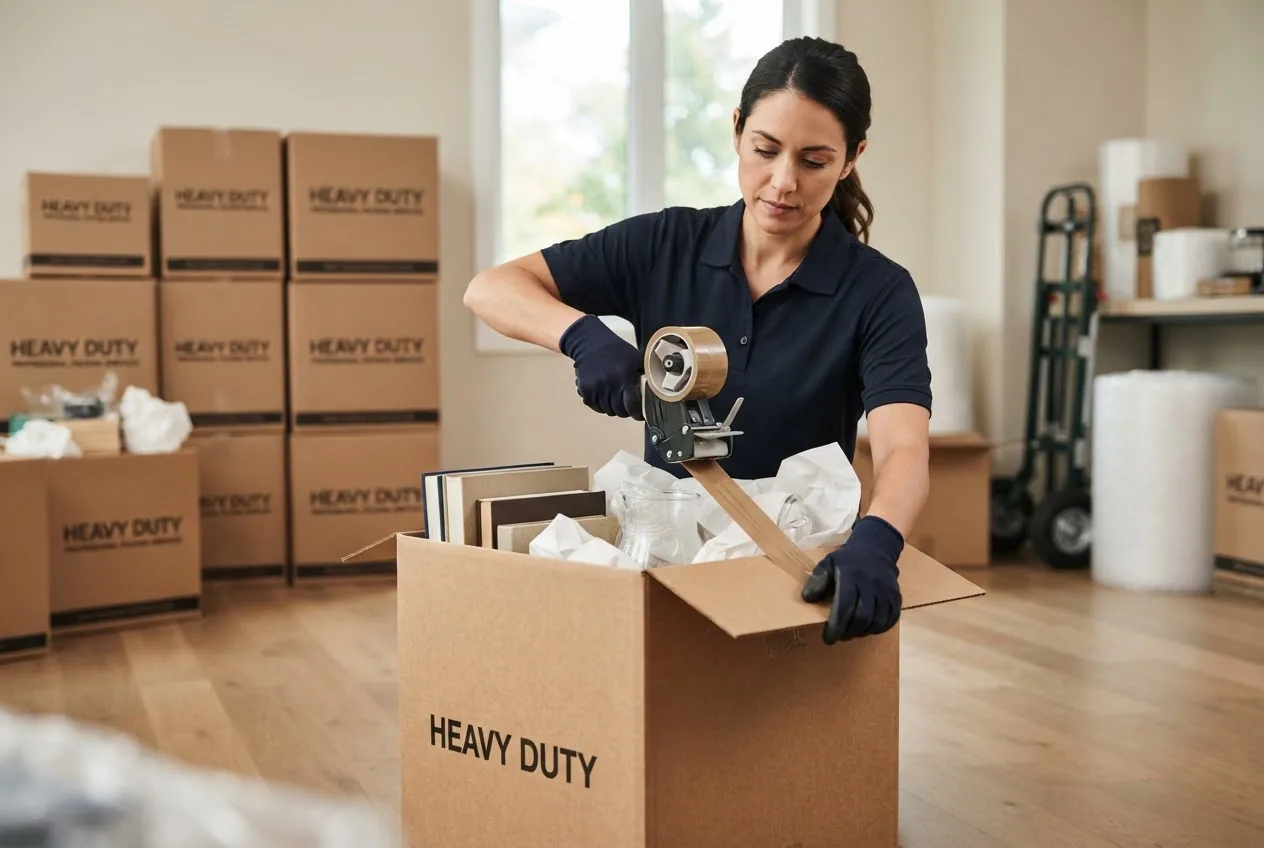


extra large moving boxes: By the end of this hands-on guide you’ll be able to measure, select, pack, and seal extra large moving boxes correctly for bulky and fragile items; estimated time: 2–4 hours for a household load of 6–12 boxes; skill level: beginner to intermediate.
This guide assumes you want precise moving box dimensions, real-world packing steps, and clear rules for when to use heavier construction or call a pro. Read the checklist and step-by-step plan, then follow the section deep-dives for standards and sourcing.
Before you start
- Measure the largest single item you plan to pack (length × width × height in inches).
- Gather tools: tape gun with 2″ polypropylene packing tape, utility knife, carpet-safe marker, 3–6 rolls of bubble wrap, 2–3 rolls of kraft paper, moving blankets, corner protectors, and a scale (up to 100 lb capacity).
- Have labels and a floorplan/photo of the destination room for quick unpacking.
- Plan weight thresholds: for extra large boxes, keep packed weight below 50–65 lb unless using double-wall heavy-duty boxes.
Core process — step-by-step
-
Measure items and record dimensions.
Measure length, width and height (L × W × H) of the largest item you will pack, then add 3–4 inches clearance on each dimension for cushioning. For irregular shapes take two measurements and note if the item can be disassembled.
-
Consult the size chart and choose the smallest suitable extra large box.
Match your padded item size to a box whose internal dimensions exceed your item by at least 3″ per side. Use cubic capacity (cubic feet) to estimate volume and confirm weight capacity on the product spec.
-
Select material and strength rating.
Decide between single-wall, double-wall, or reinforced (double-wall with higher ECT). For packed loads over 50 lb choose double-wall with ECT 32+; for fragile antiques choose double-wall plus internal bracing.
-
Prepare the box: reinforce base and label location.
Apply a H-taping pattern on the bottom with at least three strips of 2″ tape (two along seam, one across). Mark the top end where the opening will be and reserve one side for contents and room label.
-
Protect the item with cushioning and pack tightly.
Use 3–4″ of kraft paper or bubble wrap under the item, add corner protection for large fragile edges, and fill voids with crumpled paper or foam peanuts to prevent shifting.
-
Seal with H-tape and add handling information.
Seal top with H-tape (three strips), then label box with weight (rounded to nearest lb), contents, room, and orientation arrows if fragile. For heavy boxes write MAX 2 PERSON LIFT if >40 lb.
-
Test, photograph, and move.
Lift the box using safe two-person techniques (bend knees, keep back straight) and perform a 2–3 foot carry test to check for structural stress or buckling; photograph packed boxes and store photos for claims if needed.
Common mistakes and how to avoid them (from my experience)
I once packed a large framed mirror in a single-wall extra large box to save money; when two movers lifted it the bottom bowed and the frame cracked. I now always use double-wall with corner foam and a wooden cradle for mirrors over 30 inches. To avoid this, weigh the item and default to heavier construction when in doubt.
Quick checklist before you call it done
- Box internal dimensions ≥ item + 3″ per side
- Packed weight clearly labeled and ≤ recommended limit
- Bottom H-taped with 3 strips of 2″ tape
- Fragile items wrapped with 2–3 layers of bubble wrap and corner protection
- Photos taken of packed content and label for inventory
When to call a professional
Call a pro when items exceed 8 ft in any dimension, when combined packing weight exceeds what two people can safely lift (>120 lb), or when items are high-value antiques needing crating. For pricing and logistics see the professional packing services guide and cost overview.
professional packing services guide and cost overview
Introduction to Extra Large Moving Boxes
This section defines what counts as extra large moving boxes and explains when you need them. Moving logistics change with volume: larger boxes speed packing but increase risk of heavy, awkward loads. Use extra large boxes primarily for lightweight bulky items (comforters, pillows, linens), disassembled furniture parts, and large soft goods, and use reinforced boxes for heavy or fragile large items.
Categories of moving boxes commonly used in residential moves break down roughly as:
- Small (1.5–3 cu ft): books, small electronics
- Medium (3–4.5 cu ft): kitchenware
- Large (4.5–6 cu ft): lamps, pots
- Extra large (6–12+ cu ft): bulky but often light items like bedding, or large framed artwork when reinforced
Understanding container dimensions and categories helps plan packing order and truck space. The sections that follow give exact size ranges, comparisons with shipping boxes, strength ratings, and step-by-step packing instructions you can apply immediately.
Comprehensive Guide to Extra Large Moving Box Dimensions
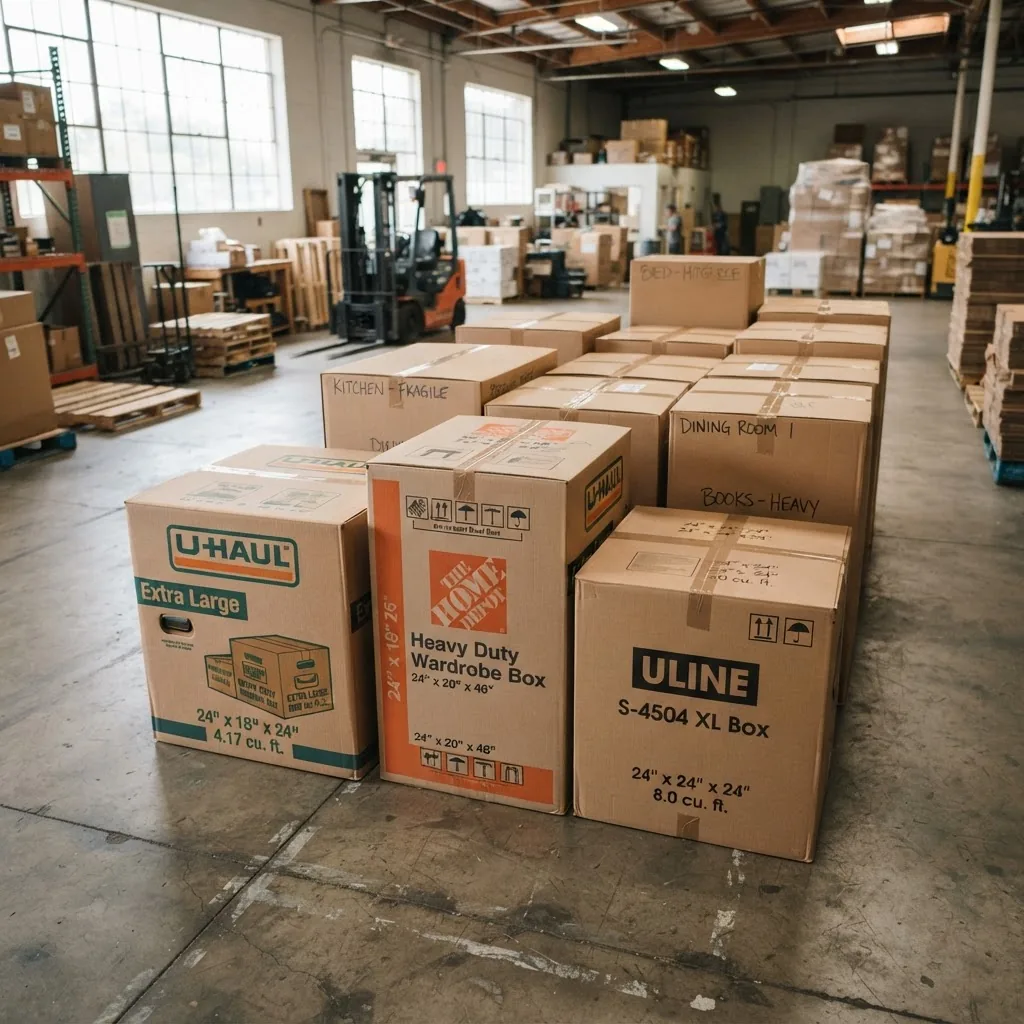
The table below lists common moving box dimensions, internal size (L × W × H in inches), cubic feet, typical weight capacity ranges, and common uses. Use it to match measured item dimensions to the best-fit box.
| Box Type | Internal Dimensions (in) | Cubic Feet | Typical Weight Capacity (lb) | Typical Uses |
|---|---|---|---|---|
| Extra Large (XL-1) | 24 × 18 × 18 | 4.5 | Up to 50 (single-wall) / 65+ (double-wall) | Pillows, bedding, small lamps |
| Extra Large (XL-2) | 24 × 18 × 24 | 6.0 | Up to 55 / 75+ | Large bedding, disassembled furniture parts |
| Extra Large (XL-3) | 27 × 18 × 18 | 5.06 | Up to 60 / 80+ | Bulky soft goods, rugs |
| Extra Large (XL-4) | 30 × 20 × 20 | 7.0 | Up to 65 / 90+ | Lamps, cushions, large but light items |
| Specialty XL — Wardrobe | 24 × 24 × 40 | 13.3 | Primarily for hanging clothes; weight variable | Hanging garments, long textiles |
Notes on the table: cubic feet equals (L × W × H) / 1728. Weight capacity depends on material and box strength rating (see Materials section). For sourcing after you pick a size, see where to buy extra large moving boxes affordably for retail and wholesale options.
where to buy extra large moving boxes affordably
How to read the chart: choose a box where internal dimensions leave 3–4 inches clearance each side for cushioning. If the combined item and cushioning approach 60 lb, shift to double-wall or reinforced options listed in the Materials section.
Differences Between Extra Large Moving Boxes and Large/Extra Large Shipping Boxes
Understanding the difference between moving boxes and shipping boxes reduces damage risk and unexpected carrier refusals. Below is a concise comparison highlighting material, construction, uses, and carrier constraints.
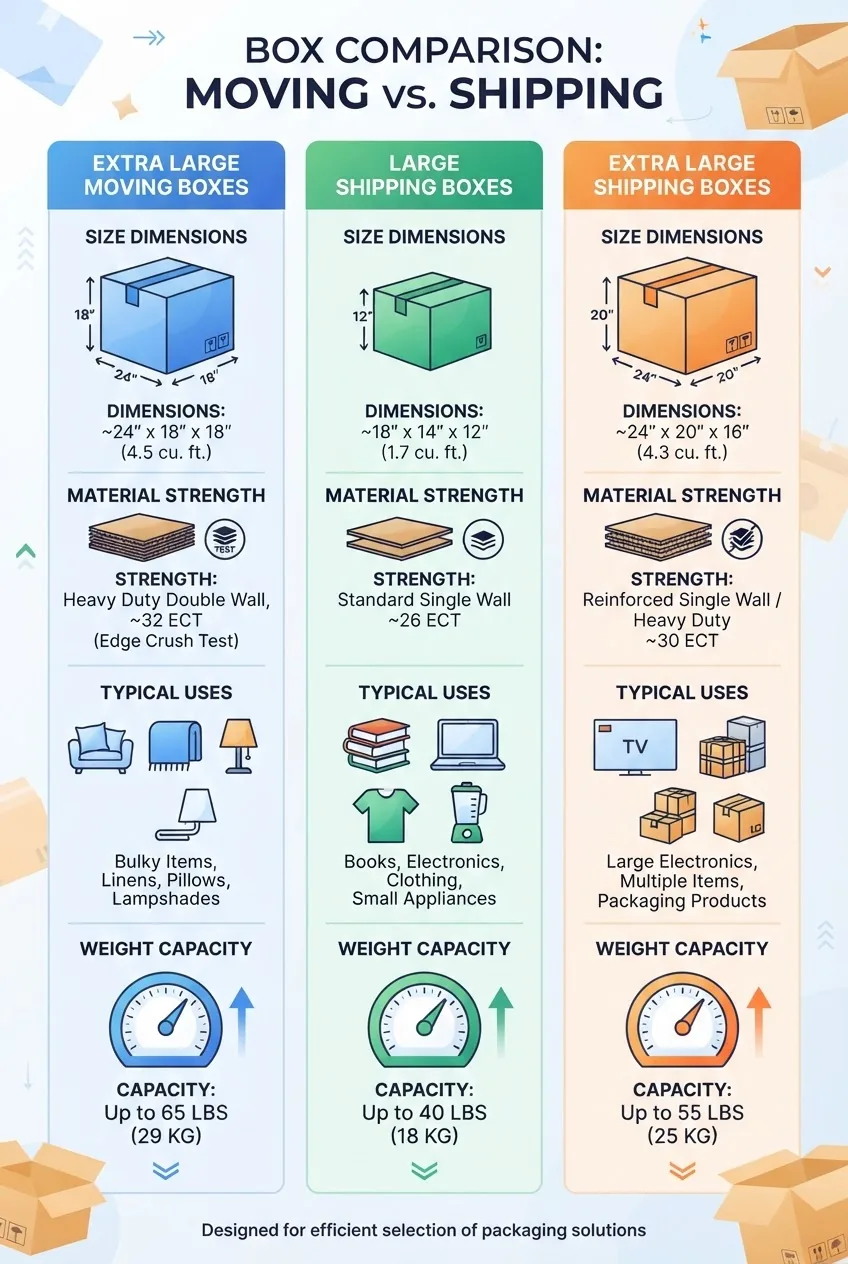
| Feature | Extra Large Moving Boxes | Large/Extra Large Shipping Boxes |
|---|---|---|
| Primary purpose | Domestic relocations, volume packing | Carrier transport, meeting postal size/weight limits |
| Construction | Often single- or double-wall corrugated with wider flaps for manual handling | Stronger grades, often double-wall or specialized flute profiles for transit stress |
| Strength ratings | Varies; common ECT 32 for double-wall moving boxes | Often ECT 44+ or burst rating specified for long-haul shipping |
| Carrier limits | Not standardized — choose by safe lift thresholds | Specific size and weight caps (refer to carrier rules) |
| Typical uses | Household moves, bulk soft goods | E-commerce, freight, machine parts |
When shipping via carriers, their documented dimensional and weight limits apply. For carrier rules consult official carrier guidelines. For local service and shipping options see package service and shipping options near me and for in-person packing services check pack and ship near me locations for box and mailing services.
package service and shipping options near me
pack and ship near me locations for box and mailing services
External standards: packaging industry bodies publish strength testing methods. For reference, see the Fibre Box Association and ASTM protocols, and carrier size/weight guidance at major postal services.
Sources: According to a 2024 industry packaging review, shipping boxes intended for long-haul freight typically specify higher burst strength and ECT ratings than movers generally require.
Authoritative links:
Choosing the Right Extra Large Moving Box Based on Item Type and Weight
This section gives a practitioner-first, itemized selection and packing strategy. Use these numbered categories and concrete thresholds when you decide which extra large moving box to use.
-
Bedding, pillows, and soft goods — choose XL with 3–4″ clearance.
Use boxes in the 24×18×24 to 30×20×20 range. Packed weight typically <25 lb. Fill voids with kraft paper to prevent crushing. Label "Cushions/Bedding — light."
-
Rugs and rolled textiles — long, low boxes or tubes.
For rugs, use a 6–13 cu ft wardrobe or custom tube. If boxed, protect edges with corrugated corner guards. Keep weight under 40 lb to ease carrying.
-
Large lamps and floor lamps — double-wall XL with cradling.
Disassemble lamps when possible. Pack bulb sockets with foam, use double-wall box (ECT 32+) and pad base with 3–4″ of foam. Write “Fragile — Base/Glass.”
-
Flat artwork and framed mirrors — reinforced XL or crate.
For frames under 36″ a double-wall XL (27×18×18 or 30×20×20) plus corner protectors and plywood corner plates may suffice. For >36″ or valuable pieces, build a crate or call pro crating.
-
Disassembled furniture parts — long, deep XL or specialty crate.
Pad all ends, bundle hardware separately in labeled bags, and include an inventory sheet. For heavy wooden parts >40 lb, use double-wall reinforced boxes or palletize for transport.
-
Electronics (large TVs, monitors) — use manufacturer shipping boxes if possible.
TVs over 50″ typically require original shipping cartons; otherwise use a specialized TV box with corner foam and double-wall construction. Secure stand mounting points and label orientation.
-
Heavy but bulky items (cast-iron, stone) — avoid XL boxes; crate instead.
If an item is both heavy and bulky, standard moving boxes are unsuitable: weight concentrates and causes box failure. Threshold: any single packed item >65 lb should be crated or moved on a dolly by pros.
-
Fragile large items — choose double-wall + internal bracing.
Use double-wall with minimum ECT 32 and add internal wooden braces if weight approaches 50–80 lb. For glass or ceramic large items, add a 2″ foam layer around the item plus edge protectors.
Real-world scenario: I once packed a 60″ floor lamp (base weighted 30 lb). By using a 30×20×20 double-wall box with a plywood base plate and two movers, the lamp moved without wobble. The investment in a heavier box prevented damage and saved an insurance claim.
Materials and Construction of Extra Large Moving Boxes
Most extra large moving boxes are made from corrugated cardboard. Key terms:
- Corrugated cardboard: paper layers with fluted medium sandwiched between liners.
- Single-wall: one corrugated medium between two liners.
- Double-wall: two corrugated media and three liners—stronger and thicker.
- ECT (Edge Crush Test): measures stacking strength in lb/in; common specs are ECT 32 and ECT 44.
- Burst strength: pressure required to rupture the board; reported in lb/in².
Industry standards: according to the Fibre Box Association, ECT and burst ratings remain the primary measurable indicators of performance for corrugated packaging. External guidance from ASTM defines test methods for these metrics. For deeper cost and buying trade-offs see the heavy duty moving boxes cost and buying guide.
heavy duty moving boxes cost and buying guide
Trade-offs:
- Single-wall: cheaper, lighter, sufficient for light bulky items (bedding)
- Double-wall: higher ECT and burst ratings, recommended for heavy or fragile large items
- Specialty flutes and liners: improve long-term stacking strength during moves involving pallets or stacks in storage
Sustainability: many movers prefer kraft corrugated made from 30–100% recycled fiber. According to a 2023 packaging materials standard review, recycled-content corrugated can meet typical ECT ratings when properly manufactured.
External authority links and testing references:
How to Properly Pack and Seal Extra Large Moving Boxes
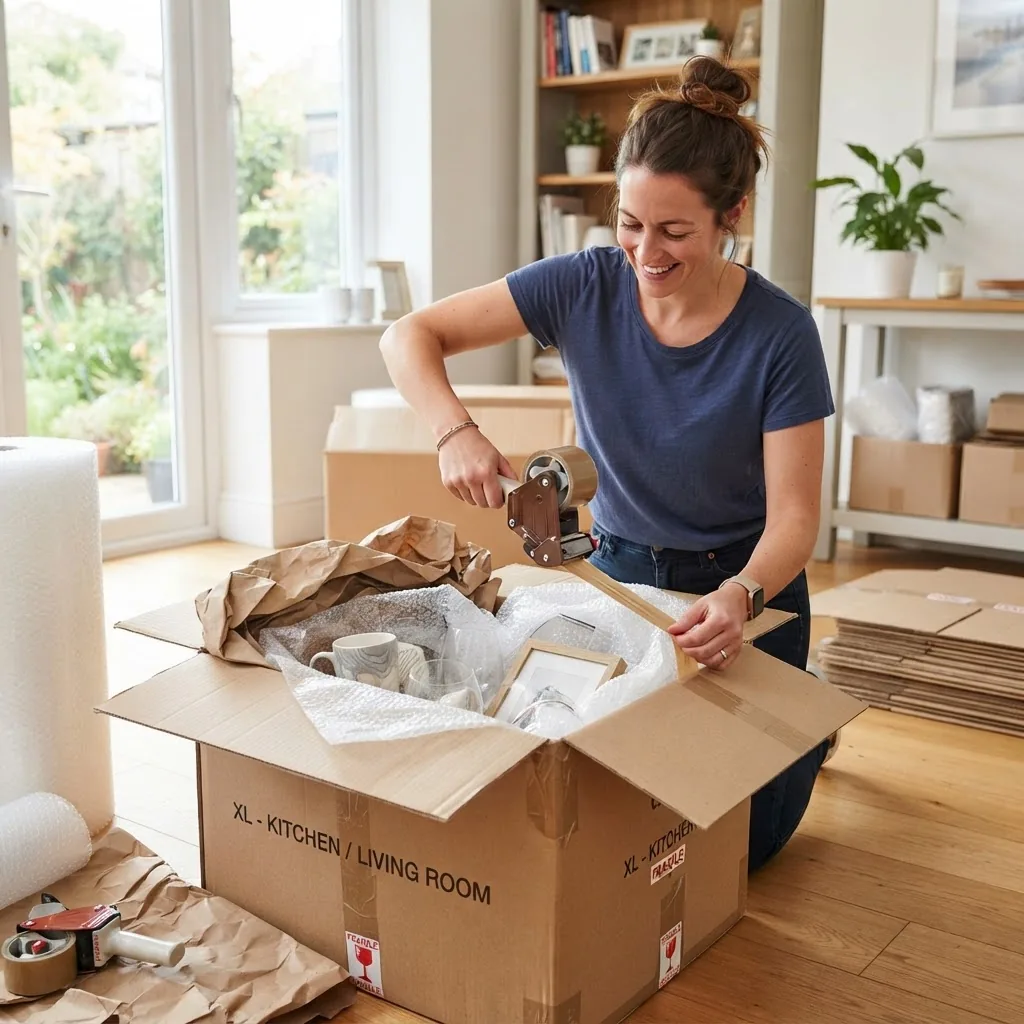
Follow these numbered, concrete steps when packing and sealing an extra large moving box. Each step includes quantities and timings so you can replicate the process.
-
Prepare and reinforce the base (5 minutes per box).
Place box on a clean surface; fold flaps down. Apply three strips of 2″ tape: one centered along the seam (extend 3–4″ onto each side), then two strips along edges (H-pattern). For heavy loads add a fourth perpendicular strip for a total of 4 tape passes.
-
Add 3–4″ base cushioning (2–3 minutes).
Line the bottom with 3–4″ crumpled kraft paper or 1–2″ of bubble wrap (minimum 3 mm bubble). For very fragile bases add cardboard sheets or a thin plywood panel cut to box size.
-
Wrap items individually (5–15 minutes per item depending on size).
Use 2–3 layers of bubble wrap for glass or ceramic, and 1–2 layers for wood or plastic. Secure with 1″ paper tape (not too tight). For corners use corner guards or folded corrugated.
-
Position and brace (3–6 minutes).
Place heavy side down. Keep center of gravity low. For asymmetrical items add foam blocks or crumpled paper around edges. If more than one item inside, interlock parts to prevent internal movement.
-
Fill voids to prevent shifting (2–4 minutes per void).
Fill gaps with kraft paper, foam peanuts, or bubble wrap until item cannot shift more than ½”. Avoid loose plastic bags which compress under load and permit movement.
-
Close and perform H-seal (3 minutes).
Close flaps and apply tape in H pattern on top. Use at least three 2″ tape strips; add two more if weight exceeds 50 lb. Run tape 3–4″ down sides to secure flaps under stress.
-
Label, weigh, and document (2–3 minutes).
Weigh box and mark weight on top and side. Label content category and room destination. Mark “This Side Up” and “Fragile” where applicable. Photograph sealed box front and back for inventory and claims.
For recommended supplies and exact tape types, see the complete moving supplies and packing materials guide for brand recommendations and quantities per box size.
complete moving supplies and packing materials guide
Practical tip: when sealing, maintain tape tension so tape lies flat without wrinkles. If tape lifts within 24 hours, re-tape with a fresh strip—older tape sometimes fails due to humidity or dust.
When to Consider Professional Packing Services for Extra Large Items
Hiring professionals can save time and reduce risk for high-value or awkward large items. Consider pros for crating, white-glove handling, and complex disassembly/reassembly.
- Benefits:
- Accuracy in selecting crate dimensions and materials
- Access to professional-grade ECT 44+ crates and custom bracing
- Insurance and documented chain-of-custody for high-value items
- Time savings: pros can pack large household with many XL boxes in half the time
- Scenarios to hire pros:
- Antiques, art, or high-value electronics
- Oversized or awkward dimensions >8 ft
- Items requiring crating or palletization
- Short timelines or interstate moves with strict carrier requirements
If you need detailed fee structures and service options, consult the professional packing services guide and cost overview for full pricing, service tiers, and examples.
professional packing services guide and cost overview
Evidence: According to a 2022 survey of professional packers, customers who used white-glove packing reduced damage claims by over 70% for high-value items transported across state lines.
Summary and Best Practices Recap
Key takeaways for using extra large moving boxes correctly:
- Always measure your item and add 3–4″ of clearance for cushioning.
- Use double-wall construction for any packed weight >50 lb or fragile large items.
- Reinforce box bottoms with an H-tape pattern and add internal bracing for edge loads.
- Label with weight and orientation; photograph for claims and inventory.
- When in doubt about weight or value, use professional services or crating.
Final practical checklist:
- Box size chosen = item + 3–4″ padding
- Box strength (ECT) matches expected stacked load
- Base H-taped with 3–4 strips, top H-taped similarly
- Packed weight labeled and tested with a 2–3 ft carry
- Photos taken and inventory recorded
When to call in a professional
If items are antiques, irreplaceable art, exceed 65 lb individually, or require crating to meet carrier requirements, call professional packers to avoid damage and ensure insurance coverage. For full service options and pricing consult the professional packing services guide and cost overview.