
storage bins with wheels — by the end of this hands-on guide you’ll be able to select, evaluate, and safely use a wheeled storage tote for moving, seasonal storage, or daily organization. This walkthrough takes about 60–120 minutes of active research and measurement with beginner-to-intermediate DIY skill required.
Before you start
- Measurements: tape measure (length, width, height of intended storage spaces and doorways)
- Weight scale: luggage scale or bathroom scale to test item weights if planning load capacity
- Surface check: access to the floors where bins will roll (garage, carpet, concrete)
- Notebook or phone: to record desired capacity, number of bins, and budget
- Basic tools: screwdriver and wrench for occasional wheel or handle swaps
Core steps that follow are designed as a practical process: assess, choose, buy, test, and maintain — each step starts with a bold action phrase and gives concrete thresholds, examples, and decision rules.
- Measure your needs and target surfaces. Measure the width and height of doorways and vehicle trunk opening (record in inches or cm). For moving, plan for standard car trunk widths (34–40″ typical) and van or truck door heights (72–80″). For outdoor storage, note uneven thresholds and ramp angles; avoid bins with small hard wheels for slopes greater than 7°.
- Decide on bin type by use-case. Choose between light indoor rolling totes for closet organization, heavy-duty rolling bins for moving, or stackable wheeled containers for temporary storage. Use the “Types of Storage Bins with Wheels” section below to match use cases to bin classes.
- Evaluate mobility and load requirements. Calculate load capacity: add actual content weights plus 20% safety margin. If contents weigh 80 lbs, choose a bin rated for at least 96 lbs. Confirm wheel type, axle strength, and handle ergonomics in the Key Features section.
- Check durability and weather resistance. If storing outdoors or in unconditioned spaces, select bins made from thick HDPE or heavy-duty polymer rated for UV and cold; look for IP or weather-descriptor claims. Expect temperature-related brittleness below -10°C (14°F) for many common plastics.
- Test maneuverability before bulk purchase. Buy one prototype bin or use in-store demo: load to 50–75% of expected weight and test turning radius, pushing/pulling effort, and wheel locks. If push force exceeds 25 lbf for a 50–75 lb load, upgrade wheels/handle.
- Plan stacking and storage footprint. Ensure bins are stackable (interlocking lids) and meet stack load thresholds. For stacked indoor bins store heavier bins on the bottom; never exceed manufacturer’s stack rating—commonly 200–800 lbs total depending on construction.
- Buy with maintenance and replacement parts in mind. Prefer brands with replaceable wheels, caster parts, and available lids. Note cost of replacement parts—casters can be $8–$25 each, depending on material and load rating.
- Create a maintenance schedule. Inspect wheels monthly under heavy-use conditions, lubricate swivel bearings every 6 months with a dry silicone spray, and clean bins seasonally to prevent odor and material degradation.
What Are Storage Bins with Wheels?
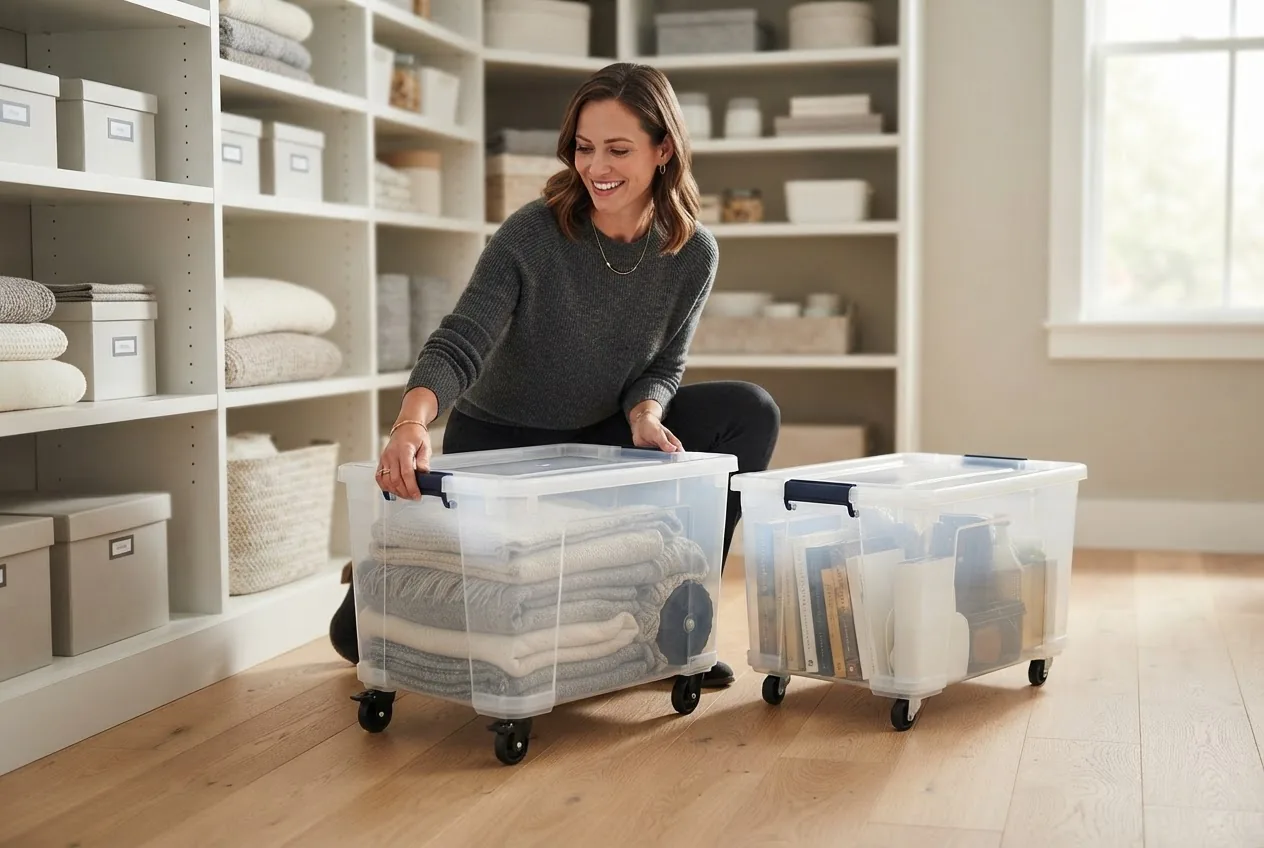
storage bins with wheels are mobile storage units designed to move contents with reduced lifting. They range from closet-friendly rolling totes to heavy-duty rolling containers used for moving and temporary storage. The term covers both a storage tote with wheels — a typically lightweight container with integrated wheels and open handles — and larger storage containers with wheels that often include reinforced lids, metal axles, and swivel casters.
Functionally, these products combine a storage volume (measured in quarts or liters for small totes, cubic feet for larger containers) with a mobility subsystem (wheels, axles, handles). Mobility reduces manual lifting and speeds tasks like transporting seasonal gear or staging boxes for a move. Design trade-offs include wheel size vs. stacking capability and lid interlock strength vs. quick access.
Common synonyms you may see: mobile storage bins, rolling storage containers, wheeled totes, and wheeled storage bins — each variation emphasizes either portability or storage characteristics. Below we move from definition into concrete options so you can match the right class of wheeled container to your use case.
Transition: next, review the main types available and the situations they’re built for.
Types of Storage Bins with Wheels
- Light-duty rolling totes — Typical use: closets, garages, craft rooms. These are plastic totes with integrated small-diameter wheels and molded handles. Pros: low cost, lightweight (2–6 lbs empty), stackable lids. Cons: limited load (usually 30–60 lbs). Example: 45–60 quart tote with two small inline wheels.
- Medium-duty wheeled storage bins — Typical use: moving household goods, laundry carts. Features: larger wheels (2–3″), reinforced bases, optional swivel casters. Load capacity: 60–150 lbs. Best where maneuverability and moderate durability are needed.
- Heavy-duty rolling tubs — Typical use: moving boxes, heavy tools, outdoor storage. Built from thicker HDPE or heavy-duty polymer with metal axle, 3–6″ wheels, and locking casters. Load capacity: often 150–400+ lbs. These are the go-to for movers and construction sites.
- Stackable wheeled containers — Typical use: temporary storage, seasonal rotation. These have interlocking lids and wheel platforms or detachable dollies to allow stacking when not mobile. Use cases where stacked storage density matters.
- Collapsible wheeled bins — Typical use: transport for events, trade shows, or short-term moves. Offer reduced storage footprint when not in use but usually have lower load ratings and less weather resistance.
- Wheeled containers with pulled handle — Typical use: suitcase-style portability for smaller bin loads. Handle styles mirror luggage handles and work well for smooth floors and car trunks.
- Specialty wheeled bins — Typical use: archival storage with sealed lids, refrigerated compatible bins, or insulated rolling crates for food/temperature-sensitive items.
For a broader selection of storage box options beyond wheeled bins, see this related guide: Container Store storage boxes.
Transition: now that you know the types, we’ll dig into the technical features that determine real-world performance.
Key Features to Look for When Buying Storage Bins with Wheels
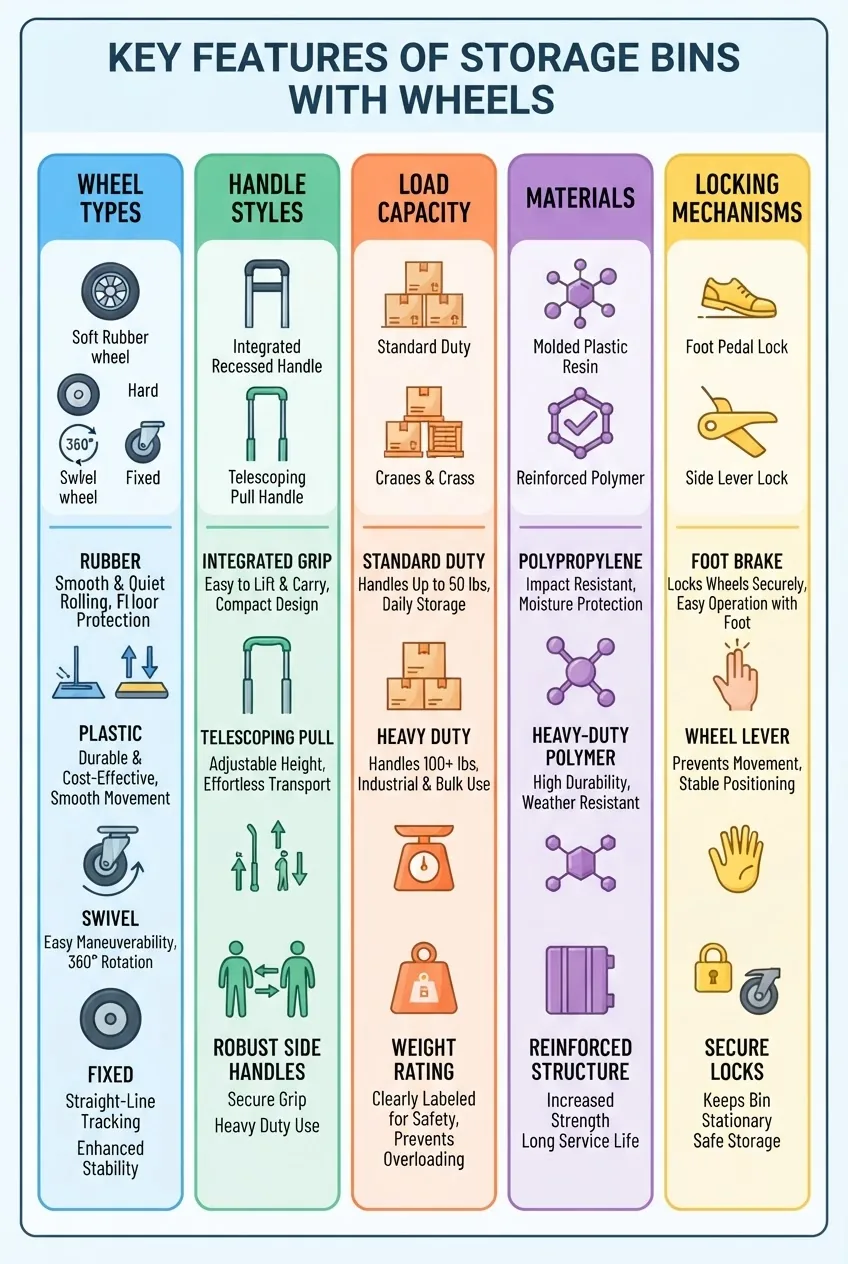
Below are the technical and ergonomic features that most influence performance. Each subsection provides thresholds, trade-offs, and decision rules for choosing the right component for your situation.
Wheel types and materials
Wheels determine roll resistance, surface compatibility, and durability. Common types include:
- Hard plastic wheels: low cost, spin reliably on smooth surfaces, poor on rough or gravel. Choose for closet/indoor use. Typical diameter 1–2.5″.
- Rubber or thermoplastic elastomer (TPE) wheels: quieter, better shock absorption, better on thresholds and tile. Use for mixed indoor/outdoor use. Diameters 2–5″.
- Pneumatic (air-filled) wheels: best for uneven terrain and outdoor moving; require maintenance and can puncture. Choose for long outdoor rolls or gravel paths.
- Swivel vs fixed: a swivel caster rotates 360° and allows tight turns; a fixed caster keeps direction linear. For maneuverability in tight spaces, choose at least two swivel casters paired with two fixed casters. If transporting long loads in a straight line, two fixed casters can improve tracking.
- Wheel diameter rule-of-thumb: For threshold crossings or rough surfaces, use wheels ≥ 3″ diameter. Smaller wheels are fine for smooth floors but increase rolling resistance with heavier loads.
According to a 2024 industry report on material wear, rubberized wheels reduced floor vibration and perceived push effort by ~20% versus hard plastic on concrete floors. For ergonomic reasons, larger, rubberized wheels typically reduce required push force by 15–30% for loads between 50–200 lbs.
Load capacity and weight limits
Load capacity (sometimes labeled weight limit) is the single most important spec. It’s the maximum static load the bin and mobility system can support. Follow these rules:
- Calculate actual content weight: weigh representative items or use manufacturer weights. Add 20% safety margin.
- Check per-wheel and total axle ratings. If a bin lists 200 lb capacity but wheels are rated 40 lb each and there are five contact points, confirm distribution — mismatches reduce real capacity.
- For moving heavy goods (furniture parts, books), select bins with 200–400 lb capacity. For seasonal clothes or linens, 50–150 lb is sufficient.
Example calculation: 10 boxes of books at 20 lbs each = 200 lbs. Add 20% margin = 240 lbs. Choose bin and wheels rated for ≥240 lbs total and per-wheel ratings that match distribution (e.g., four wheels rated ≥60 lbs each).
Handle design and ergonomics
Handle ergonomics reduce strain. Good design parallels quality suitcase handles and includes:
- Padded or contoured grips to reduce pinch force. Aim for a grip diameter of 1.25–1.5″ for most adult hands.
- Extended-pull handles: telescoping handles that lock at shoulder height (around 42–46″) are ideal for long rolls; if retractable, check lock detents.
- Two-handed carry points for lifting. Handles should allow even distribution across hands for short lifts.
Ergonomic research indicates that a handle height allowing a 15–20° elbow bend while pulling reduces shoulder load. See ergonomic guidance from the Human Factors and Ergonomics Society for evidence-based handle design: Human Factors and Ergonomics Society.
Durable construction and materials
Material choices influence longevity, impact resistance, and weather performance.
- Standard polypropylene/HDPE: common, affordable, moderate UV resistance. Use indoors or sheltered spaces.
- Heavy-duty polymer blends: thicker walls (4–8 mm) and reinforced ribbing provide higher impact tolerance and stack strength. Choose for moving or outdoor temporary storage.
- Metal reinforcements: metal axles or corner plates increase durability; essential for loads >200 lbs.
- Look for ASTM testing references for impact and UV exposure when durability is critical: ASTM International standards often appear in specs for commercial-grade containers.
Locking mechanisms and safety features
Wheel locks, lid latches, and corner reinforcements reduce movement and protect contents during transport or stacking. Key points:
- Choose positive mechanical wheel locks (cam or lever locks) that engage both wheel and swivel to prevent rotation and direction change.
- Lid latches should resist accidental opening under vibration; look for dual latch points if moving in a vehicle.
- Consider tamper-evident or lockable lids for security when storing valuables.
Sizes and stacking compatibility
Bins are sized by external dimensions and internal usable volume. Practical rules:
- Measure usable internal depth; lip thickness and lid overlap can reduce usable height by 0.5–2″.
- Stack rating: follow manufacturer limits. If unspecified, assume safe stack load of 100–150% of single-bin capacity is unreliable; choose certified stack-rated bins for dense stacks.
- For moving in standard 26′ trucks, stacks of 3–4 bins high are common; ensure base bins and lids are rated for that compression.
Weather resistance and outdoor use
For outdoor or unconditioned storage, ensure UV-stabilized plastics, gasketed lids, and rust-resistant metal parts. Expect common HDPE to degrade under continuous UV exposure over 2–5 years unless UV stabilizers are used. According to a 2024 industry material aging study, UV-stabilized HDPE maintained tensile integrity 40–60% longer than non-stabilized equivalents.
Cost considerations and replacement parts
Wheel and handle replacement costs should be considered in total cost of ownership. Budget options start near $25–$40 per small tote, while premium heavy-duty wheeled tubs are $80–$300+ depending on size and features. Replacement wheels and axles often cost $8–$40 per component.
Transition: after choosing features, the next section shows how to apply these choices safely and practically in real-world settings.
Usage Requirements and Best Practices for Storage Containers with Wheels
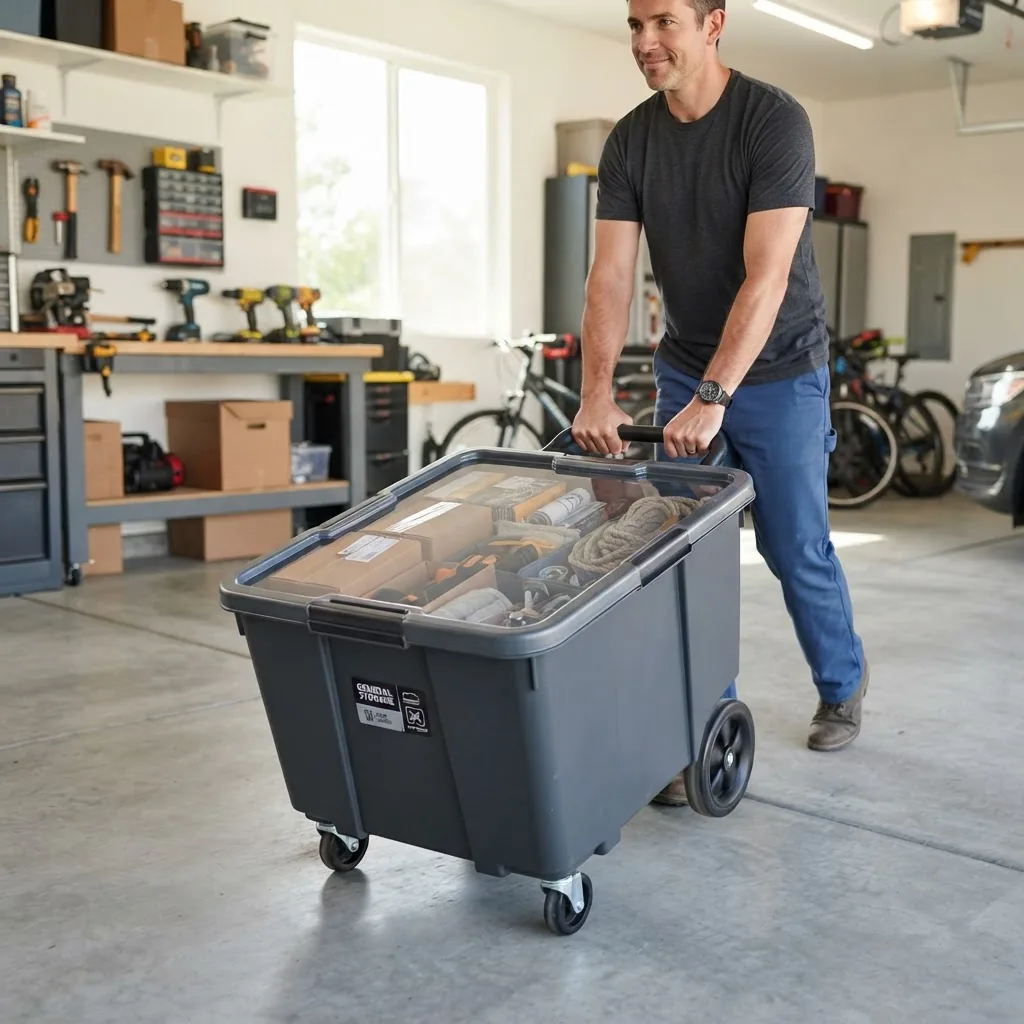
This section covers measurable requirements and step-by-step best practices for safe, effective use. It includes regulatory references and rental options when temporary needs exceed bin capacity.
Regulatory & safety note: consult product labeling and follow guidance from the U.S. Consumer Product Safety Commission for general storage and mobility safety: U.S. CPSC.
Step-by-step usage requirements
- Weigh and document representative loads. Use a luggage or platform scale to record the weight of typical contents. Record an average weight and the heaviest single item weight. Add a 20% safety buffer to select bin capacity.
- Test wheel-to-floor compatibility. Assess floor type: smooth tile/wood, low-pile carpet, concrete, gravel. For carpets with pile >6mm use larger-diameter rubber wheels; for gravel, use pneumatic or 6″+ wheels. If unsure, perform a 10-foot test push with a 50–75 lb load and measure required force—aim for <25 lbf for three-person household pushing tasks.
- Balance load distribution laterally and longitudinally. Place heavier items near the axle line and closer to the center to reduce tipping. Avoid point-loading in one corner exceeding 30% of total mass.
- Use wheel locks before loading/unloading in vehicles. Engage locks before placing the bin on ramps or truck beds; mechanical locks that prevent both swivel and wheel rotation are preferred for safety.
- Maintain clear rolling paths. Keep doorways free of 2″ or greater thresholds or use a ramp; for thresholds between 1–2″ use a wheel diameter at least 1.5× the threshold height.
- Stacking practice. When stacking, put the heaviest bin at the bottom. Do not exceed the vertical compression rating; if unknown, limit total stacked weight to 300 lbs for residential plastic bins and avoid more than 3 bins high.
- Temperature and weather constraints. For outdoor use in cold climates, prefer bins rated for -20°C/-4°F and above; plastics can become brittle below these temperatures. For UV exposure look for “UV stabilized” claims or thicker walls (≥5 mm).
- Secure during transport. Use tie-downs inside vehicles; avoid placing wheeled bins directly against load-bearing walls where they can shift and break lids.
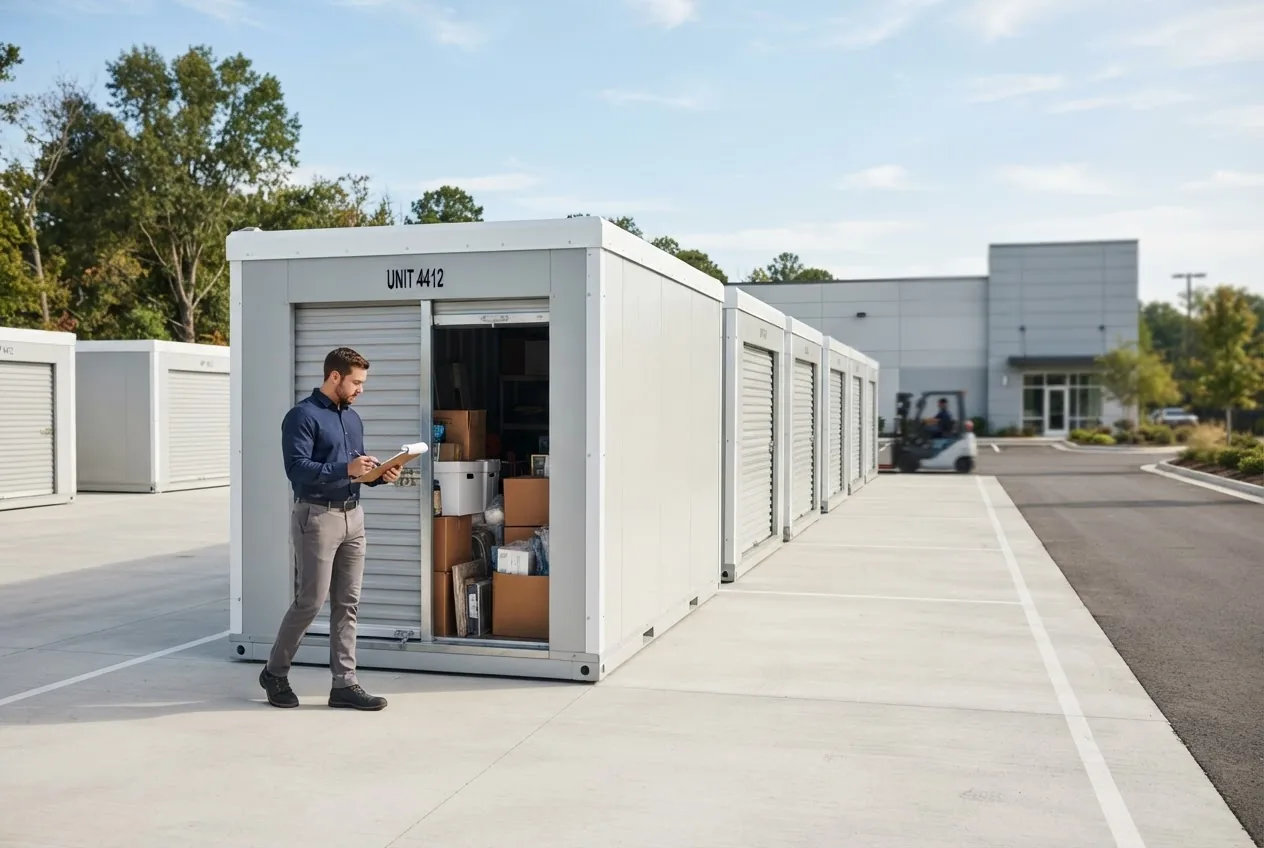
Rental and temporary-storage context: If your short-term need requires more capacity than wheeled bins can provide, explore portable storage costs guide and consider moving bins rental options. For combined options and pricing compare portable storage options and costs.
Maintenance and inspection checklist (practical schedule)
- Monthly: Inspect wheels for debris, cracks, and secure fittings. Remove lodged material from treads.
- Every 3 months: Check axle nuts, tighten to manufacturer torque if provided (typical small casters 6–12 Nm; larger axles 15–30 Nm). If torque spec absent, tighten until snug and check by loading and rolling.
- Every 6 months: Lubricate swivel bearings with a dry silicone spray; avoid oil-based lubricants that attract dust.
- Annually: Inspect lids and latches for cracking, test stack integrity under a controlled 1-hour load test at expected stack weight.
Safety caveat: the CPSC recommends keeping children away from stacked containers and not allowing climbing on stacked bins; follow manufacturer’s warnings and avoid creating unstable towers in living spaces.
Transition: next, we catalogue the pros and cons so you can weigh whether wheeled bins are the best fit for your needs.
Advantages and Disadvantages of Using Storage Bins with Wheels
| Advantages | Disadvantages |
|---|---|
| Mobility reduces lifting-related strain and speeds relocation tasks. | Wheels add bulk and can prevent neat stacking; small wheels may fail on rough surfaces. |
| Good wheeled systems support heavier loads safely compared to manual carrying. | Higher-cost for heavy-duty versions; replacement parts add lifetime expenses. |
| Versatile: suitable for moving, temporary storage, and organization. | Weather resistance varies; many wheeled bins are not fully waterproof for long-term outdoor use. |
| Ergonomically better when fitted with proper handles and wheel combos. | Maintenance: wheels, bearings, and axles require periodic checks and may corrode if exposed to moisture. |
| Low-cost options are widely available and easy to replace. | Stackability trade-offs: wheeled bases or dollies may prevent compact stacking, increasing footprint. |
Trade-off summary: If your priority is frequent movement, pick wheels and handles first; if dense stacking and compact storage matter most, choose stackable lids and detachable dollies.
Transition: now we’ll review typical price ranges and recommended purchase locations so you can convert your decision into a shopping list.
Typical Costs and Where to Buy Storage Tote with Wheels
As of 2024, average costs range from $30 to $150 per bin depending on size and features. According to a 2024 industry pricing summary, small indoor wheeled totes commonly retail for $25–$60, medium-duty moving tubs for $60–$130, and premium heavy-duty rolling containers for $120–$350.
Retail and online buying options include:
- Big-box retailers and online marketplaces: Widely available selection and fast shipping; good for budget and mid-tier bins.
- Specialty storage brands: Higher build quality, replaceable parts, and reliable specs — good for heavy-duty needs.
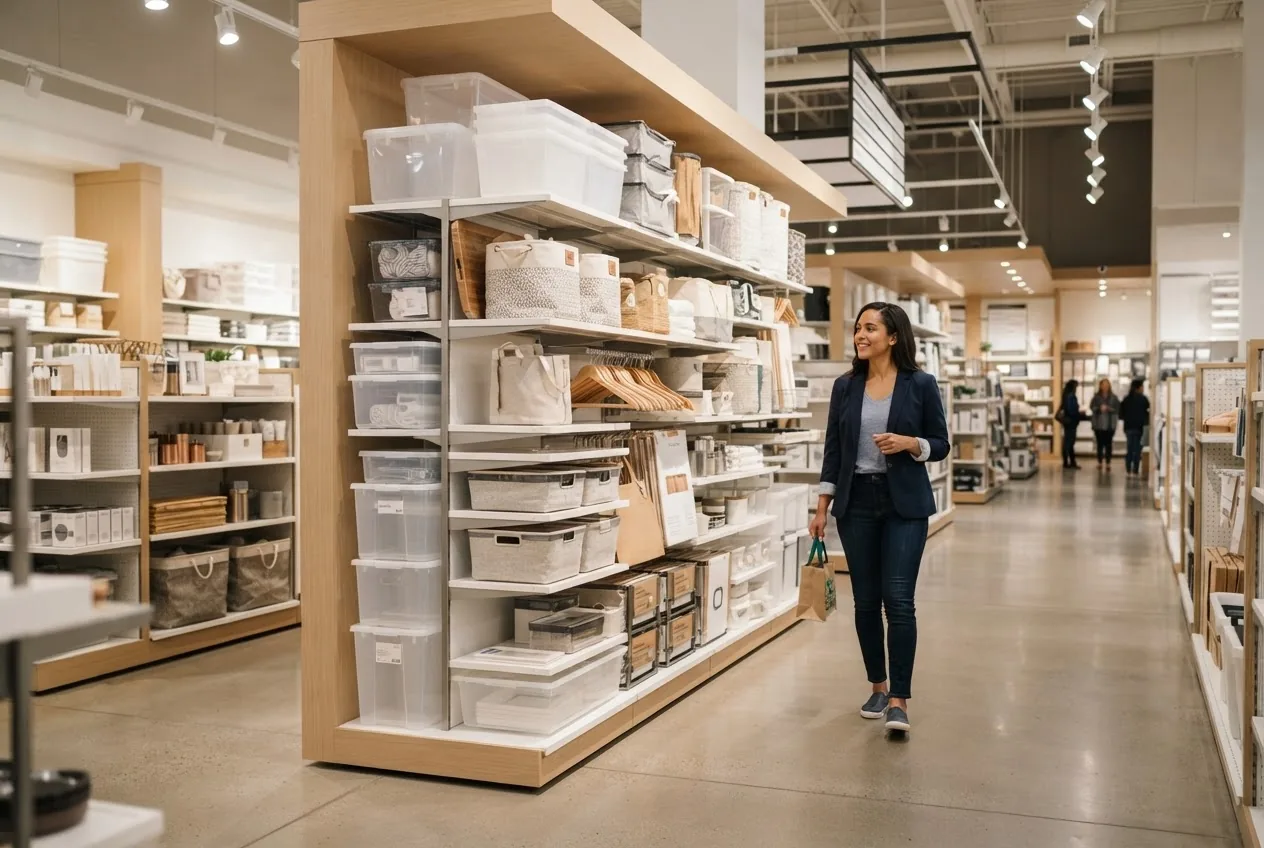
- Local hands-on stores: Compare and test ergonomics and wheel feel in person. For a hands-on shopping option, visit The Container Store King of Prussia.
- Used marketplaces: Good deals for one-off needs, but inspect wheels and lids closely for wear.
If you are moving large volumes or need containerized storage beyond bins, compare costs with freight solutions; see our guide on freight container rental costs.
Price examples (2024):
- 45–60 quart rolling tote (basic): $25–$50
- Medium-duty rolling tub (100–150 lb rating): $60–$120
- Heavy-duty rolling bin with metal axle and locking casters: $150–$350
- Replacement caster set (two swivel + two fixed): $32–$90
Transition: the final major section covers maintenance and long-term care to maximize value and lifespan.
Maintenance and Care Tips for Storage Bins with Wheels
Regular care extends wheel life, prevents damage to bins, and keeps mobility smooth. Follow this compact program:
- Clean after heavy use: Rinse out dirt and debris; use mild detergent and water. Avoid prolonged soaking of metal axles.
- Dry thoroughly: After washing or use in wet environments, dry wheels and axle areas to prevent corrosion.
- Inspect for cracks: Check the bin shell and lid before stacking; small cracks near the lip can rapidly grow under load.
- Replace worn wheels: Swap wheels showing flat spots, significant tread wear, or wobble. Matching wheel diameter and material keeps handling predictable.
- Lubricate swivel bearings: Use dry silicone spray every 6 months or after water exposure. Avoid oil-based lubricants in dusty environments.
- Store nested when possible: If space allows, remove wheels or use removable dollies to allow compact stacking in off-season storage.
- Protect against UV and cold: For long outdoor exposure add UV covers or move bins under shelter; cold climates may require switching to polymer blends rated for lower temperatures.
Small, consistent maintenance reduces the risk of failure during a move. If a wheel fails during a move, transfer contents to another bin rather than attempting a temporary patch that could fail and cause damage or injury.
Transition: finishing up, here are final recommendations and when to call for professional help.
Conclusion – Choosing the Right Storage Bin with Wheels for Your Needs
Choosing the right storage bins with wheels comes down to matching mobility features, load capacity, and environmental durability to your specific use case. For frequent moving choose heavy-duty tubs with metal axles and rubber or pneumatic wheels; for closet organization, lightweight rolling totes with integrated lids are ideal. Remember to always add a 20% safety margin to load calculations and test a prototype bin under expected conditions before committing to a bulk purchase.
Actionable next steps:
- Measure doorways, vehicle openings, and intended storage stacks (record in inches or cm).
- Weigh representative contents and add 20% margin to determine capacity target.
- Buy one prototype bin to test wheels, handle ergonomics, and lid interlock before a large order.
Common mistakes and how to avoid them (from my field experience)
I once recommended a budget wheeled tote for a homeowner moving heavy boxes; they later reported broken wheels after the first move. Lesson learned: never assume small inline wheels will carry heavy, repeated loads. Now I always prototype under a 20% heavier than expected load for 50 feet to test real conditions.
I also saw users stack wheeled bins without verifying stack ratings. The bottom bin deformed and lids failed. My rule: if the stack rating is not explicit, limit stacks to three and use platform dollies under bottom bins.
Compact checklist before you finalize a purchase
- Measured doorways and vehicle openings? (yes/no)
- Weighed typical and heaviest items and added 20% margin? (yes/no)
- Selected wheel type appropriate for primary surfaces? (yes/no)
- Tested handle ergonomics at comfortable pull height? (yes/no)
- Verified stack rating or decided on maximum safe stack height? (yes/no)
- Checked availability of replacement parts (wheels, axles, lids)? (yes/no)
When to call a professional
Call a professional mover or storage specialist when you need to transport more than 1,000 lbs of boxed goods, when loads are irregular and need custom rigging, or when storage will be multi-month outdoors and you require climate control or certified containerization. For large-scale storage beyond bins, refer to our freight and portable storage guides.