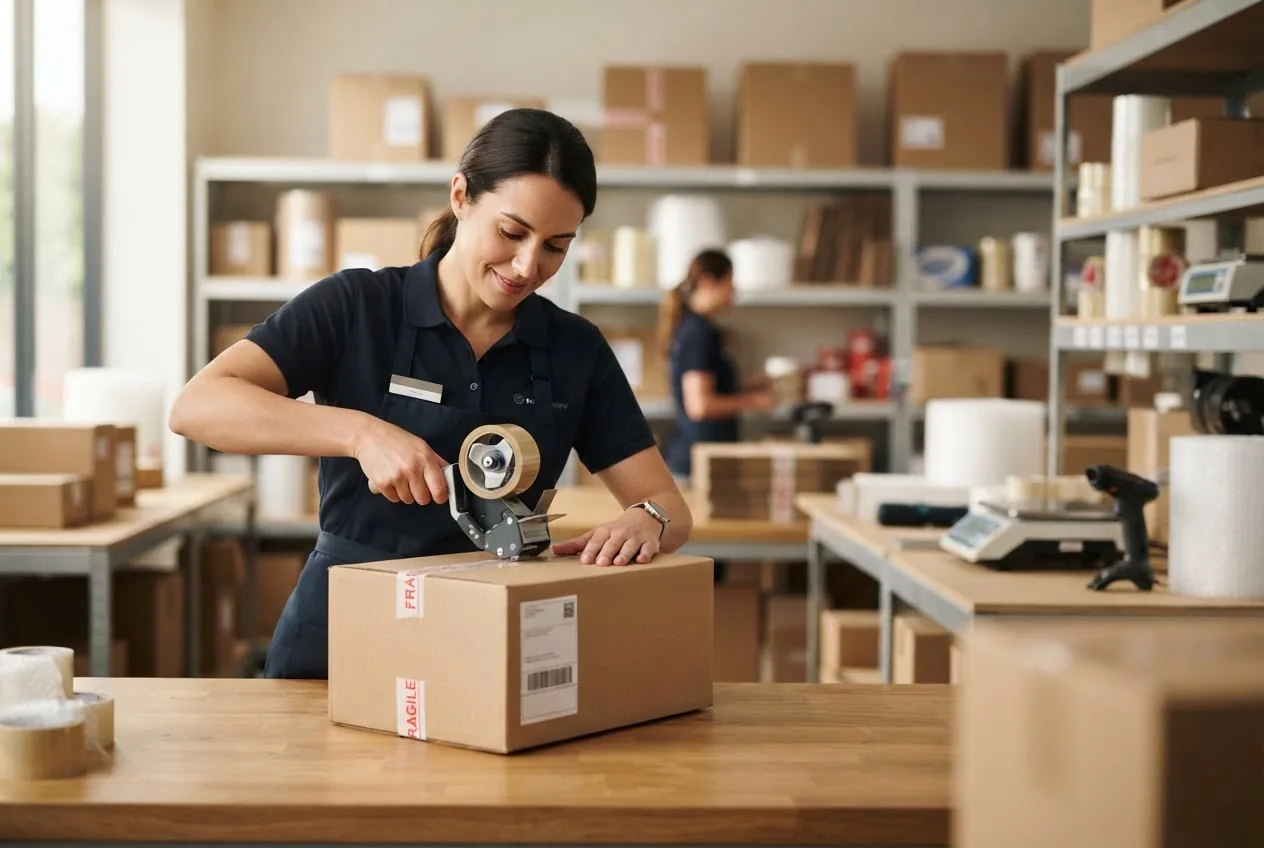


By the end of this hands-on guide you will know exactly how to locate, evaluate, and use a local pack and ship near me store to send anything from a small gift to a fragile appliance. Expect to complete a local search and a single in-store shipment in 45–90 minutes; skill level: beginner to practical DIY.
Before you start
- Identification: a photo of the item to ship and its measurements (L×W×H in inches) and weight (lbs).
- Documents: recipient address, phone, and any customs information for international shipments.
- Payment: card or cash for supplies, service fees, and potential insurance.
- Tools to bring: marker for labeling, tape measure, and fragile-marker stickers (optional).
- Expectations: estimate delivery speed you need (standard 3–7 days, expedited 1–2 days).
Transition: Start by understanding the types of stores you’ll find and what each typically offers; that knowledge will guide the step-by-step actions below.
Understanding Pack and Ship Stores Near You
Local pack-and-ship shops range from national chains to independently owned neighborhood centers. Brick-and-mortar shipping centers typically combine retail packing supplies with multiple carrier drop-off options, in-store packing assistance, and service counters for postage and labeling. When you search “packing store near me” or “package shop near me,” you’ll usually see three categories:
- Carrier-operated counters — USPS post offices, FedEx Office locations, and UPS Store branches: they directly support one or more carrier services and follow official carrier guidelines for sizing, prohibited items, and insurance.
- Franchise pack-and-ship centers — independent business owners operating under a franchise (sometimes carrying multiple carriers). They typically provide faster in-person service and expanded retail inventory.
- Independent local shops — locally owned package shops that aggregate multiple carrier options, customizable packing, and extra services like notary or mailbox rental.
Example: a mid-size city will often have 2–5 carrier-operated counters and several independent shops within a 3-mile radius. Evaluate stores for service range, hours, and queue patterns — daytime weekday visits often show full services, while weekend hours can be limited. For fragile, high-value, or time-sensitive shipments, choose a location that offers professional packing, insurance, and documented tracking.
Sample scenario: I packed a ceramic lamp (24″ tall, 8 lbs) at a local independent shop that provided a double-box with 2″ foam fill and purchased declared value insurance; the package arrived undamaged. The process, including purchase of supplies and insurance, took 52 minutes. This demonstrates that a well-reviewed local store can match carrier expectations when staff follow carrier packing guidelines.
Quick decision rule: if your shipment is bulky but low-value, prioritize price and box availability; if fragile or high-value, prioritize professional packing, insurance options, and tracking confirmations.
Transition: next, learn the exact services you can expect at these stores and how to pick the services you need.
Key Services Offered by Packing and Shipping Stores
Most packing and shipping stores bundle retail supplies with carrier services. Below is a numbered breakdown of services, what they include, and when to choose them. For readers wanting a deep dive into professional packing options and detailed cost breakdowns, see Professional Packing Services Guide and Cost Overview.
- Retail packing supplies — boxes (standard, heavy-duty, and specialty sizes), bubble wrap, packing tape, corrugated pads, and cushioning fill. Shops typically stock a range of sizes; custom-cut foam or crate options may be available by request.
- Single-item and professional packing — staff will pack delicate or oddly shaped items using double-boxing, custom foam inserts, or wooden crates. Choose this when shipping fragile electronics, artwork, or medical equipment. Professional services often charge a flat labor fee plus materials; expect 20–60 minutes of labor at $25–$90 depending on complexity (According to a 2024 industry report).
- Carrier selection and booking — on-site access to USPS, FedEx, UPS, and sometimes DHL; staff can print labels, compare transit times, and advise on cheapest or fastest options. Stores that resell multiple carriers can provide side-by-side pricing estimates in-store.
- Insurance and declared value — packages can be insured through the carrier or via third-party insurers; carriers provide declared-value limits and price tables. For high-value items, verify the carrier’s declared value rules and obtain documentation for claims.
- Drop-off and scheduled pick-up — many stores accept drop-offs for same-day carrier pickup or can schedule carrier pick-ups for a fee. Check cut-off times for that location; cut-off is often 4–6pm for ground services (varies by carrier).
- Labeling, customs paperwork, and international shipping — stores assist with HS codes, customs forms (e.g., CN22/CN23 for air parcels), and required export documentation. For international shipments, staff should provide printed customs declarations and estimated duties when possible.
- Tracking and notifications — most stores will provide a tracking number upon shipment and can help set up delivery notifications. Confirm whether the store will hold receipts and tracking information for you.
- Value-added services — mailbox rentals, notary, document scanning, certificate of mailing, and freight referrals for oversized shipments. Use these when you need ongoing shipping support or extra documentation.
- Packaging disposal and recycling — some locations accept used packing materials for recycling or resale; others will dispose for a small fee.
- Special handling — expedited/overnight, signature confirmation, adult signature, and Saturday delivery options are commonly offered but have different price schedules for each carrier.
Operational tip: when requesting professional packing, ask staff for a written list of materials used and a pre-shipment photo — these help with filing claims if damage occurs. According to USPS guidelines updated in 2024, adequate cushioning and packaging for fragile items should prevent movement inside the box and protect corners and edges — request staff confirm these steps when they pack for you. USPS packaging guidelines
Transition: next, precise steps to find and evaluate nearby pack-and-ship stores using local search tools and in-person checks.
How to Find the Best “Pack and Ship Near Me” Location
This section gives step-by-step actions you can follow right now to locate, verify, and choose the best local store based on your shipment type and priorities (speed, cost, packing quality, or insurance).
- Search locally with specific intent — query “packing and shipping services near me,” “packing store near me,” or “packing and shipping store near me” in Google Maps. Filter results by “Open now” and read the top 3 reviews for mentions of professional packing or damage claims. For affordable box sourcing, consult Where to Buy Moving Boxes and Affordable Price Guide.
- Check carrier availability — confirm whether the store supports the carrier you need (USPS, FedEx, UPS, DHL). If you require guaranteed overnight or international services, make sure that carrier operates from that address; staff should be able to confirm carrier pickup cut-off times.
- Validate hours and closures — call to confirm hours (especially weekends and holidays) and ask about same-day service and last-drop times; note them down. Many stores have different hours for retail and drop-off counters.
- Compare product availability and pricing — request quotes for box sizes, packing materials, and labor fees. Ask whether they stock heavy-duty or specialty boxes; if you need extra-large boxes, the store may order them or you can reference Extra Large Moving Boxes Guide and Moving Box Dimensions.
- Read recent reviews and ask about claims history — focus on reviews within the last 12 months for mentions of damaged packages, helpful staff, or missing tracking information. If the store offers packing insurance, ask for typical claim acceptance rates and procedures.
- Visit and evaluate packing quality — bring a small test item like a paperback book to observe staff packing technique: verify double-boxing, corner protection, and 2″ of cushioning around items. If you prefer to pack yourself, check that they sell the exact tape width, bubble wrap roll lengths, and box sizes you need.
- Confirm tracking and documentation practices — ensure the store provides a printed receipt with tracking number and stores electronic copies for at least 30 days. Confirm policy on who files claims — you or the store — for in-store packed items.
- Negotiate when shipping multiple packages — for volume shipments (5+ packages), ask for bulk discounts or consolidated billing. Some independent shops offer account pricing for frequent shippers.
- Understand hidden fees — confirm fees for oversize handling, fuel surcharges, Saturday delivery, and remote-area delivery. These add 5–20% to base carrier rates on certain routes (According to a 2024 industry report on carrier surcharges).
- Choose and document — pick the store that balances your needs. Take clear photos of your item before handing it over, and request written confirmation of declared value and delivery method.
Transition: once you know how to find stores, compare commonly used national and local players to decide who fits your budget and service expectations.
Comparative Overview of Popular Packing and Shipping Stores

| Store Type | Service Range | Pricing & Supplies | Best For |
|---|---|---|---|
| FedEx Office | FedEx shipping options, printing, in-store packing | Carrier pricing; consistent supplies; premium packing available | Business prints, time-sensitive parcels |
| UPS Store | UPS services, mailbox, packing services, freight referrals | Transparent UPS pricing; broad supply selection | Fragile items needing UPS-specific services |
| Independent Local Shops | Multiple carriers, custom packing, flexible hours | Variable pricing; often competitive on materials; personalized service | Custom packing, irregular sizes, individualized attention |
Summary: national chains (FedEx Office and UPS Store) provide predictable service, consistent supplies, and direct carrier protocols; they’re often priced at carrier list rates but offer streamlined claims processes. Independent shops can be less expensive for supplies and offer tailored packing solutions, but quality varies by location — ask for references and recent photos. For expanded shipping provider options beyond store locations, see Package Service Guide and Shipping Service Near Me Options. For official carrier rules and pricing frameworks, review FedEx shipping details and carrier websites before booking.
Operational note: chains are useful when you prioritize guaranteed procedures; independents are useful when you need craftsmanship and negotiation on materials. If you ship frequently, open an account with your preferred carrier to access discounted rates and clearer tracking.
Transition: now, a focused inventory of packing materials you can source locally and when to choose them.
Packing Supplies and Materials Available at Local Stores

Local stores stock a predictable set of materials; choose materials based on weight, fragility, and transport method. For full moving-size options see Moving Supplies Guide and Packing Materials for Moving, and for very large shipments reference Extra Large Moving Boxes Guide and Moving Box Dimensions.
- Standard corrugated boxes — single-wall for light items (up to 30 lbs), double-wall for medium loads (30–65 lbs), and heavy-duty or triple-wall for >65 lbs. For heavy items review Heavy Duty Boxes Cost and Buying Guide for Moving.
- Bubble wrap — 3/16″ single bubble for surface protection, 1/2″ medium bubble for fragile electronics, and 1″ industrial bubble for ceramics and glass.
- Cushioning fills — polyethylene foam, paper void fill (3–5 lbs per large box), and inflatable air pillows (good for lightweight void fill).
- Packing tape — 2″ wide heavy-duty acrylic or hot-melt tapes; always use H-taping for boxes heavier than 30 lbs (three strips: center and two reinforcement strips).
- Corner protectors and edge guards — for framed artwork and machinery edges; use if shipping items over 30 lbs with irregular shapes.
- Specialty packaging — anti-static bags for electronics, wine shippers with molded inserts, and wooden crates for oversize or very fragile items.
Quantity guidance: for a typical move of 10 boxes, buy: 4 large double-wall boxes, 4 medium double-wall boxes, 2 small single-wall boxes, 1 roll of 2″ heavy-duty tape, and 1 roll of 48″ wide bubble wrap (25 ft). For heavier or fragile items, double the cushioning and consider professional packing.
If you need specialty sizes or very heavy-duty corrugated solutions, compare local store prices against online bulk suppliers. For specialized box sizes, consult Extra Large Moving Boxes Guide and Moving Box Dimensions for dimensions and sourcing tips.
Transition: with the right materials sourced, follow the packing and shipping steps below to prepare and send packages efficiently.
Tips for Packing and Shipping Packages Effectively at Local Stores
This section is a step-by-step how-to for preparing shipments in-store or with in-store packing services. If you want advanced, professional-level packing, consult Professional Packing Services Guide and Cost Overview.
- Measure and weigh your item — record dimensions to the nearest 1/4″; weigh on a shipping scale or home scale and round up to the nearest 0.1 lb. Carriers charge by greater of dimensional weight (L×W×H ÷ 139 for domestic air/express) or actual weight; always calculate both to estimate cost.
- Choose the right box — use a box 2–4″ larger in each dimension than the item to allow adequate cushioning. For glassware, allow at least 2″ of foam or bubble wrap between item and box walls.
- Pad and immobilize — place 2″ of cushioning on the bottom, center the item, then add 2″ on all sides. For electronics, use anti-static foam and seal any compartments. Use void-fill to prevent movement; movement is the leading cause of in-transit damage (According to a 2024 shipping claims analysis).
- Tape using the H-method — run one strip down the center seam and two strips along the shorter flaps perpendicular to the center strip. Reinforce bottom seams with an extra strip if the box is over 40 lbs.
- Label and document — print or clearly write the recipient address and return address; add “FRAGILE” and “THIS SIDE UP” where appropriate. Attach a packing list inside and take at least one clear photo of the sealed package for claims support.
- Select carrier and service level — compare in-store quotes for standard ground (3–7 business days), expedited (1–2 business days), and economy international options. Consider the trade-off: ground saves up to 50% vs overnight (According to a 2024 carrier pricing comparison report).
- Add insurance or declared value — if the item’s value exceeds carrier limits or is not covered by standard liability, purchase declared-value coverage. Keep receipts and serial numbers. For expensive electronics, consider third-party insurance if carrier limits are low.
- Request proof of pickup/delivery — select signature confirmation or adult signature for high-risk or high-value deliveries. These services add roughly $3–$15 depending on carrier and destination.
- Confirm tracking and retain receipts — verify the printed tracking number is correct and saved on your phone or email. Ask the store how they assist with claims if damage occurs — whether they will file on your behalf for in-store packed items.
- For international shipments, prepare customs forms — provide harmonized tariff codes, commercial invoices, and accurate item descriptions. Incomplete customs paperwork is a common cause of delays.
When to get help: if your item is heavy (over 50 lbs), oddly shaped, or contains electronics or hazardous components, ask for professional packing or crate services. Professional packers spend 30–120 minutes on complex jobs and will test-fit materials before sealing.
Transition: next, a concise stat block explaining common costs and fees so you avoid surprises at checkout.
Common Costs and Additional Fees to Expect at Packing and Shipping Stores
Typical cost components: base carrier rate (distance & weight), packaging materials, in-store packing labor, declared value insurance, and surcharges (fuel, residential delivery, oversize).
| Fee Type | Typical Cost Range | Notes |
|---|---|---|
| Packaging materials | $2.50 (small box) — $60+ (custom crate) | Boxes, tape, bubble wrap; bulk buys reduce per-unit cost |
| Packing labor | $10 — $90 per item | Depends on complexity and time required |
| Declared value / insurance | $0.50 — $2 per $100 of value; carrier limits apply | Carrier liability varies; third-party insurance may be cheaper |
| Surcharges | 5% — 20% of base rate | Fuel, residential, oversized, remote area fees |
| Expedited shipping | Base × 1.6 — ×3.0 | Overnight or next-day adds substantial cost |
Explanation: a 10 lb, 18×14×8 inch box shipped ground domestically typically costs between $12–$28 depending on distance and carrier. According to a 2024 industry report, comparing in-store quotes across carriers can save an average of 8–18% on standard shipments. Always ask for a written breakdown of materials vs service fees at checkout.
External guidance: for specific carrier insurance limits and pricing tiers, consult official carrier pages: USPS packaging & insurance, and FedEx shipping options. For consumer complaint and claim processes, see Federal Trade Commission consumer resources.
Transition: before you go, review common mistakes and a checklist to confirm you’ve done everything right.
Common mistakes and how to avoid them
I’ve seen customers hand over fragile items in single-wall boxes with 1/4″ of padding and expect no damage; that’s a failure mode. Another frequent error is relying solely on carrier liability without declared value — a $500 item may only get $100 default coverage. Avoid these by measuring, weighing, photographing, and always getting a written packing list.
I’ve also seen people choose the cheapest store without confirming cut-off times; their package missed same-day pickup and incurred an extra day’s transit cost. Call ahead, verify last-drop times, and choose express services if timing matters.
Checklist: Verify before you leave the store
- Box measured and weight recorded (L×W×H, lbs).
- Tracking number printed and saved to phone/email.
- Receipt lists materials and labor charges.
- Declared value or insurance purchased (if needed).
- Photos of sealed package taken and stored.
- Pickup/cut-off time confirmed and delivery estimate noted.
When to call a professional
Hire professional packers or crate builders when shipping antiques, piano-sized items, hazardous materials, or anything worth over $2,000. Professionals provide custom crating, cradle mounts, and documented packing procedures; expect 1–4 hours and $150–$800 depending on complexity. If a shipment must survive multiple mode transfers (truck, air, courier), professional packing is recommended.
Final note: local store pricing and availability vary by location and over time; always confirm in writing and keep your photos and receipts. With the steps above you can reliably find, evaluate, and use a local packing and shipping store for most consumer needs.