

Allied Movers near me provide national and local moving services backed by valuation coverage options—released value and full value protection—plus optional third-party policies; this article explains their insurance types, service offerings for residential and commercial moves, verification steps, claims handling, and how Allied compares to other insured moving companies.
What is Allied Movers’ market presence and reputation?
Answer: Allied Movers (operating under Allied Van Lines and affiliated brands) is a national moving network with franchise and agent partners that serves residential and commercial customers across the U.S. and internationally, known for large-scale relocations, specialized services, and a broad customer base that includes households and corporate accounts.
Term: Allied Movers refers here to the Allied Van Lines network and its local agents and franchise partners that operate moves under the Allied brand.
Allied has operated as a major carrier in the U.S. for decades, combining company-owned fleets and independent agents to maintain national coverage and cross-country logistics. Their market presence includes:
- National network: agent and franchise model allows local pickup and delivery with centralized coordination for long-haul moves.
- Customer base: residential homeowners, corporate relocation programs, government and military contracts, and specialty items (pianos, artwork).
- Service areas: full coast-to-coast coverage, major metro regions and many regional service centers for consolidation and storage.
Reputation signals for Allied include national advertising, corporate relocation partnerships, and public complaint records across independent review platforms. According to a 2024 industry report, large national carriers (including Allied) accounted for a majority of interstate household moves by volume, which increases both visibility and complaint counts simply by market share.
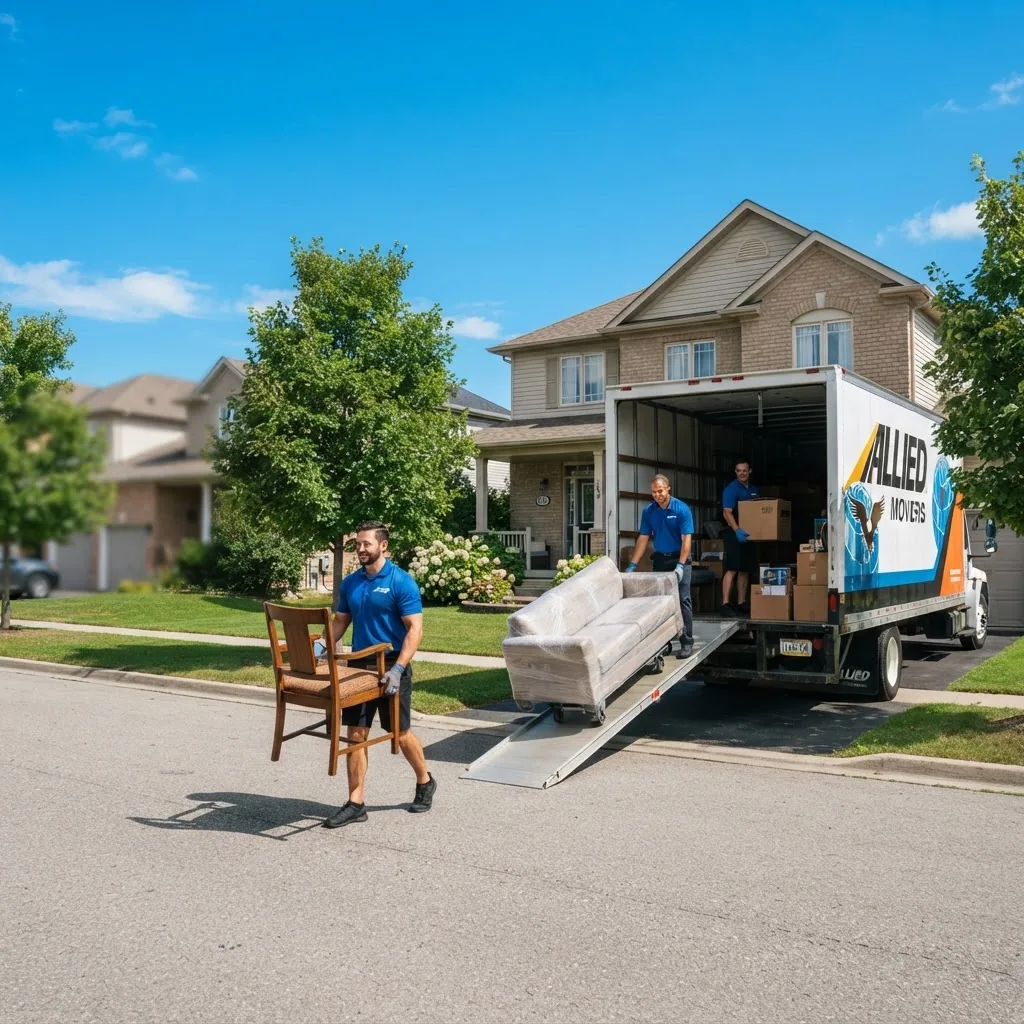
Practical takeaways: Allied’s strength is scale—good for complex and long-distance moves—but service quality varies by local agent, so assessing the local Allied office’s licensing, reviews, and insurance handling is essential for trust and suitability.
What insurance coverage does Allied Movers provide and how does it work?
Answer: Allied offers valuation coverage options that define their liability: standard released value protection (minimal liability per pound), and optional full value protection (replacement/repair at declared value); customers may also purchase supplemental third-party policies to fill gaps. Coverage depends on shipment type (household vs commercial) and contract terms.
Term: Valuation coverage describes the mover’s legally binding liability for lost or damaged goods during transit, expressed as released value or full value protection.

Released Value Protection – Basics and Limitations
Answer: Released value protection is basic coverage movers provide by law at no direct charge; it limits the mover’s liability to a low cents-per-pound rate per item and often excludes high-value items and certain damage types, leaving significant coverage gaps for homeowners.
Term: Released value protection is a default mover-provided valuation that limits liability to a specified cents-per-pound amount for each lost or damaged article.
How released value works with Allied:
- Default option: When customers do not select additional valuation, Allied’s agents typically apply the released value formula—e.g., a few dollars per pound per article—outlined in the bill of lading.
- Calculation example: A 50-pound sofa damaged under released value could yield a nominal payout (50 lb × cents-per-pound), often far below replacement cost.
- Common exclusions: pre-existing damage, wear-and-tear, hidden damage (subject to inspection), electronics, art, jewelry, and items not specifically declared.
Limitations and practical effects:
- Minimal payout: Released value rarely covers full replacement for unique, antique, or high-value items.
- Greater customer responsibility: If you have valuable items, released value leaves you exposed to significant out-of-pocket loss.
- Cost impact: Because it’s low-cost for the carrier, it reduces customer fees but transfers risk to the shipper.
Trade-offs: Released value is comparable to basic liability in other carriers and should be treated as a floor—consider it only for low-value household goods or when owning replacement cost is not a concern.
Full Value Protection – What It Covers and How It Works
Answer: Full value protection (FVP) is a paid valuation option where Allied agrees to repair, replace, or make a cash settlement for the declared value of damaged or lost items; it generally covers most household goods but includes deductibles, claim procedures, and exclusions that must be confirmed in writing.
Term: Full value protection is an optional mover-provided valuation where the mover is responsible for the replacement value or repair of lost/damaged items up to the declared value.
Key mechanics of Allied’s FVP:
- Declared value: You and Allied agree to a total declared value on the bill of lading or valuation addendum; this becomes the basis for claims.
- Remedies: Allied can repair damaged items, replace them with comparable items, or settle with a cash payment reflecting repair or replacement cost.
- Deductibles and limits: Policies can include per-claim or per-item deductibles and caps for certain categories (electronics, jewelry), so read the valuation terms closely.
- Proof and documentation: Claims require photos, receipts, and the original inventory—prompt documentation expedites settlement.
Examples and trade-offs:
- Residential move example: For a declared $20,000 shipment with FVP, Allied will be contractually responsible up to that amount for covered losses, subject to exclusions and deductibles in the bill of lading.
- Commercial moves: FVP terms can be negotiated into corporate contracts with higher limits and tailored handling protocols.
- Cost: FVP raises moving fees but dramatically reduces customer financial risk for mid-to-high-value moves.
Regulatory note: Under FMCSA rules, movers must provide valuation information and the choice to select higher valuation levels; see FMCSA for federal guidance on valuation and bill of lading requirements.
Optional Third-Party Insurance and Additional Coverage
Answer: Allied customers can supplement carrier valuation with third-party insurance from independent insurers or homeowners policies; these supplemental policies fill valuation gaps, increase single-item limits, and often offer broader coverage (e.g., accidental damage, mysterious disappearance).
Term: Third-party insurance means buying supplemental coverage from an independent insurer, not the moving company, to cover losses beyond the mover’s valuation limits.
Why consider third-party insurance with Allied:
- Broader coverage: Independent policies can cover accidental damage, concealed damage, and higher single-item limits often excluded under carrier valuation.
- Higher limits for valuables: If you have antiques, fine art, or jewelry, third-party insurers allow scheduled coverage at appraised values.
- Claims independence: Filing with an insurance company separates the settlement process from the mover’s liability procedures, which can speed resolution in some cases.
How to arrange third-party coverage:
- Inventory and appraisal: Create a detailed inventory and obtain appraisals for items above standard carrier limits.
- Policy comparison: Request supplemental movinginsurance quotes from specialty insurers; review covered causes, deductibles, and claim timelines.
- Coordinate with Allied: Notify the carrier that supplemental insurance is in place and understand how it interacts with the mover’s valuation (subrogation rights, primary vs secondary payor).
Common pitfalls and gaps:
- Overlap confusion: Some homeowners assume third-party insurance replaces carrier responsibility; typically, the mover’s valuation remains primary for operational accountability.
- Exclusion surprises: Certain causes (e.g., improper packing) may be excluded by either policy—clarify packing responsibilities before the move.
Industry guideline: The American Moving & Storage Association provides consumer tips on valuation choices and third-party policies; see moving.org for guidance aligned with industry standards.
What residential and commercial services does Allied Movers offer?
Answer: Allied offers a broad service portfolio including local and long-distance residential moves, corporate and commercial relocations, full-service packing and crating, loading/unloading, storage solutions, and specialty item handling (pianos, safes, art), with options for labor-only or turnkey moves.
Term: Residential moving refers to household moves; commercial moving refers to business, office, or corporate relocations, often requiring coordination and downtime minimization.
- Local and long-distance residential moving
Allied handles single-family homes, apartments, and senior moves with inventory management, furniture disassembly/reassembly, and optional packing. For apartment-specific constraints—elevators, building rules, narrow hallways—Allied agents often offer pre-move surveys and specialized moving plans. See the apartment movers service guide for apartment-specific tips.
- Commercial and corporate relocation
Allied manages office moves, department relocations, and corporate transfer programs, offering project management, IT asset handling, modular furniture moves, and scheduled downtime minimization. Commercial contracts often include negotiated valuation terms and service-level agreements (SLAs).
- Packing, crating, and specialty packing
Full-service packing (materials, labor), custom crating for fragile items, and white-glove services for art and antiques. Allied provides trained packers; customers can mix professional packing with DIY for cost savings.
- Loading, transportation, and unloading
Local agents coordinate vehicle selection (straight trucks or tractor-trailers) depending on shipment size, and handle loading/unloading with standard protections; additional liftgate or hoisting services are available for heavy or inaccessible items.
- Storage and consolidation
Short- and long-term warehouse storage, with climate control options for sensitive items. Storage agreements include inventory lists and insurance/valuation terms—confirm how storage time affects valuation and liability.
- Specialty item moving
Services for pianos, gun safes, vehicles, hazardous materials exemptions, and climate-sensitive art. For heavy appliances and safes, specialized equipment and crews are assigned—see appliance movers near me for appliance-specific guidance.
- Labor-only and self-service options
Some Allied agents offer labor-only crews to load/unload customer-rented trucks; customers can combine Allied labor with third-party trailer or container rentals for hybrid moves.
- Insurance and valuation add-ons
Carrier valuation selections (released or full value) and assistance arranging third-party insurance for high-value items are available. Packing service guarantees and custom handling add-ons may be contract-specific.
Practical service notes:
- Move planning: Allied typically includes a pre-move survey (in-person or virtual) to estimate labor, truck size, and valuation needs.
- Turnkey vs partial service: Customers choose between turnkey (Allied handles everything) or partial (DIY packing, Allied handles transport) to manage cost and risk.
- Supplies: For DIY packing, consider the best place to buy moving boxes to ensure quality materials that reduce damage risk.
Service selection tips: For apartment moves review building rules, for commercial moves require a written SLA and valuation clause, and for specialty items always request written confirmation of handling and insurance arrangements.
How can I verify Allied Movers’ insurance and service reliability near me?
Answer: Verify Allied’s local agent insurance and reliability by checking FMCSA registration and USDOT number, reviewing Better Business Bureau (BBB) ratings and complaint records, reading recent customer reviews, confirming agent-level certificates of insurance, and asking for written valuation terms and service guarantees.
Term: FMCSA registration is the federal registration and safety oversight system for interstate movers and carriers; the USDOT number identifies the carrier in databases.
- Check federal registration:
Search the carrier’s USDOT number and registration at the Federal Motor Carrier Safety Administration: FMCSA. According to a 2024 industry report, verifying USDOT records reduces the risk of hiring an unregistered interstate mover.
- Request proof of insurance and valuation terms:
Ask the local Allied agent for a certificate of insurance (COI) showing cargo coverage limits and the bill of lading or valuation addendum that details released vs full value protection. Insist the agent documents the chosen valuation on the contract.
- Review BBB and complaint histories:
Search Allied’s local agent office on the Better Business Bureau at BBB to view ratings, complaint volumes, and resolution records; AAA and industry associations also post dispute statistics.
- Read recent customer reviews and third-party ratings:
Scan Google Reviews, Yelp, and niche moving forums for same-market reviews (past 12–24 months) to identify recurring issues like late deliveries or claims denial patterns.
- Confirm licensing and local certifications:
For intrastate moves, verify state-level mover licensing—many states require separate registration for intrastate operations; request the agent’s local license numbers and check state regulatory sites.
- Validate service guarantees and SLAs:
For commercial moves, ask for a written Service Level Agreement that defines delivery windows, damage thresholds, and remedies. For residential moves, request any packing or service guarantees in writing.
- Get the contract and inventory in writing before move day:
Ensure the bill of lading lists the chosen valuation, pick-up/delivery windows, and an itemized inventory to support future claims.
External resources and E-E-A-T signals:
- FMCSA: federal registration, carrier safety ratings and legal valuation requirements—check FMCSA.
- BBB: local agent ratings and complaint trend data—check BBB.
- Industry association guidance: moving standards and valuation explanations at moving.org.
How does Allied handle common issues, claims and service problems?
Answer: Allied’s claims process generally requires prompt notification, documentation (inventory, photos, receipts), a formal claim submission to the local agent, inspection and repair/replacement or cash settlement per valuation; dispute resolution can involve agent-level appeals and escalation to national claims departments.
Term: Claims process describes the sequence: report damage, document, submit claim, carrier inspection, and settlement or denial with reasons.
Typical problems and Allied’s standard responses:
| Problem | How Allied typically addresses it |
|---|---|
| Damage during transit | File a claim with local agent within required timeframe; provide photos and inventory; Allied arranges inspection and repair or settlement per valuation. |
| Lost items | Search procedure initiated; if lost, claim proceeds based on valuation—released or full value. |
| Delays in delivery | Agent communicates revised windows; force majeure and operational constraints can apply—get timelines in writing. |
| Denied claims | Agent issues denial with reason; customers can escalate to national claims, provide additional documentation, or pursue mediation/arbitration per contract. |
Step-by-step filing process (practical):
- Report damage immediately on delivery and note exceptions on the bill of lading.
- Take dated photos of damage and damaged packaging.
- Collect receipts, appraisals, and itemized inventory entries.
- Submit a written claim to the local Allied agent and maintain copies.
- If denied, request written explanation and escalate to national claims office—retain all correspondence.
Processing timelines and expectations:
- Initial acknowledgement: typically within 7–14 days by the agent after submission.
- Investigation and repair/replacement: varied—simple claims may resolve in weeks; complex claims can take months.
- According to a 2023 industry survey, average household mover claim resolutions ranged from 30–90 days depending on complexity and documentation quality.
Dispute resolution options:
- Negotiation with agent or national claims office.
- Mediation or arbitration per bill of lading clauses.
- State consumer protection agencies for intrastate disputes, and FMCSA complaints for interstate issues.
Trust-building practices:
- Insist on documenting all exceptions and damages on the day of delivery.
- Keep an independent inventory and receipts to speed claims.
- Consider supplemental third-party insurance to streamline settlements for high-value items.
How does Allied compare to other insured moving companies?
Answer: Allied’s advantages are scale, national network, and corporate relocation experience; trade-offs include variable local agent quality and valuation differences—comparison with other insured movers should weigh coverage types, claim responsiveness, single-item limits, and written guarantees.
Comparison table: Allied vs ABF vs APT

| Carrier | Coverage Options | Service Strengths | Typical Limitations |
|---|---|---|---|
| Allied Movers | Released value; Full value protection; third-party options | National network; corporate relocation programs; specialty item handling | Variable local agent performance; valuation fine print |
| ABF Moving Company | Released and declared valuation; options vary by agent | Strong regional LTL (less-than-truckload) capabilities; good for consolidation moves | Less uniform agent network; scheduling constraints |
| APT Moving Company | Standard released; optional full value via agent | Local-service focus; competitive pricing for short moves | Smaller geographic footprint than national carriers |
Brief analysis:
- Coverage parity: Most large insured movers offer the same two basic valuation types; differences arise in per-item limits, deductibles, and claims responsiveness.
- Price vs coverage: Lower-cost carriers often rely more on released value default; premium carriers or negotiated contracts provide better full value protection terms.
- Service quality: National brands like Allied provide logistics advantages for long-distance moves, while regional or specialized movers may excel at local handling and responsiveness.
For readers comparing providers, the next step is a comprehensive cost and hiring guide: Moving Companies Near Me: Service Costs and Hiring Guide.
Other comparable carriers to review when weighing insurance and services:
- ABF Moving Company costs and services
- APT Moving Company service details
- best moving companies guide
What are the best practices and recommendations for choosing Allied Movers near me?
Answer: Choose Allied by verifying local agent licensing and insurance, selecting full value protection when needed, documenting inventory thoroughly, obtaining written service guarantees, and comparing agents with other insured movers for claims performance and responsiveness.
Summary recommendations:
- Confirm FMCSA registration and state intrastate licensing where applicable.
- Select full value protection for high-value household or commercial goods; supplement with third-party insurance for antiques or artwork.
- Document all items and pre-existing conditions with photos; sign and retain the bill of lading and valuation addendum.
- Ask for written timelines, SLAs for commercial moves, and packing guarantees for professional packing services.
- Compare local Allied agents with other carriers if cost or claims responsiveness is a priority—see the affordable movers guide if budget sensitivity is primary.
- For DIY or hybrid moves, evaluate equipment rental options—see cargo trailer rental guide—or consider labor-only Allied services combined with rentals.
- For budget alternatives, research the cheap movers guide, but weigh insurance and reputation carefully.
Action checklist before booking Allied:
- Get at least three written quotes from local agents with identical inventories and valuation choices.
- Request a COI and copy of the bill of lading showing valuation selection.
- Read recent BBB complaints and online reviews for the local agent.
- Decide on supplemental insurance for items exceeding carrier limits.
- Schedule a pre-move walk-through or virtual survey to lock costs and service commitments.
If your move includes apartment-specific constraints or heavy appliances, consult these resources: apartment movers service guide, and appliance movers near me. For supplies, check the best place to buy moving boxes.
What are common insurance claim denial reasons and how can Allied customers avoid them?
Answer: Common denial reasons include improper packing for fragile items, undisclosed pre-existing damage, failure to note exceptions at delivery, missing proof of value or receipts, and filing outside claim deadlines; customers avoid denials by documenting conditions, using professional packing, and adhering to claim timelines.
Typical denial causes and preventative steps:
- Improper packing: Fragile items packed by owner without professional materials may be excluded; mitigate by buying professional packing or using third-party insurance that covers owner-packed items.
- Failure to note damage at delivery: Always note visible damage on the bill of lading before signing; unsigned deliveries can complicate claims.
- Missing documentation: Keep receipts, appraisals, and photos to substantiate claims—without them, carriers may deny based on lack of proof.
- Late filing: Most carriers and third-party policies have strict filing windows—file promptly and request confirmation.
Allied specific tips:
- Ask the local agent for the specific time windows and documentation checklist for filing claims.
- Obtain written packing and service guarantees when purchasing professional packing from Allied.
- For high-value items, schedule an appraisal and add a scheduled value endorsement to any third-party policy.
Summary and recommendations for choosing Allied Movers near me
Answer: Allied is a strong option for long-distance, corporate, and specialty moves when you verify local agent licensing, choose appropriate valuation (full value for higher-risk moves), document inventory thoroughly, and consider supplemental third-party insurance where carrier limits are insufficient.
Key takeaways:
- Allied’s scale supports complex moves, but agent performance varies—agent-level verification is critical.
- Released value is low and often inadequate; choose full value protection or third-party policies for meaningful risk transfer.
- Document everything, keep receipts, and note exceptions on delivery to preserve claim rights.
Actionable next steps:
- Get written quotes with valuation options from local Allied agents and at least two competitors.
- Confirm FMCSA registration and local licensing, and request a COI for cargo coverage.
- Consider third-party insurance for art, antiques, and items over carrier single-item limits.
- Compare costs and service terms with broader guides if needed: affordable movers guide; for DIY equipment evaluate the cargo trailer rental guide; for cheaper alternatives weigh risks via the cheap movers guide.
Conclusion and CTA
Allied Movers near me can be a reliable partner when you confirm the local agent’s insurance, choose appropriate valuation (prefer full value for significant items), and document the move. For a broader comparison and hiring guidance, review the linked resources and request written valuation and COI from your local Allied agent before booking.