By the end of this guide you’ll know which rented moving bins fit your move, how to book and handle deliveries, the true cost including deposits and fees, and step-by-step packing and loading methods you can complete in 2–8 hours depending on move size. This guide assumes a basic DIY skill level: you can lift 30–50 lb comfortably and can assemble simple tote lids and straps.
Introduction to Moving Bins and Their Benefits
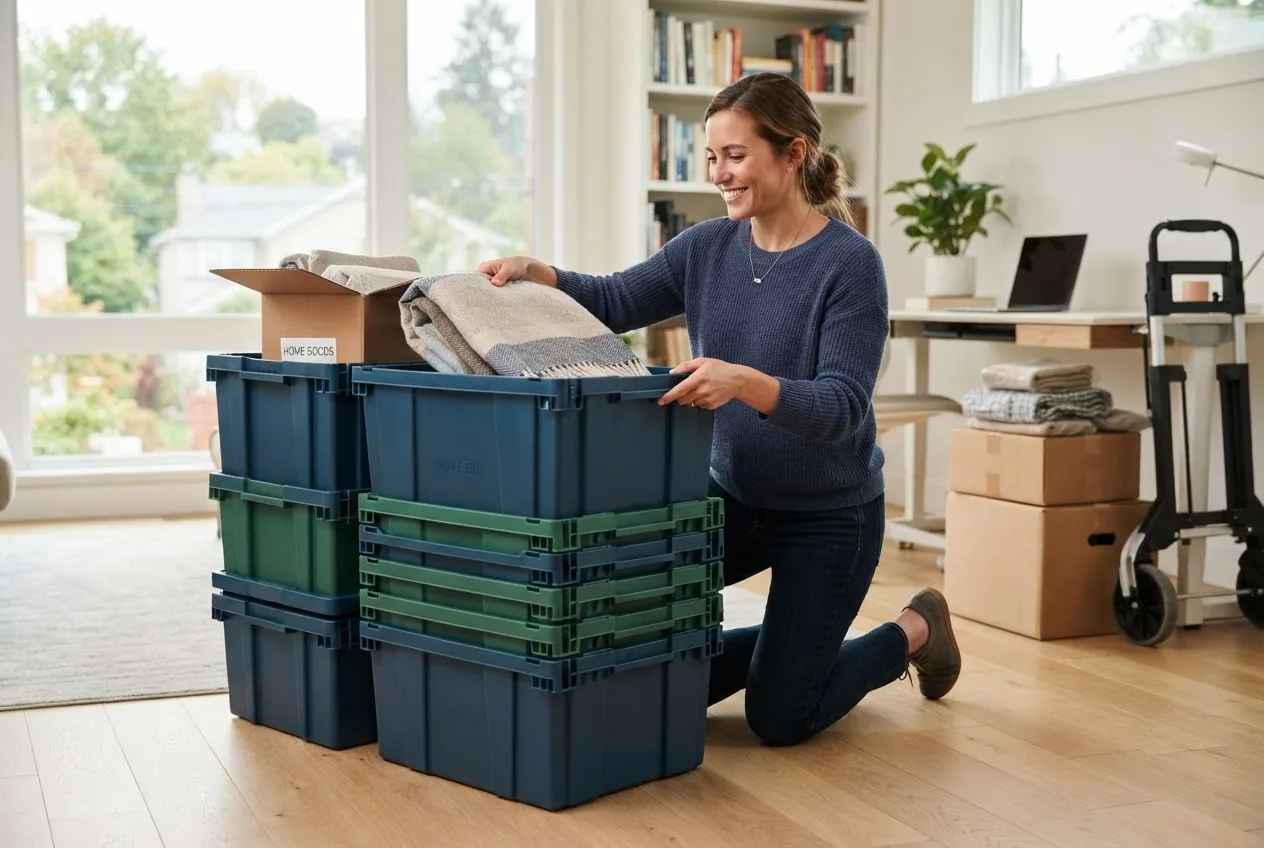
Moving bins are reusable plastic containers designed for transporting and short-term storage; they replace disposable cardboard boxes and simplify loading, stacking, and organization. They’re often made from high-density polyethylene or polypropylene, come with interlocking lids or secure clips, and are sized for manual handling and efficient van loading.
Key benefits at a glance:
- Convenience: Stackable and uniform sizes speed loading/unloading and make inventory simple.
- Cost-savings on waste: Reusable containers cut single-use box purchases and disposal fees.
- Eco-friendly: Similar to a reusable grocery bag model—rent, return, reuse. According to a 2024 industry report, rental reuse programs divert an estimated 120,000 tons of cardboard yearly from landfills, improving move sustainability.
- Protection: Rigid sides guard fragile items better than squashed boxes; padded inserts are available on request.
- Organizational tools: Standardized volumes, built-in label areas, and color coding make unpacking systematic.
Transition: Now that you understand the core benefits, let’s examine what bin types you can rent and how they differ practically.
Types of Moving Bins Available for Rent
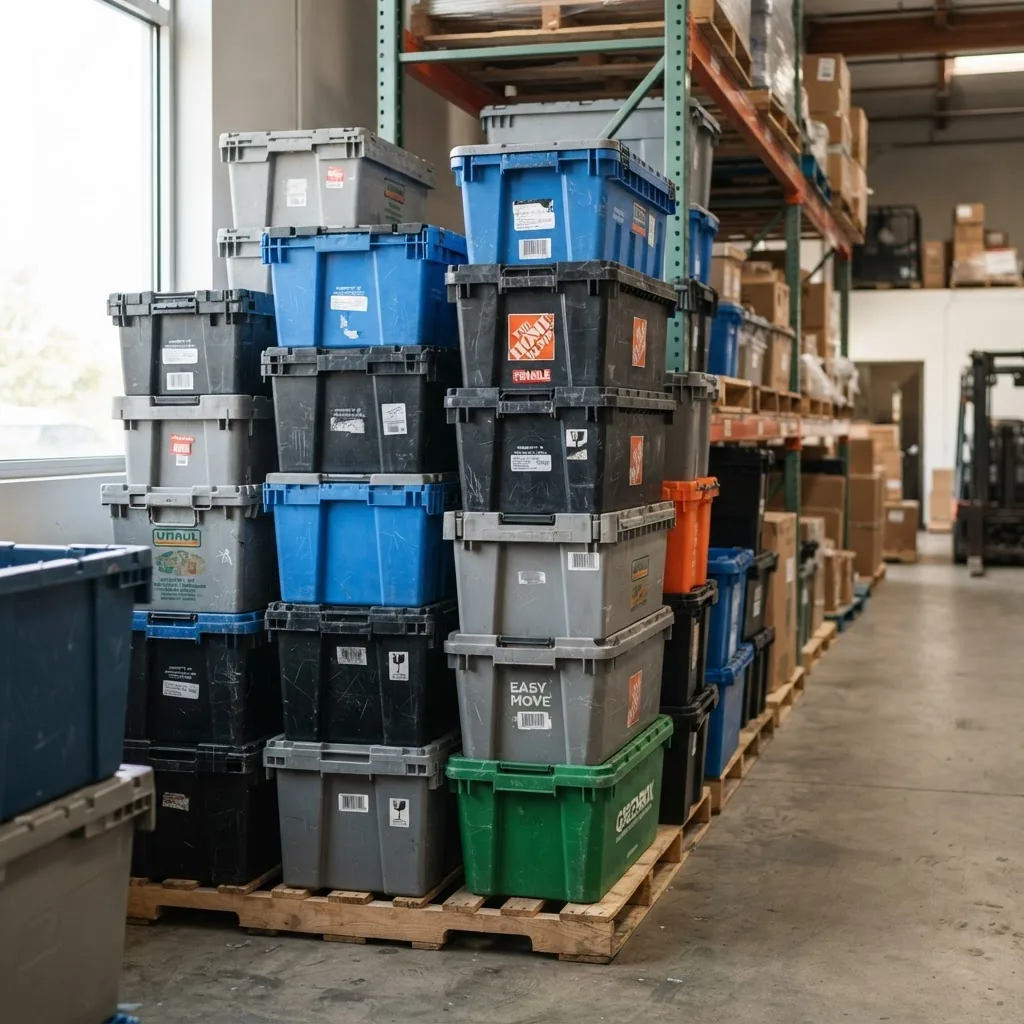
Rental fleets typically include several class types. Below is a practical comparison so you can pick the right container by dimension, material, and intended use.
| Type | Common materials | Typical dimensions (L×W×H) | Load capacity | Best for |
|---|---|---|---|---|
| Stackable moving bins | HDPE / PP plastic | 24″×16″×12″ (common medium) | 40–60 lb | General household items, books, linens |
| Moving crates (ventilated) | Durable plastic with vents | 22″×14″×14″ to 28″×18″×18″ | 35–75 lb | Clothing, linens, shoes — air circulation |
| Durable totes (with lids) | Thicker-walled HDPE | 30″×20″×20″ (large commercial tote) | 75–150 lb | Kitchenware, small appliances, bulk items |
| Wheeled storage bins | PP plastic with rubber wheels | Varied — often low-profile | 50–200 lb depending on axle | Heavy loads that need rolling |
| Specialty crates (dish/wardrobe) | Custom molded plastic | Varied: tall for wardrobe; padded for dishes | 20–100 lb | Fragile dishware; hanging clothes |
Notes on materials and durability: plastics like HDPE are common because they resist water, flexing, and UV; some fleets use recycled plastics. For safety and design guidance, vendors often reference standards such as ASTM container handling guidelines and ISO stacking-load recommendations — see industry resources for exact specs: ASTM and ISO.
If you prefer rolling bins, see storage bins with wheels options for buying alternatives.
storage bins with wheels options
Transition: With types understood, next we walk through the rental lifecycle so you can book, receive, pack, and return bins without surprises.
How Moving Bin Rental Works: Step-by-Step Guide
This hands-on guide walks you through booking, delivery, packing, pickup, and return. Expect to spend 30–90 minutes on booking, 1–4 hours packing for a small move, or 4–10+ hours for a 3+ bedroom home. Below is a step-by-step procedure with a fictional customer walkthrough to show real-world decisions.
Before you start
- List of items to move by room (count large items and approximate box-equivalents)
- Phone or computer to book; credit card for deposit
- Optional: moving blankets, ratchet straps, markers / labels
- Tape measure to check three-bin stacks and vehicle clearance (measure van load height)
- Estimate needs and choose bin sizes. Count belongings by room: a small studio often needs 10–18 medium bins (24″×16″×12″), a 2-bedroom needs 30–45 bins, and a 3+ bedroom home needs 60+ bins including large totes for kitchen and linens. Fictional walkthrough: Jamie, moving a 2BR, inventories four boxes of books (3 bins each), 8 bins for clothes, and 6 bins for kitchen; total ordered = 30 medium bins + 6 large totes.
- Compare rental options and book a fleet. Ask providers about daily vs. flat-week pricing, delivery windows, deposit amounts, and cleaning policies. Reserve at least 2 days in advance for urban areas; 7–14 days for peak season. Payment methods commonly accepted: credit card, ACH, or authorized invoice. Include a fictional choice: Jamie selected a 7-day rental with a 1-week flat rate and a refundable $50 per-bin deposit.
- Schedule delivery and measure access points. Provide exact address, elevator access (height and weight limits), driveway slope, and parking requirements. Delivery crews typically ask for a 2–4 hour delivery window. Tip: Reserve a parking spot permit if the truck needs curbside stop longer than 30 minutes.
- Receive and inspect bins on delivery. Check the number of bins, lid condition, and cleanliness. Note any pre-existing damage on the delivery sheet and take timestamped photos for your records. Fictional walkthrough: Jamie photographed scratched corners and one cracked latch before signing the delivery receipt to avoid charges.
- Pack strategically by weight and fragility. Pack heavy items (books, tools) in small/medium bins; light bulky items (pillows) in large totes. Use towels or bubble wrap for fragile items and place them in the center of a bin surrounded by softer items. Maximum practical weight per hand-carried bin: 40–60 lb; manufacturers often list a design load — do not exceed it.
- Label and inventory each bin. Use a consistent label format: room code (KIT, BDR1), content summary, and priority (UNPACK FIRST). Keep a digital inventory (photo + list) mapping bin ID to contents. This reduces unpacking time by 30–50% in typical moves.
- Stack and load efficiently. Place heavier bins on the bottom and secure stacks with ratchet straps in the truck or van. Use tie-down points and ensure stack height does not exceed vehicle load clearance. For long-distance moves where the truck will be driven over 6+ hours, limit stack height to avoid shifting. Case example: For a local move, Jamie stacked bins five high in the van but limited to three high for the long-haul carrier to prevent tipping.
- Return, pickup, or extend rental. When done, schedule pickup within the booked window. If returning at a depot, confirm drop-off hours. If extending, inform provider at least 24–48 hours before the due time to avoid late fees. Providers typically inspect returned bins for damage and cleanliness before refunding deposits.
- Handle disputes and damage claims. If a bin is damaged during rental, document it immediately and contact your provider. Many companies charge repair or replacement fees; consumer guidance and common dispute resolutions are referenced by agencies like the Federal Trade Commission — see safety and consumer advice at FTC moving tips. Keep photos and delivery receipts for protection.
- Final cleanup and inspection. Clean visible dirt, remove personal tape and labels, and ensure lids are closed. Providers usually require bins returned swept and free of food residue to avoid sanitation fees.
Real-world rental snapshot: A local 2-bedroom move using 36 medium bins and 6 large totes for two-day rental: delivery + pickup included, refundable deposit $300, flat 3-day rate $220, sanitation fee waived after documented photos. This reflects typical 2024 carrier pricing ranges and policies.
Common mistakes and how to avoid them
I’ve seen renters underestimate bin counts and overpack bins to save costs — that often led to broken lids or back strain. I learned to always overestimate by 10–15%, measure doorways and elevator heights, and never exceed 50–60 lb per hand-carried tote.
Another mistake: not photographing pre-existing damage or failing to note elevator/stair restrictions. I now always take timestamped photos and email them to the provider immediately after delivery.
Quick verification checklist
- Delivery condition photographed and logged
- Inventory spreadsheet created with bin IDs
- Labels applied to all bins with room codes
- Stack heights verified for vehicle clearance
- Return/pickup scheduled within rental window
When to call a professional
If you need to move pianos, hot tubs, or antiques requiring white-glove handling, or if the move requires complex logistics (multiple pickup/delivery locations, international transport), hire licensed professional movers or specialty shippers. For regulatory advice on container handling standards, consult ASTM.
Transition: Next, we’ll break down how pricing typically works so you can budget accurately and spot hidden fees.
Costs and Pricing Structures for Moving Bin Rentals
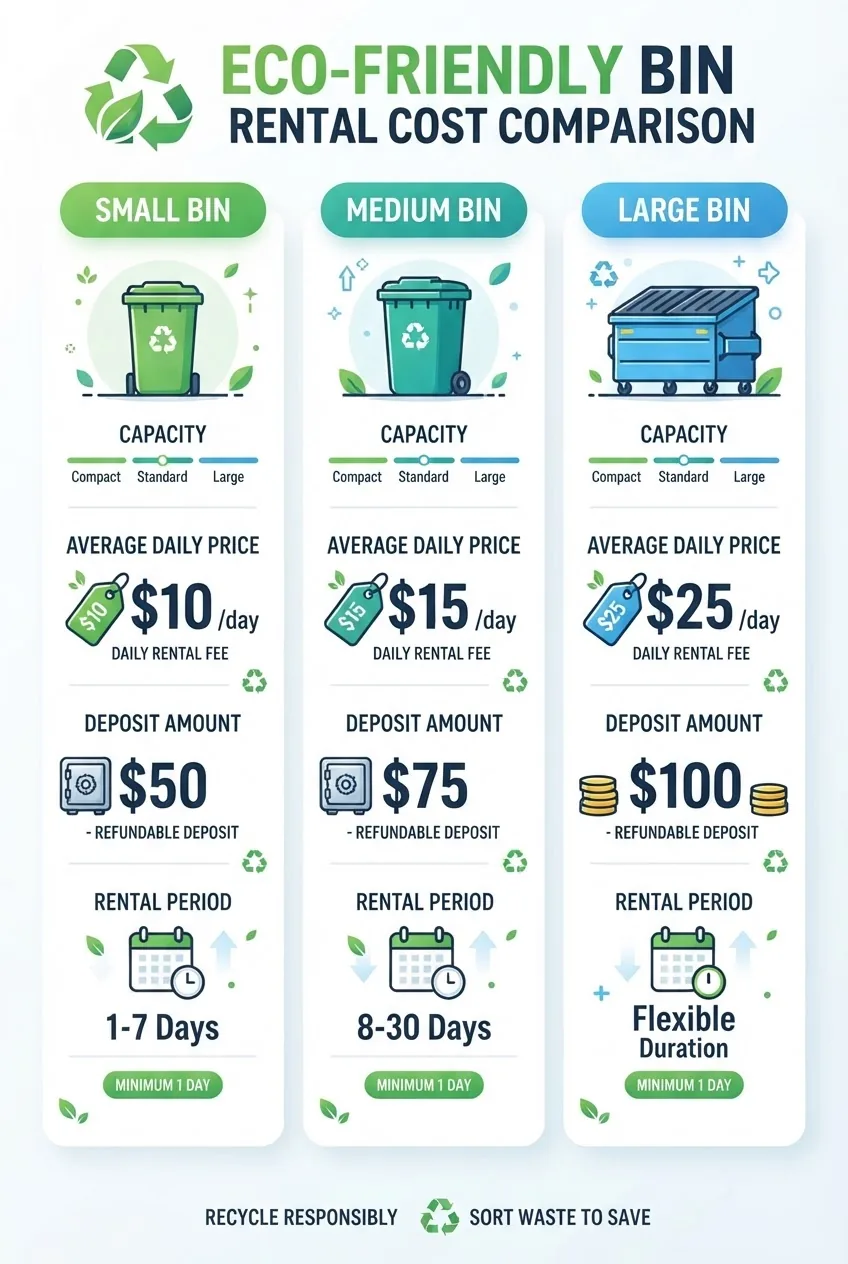
Rental pricing varies by provider, region, and timing. Below are typical cost components and concrete examples drawn from a 2024 industry survey.
Common fee components:
- Daily or flat-period rental fee: Charged per bin or per set for a defined period (e.g., daily, 3-day flat, weekly)
- Delivery / pickup charges: Often tiered by distance or included for local deliveries over a minimum order
- Refundable deposit: Per-bin or flat security deposit returned if bins are clean and undamaged
- Sanitation or cleaning fees: Applied if bins returned dirty or with food residue
- Late fees: Daily penalty for each day past due
- Damage or replacement fees: Charged if a bin is cracked, missing a lid, or beyond repair
Pricing examples (2024 industry averages):
- Small bin (12″×12″×8″): $1.25–$2.50 per day; deposit $10–$20
- Medium stackable bin (24″×16″×12″): $2.50–$4.50 per day or $3.50–$5.50 flat rate for a 3-day package; deposit $8–$25 per bin
- Large tote (30″×20″×20″): $4–$8 per day; deposit $20–$50
- Wheeled bin: $6–$12 per day; deposit $30–$75
Example total for a 2-bedroom local move (36 medium bins + 6 large totes):
- Flat 3-day bin package: 36 × $4 + 6 × $6 = $144 + $36 = $180
- Delivery + pickup: $60–$120 depending on distance
- Refundable deposit: 42 bins × $15 average = $630 (held during rental)
- Estimated total outlay at pickup: $240 + $630 = $870 (deposit refunded within 7–14 days if bins returned clean)
Cost-saving tips:
- Book a flat multi-day package when your move takes place over a weekend — flat packages often beat daily rates.
- Bundle delivery with neighbors or multiple household orders if the provider offers route discounts.
- Return bins in a single drop-off to avoid multiple pickup fees.
Regional caveat: fees and deposit policies vary widely across areas and peak seasons. According to a 2024 industry report, urban centers typically charge 10–25% more for delivery and pickup than suburban regions.
Transition: With pricing understood, next are the practical packing and handling practices that reduce damage and fees.
Best Practices for Using Moving Bins Efficiently
Use these hands-on steps to pack, stack, and transport bins safely and efficiently. This section references additional organization strategies if you want deeper tips.
- Sort and pre-pack by room and function. Reserve 20–30 minutes per room to pre-sort: donate or discard items you won’t move. Label “KEEP” piles and immediately pack similar items into the same bin to reduce cross-room searching later.
- Follow weight limits and pack by density. For hand-carryable bins, keep weight ≤ 50 lb (22.7 kg). Use heavier items in smaller bins: pack books at 25–40 lb per medium bin. For large totes, stay under 75 lb unless bin specs indicate higher load capacity.
- Protect fragile items with nested packing. Place foam or bubble wrap around fragile objects, then nest them amongst soft items (towels, linens). For plates, use vertical standing placement with padding and a divider. Leave 1–2″ headspace to prevent top compression.
- Use a labeling system for rapid unpack. Adopt a 3-part label: Room-Code | Bin-Number | Priority. Example: KIT-05-PRIO1. Maintain a simple spreadsheet mapping bin numbers to contents and photos so you can search for “coffee maker” or “winter coats” quickly.
- Stack safely and plan vehicle layout. Heavier bins at the floor, lighter on top. Secure stacks with straps. For vans, leave 1–2″ between stacks and wall tie points. Never stack beyond the vehicle’s measured interior height; measure vehicle interior and bin stack before final loading.
- Protect bin lids and clips. Use a soft cover between stacked lids when loading into other containers or trucks to avoid scuffing. If a lid clip is damaged, place a note and photograph it before transit to avoid replacement fees.
- Keep an essentials bin for arrival day. Pack one small bin with things you’ll need on day one: two changes of clothes per person, chargers, basic tools (screwdriver), toiletries, medication, a kettle/coffee maker, and cleaning basics. Keep it labeled “OPEN FIRST.”
- Sanitize bins if needed before return. Wipe interiors with an approved disinfectant and let them air-dry; remove adhesive labels and tape. Providers list cleaning expectations; failing to clean can trigger fees.
- Store bins safely if keeping long-term. Stack in cool, dry spaces away from direct sunlight to prevent plastic warping. Rotate contents every 6–12 months for stored items like seasonal clothing to prevent mildew.
- Consult store buying guides for organizational layers. For additional organization workflows that complement bins, see efficient organization with storage boxes for shelf-ready methods and partitioning tips.
Transition: If you’re weighing options, here’s a direct comparison between moving bins and other containers to help decide.
Comparing Moving Bins to Other Moving Containers
| Container | Durability | Eco-impact | Cost & convenience |
|---|---|---|---|
| Reusable moving bins (rental) | High — molded plastics resist moisture and crushing | Low long-term footprint when reused frequently; lifecycle studies show reduced waste compared to single-use cardboard (According to a 2024 industry report). | Higher upfront deposit but lower waste and faster loading |
| Cardboard boxes (disposable) | Low — susceptible to water and crushing | Higher waste, though recyclable locally | Low per-unit cost but time-consuming to tape and assemble |
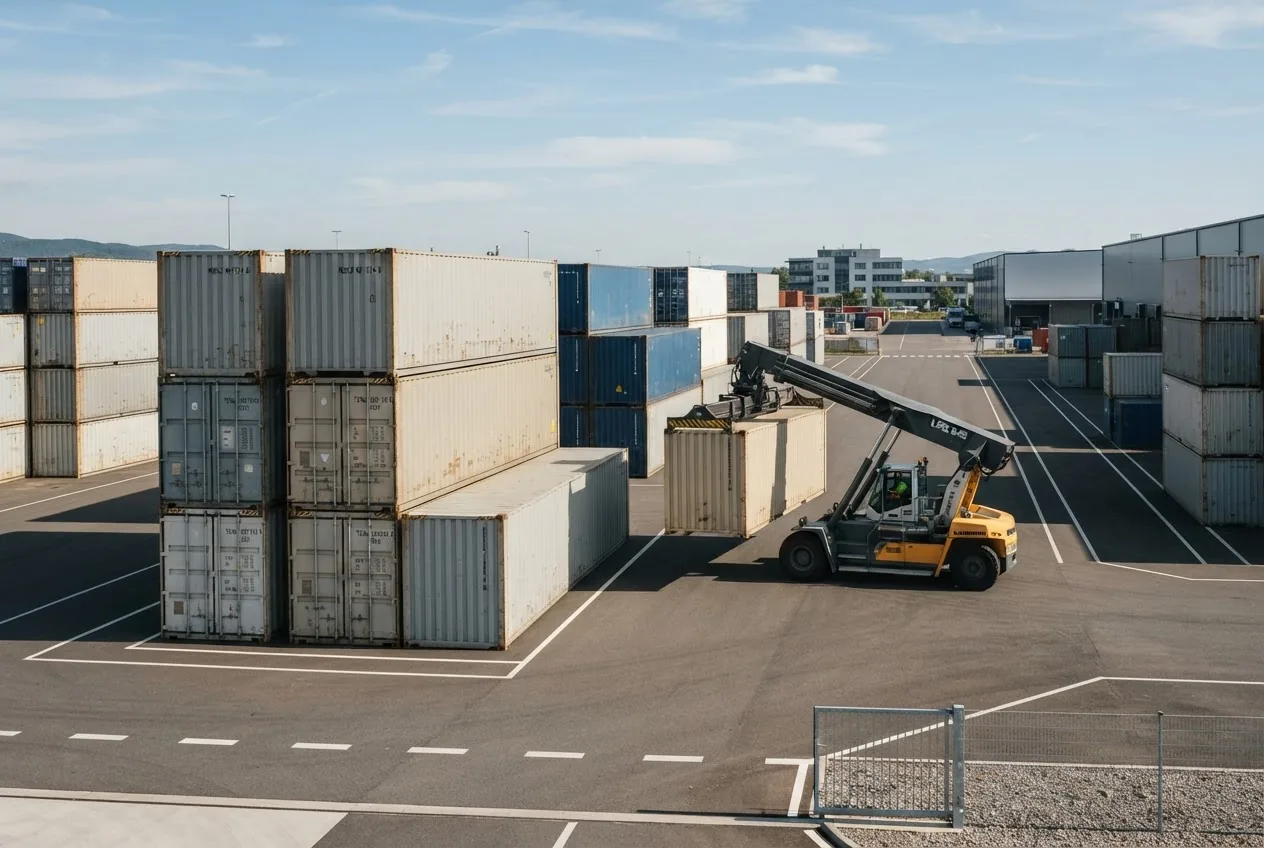
| Freight containers / shipping containers | Very high — steel, weather-resistant | Higher embodied energy but long-term reusable; suitable for large jobs | Expensive and overkill for small moves; suited for whole-house or long-term storage |
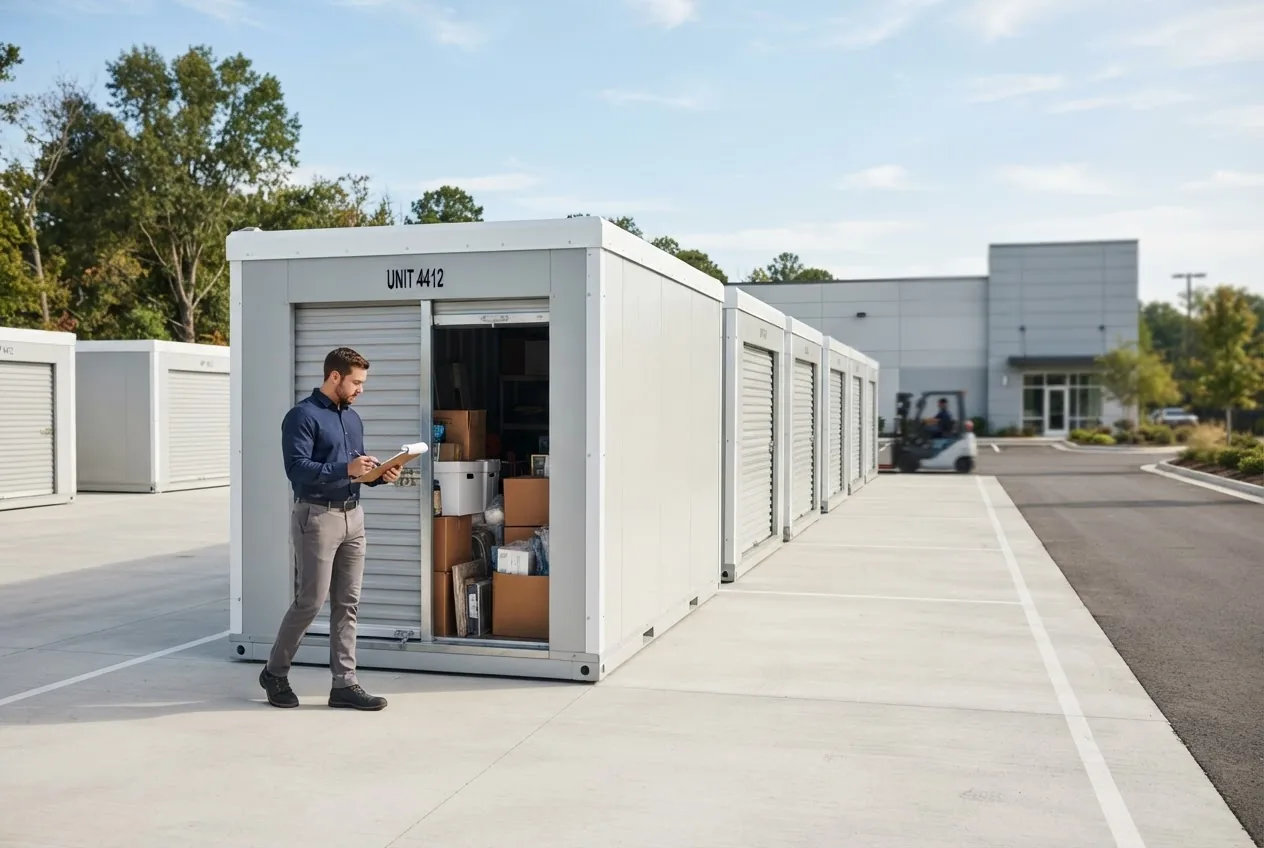
| Ship-lift pods / portable storage | High — built for transport and stacking | Moderate — depends on use cycle | Good for in-place storage; costs vary widely |
Short analysis: For local or short-term moves, rented moving storage bins typically win on speed, organization, and lower waste. For very large or long-term storage, freight containers or ship containers are better suited; see freight containers rental requirements and ship container rent options for larger solutions.
Transition: Choosing the provider matters — here’s how to evaluate rental companies.
Rental Providers and How to Choose the Right Moving Bin Rental Company
Choosing the right provider reduces surprises. Evaluate companies on service, transparency of fees, and reliability.
Checklist for provider selection:
- Clear pricing with line-item delivery, pickup, cleaning, and deposit terms
- Delivery windows and handling policies for stairs/elevators
- Sanitation policy and cleaning charge thresholds
- Damage and loss policies with maximum itemized fees
- Insurance or rental protection options
- Customer service responsiveness and documented reviews
- Fleet condition (age of bins, plastic fatigue, lids condition)
- Local depot return options if you prefer to drop off
When evaluating providers, consult consumer protection advice for rental agreements and deposits from the Federal Trade Commission and related agencies: FTC moving tips. For environmental credentials and reusable material claims, see sustainability data from national environmental bodies: EPA.
Alternative storage options are covered on the pillar portable storage page with cost comparisons; if your move needs long-term or large-volume storage see portable storage costs guide.
freight containers rental requirements
Container Store King of Prussia store info
Provider shortlist action steps:
- Request a written quote and confirm deposit/refund timelines.
- Ask about sanitation and documented cleaning procedures.
- Confirm liability for damaged returned bins and replacement fees in writing.
- Read at least three recent reviews for delivery punctuality and dispute resolution.
Transition: Below are questions renters most often ask and concise answers to keep you moving.
Frequently Asked Questions About Moving Bin Rentals
Brief Q&A based on recurring renter concerns and best-practice resolutions.
Transition: Ready for a quick recap and final recommendations.
Conclusion: Why Renting Moving Bins Is a Smart Choice for Your Next Move
Renting moving bins reduces packing time, lowers waste, and improves protection and organization compared with disposable boxes. For local moves and short-term storage, bins offer speed, uniform loading, and easy tracking. For larger or longer-term needs, freight or ship-container solutions may be better — consult the provider and the linked pillar guide for scale decisions.
Final recommendation: estimate your bin count conservatively (add 10–15% cushion), photograph delivery condition, label every bin, and book a flat multi-day package for moves longer than two days. If you want tailored cost estimates, contact two local providers and compare line-item quotes before committing.
Call to action: Ready to plan? Use the checklist above, get quotes from two vendors, and reserve bins 3–7 days before your move to lock in rates and delivery windows.