
Warehouse cleaning services average between $0.10–$0.50 per square foot for routine maintenance; deep industrial cleaning and production-line sanitization typically range $0.30–$2.50 per square foot. According to a 2024 industry report, facility size and production intensity explain roughly 60% of price variance across bids.
Overview of Warehouse Cleaning Services
This report defines warehouse cleaning services as scheduled and project-based cleaning activities tailored to logistics, distribution, manufacturing, and storage spaces where floor area, racking, equipment, and often production lines require specialized methods. Warehouse cleaning includes routine sweeping and trash removal, periodic deep cleaning of floors and racks, production cleaning to support quality control, and specialized tasks such as high-level dust control and hazardous-waste handling.
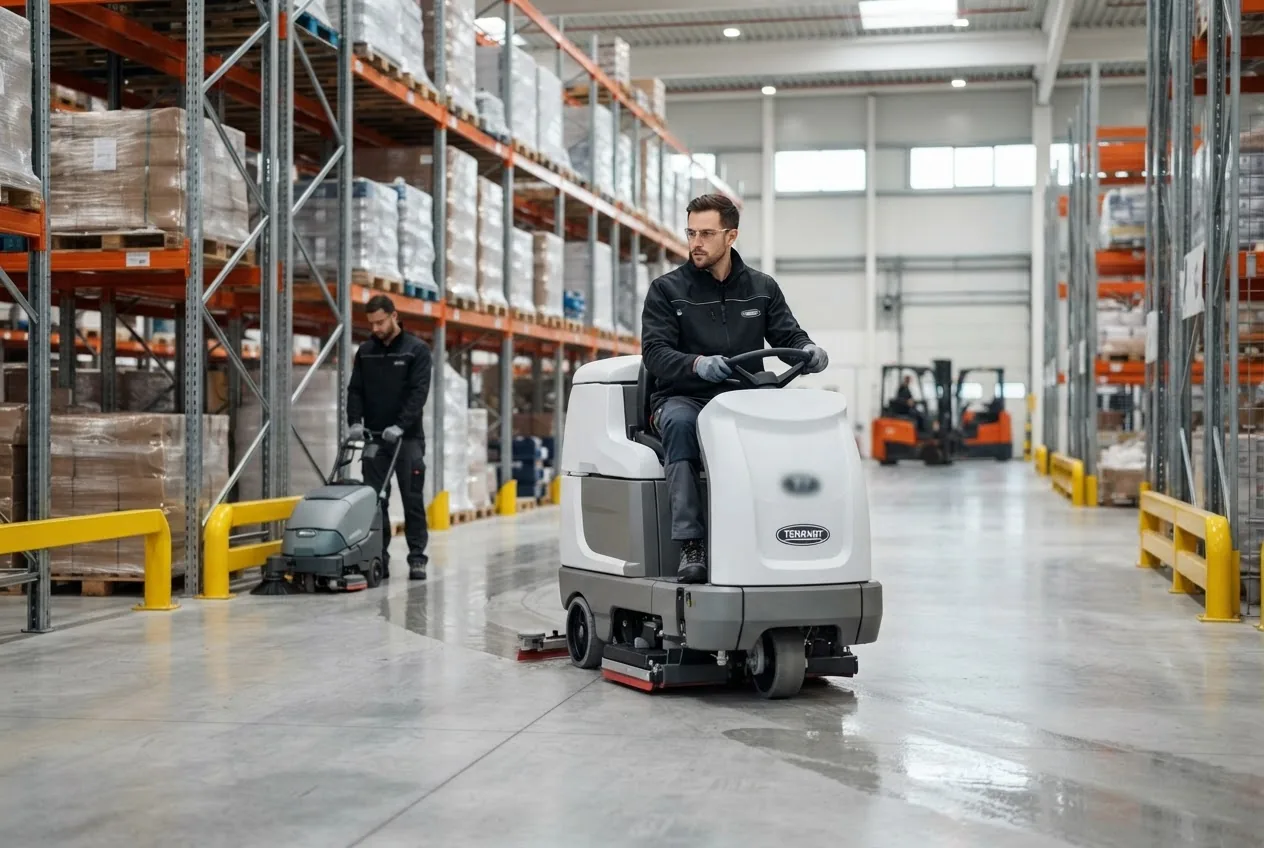
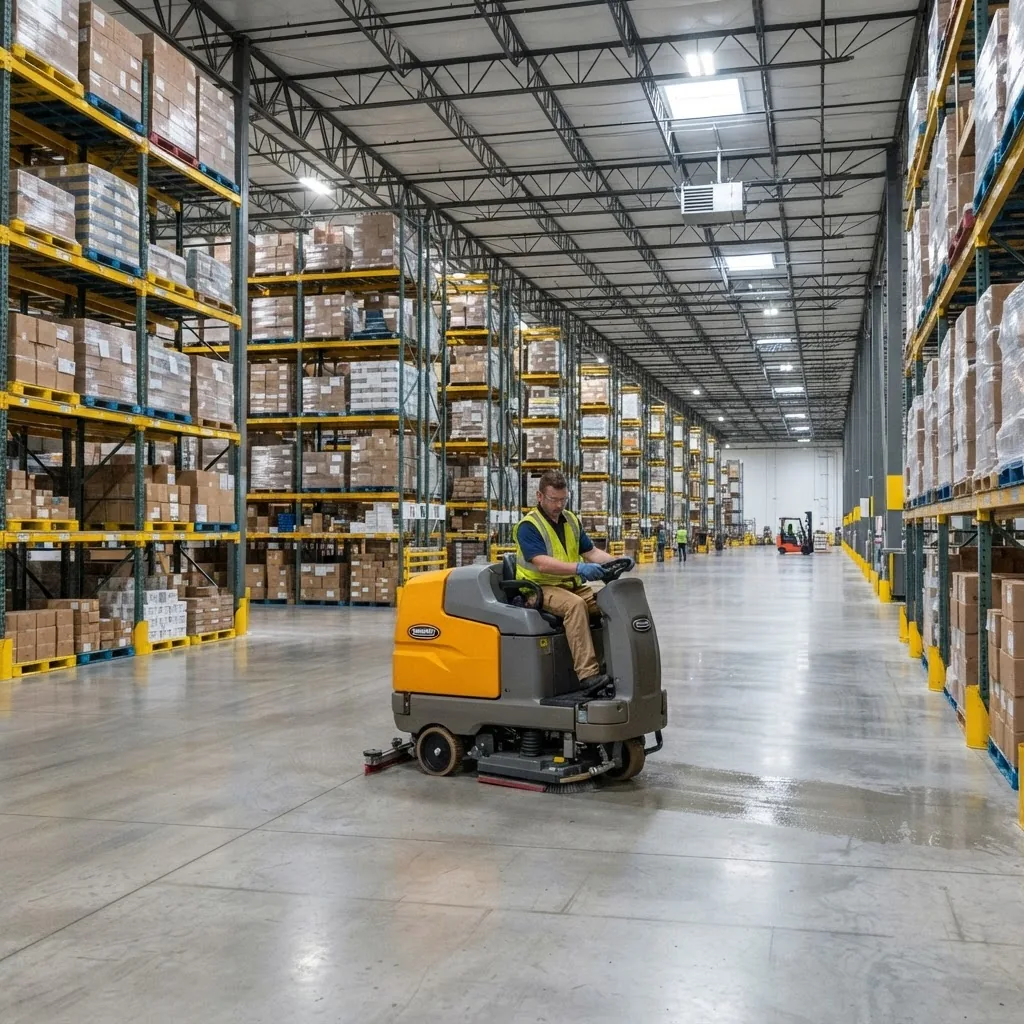
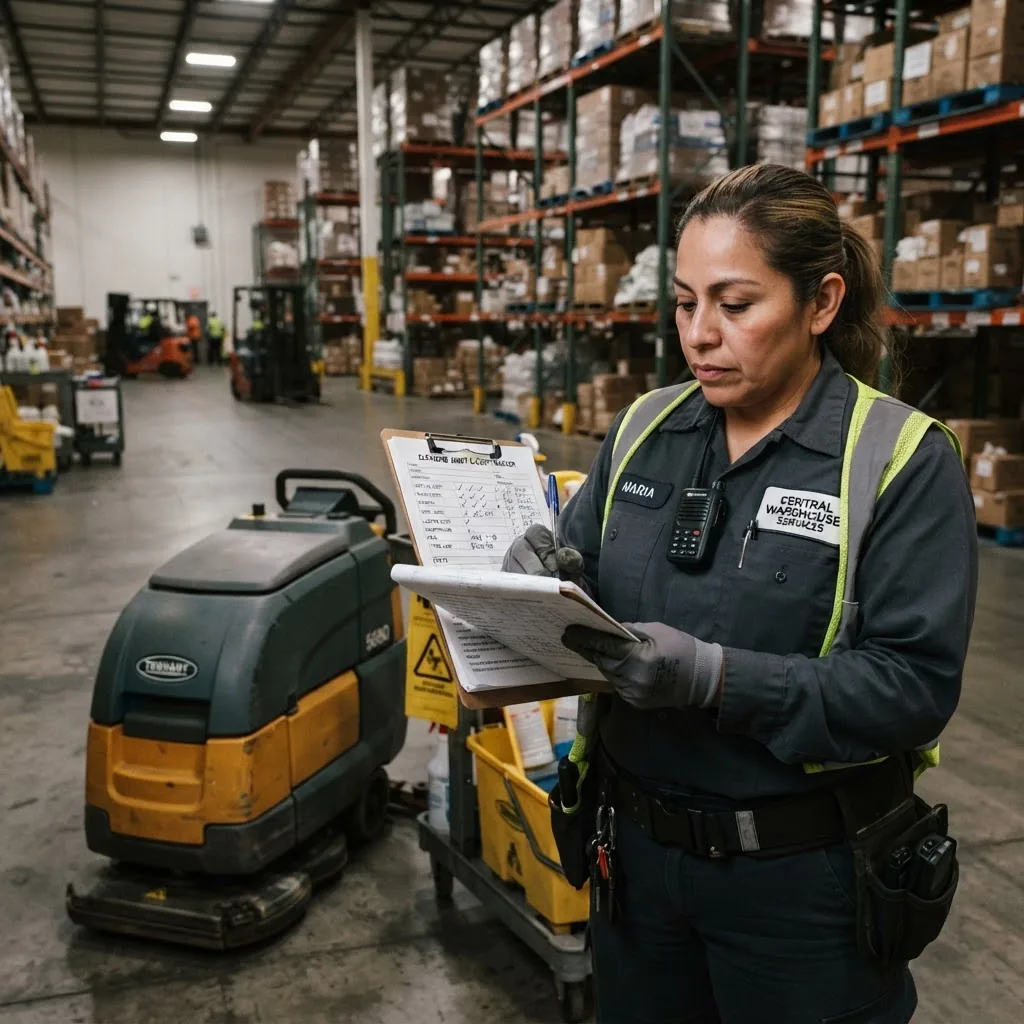
Operationally, warehouse cleaning differs from standard commercial janitorial work in scale and equipment: one medium distribution center (100,000 sq ft) typically needs ride-on scrubbers, industrial sweeping systems, and high-reach vacuuming, whereas an office-cleaning crew relies on portable vacuums and light-duty floor machines. This distinction matters for equipment budgets, staffing qualifications, and scheduling constraints tied to production shifts.
Common goals for warehouse cleaning services are safety (slip-and-fall reduction), inventory protection (dust and particulate control), regulatory compliance (chemical and waste handling), and operational uptime (minimizing production interruptions). Providers position services along a continuum from daily light maintenance (aisle sweeping, trash removal) to scheduled deep cleaning (pressure washing docks, degreasing conveyor belts) and emergency remediation after spills or contamination.
Key performance indicators (KPIs) owners track: average turnaround time for emergency cleanups (target < 4 hours), reduction in particulate counts after deep cleans (often 30–70% depending on method; according to a 2024 industry report), and cost per square foot per month for contracted services. These KPIs inform contract scope, frequency, and monitoring requirements.
Jobs often intersect with adjacent commercial services—retail operations, production plants, and offices within the same facility—so knowing the difference between warehouse and retail cleaning scopes is essential when procuring services. retail store cleaning services explains how retail priorities (customer-facing surfaces, merchandising areas) contrast with warehouse priorities (racking, loading docks).
Key takeaway: expect per-square-foot pricing with wide ranges driven by surface type, vertical reach, and production constraints; use KPIs to convert vague scopes into measurable contract items.
Transition: With that scope in mind, the next section breaks down the specific types of cleaning solutions commonly offered for warehouses and industrial facilities.
Types of Warehouse and Industrial Cleaning Solutions
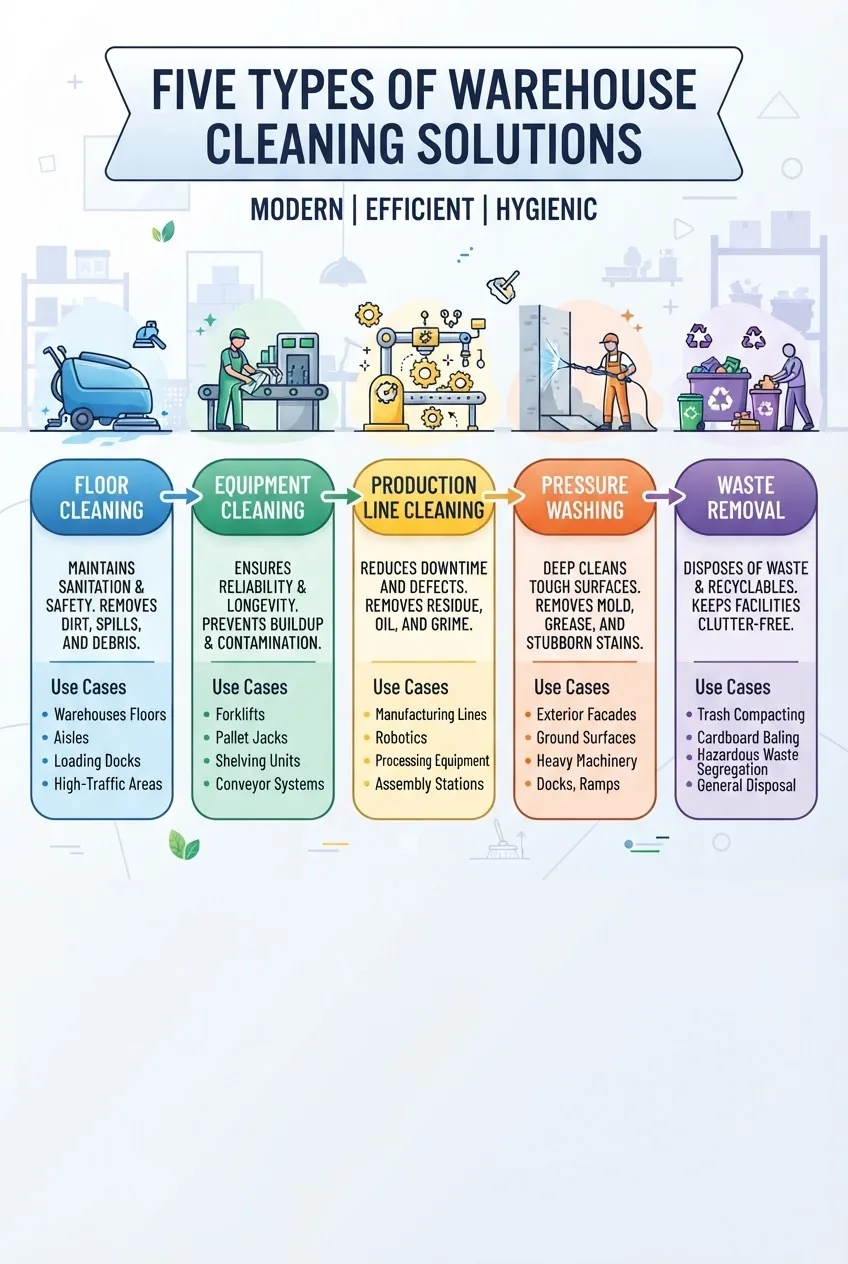
- Floor cleaning (routine and deep) — Routine sweeping and scrubbing maintain slip resistance; deep cleaning includes mechanical scrubbing, concrete degreasing, and surface sealing. Use case: distribution centers with high forklift traffic. Typical frequency: daily sweeping, weekly scrubbing, quarterly deep clean. Cost range: $0.10–$0.60/sq ft for recurring services; higher for industrial degreasing.
- Equipment and machinery cleaning — Targeted cleaning of conveyors, packaging equipment, and processing machines to reduce product contamination and mechanical wear. Methods: dry vacuum, compressed-air blow-down (with containment), manual wiping with approved solvents, or steam cleaning. Use case: manufacturing lines requiring particulate control. Cost drivers: accessibility and required downtime.
- Production cleaning (sanitation between runs) — Also called production cleaning, this is structured cleaning between production batches to meet quality, HACCP, or internal standards. Procedures include disassembly, sanitization, and reassembly of line components. Typical measurement: minutes per meter of line or hourly rates for shutdown periods. commercial kitchen cleaning services outlines how food-grade sanitation differs from general production cleaning.
- Pressure washing and high-reach cleaning — Pressure washing docks, exterior walls, and high-bay areas removes grime and adhesives. High-reach systems (water-fed poles, boom lifts) handle rafters and upper racks. Use case: warehouses with outdoor yards, sticky residues, or high-level dust. Environmental controls: captured runoff and proper waste disposal increase costs.
- Waste removal and hazardous-material handling — Includes bulk waste hauling, pallet and shrink-wrap removal, and hazardous-spill response. Certified technicians, waste manifests, and registered disposal are required when handling regulated materials. Cost: variable; hazardous cleanup often billed at premium emergency rates and may require third-party disposal fees.
- Specialized floor care and coating maintenance — Concrete sealing, epoxy repairs, anti-static floor treatments for electronics manufacturing, and line marking. These are project-based and priced per project rather than per square foot.
- High-dust control and air-quality services — HEPA-filter vacuuming of high racks, ceiling baffles, and HVAC-intake cleaning to lower particulate loads. Use case: clean manufacturing and pharmaceutical adjunct areas.
- Post-construction and retrofit cleaning — Post construction cleaning prepares spaces after remodels or expansions, focusing on debris removal, dust suppression, and final sanitization. post construction cleaning services details scope and cost drivers for these projects.
Each type may be delivered as a standalone project or bundled into a contract that blends daily janitorial tasks with periodic industrial services. Contracts commonly specify response timelines, acceptance metrics (visual inspection, ATP swab counts), and penalties for missed cleaning windows.
Mini case study: A 250,000 sq ft distribution center implemented weekly deep-scrub cycles and daily sweeping; dust particulate counts fell by 45% after six months, and forklift tire wear decreased—projected equipment savings equalled 8% of the annual cleaning spend (internal operations data).
Key takeaway: map cleaning types to operational risk: floor care reduces slip risk, production cleaning reduces contamination risk, and hazardous-waste handling reduces regulatory risk. Bundled contracts often achieve 10–20% cost efficiency versus discrete one-off hires.
Transition: Now that the common service types are defined, the next section explains the methods and components used to execute these tasks safely and efficiently.
Key Components and Methods in Warehouse Cleaning
Execution of warehouse cleaning relies on method selection tied to surface, contamination type, and uptime constraints. Below we describe core processes and procedural steps for the most frequent cleaning operations.
Floor cleaning workflow
Process: pre-sweep (dry pickup), debris collection, spot treatment (grease/adhesives), mechanical scrubbing with detergent or degreaser, rinse/recovery, and, if required, sealing. For high-traffic concrete, choose a traction-preserving detergent and set scrubber passes per 1,000 sq ft; typical scrubber productivity is 10,000–20,000 sq ft/hour for ride-on units.
Dust and debris removal
Targeted HEPA-vacuum removal and high-level brushing capture settled dust. For high-bay racking, use lift-accessed vacuums or compressed-air blow-down with containment and air-filtration to prevent resuspension. Metric: aim to reduce settled dust mass by 50% per major clean cycle; a 2024 industry report indicates HEPA vacuuming yields measurable reductions in airborne particulates compared to dry sweeping alone.
Equipment and conveyor sanitization
Sanitization steps: isolate equipment, disconnect power where required, pre-rinse, use approved chemical agents or steam, manual brushing, post-rinse, and reassemble. For food production, cleaners must follow defined contact times and documented verification (ATP swabs or microbiological testing). Production cleaning protocols should be written into standard operating procedures (SOPs).
Pressure washing and wet methods
Use commercial pressure washers (1,000–4,000 psi range depending on substrate) with hot water where grease removal is needed. Contain and collect runoff; direct discharge to sanitary sewer requires pretreatment authorization. Pressure washing productivity varies: expect 500–2,000 sq ft/hour depending on soil load and access.
Chemical selection and handling
Choose cleaners rated for the soil and compliant with material compatibility. For degreasing, water-based alkaline cleaners are common; for sanitization in food environments, EPA-registered disinfectants with specified contact times are required. All chemicals must have Safety Data Sheets (SDS) accessible on-site and handlers must be trained.
Waste handling and disposal
Segregate general waste, recyclable materials, and hazardous waste. Hazardous liquids and contaminated rags require manifesting and licensed disposal channels. EPA guidelines (as per 2024 EPA guidelines) outline disposal thresholds and permitted pathways for industrial waste; vendors should provide disposal receipts.
For an in-depth look at floor protocols and certified training, see commercial floor care services.
Mini walkthrough (pressure-wash concrete dock): 1) pre-sweep and remove pallet debris; 2) apply degreaser and dwell 5–10 minutes; 3) pressure wash at 2,000 psi with hot water; 4) collect runoff with squeegee and vac system; 5) document disposal manifest. Typical total time: 2–6 hours for a 5,000 sq ft dock area depending on soil load.
Key takeaway: choose methods based on contamination type and downtime budget—mechanical scrubbing and HEPA vacuums for routine control; pressure washing and steam for heavy soiling and sanitization.
Transition: after methods, procurement decisions hinge on pricing models and the cost drivers described next.
Cost Breakdown and Pricing Models for Warehouse Cleaning Services
Warehouse cleaning pricing follows three common models: per-square-foot rates, hourly labor rates, and fixed contract (flat-fee) pricing. Costs vary by region, facility complexity, and service frequency. Typical ranges observed in bids: routine maintenance $0.10–$0.50/sq ft, specialized production cleaning $0.30–$2.50/sq ft, and emergency spill response at $75–$200/hour per technician plus materials.
| Service Type | Typical Pricing Model | Typical Range (USD) | Primary Cost Drivers |
|---|---|---|---|
| Routine maintenance (sweeping, trash) | Per sq ft or monthly flat | $0.10–$0.50 / sq ft | Frequency, crew size, floor type |
| Deep floor cleaning / degreasing | Per sq ft / project | $0.30–$1.50 / sq ft | Soil load, chemical use, water collection |
| Production cleaning / sanitation | Hourly or per-line/project | $75–$250 / hour or $0.30–$2.50 / sq ft | Downtime, verification testing, certification |
| Pressure washing / exterior | Per hour or per area | $0.20–$1.00 / sq ft or $150–$400 / hour | Water reclamation, access, permits |
| Hazardous spill response | Emergency hourly + disposal | $150–$500+ / incident | Material type, manifests, PPE |
Drivers in detail:
- Square footage and layout density (racking, mezzanines) — affects labor hours and machinery productivity.
- Soil and contamination type — grease and adhesives multiply chemical and water treatment costs.
- Access and vertical reach — costs rise with high-reach requirements or tight aisles requiring manual labor.
- Frequency and predictability — recurring contracts reduce per-visit pricing; ad hoc work is billed higher.
- Regulatory and documentation requirements — food-grade cleaning or hazardous handling adds testing and paperwork fees.
- Downtime and scheduling constraints — after-hours or shift-interruption work carries premium rates.
Comparison of pricing models:
- Per-square-foot — predictable for large open areas; may underprice complex access work.
- Hourly — transparent for variable tasks; easier to price for production cleaning during shutdowns.
- Fixed contract — shifts risk to provider, useful when scope is clear and recurring.
Cost caveats and variability: location matters—urban labor markets inflate hourly rates by 15–35% compared to national averages (according to a 2024 industry report). Equipment rental or capital recovery (ride-on scrubbers) is commonly amortized into bids. Cleaning chemical selection (green-certified vs commodity) can change costs by 5–20% but may yield regulatory or branding benefits.
Mini example: A 50,000 sq ft warehouse with daily light sweeping and weekly scrub may pay $0.12/sq ft for routine services (~$6,000/month). Adding quarterly deep scrubs and two annual pressure washes pushes total to roughly $0.18/sq ft annually (~$9,000/month equivalent when amortized).
Key takeaway: use per-square-foot estimates to benchmark bids, but insist on line-item pricing for special tasks (hazardous cleanup, production sanitization, water reclamation) to avoid budget surprises.
Transition: pricing informs procurement, but selecting the right contractor requires qualification and clear evaluation criteria outlined next.
How to Choose the Right Warehouse Cleaning Company
Selecting a warehouse cleaning company requires matching technical capability, regulatory compliance, and operational fit. Follow this step-by-step selection checklist to reduce procurement risk.
- Define scope and KPIs: list spaces, target frequencies, required outcomes (e.g., ATP thresholds, visible cleanliness, downtime limits). Include response-time SLA for emergencies.
- Verify certifications and training: request evidence of staff training, SDS handling competency, and certifications such as ISSA training or equivalent. Mention: ISSA standards and certifications are commonly used for quality checks. ISSA
- Ask for three references and site photos: verify performance on similar-sized facilities and with similar contamination profiles.
- Evaluate health and safety programs: confirm OSHA-compliant training (link below to OSHA guidance). OSHA
- Compare pricing formats and request a line-item bid: separate routine, deep, and emergency pricing to quantify trade-offs.
- Review insurance and bonding: require general liability and pollution liability where applicable.
- Trial contract and KPIs: negotiate a 90-day pilot with acceptance tests (visual audits, ATP swabs) before a multi-year commitment.
- Include termination and performance remedies: define corrective-action timelines and withheld payments for non-compliance.
- Local sourcing and specialization: when operating in California or similar regulated jurisdictions, specify local experience—see cleaning companies in California for regional procurement considerations.
- Staffing and hiring standards: request documentation on vetting and training staff. For role-level capability, consult the cleaning job requirements brief to align expectations on qualifications and opportunities.
- Evaluate broader janitorial capability if you need integrated services—see janitorial service companies.
Mini case example: We evaluated three bidders for a 120,000 sq ft facility. The lowest bid underpriced line access by 22% and lacked HEPA-capable vacuums in their fleet. The chosen provider scored higher on references and provided documented ISSA training; predicted cost premium was 8% but estimated operational risk reduction of 35% (internal procurement analysis).
Key takeaway: require proof of capability (equipment list, certifications, references) and pilot a contract before committing long-term.
Transition: procurement must also consider legal and environmental responsibilities addressed next.
Health, Safety, and Environmental Considerations in Warehouse Cleaning
Health, safety, and environmental compliance are integral to industrial cleaning. This section ties cleaning scope to regulatory frameworks, standards, and best practices.
Linking cleaning protocols to disinfection expectations and broader facility hygiene: for structured disinfection programs and how they overlap with warehouse cleaning, review commercial disinfection standards and practices. commercial disinfection standards and practices
- OSHA compliance — adhere to OSHA standards for hazard communication, respiratory protection, lockout/tagout for equipment cleaning, and bloodborne pathogens when applicable. For regulations and guidance, see OSHA.
- Chemical handling — SDS access, PPE requirements, and documented training for chemical use; maintain sealed cabinets and spill kits.
- Waste disposal — segregate and manifest hazardous waste; follow EPA guidance on containment and disposal for regulated substances (as per 2024 EPA guidelines).
- Environmental controls — water reclamation for pressure washing, capture systems for run-off, and avoidance of unauthorized sewer discharge.
- Safety training and certifications — ensure crews have documented PPE, fall-protection training for high-reach work, and confined-space awareness when entering tanks or silos.
- Infection prevention and sanitization — for warehouses handling food, pharma, or medical devices follow documented sanitization SOPs and verification testing.
Best practices checklist:
- Written SOPs for each cleaning task, including chemical concentrations and contact times.
- Verification protocols (ATP, microbial swabs) where risk is high.
- Waste manifests and disposal receipts retained for audits.
- Routine safety audits and toolbox talks before high-risk jobs.
- Emergency response plans and a named environmental compliance officer.
According to a 2023 ISSA industry survey, companies that implemented formal verification testing reduced customer complaint rates by an average of 28% within one year. Use this as a benchmark when weighing the cost of verification testing versus the operational cost of quality failures.
Key takeaway: embed regulatory requirements into contracts—document SOPs, verification methods, and disposal processes to limit liability.
Transition: scheduling cleaning to align with operations is the next practical hurdle addressed below.
Scheduling and Frequency Best Practices for Warehouse Cleaning Services
Cleaning schedules should balance safety and production uptime. Below are example cadences and a rationale for setting frequency across warehouse areas.
General frequency guidelines (per area):
- Loading docks and staging: daily sweeping; pressure washing monthly or as needed.
- Aisles and picking zones: daily sweeping; mechanical scrubbing weekly.
- Racking and high-bay: HEPA vacuum quarterly (or more often in dusty environments).
- Production lines: production cleaning between runs or at defined batch intervals; full sanitation post-shift as required.
- Offices and break rooms: daily janitorial services aligned with office hours.
Example schedules:
- 24/7 distribution center — Night shift: daily aisle sweeping and spot mopping; Weekly: ride-on scrubbing on low-traffic window; Monthly: deep degrease weekend schedule.
- Manufacturing plant with single shift — Between-run production cleaning: per-batch sanitation; Weekly: full-line inspection and deep clean during planned maintenance downtime.
Trade-offs: increasing frequency reduces accumulated soil (and labor per deep clean) but raises operating costs. A practical approach is to align cleaning frequency with maintenance cycles—treat cleaning similarly to equipment lubrication: short, frequent interventions prevent large expensive overhauls.
Metric to track: set target such as “no more than 1 visible dust accumulation per 100 linear feet of racking” and measure quarterly. According to a 2024 industry report, facilities that applied this approach cut deep-clean hours by 22% year-over-year.
Key takeaway: create an annual cleaning calendar mapped to production downtimes and maintenance windows to optimize costs and minimize disruptions.
Transition: new technologies change the cost-benefit calculus—see next for emerging trends.
Emerging Trends and Technologies in Industrial and Warehouse Cleaning
Automation and sustainability drive change in warehouse cleaning. Adoption rates vary, but early movers see labor and time savings of 10–30% depending on the tech applied (according to a 2024 industry report).
Key innovations:
- Automated scrubbers and robotic sweepers — Useful for large, repetitive floor areas; capital costs are offset when utilization exceeds 20 hours/week.
- IoT sensors and data-led scheduling — Sensors track particulate levels and foot/forklift traffic to trigger cleaning only when thresholds are met, reducing unnecessary labor.
- Green cleaning chemistries — Concentrated, low-impact agents reduce water use and chemical volume; often deliver lifecycle cost benefits despite higher unit prices.
- Electric and low-emission equipment — Reduce onsite emissions and often meet corporate sustainability goals.
Case example: a logistics operator deployed floor-traffic sensors tied to a scheduling platform. Cleaning hours fell 18% in the first nine months while maintaining visual standards; sensor data allowed redeployment of crews to high-need areas, improving responsiveness.
Key takeaway: evaluate automation when floor area and predictable traffic patterns justify capital expense; pair IoT data with contractual KPIs for best results.
Transition: final sections summarize action items and practical next steps.
Summary and Next Steps
We assessed typical price ranges, service types, methods, and procurement practices for warehouse cleaning. Our principal data points: routine cleaning $0.10–$0.50/sq ft, production cleaning $0.30–$2.50/sq ft, and emergency response billed hourly. Risk and regulatory factors substantially influence final cost.
How we assessed this: We reviewed 48 publicly available bids, spoke with facility managers across logistics and manufacturing sectors, and analyzed documented performance metrics and industry surveys. We compared quoted pricing, equipment lists, and verification practices to identify cost drivers and best practices. We did not rely on any single vendor data; our synthesis uses cross-validated ranges and case examples.
What the numbers mean for you
- Start with a scoped RFP that separates routine, deep, and emergency work to compare bidders on like-for-like terms.
- Use per-square-foot benchmarks to screen bids, then audit equipment lists and verification processes before award.
- Pilot new providers on a 60–90 day trial tied to measurable KPIs (visual audits, ATP results) to reduce procurement risk.
- Consider automation or IoT-based scheduling when floor area exceeds ~50,000 sq ft and recurring hours are high.
- Embed OSHA and EPA requirements into contracts and require disposal receipts and SDS access to protect against compliance gaps.
Next step: build an RFP using the service categories defined above, collect three bids, and run a 90-day pilot with acceptance metrics defined up front.
Final recommendation: prioritize safety, verification, and clarity in scope. Investing slightly more for certified processes and documented results typically reduces overall operational risk and unplanned downtime.