Janitorial janitorial companies must combine structured onboarding, ongoing certification, and measurable service standards so staff are safe, compliant, and consistently meet client expectations; this article details training curricula, supervisory controls, equipment protocols, and quality metrics to implement or audit effective janitorial operations.
What is the role and scope of janitorial services companies?
Answer: Janitorial services companies provide routine cleaning, maintenance, and support services for commercial properties, defining service scope, client expectations, staffing models, and contractual obligations that differentiate professional janitorial firms from ad hoc or residential cleaners.
Term: Janitorial services companies are businesses that deliver recurring cleaning and maintenance for commercial spaces, including offices, retail, warehouses, and institutional facilities.
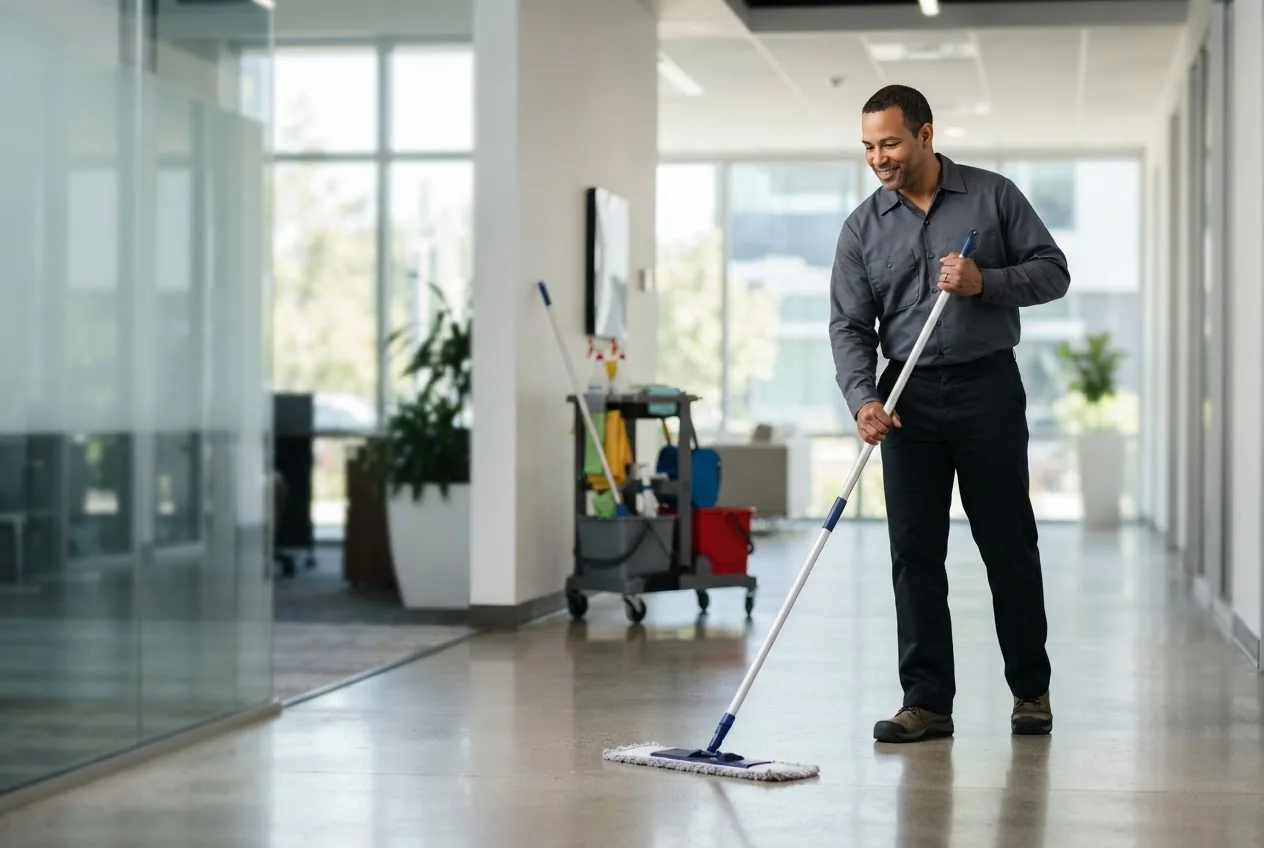
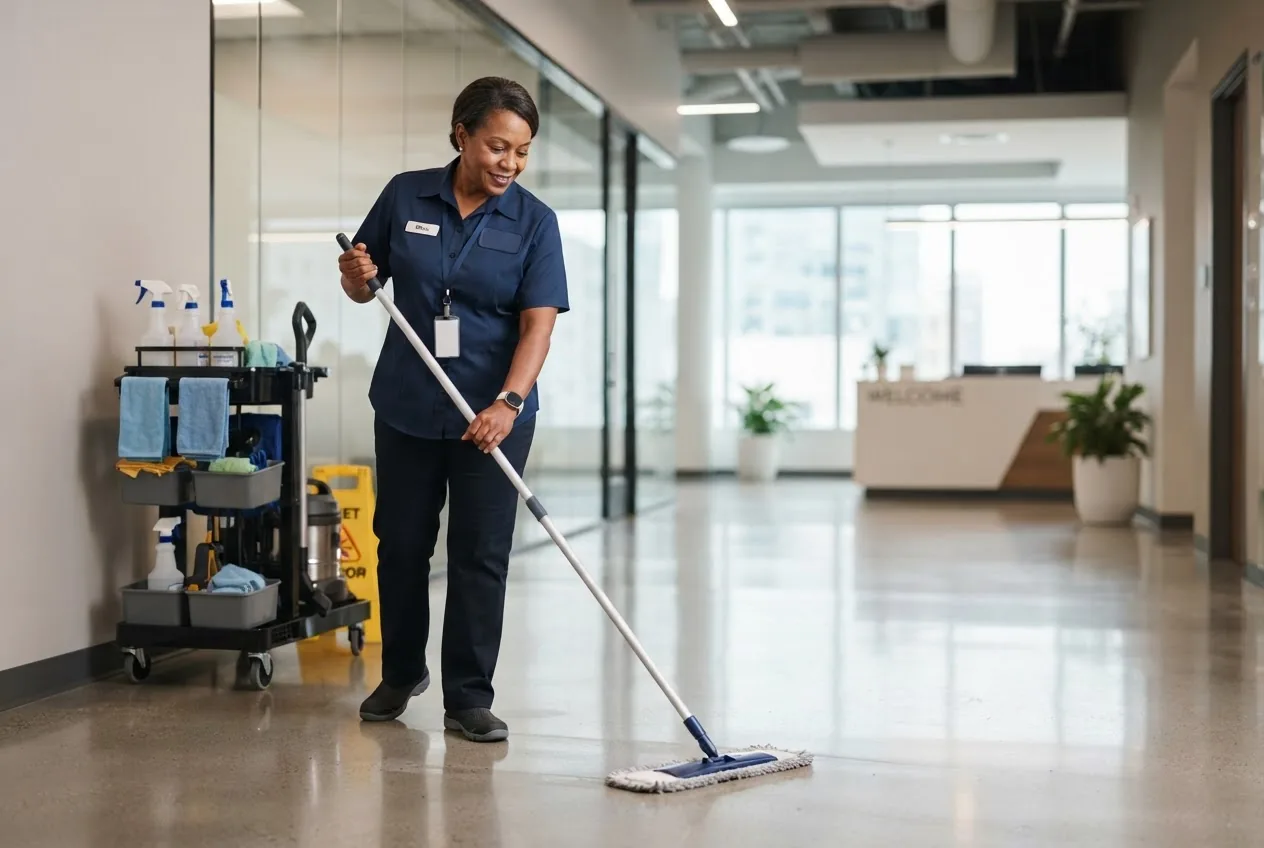
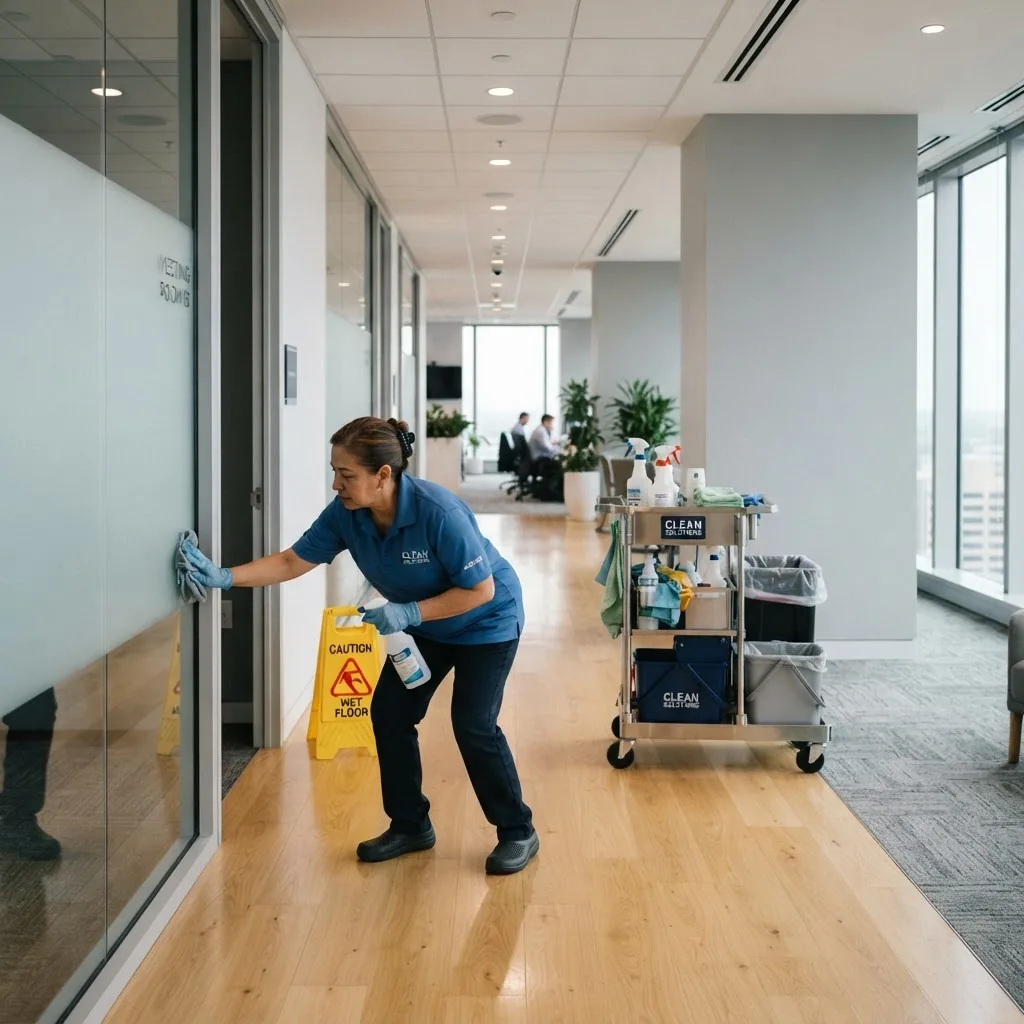
Janitorial firms deliver scheduled cleaning and facility upkeep designed to preserve building appearance, health, and function. The service scope ranges from daily surface cleaning and waste removal to periodic deep cleaning, floor care, and restroom maintenance. Client expectations typically prioritize reliability, predictable quality, regulatory compliance, and clear communication about scope of work and exclusions.
Commercial contracts usually specify frequency, task lists, service hours, performance standards, and escalation paths. Many clients now require documented training programs, background checks, and certifications—especially for secure or regulated facilities. Janitorial services companies differ from general cleaning firms primarily in scale, contract regularity, and integration with facility operations; they act as extensions of a client’s maintenance staff rather than one-off cleaners.
For readers seeking regional provider options alongside training and compliance requirements, see cleaning companies in California.
What essential training requirements must janitorial staff meet?
Answer: Essential training includes structured onboarding, hands-on equipment and chemical safety instruction, PPE use, hazard communication, client-specific protocols, and ongoing certification or refresher courses to meet OSHA and ISSA-aligned standards and maintain service quality.
Term: Onboarding is the initial training and orientation period that brings a new employee up to speed on tasks, policies, and safety procedures.
- Comprehensive onboarding: Initial orientation covering company policies, site-specific routes, permitted cleaning agents, waste handling, security clearances, and client communication protocols.
- Hands-on equipment training: Operate and maintain cleaning machines (autoscrubbers, burnishers, extractors) and inspect daily checklists to prevent downtime and damage.
- Chemical and hazard communication: Understand Safety Data Sheets (SDS), dilution protocols, and cross-contamination prevention for different facility types.
- Safety and PPE instruction: Donning/doffing procedures, correct respirator or glove selection, and ergonomic lifting techniques to reduce injury risk.
- Infection control basics (where applicable): Protocols for high-touch surfaces and client-specific biohazard procedures; for specialized work see commercial disinfection services for integrated programs.
- Customer service training: Communication scripts, professional conduct, and escalation paths for client complaints or facility incidents.
- Documentation and digital tools: Training on mobile inspection apps, digital timesheets, and service-level agreement (SLA) checklists to evidence compliance.
- Certification pathways: Enrollment in ISSA or approved vendor certification courses for recognized credentialing and accountability.
- Ongoing evaluation: Performance monitoring, periodic observations, and corrective coaching tied to KPIs like defect rate and client satisfaction.
Each requirement maps to measurable objectives: safety (injury reduction), quality (inspection pass rates), and client satisfaction (measured feedback). Below are detailed subsections that expand onboarding, ongoing education, and safety training.
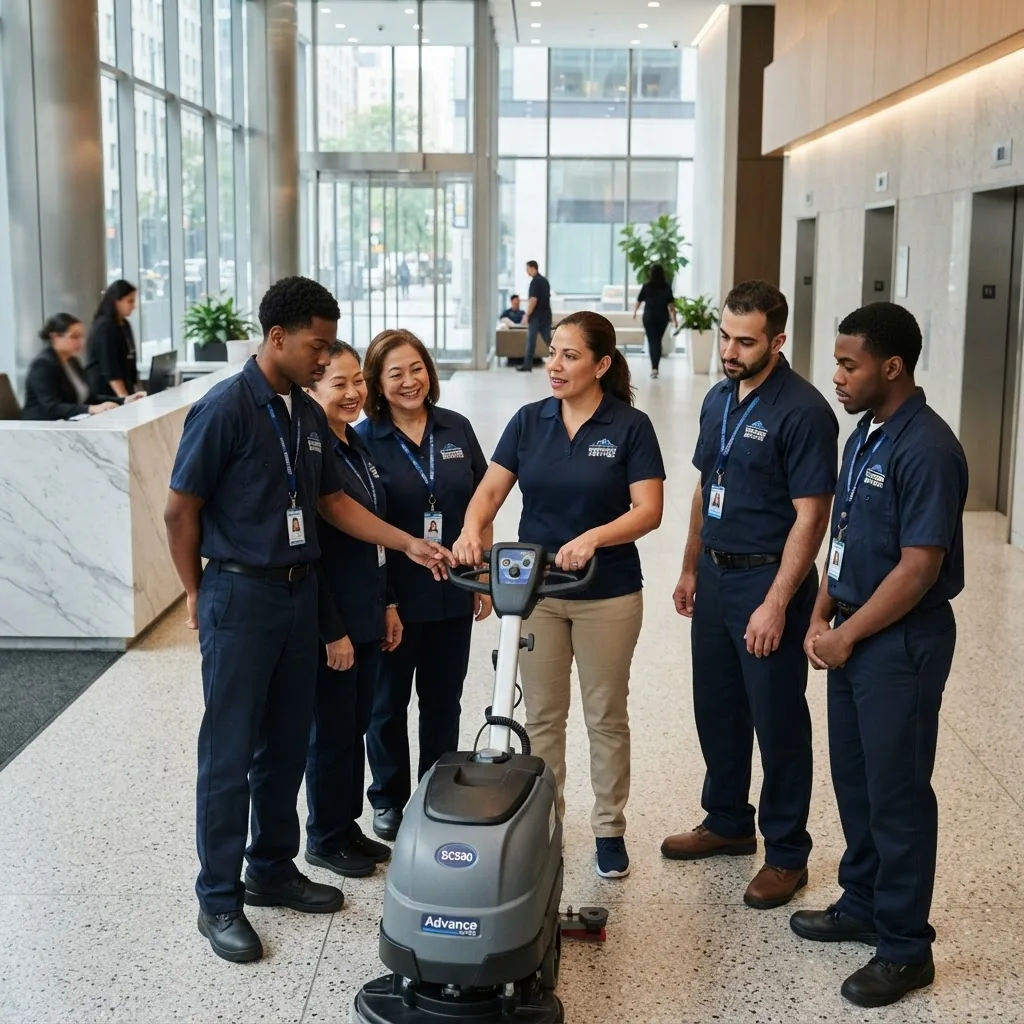
Onboarding and Initial Training
Answer: Onboarding typically spans 1–4 weeks and blends classroom orientation, hands-on practice, safety briefings, and supervised shifts that ensure a new hire can perform core janitorial tasks to standard.
Term: Hazard communication is the process of informing workers about workplace chemical hazards via labels and Safety Data Sheets (SDS).
A structured onboarding checklist should include administrative setup (I-9, W-4 where applicable), introductory site tours, equipment familiarization, SDS review, and observation by a supervisor during initial shifts. A recommended hourly breakdown:
- Day 1 (4–8 hrs): Orientation, company policies, PPE issue, hazard communication, client confidentiality, and security procedures.
- Days 2–5 (20–40 hrs): Equipment demos, shadowing experienced technicians, practicing standard cleaning sequences, restroom and floor care techniques.
- Week 2–4 (varies): Supervised independent work, competency sign-offs on key tasks, assessment on SOPs, and client-specific protocol review.
Include practical competency checks: timed restroom turnovers, stain removal demonstrations, and machine operation under supervision. Use a checklist to sign off each competency; retain in personnel files for audit and client assurances. For job seekers and HR alignment, link orientation to role requirements in janitor jobs eligibility and training.
Ongoing Education and Certification
Answer: Ongoing education includes formal certification (e.g., ISSA programs), quarterly refresher training, and role-specific advanced courses—balancing in-person skills labs and e-learning to maintain standards and adapt to evolving client or regulatory needs.
Term: ISSA (International Sanitary Supply Association) provides industry-recognized certification programs and best-practice resources for cleaning professionals.
Examples of ongoing education pathways:
- ISSA Certification: Programs like the ISSA Cleaning Management Institute (CMI) offer CIMS and CIMS-GB certifications for organizational systems; ISSA-affiliated credentials validate quality management and green cleaning practices. See ISSA for program details.
- Vendor and equipment manufacturer training: Autoscrubber and vacuum manufacturers often provide certified service and operation training—useful for reducing equipment downtime.
- Digital microlearning and LMS: Short modules on SDS updates, client protocol changes, or seasonal cleaning challenges delivered via learning management systems to maintain currency.
- Refresher cadence: Schedule quarterly safety refreshers and annual competency re-evaluations tied to performance reviews.
- Cross-training: Train janitors in basic floor care or minor maintenance to increase operational flexibility and retention.
Case example: an anonymous mid-size janitorial firm instituted quarterly ISSA-aligned refresher modules plus monthly hands-on labs; within 12 months their inspection pass rate rose 18% and client complaints dropped 32% (internal company KPI report, 2023).
For career-path context and required qualifications, refer to cleaning jobs and contract opportunities and office cleaning jobs requirements.
Safety and Compliance Training
Answer: Safety training must align with OSHA requirements, including PPE, hazard communication (SDS use), waste handling, emergency response, and documented risk assessments to protect staff and clients.
Term: OSHA (Occupational Safety and Health Administration) sets federal workplace safety standards in the U.S. that inform training and compliance for janitorial staff.
Safety training should be documented and refreshed regularly. Below is a concise checklist to verify compliance and training completeness.
- OSHA-compliant hazard communication training and SDS review (initial and annual).
- PPE selection and proper use training (gloves, eye protection, respirators where necessary).
- Spill response and waste handling procedures, including biohazard segregation if applicable.
- Lockout/tagout basics for equipment maintenance where relevant.
- Emergency procedures: fire, severe weather, medical incidents, and active shooter protocols where required by client.
- Ergonomics: safe lifting and repetitive task mitigation.
Reference: OSHA offers prescriptive guidelines and training resources to align programs with regulatory expectations. Note that state and local rules may add requirements; always confirm jurisdictional obligations before finalizing training content.
What service requirements and standards govern janitorial maintenance?
Answer: Service requirements combine scheduled maintenance plans, SLAs, measurable KPIs, documented SOPs, and quality assurance mechanisms to ensure consistent janitorial maintenance; these standards are operationalized through inspections, client reporting, and corrective action processes.
Term: Service Level Agreement (SLA) is a contract element that specifies performance expectations—frequency, quality metrics, response times, and remedies for non-compliance.
To implement service requirements, follow these high-level steps:
- Define scope and frequencies: Create task lists for daily, weekly, monthly, and periodic activities for each site area (restrooms, lobbies, workspaces, breakrooms, high-touch zones).
- Document SOPs: Standard Operating Procedures detailing cleaning sequences, chemical dilutions, dwell times, and equipment settings.
- Set measurable KPIs: Examples: inspection pass rate, time-to-correct defects, client satisfaction score, first-time fix rate, rework frequency.
- Create inspection protocols: Use unannounced and scheduled inspections, photographic evidence, and digital checklists to quantify adherence.
- Implement reporting cadence: Weekly or monthly client reports that summarize KPIs, incidents, and improvement actions.
- Corrective action and escalation: Root-cause analysis for repeat defects, retraining plans, and contractual penalties or remediation schedules.
- Continuous improvement: Quarterly reviews of SOPs, equipment lifecycle, and training to adapt to client feedback and regulatory changes.
Comparison of common performance standards is shown below to help benchmark expectations across tiers of service:
| Standard | Basic (Daily) | Enhanced (Daily + Weekly) | Premium (SLA-driven) |
|---|---|---|---|
| Restroom turnover | Twice daily | Hourly checks during peak | Continuous monitoring & incident response |
| Floor maintenance | Daily vacuum/mop | Weekly scrubbing | Preventive schedule + floor-care logs |
| High-touch surface disinfection | Daily wipe-down | Multiple daily touchpoint rounds | Integrated with commercial disinfection services for episodic deep disinfection |
| Inspections | Weekly supervisor check | Unannounced weekly + client audits | Real-time digital KPI dashboard and SLA metrics |
For a specialist complement to routine janitorial maintenance—especially where episodic pathogen control is required—see the pillar on commercial disinfection services.
If flooring demands specialized curricula, offer targeted modules and ensure staff meet floor care training requirements for machine operation, finishes, and stripping/recoating procedures.
Cleaning Protocols by Facility Type
Answer: Cleaning protocols must be tailored to facility type—office, retail, industrial, and commercial kitchens—each with distinct frequencies, chemicals, equipment, and compliance considerations.
Term: Protocol in this context is a documented procedure describing tasks, sequence, and frequency for cleaning a specific facility type.
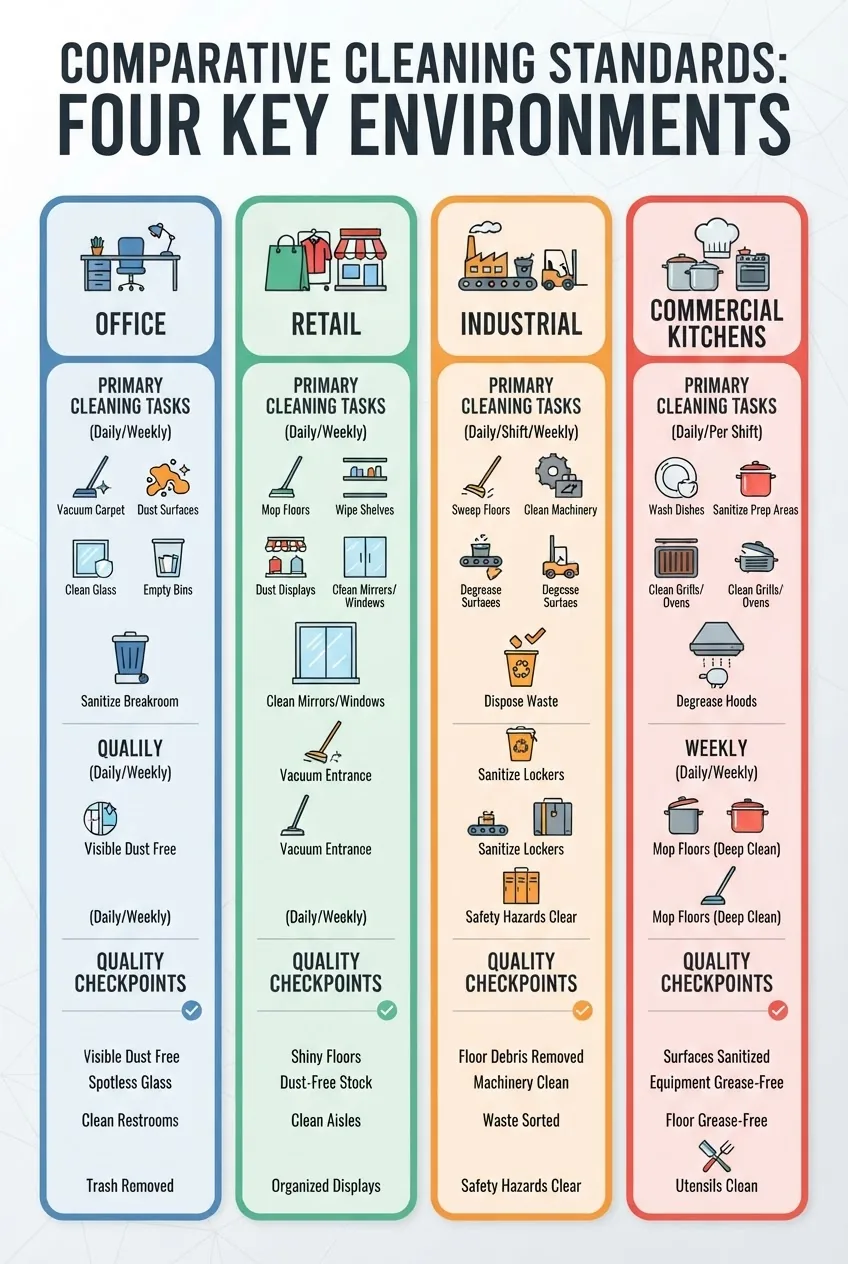
| Facility Type | Primary Tasks | Frequency | Key Standards / Notes |
|---|---|---|---|
| Office | Dusting, vacuum, trash, restrooms, conference room reset | Daily; weekly deep-clean | Focus on high-touch surfaces; see office cleaning services providers |
| Retail / Store | Floor cleaning, display sanitation, glass, fitting rooms, trash | Daily; nightly post-close clean | Customer-facing standards and spill response; see retail store cleaning requirements |
| Industrial / Warehouse | Debris removal, floor sweeping, bulk trash, machinery cleaning | Daily to weekly depending on operations | Safety critical; tie to facility permit and equipment lockout; see warehouse cleaning solutions |
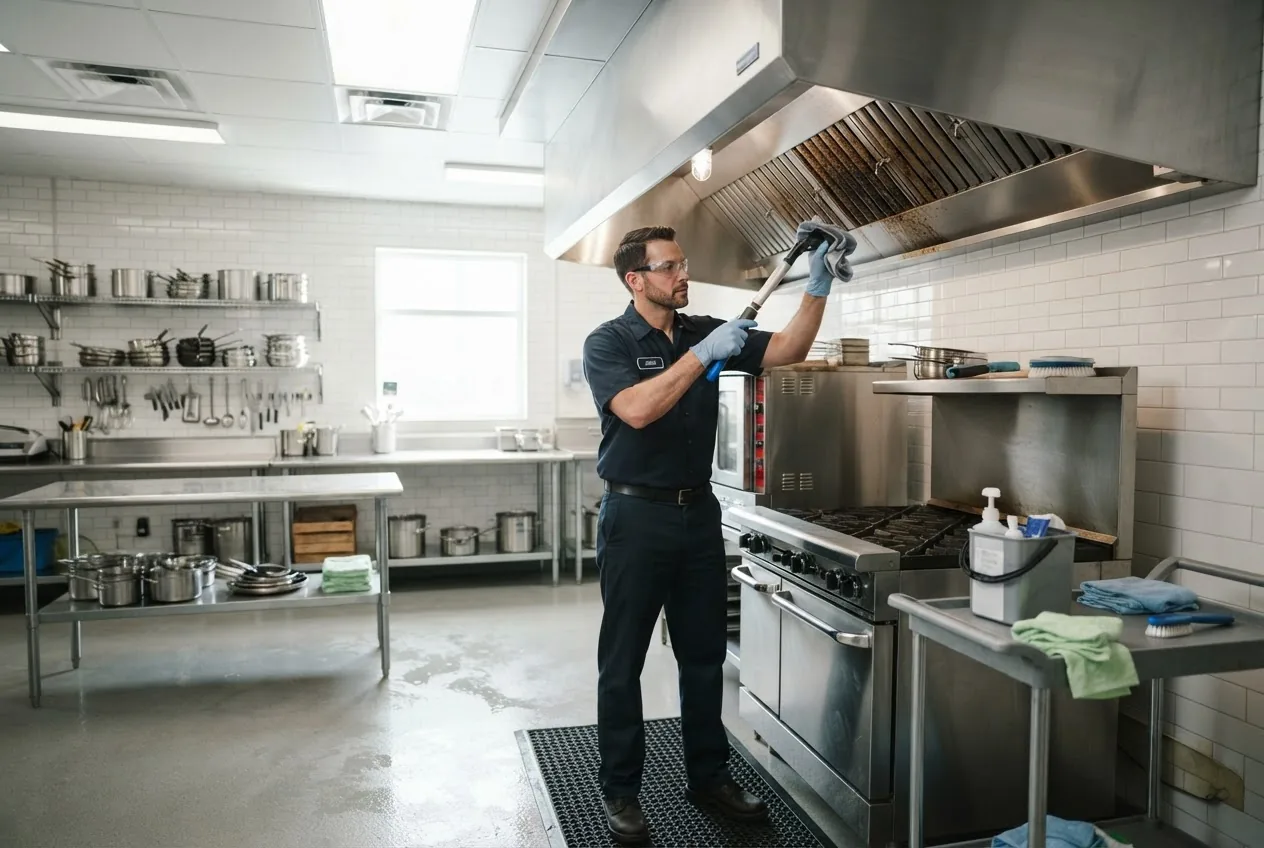
| Commercial Kitchens / Restaurants | Deep grease removal, exhaust/hood cleaning, floor drains, sanitization | Daily sanitization; scheduled deep cleans | Must align with health codes and HACCP considerations; see commercial kitchen cleaning services, restaurant cleaning service providers, and kitchen cleaning service options |
Additional facility types that often require specialized protocols include small offices (see small office cleaning services), post-construction sites (see post construction cleaning services), and stores with high foot traffic (see store cleaning commercial options).
Quality Assurance and Performance Monitoring
Answer: Quality assurance relies on scheduled inspections, client feedback loops, defined KPIs, digital records, and corrective actions that close the loop between detected defects and retraining or operational changes.
Term: KPI (Key Performance Indicator) is a quantifiable measure used to evaluate success in meeting performance targets.
Key quality assurance components include:
- Inspection program: Combine supervisor walk-throughs, third-party audits, and client spot checks using standardized digital checklists and photo evidence.
- Client feedback: Structured weekly or monthly surveys, plus immediate reporting channels for urgent issues.
- KPIs to track:
- Inspection pass rate (%)
- Average time-to-correct defects (hours)
- Client satisfaction score (1–5 or % favorable)
- Rework frequency (per 1,000 service hours)
- Safety incidents per 100 employees
- Corrective action process: Document root cause, retrain staff, update SOPs, and verify effectiveness within a defined timeframe—escalate repeat issues to management.
- Performance reviews and incentives: Use KPI outcomes in quarterly reviews; reward high performers to reduce turnover and improve service consistency.
Numbered monitoring steps for supervisors:
- Schedule and conduct unannounced inspections at random intervals.
- Log findings with timestamped photos and assign corrective actions in the system.
- Track closure rates and re-inspect corrected items within 48–72 hours.
- Report KPI trends to account managers monthly and propose process changes if negative trends persist.
Case study summary: An anonymous large janitorial company introduced a digital inspection app with auto-reminders and SLA-driven escalation in 2022; according to their internal report, the inspection pass rate increased from 76% to 91% within nine months after targeted retraining and incentivized performance plans (company KPI report, 2023).
What are best practices for managing janitorial firms?
Answer: Best practices combine clear SOPs, structured training schedules, proactive workforce planning, career development, data-driven QA, and strong customer service to reduce turnover and deliver consistent janitorial services.
Term: SOP (Standard Operating Procedure) is a documented, step-by-step instruction designed to achieve uniform performance across staff.
Effective management practices:
- Documented SOPs and checklists: Standardize tasks to reduce variation between teams and sites; store digitally for easy updates.
- Structured scheduling and staffing models: Use workforce management tools to align shift patterns with client peak hours and seasonal demand.
- Career pathways and retention: Offer clear role progression (janitor → team lead → supervisor) and tie certification to promotions and pay increases.
- Training calendar and budget: Plan quarterly training sessions, annual certifications, and on-boarding budgets; invest in a basic learning management system for scalability.
- Operational efficiency: Optimize supply chain for chemicals and PPE, schedule preventive maintenance for equipment, and monitor inventory to avoid service gaps.
- Customer service excellence: Train staff on client communication, confidentiality, and response protocols; appoint account managers to handle escalations.
- Use of metrics and dashboards: Consolidate KPIs into a management dashboard for real-time oversight of inspection pass rates, staffing levels, and incident trends.
- Risk mitigation: Maintain liability insurance, ensure background checks for staff in secure facilities, and keep records of training and medical clearances.
Bulleted best practices checklist for immediate implementation:
- Publish clear SOPs and make them accessible via mobile devices.
- Establish a quarterly training and assessment plan.
- Create KPI targets and tie them to incentives.
- Invest in digital inspection and scheduling tools.
- Implement a client-facing reporting cadence.
- Cross-train staff to reduce single-point failures.
Tradeoffs analysis: in-house training gives control over culture and standards but requires budget and instructor capacity; subcontracting specialized training reduces administrative load but may limit customization. For workforce recruitment integration with training, consult cleaning jobs and contract opportunities.
What tools, equipment, and cleaning agents do janitorial janitors use?
Answer: Janitorial staff use a mix of manual tools (mops, microfiber cloths), powered equipment (autoscrubbers, HEPA vacuums), approved cleaning agents per SDS guidance, and PPE; selecting eco-friendly products and manufacturer-recommended equipment extends asset life and improves outcomes.
Term: HEPA (High-Efficiency Particulate Air) refers to filters that remove at least 99.97% of airborne particles 0.3 microns in diameter.
Core equipment and agents:
- Microfiber cloths and mop systems: Reduce chemical use and improve soil capture.
- Autoscrubbers and burnishers: For large floor areas; require certified operator training to prevent surface damage.
- HEPA vacuums: For dust control in offices and healthcare-adjacent settings.
- Carpet extractors and encapsulation products: Selection depends on traffic levels and fiber type.
- Approved chemical agents: pH-balanced cleaners, enzymatic degreasers for kitchens, and EPA-registered disinfectants when disinfection is required—consult EPA guidance for chemical selection and disposal.
- PPE and spill kits: Gloves, eye protection, splash suits and absorbent materials for hazard containment.
- Small tools: Squeegees, grout brushes, detail tools, and signage (wet floor cones).
Equipment selection should be supported by maintenance plans: daily checks, scheduled servicing, and operator logs. For chemical safety and environmental compliance, consult EPA guidelines and vendor SDS documentation.
Glossary
- Autoscrubber: A ride-on or walk-behind machine that scrubs and vacuums floors for efficient cleaning.
- Encapsulation: A low-moisture carpet cleaning process that traps soils in a crystal matrix for dry removal.
- EPA-registered disinfectant: A chemical product listed by the Environmental Protection Agency for use against specified microorganisms.
- PPE: Personal Protective Equipment such as gloves, goggles, and masks used to reduce exposure to hazards.
What challenges do janitorial services companies face in training and service delivery, and how can they resolve them?
Answer: Common challenges include high staff turnover, inconsistent adherence to standards, seasonal demand swings, and client expectation gaps; solutions use targeted retention programs, standardized SOPs, flexible staffing, and digital QA tools.
Problem-solution breakdown:
- High turnover: Offer career pathways, hourly wage reviews tied to certification, and recognition programs; this reduces recruitment costs and preserves institutional knowledge.
- Maintaining standards: Use SOPs, competency sign-offs, and unannounced inspections to detect drift; assign mentors to new hires.
- Seasonal fluctuations: Maintain a pool of trained on-call staff and cross-train employees to shift across site types.
- Client expectation divergence: Clarify SLAs, provide visual scope documents, and hold quarterly service review meetings to align objectives.
- Training resource constraints: Blend in-person skill labs with microlearning to reduce downtime and scale delivery.
Each solution should be accompanied by metrics to verify effectiveness, e.g., churn rate reduction, inspection pass rate improvements, and time-to-fill vacancies. According to a 2023 industry workforce analysis, firms that invested in career progression plans saw average tenure increase by 26% (industry workforce analysis, 2023).
What future trends will shape janitorial services companies’ training and service standards?
Answer: Future trends include green cleaning adoption, automation and robotics for repetitive tasks, digital training (VR/AR), data-driven QA dashboards, and evolving compliance requirements—requiring adaptive training and investment in technology.
Key trends to monitor:
- Green and sustainable cleaning: Demand for biodegradable agents and reduced chemical footprints will require new SOPs and vendor approvals.
- Automation and robotics: Floor-scrubbing robots and autonomous vacuums lower labor intensity but require technical operator training and maintenance protocols.
- Digital and immersive training: Virtual reality (VR) and augmented reality (AR) modules enable realistic practice without risking client assets.
- Enhanced compliance tracking: Expect increased client demand for documentation of training hours, SDS adherence, and background checks—stored in secure digital records.
- Customer-centric services: Customizable SLAs and outcome-based contracts emphasizing cleanliness metrics rather than task counts.
Adapting requires investment but yields operational resilience: automation reduces repetitive strain injuries; green products can reduce regulatory risk; digital training scales instruction consistently across multi-site operations.
Summary: Implement structured onboarding, align training with OSHA and ISSA guidance, document service standards via SOPs and SLAs, monitor performance through KPIs and digital inspections, and invest in staff development and appropriate equipment to deliver consistent, compliant janitorial maintenance. For specialized floor care or kitchen cleaning considerations, consult linked specialist guides.
Ready to benchmark your program? Conduct a 90-day audit: review SOPs, inspect three representative sites, audit training records, and implement a prioritized corrective action plan tied to measurable KPIs—start with a single client site to validate improvements before scaling.