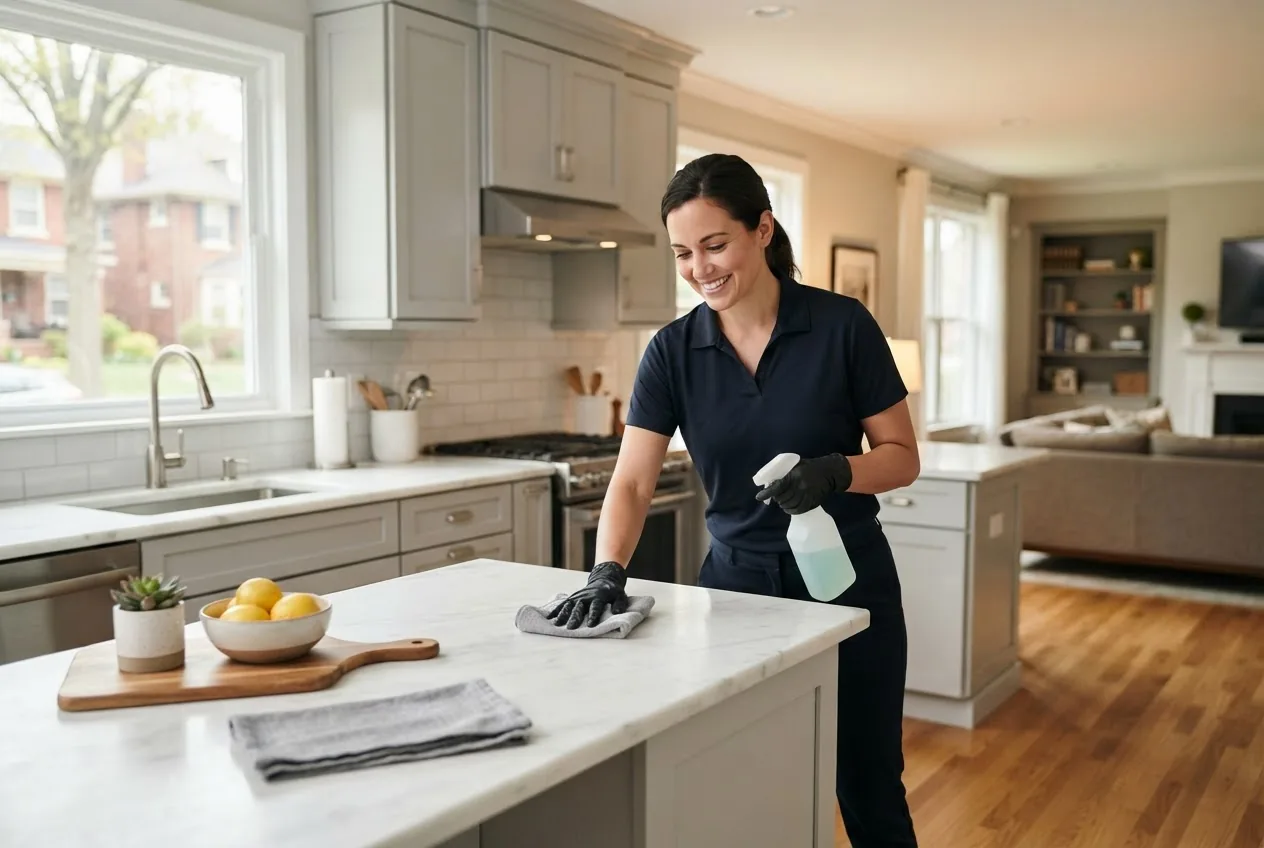


Cleaner for house cleaning refers to a domestic cleaning professional you hire to maintain living spaces; hiring requires vetting, background checks, references, insurance verification, and a clear service agreement. Nationwide costs typically range from $25–$50 per hour or flat fees by job, varying with size, frequency and included tasks.
What is a Cleaner for House Cleaning?
Answer: A cleaner for house cleaning is a residential cleaning professional hired to perform routine or scheduled cleaning tasks in a private home, including dusting, vacuuming, bathroom and kitchen cleaning, trash removal, and optional add-on tasks like laundry or oven cleaning.
Term: Residential cleaning — routine cleaning tasks performed in private homes to maintain hygiene and order.
A cleaner for house cleaning (sometimes called a housekeeper or domestic cleaning professional) can be an independent contractor, an employee of a small business, or work for a larger cleaning company. Typical duties include surface cleaning, floor care, bathroom sanitization, kitchen wipe-downs, and light organizing. Cleaners may bring supplies and equipment or use a homeowner’s products; clarify this when hiring.
Examples of common engagements:
- Weekly or biweekly recurring cleaning for general upkeep.
- One-time or initial deep clean to reset a home.
- Customized visits focused on bathrooms, kitchens, or high-traffic areas.
Cleaners differ from specialized services (e.g., carpet cleaning, mold remediation) that require equipment or certifications. For specialized tasks, ask for credentials and insurance confirmation. Transitioning into hiring, the next section explains a step-by-step hiring process so you can find a reliable cleaner who meets your needs.
How to Hire a Cleaner for House Cleaning
Answer: Hire a cleaner by defining needs, advertising or sourcing candidates, performing background checks and interviews, checking references, confirming insurance/bonding, and setting a written service agreement that covers scope, schedule, supplies, and payment.
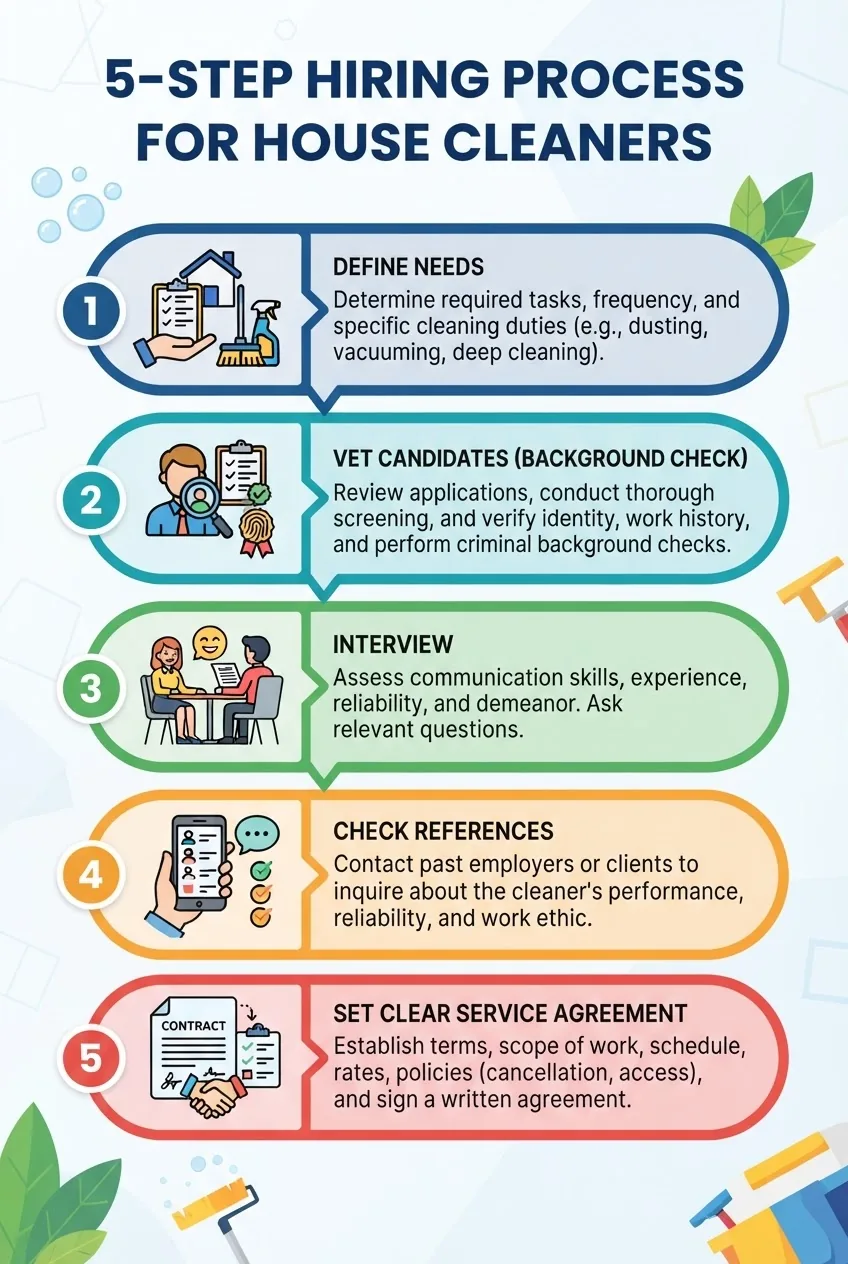
Term: Background check — verification of identity, criminal history, and employment records used to assess candidate suitability.
-
Define your needs precisely.
Write a one-page brief listing tasks (e.g., bathrooms, vacuuming, windows), frequency (one-time, weekly, biweekly, monthly), estimated time, pets, number of bedrooms/bathrooms, and whether supplies/equipment will be provided. Precise needs let candidates give accurate quotes and reduce scope creep.
-
Decide independent cleaner vs. company.
Independent cleaners often cost less and offer flexibility; companies provide payroll, training, backup staff, and insurance. Trade-offs include control (more with independents) and institutional safeguards (more with companies). Use this when weighing candidates from listings or staffing sites and consult local labor rules before hiring.
For individuals considering cleaning work, see cleaning jobs near me requirements and hiring guide.
-
Source candidates using multiple channels.
Post locally (community boards, neighborhood apps), check vetted platforms, ask neighbors, or ask small local businesses. Compare profiles, years of experience, and reviews. Request references and prioritize candidates with steady feedback over those with no history.
For clean-out specialties and complex jobs, reference the apartment clean out guide with cost and service options.
-
Conduct a structured interview.
Use a checklist of questions: availability, cancellation policy, supplies provided, experience with pets, references, and ability to provide proof of ID. Ask scenario questions: “If a client reports a chipped dish, how would you respond?” Look for clarity on communication and problem-solving.
-
Verify identity, references, and run background checks.
Request a government ID and two professional references; call former clients and ask specific questions about reliability, thoroughness, damage incidents, and punctuality. For background checks, use consumer-facing services or request that candidates obtain a basic criminal background check.
External guidance on background checks and safe hiring practices is available from government resources like USA.gov and industry best practices from ISSA.
-
Confirm insurance and bonding.
Term: Bonded — an insurance-backed guarantee that can reimburse a client for loss or theft by a bonded worker. Term: Insured — liability coverage that protects both the cleaner and homeowner against damage or injury during service.
Ask for proof of liability insurance and a bonding certificate. If hiring an independent cleaner without insurance, require they obtain coverage or hire through an insured company to limit homeowner liability.
-
Request a written service agreement.
The agreement should describe tasks, schedule, payment terms (hourly or flat), notice periods for cancellations, damage procedures, and supply responsibilities. A trial period (first two visits) with evaluation criteria helps align expectations.
-
Set a trial visit and evaluate.
Schedule an initial cleaning with clear expectations and a focused checklist. Evaluate punctuality, communication, thoroughness, and whether the cleaner follows a checklist. Provide feedback and adjust the agreement before committing to a recurring schedule.
-
Establish payment method and recordkeeping.
Use traceable methods (bank transfer, card, or company invoice). For independent contractors, confirm tax status and request invoices. Keep records of payments, agreements, and documentation for insurance or dispute resolution.
-
Build in feedback and review cycles.
Schedule check-ins at 30 and 90 days to discuss performance, adjust scope, and agree on any price changes. Encourage written feedback and keep a log of requests and resolutions to maintain clarity.
These steps prioritize safety and clarity. Next, we’ll list the precise qualities to look for so you can identify good cleaners when vetting candidates.
Characteristics of Good Cleaners for House Cleaning
Answer: Good cleaners demonstrate reliability, trustworthiness, attention to detail, clear communication, appropriate experience, respect for privacy, and professional presentation while providing consistent cleaning results.
Term: Attention to detail — thoroughness in cleaning tasks that prevents missed spots and ensures a high-quality finish.
Key qualities to prioritize when hiring:
- Reliability: Arrives on schedule, communicates about delays, and honors agreed appointments.
- Trustworthiness: Transparent references, clean records from background checks, and respectful behavior in clients’ homes.
- Attention to detail: Cleans baseboards, light switches, and corners—not only visible surfaces—using consistent checklists.
- Professionalism: Clear written agreements, polite communication, neat attire or badge if company-employed, and respectful handling of household items.
- Experience and training: Knows product use, safe chemical handling, and how to clean different surfaces (wood, stone, stainless steel).
- Insurance awareness: Either insured/bonded via a company or carries personal liability; recognizes when to escalate damage claims.
- Adaptability: Customizes cleaning to priority areas and responds to reasonable client requests without sacrificing quality.
- Clear communication: Confirms arrival times, scope changes, and price adjustments before performing extra tasks.
- Respect for privacy and possessions: Uses gloves, avoids prying into private areas, and documents pre-existing damages if present.
Examples of real-world hiring outcomes (anonymized):
Case A: After hiring an independent cleaner who provided three solid references and a clean background check, a homeowner reported a reliable weekly schedule and no incidents over 18 months.
Case B: A tenant hired the least-expensive candidate without references and experienced a missing item; the cleaner lacked bonding and resolution required small-claims action.
These examples underline why references, checks, and insurance are non-negotiable when selecting good cleaners. Next, the full cost breakdown explains how pricing models work and what to expect when budgeting for a cleaner for house cleaning.

Typical Costs for Hiring a Cleaner for House Cleaning
Answer: Typical costs for hiring a cleaner for house cleaning range from roughly $25–$50 per hour nationally, or $100–$300 for flat-rate one-time cleanings depending on home size, frequency, included tasks, and whether supplies are provided.
Term: Flat fee — a single, fixed price for a cleaning job regardless of exact time taken.
| Pricing model | Typical U.S. range | What’s included |
|---|---|---|
| Hourly | $25–$50 per hour | General cleaning tasks; overtime or extended tasks extra |
| Flat-rate per visit | $100–$300 per visit | Set scope (e.g., 3BR/2BA standard clean); supplies may be included |
| Per-room | $15–$60 per room | Useful for a la carte tasks or partial cleanings |
| Deep clean (one-time) | $200–$600+ | Intensive tasks: baseboards, inside appliances, grout, heavy-duty scrubbing |
Pricing drivers to expect:
- Home size: More square footage usually increases total time and cost.
- Frequency: Recurring weekly/biweekly service typically lowers per-visit price compared with one-time or occasional cleanings.
- Scope and task complexity: Deep cleaning, oven cleaning, or interior window cleaning increases charges.
- Supplies and equipment: Providing eco-friendly products or heavy equipment (carpet extractor) can add to cost.
- Region and labor market: Urban areas with higher labor costs tend to be at the top of ranges.
Data and benchmarks: According to a 2023 consumer market report by Angi, the median hourly rate for house cleaning professionals falls in the mid-$30s per hour; similarly, HomeAdvisor/Angi report averages for one-time cleanings cluster around $150–$250. Referencing multiple sources gives a reliable national baseline when comparing local quotes. For online estimate strategies, see cleaning quotes online how to get accurate cost estimates.
Specific move-out and regional contexts can differ markedly; for move-out pricing considerations, review the apartment move out cleaning cost and service guide. For a city-level example in Cincinnati, see Cincinnati home cleaning services cost and booking guide. For an Oklahoma City perspective, consult cleaning companies OKC service options and pricing guide.
How to get accurate estimates:
- Provide a detailed scope and photos when requesting quotes.
- Ask whether supplies are included or billed separately.
- Request a written estimate with line items for add-ons.
Costs vary; clearly document assumptions to avoid surprises. Next, examine common pricing models and what they include so you can choose the most transparent option for your household.
Common Pricing Models and What They Include?
Answer: Common pricing models are hourly, flat-rate per visit, per-room, and package pricing; each model differs in predictability, fairness for time spent, and suitability for recurring vs. one-time cleaning.
-
Hourly pricing
Charged per hour worked, typically $25–$50/hr nationally. Pros: Fair for variable tasks and partial visits. Cons: Less predictable final cost; homeowners must track time and may feel rushed if cleaner is hourly. Tip: Agree on a minimum time per visit (e.g., two hours).
-
Flat-rate per visit
A fixed price for a defined scope (e.g., 3BR/2BA standard clean for $150). Pros: Predictable billing and easy budgeting. Cons: May incentivize slower work if the scope is unclear. Ensure the scope is itemized in the agreement.
-
Per-room pricing
Charged per specified room (e.g., $30/bedroom, $40/kitchen). Pros: Simple for partial jobs or targeted cleaning. Cons: Can be inflated if rooms vary significantly in size or dirt level; clarify what “per room” includes.
-
Package or subscription pricing
Discounted rates for recurring customers (e.g., weekly at 10–20% off individual visit rates). Pros: Cost-effective for ongoing maintenance; builds a relationship with one cleaner. Cons: Requires a commitment; early termination fees may apply.
-
One-time deep clean pricing
Higher flat fee to account for intensive tasks (grout, inside appliances, heavy scrubbing). Pros: Resets a home to a base level before switching to recurring maintenance. Cons: More expensive upfront; clarify which deep tasks are included.
-
Add-on and a la carte tasks
Examples: oven cleaning, inside fridge, interior windows, laundry, and organizing. These are usually charged separately; ask for per-item pricing to compare accurately.
-
Materials-fee models
Some cleaners charge a materials or travel fee if they supply products. Clarify whether eco-friendly or specialty supplies cost extra and who is responsible for purchasing replacements.
-
Damage and repair policies
Confirm who pays for accidental damage. If a cleaner is bonded, bonding may cover theft; insurance can cover accidental damage or injury. Get the policy details in writing.
Evaluation tip: For recurring services, a flat-rate subscription with a trial period often balances predictability and cost; for irregular or complex needs, hourly with an agreed minimum can be fairer. When comparing quotes, always ask for an itemized list of included tasks to avoid misaligned expectations.
What to Expect from a Cleaner During a House Cleaning Service?
Answer: Expect a cleaner to follow an agreed checklist, arrive with or without supplies as arranged, spend the anticipated time, communicate about issues, and respect household rules; quality cleaners confirm scope and report damage or exceptions promptly.
Term: Cleaning checklist — a written list of tasks the cleaner will perform during a visit to ensure consistency and accountability.
Standard operational expectations:
- Arrival on time or prior notification for delays.
- Use of agreed supplies—if the cleaner provides products, they should be labeled and safe for surfaces.
- Following a checklist and documenting completed tasks when requested.
- Reporting accidents or existing damage before proceeding to avoid disputes.
- Leaving a note or digital confirmation of tasks completed and arrival/departure times.
Sample cleaning checklist (use as a starting point):
- Kitchen: wipe counters, degrease stove top, clean sink, load/unload dishwasher (if agreed), wipe cabinet fronts.
- Bathrooms: sanitize toilets, scrub tubs/showers, wipe mirrors, clean sinks, empty trash.
- Living areas/Bedrooms: dust surfaces, vacuum/mop floors, make beds (if requested), tidy clutter.
- Floors: vacuum carpets, sweep and mop hard floors, spot-clean stains.
- Extras (if requested): interior windows, baseboards, inside fridge/oven, laundry folding.
Specialized rooms or heavy areas such as basements often need different tools or scope. For guidance on basement-specific cleaning, consult basement cleaning services near me.
Communication expectations:
- Pre-visit confirmation via text or email and an estimated arrival window.
- Notification of any substitutions, delays, or exceeding scope that impacts price.
- Post-visit notes describing completed tasks and any issues found.
If a cleaner consistently misses checklist items, address it immediately with documented examples and allow one corrective visit before making changes. Next, learn the red flags signaling a problematic cleaner and how to avoid them.
Red Flags and How to Avoid Bad Cleaners?
Answer: Red flags include lack of references, refusal to provide ID, no written agreement, no insurance/bonding, poor or inconsistent reviews, unreliable scheduling, and pressured payment requests; avoid these by insisting on checks, references, and written contracts.
Common pitfalls and safeguards:
- No references or unverifiable references: Ask for multiple recent client contacts and call them; avoid candidates who cannot provide this.
- Refusal to provide ID or background checks: Require ID and either perform or request a background check; use government guidance from USA.gov for legal considerations.
- No insurance/bonding: If a cleaner lacks bonding or insurance and you’re uncomfortable, hire through a bonded company or require proof of coverage before work begins.
- Inconsistent or poor reviews: Cross-check multiple platforms and read for pattern complaints (theft, damage, missed appointments).
- Pressure for large cash payments or no receipts: Use traceable payments and get invoices; avoid cash-only arrangements that lack records.
- Overpromising or too-good-to-be-true low pricing: Extremely low quotes often cut corners or hide fees; balance price with documented scope and references.
- Poor communication: Missed confirmations or unclear cancellation policies signal organizational issues that may worsen over time.
- Unwillingness to sign a service agreement: A refusal to document scope, schedule, and payment terms is a material risk; decline to hire without a written agreement.
Safeguards to implement now:
- Insist on a written contract or service agreement for any recurring work.
- Hold the first two visits as a probationary period with documented feedback.
- Use platforms that provide verified reviews or background-checked professionals, or request proof of checks directly from candidates.
- Maintain photographic records of valuable items and note pre-existing damage in writing prior to service.
With red flags minimized, maintaining the relationship is the next step — the final section offers practical tips for keeping a long-term, productive cleaner-client relationship.
How to Maintain a Good Working Relationship with Your Cleaner?
Answer: Maintain a good relationship through clear communication, consistent scheduling, fair payment, constructive feedback, mutual respect for boundaries, and periodic reviews to adjust scope or pricing as needed.
Practical tips with examples:
- Communicate expectations clearly: Share a written checklist and house rules (e.g., gate codes, pet protocols). Example: “Please do not move items on my desk.”
- Be consistent with scheduling: Hold fixed days/times when possible to help the cleaner manage their route and reduce cancellations.
- Agree on payment terms: Pay on time using traceable methods and confirm invoicing cycles; tips are optional but appreciated for exceptional service.
- Provide constructive feedback: Use a sandwich method—positive note, one improvement, positive close—to address issues without creating defensiveness.
- Respect privacy and boundaries: Don’t leave sensitive documents in plain view; communicate off-limit areas and valuables before the first visit.
- Offer flexibility for minor schedule changes: Small rescheduling accommodations build goodwill—within agreed limits to avoid frequent last-minute requests.
- Consider bundled services if needed: If you need organizing plus cleaning, consult combined providers; see cleaning and organizing services near me.
These approaches preserve trust and reduce churn. Summarizing the article’s main takeaways helps you act with clarity when hiring and managing a cleaner for house cleaning.
Conclusion — Key takeaways and next steps:
Hiring a cleaner for house cleaning is a straightforward process when you define scope, verify references and background, confirm insurance/bonding, and use a written agreement. Budget using the pricing models above, start with a trial visit, and maintain clear communication to build a reliable relationship. Ready to start? Request written quotes from at least three providers and compare scope and insurance proof before committing.