

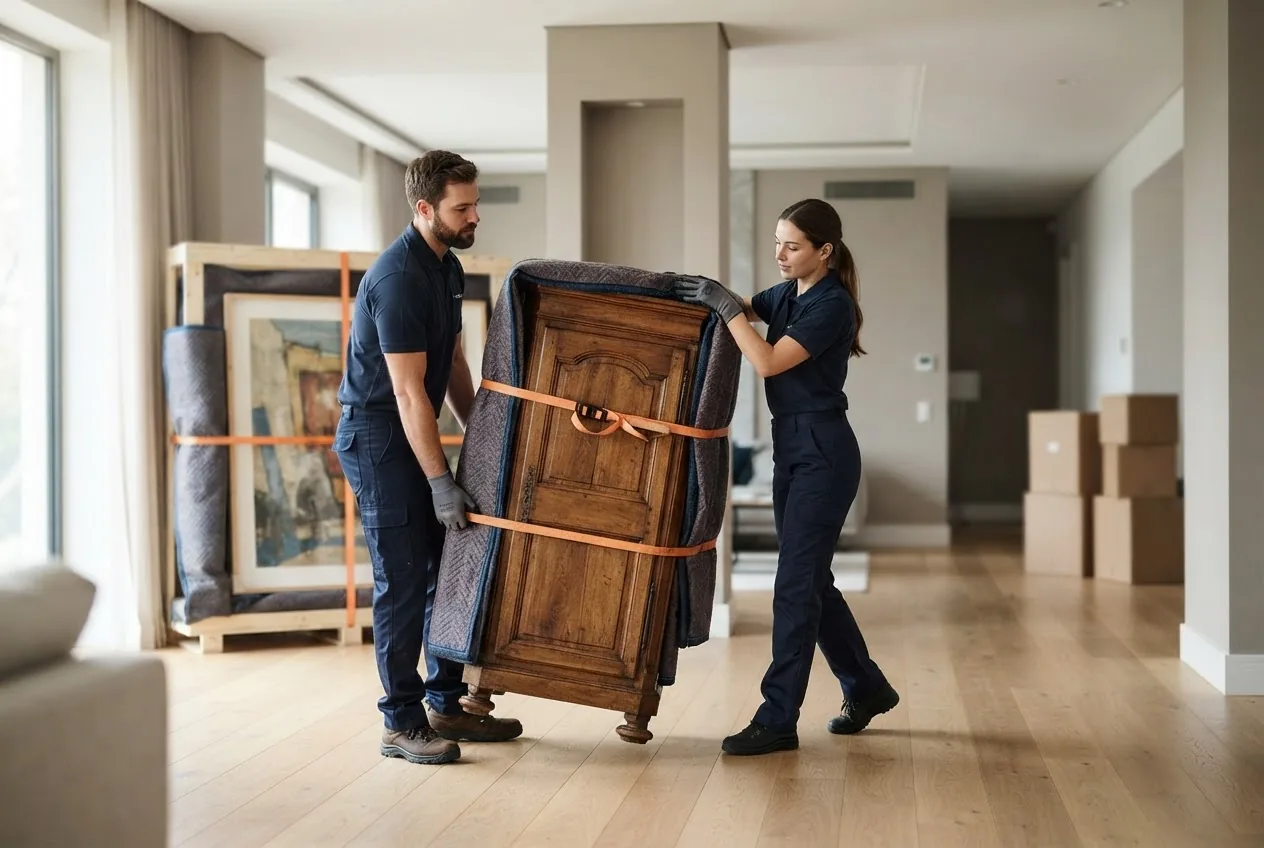
Specialty movers are professional teams that handle unique, heavy, fragile, or high-value items using specialized equipment, packing, and transport processes to minimize risk; they offer tailored services for pianos, artwork, safes, medical devices, antiques, and more, often with higher licensing and insurance standards than general movers.
What Are Specialty Movers?
Answer: Specialty movers are moving professionals focused on transporting niche or high-risk items that require special handling, tools, packing, and regulatory compliance beyond standard residential moves.
Term: Specialty movers — movers who provide niche moving services for items with unusual weight, fragility, size, or legal/technical constraints.
Specialty moving describes the complete set of services needed to relocate items that cannot be handled by general movers without additional training or equipment. These teams combine item-specific knowledge (for example, how to tune and stabilize a piano or certify a medical device for transport), mechanical rigging, and custom crating to protect value and function.
Specialty movers typically offer:
- Pre-move surveys and site checks for access and floor loading capacity.
- Custom crating and climate-controlled transport for sensitive items.
- Rigging, hoisting, and structural reinforcement coordination.
- Valuation coverage and documentation for high-value items.

Real-world example: a grand piano move often requires piano skids, ramping equipment, pallet jacks, and a two-person or four-person crew plus a specialized truck with suspension to prevent damage—actions that general movers usually don’t include in a standard quote.
Transition: Knowing what specialty movers do leads naturally into the specific service types they offer.
Common Types of Specialty Moving Services
Answer: Specialty moving services cover pianos, antiques, fine art, gun safes, medical and lab equipment, oversized furniture, pool tables, wine cellars, and unique commercial machinery—each requiring distinct packing, transport, and sometimes regulatory handling.
Below are the most common specialty move categories with concise service descriptions and typical handling notes.
- Piano moving — Move of uprights, baby grands, and concert grands using piano boards, skids, ramps, and hoists; may require disassembly (legs, pedals) and climate-controlled transport for high-value instruments.
- Artwork and fine art moving — Handling paintings, sculptures, and installations with custom crating, shock- and vibration-dampening materials, humidity control, and provenance documentation.
- Antique moving — Transportation of antique furniture and historical items using archival packing materials, padded lifts, and often insurance appraisals to meet valuation needs.
- Gun safe and heavy safe moving — Requires specialized lifting equipment, structural floor assessment, route planning, and sometimes removal of concrete footings; often a two-crew rigging job.
- Medical and laboratory equipment moving — Moving diagnostic machines, imaging equipment, and lab analyzers that may need certified technicians, calibration after move, and adherence to health-regulatory documentation.
- Pool table moving — Disassembly of slate beds, precise leveling and reassembly, and experienced movers to avoid warping or damaging playing surfaces.
- Wine cellar and fine wine transport — Climate-controlled containers, humidity monitoring, and secure handling to protect bottles and labels.
- Musical instrument specialty moves (non-piano) — Organs, harps, and other large instruments needing custom harnesses and stabilization.
- Industrial machinery and commercial equipment — Forklift, rigging, crane services and coordination with plant managers for heavy, anchored, or bolted-down equipment.
- High-value collections and jewelry — Secure transport protocols, discrete routing, and sometimes armed courier services or bonded carriers.
- Appliance specialty moves — Large or built-in appliances requiring disconnect/reconnect by certified technicians; see the appliance movers service guide for related procedures.
Each category often demands unique timing, permits, and crew composition—expect higher per-item costs and pre-move inspections.
Transition: Understanding the types helps explain how specialty moving differs from general moving services.
How Specialty Moving Differs from General Moving
Answer: Specialty moving differs from general moving by requiring item-specific expertise, specialized equipment, customized packing/crating, additional insurance/valuation options, and regulatory compliance that general movers usually omit.
Term: Crating — creating a custom wooden or composite protective enclosure for fragile or irregular items to protect them during transport.
| Feature | Specialty Moving | General Moving |
|---|---|---|
| Training & expertise | Item-specific certified handlers (e.g., art handlers, piano movers) | General packing and lifting techniques |
| Equipment | Hoists, cranes, climate-controlled trucks, custom skids | Blankets, dollies, standard trucks |
| Packing materials | Archival papers, custom crates, anti-vibration mounts | Boxes, bubble wrap, stretch wrap |
| Insurance & valuation | Higher valuation options, specialized endorsements | Basic carrier liability or released value |
| Permits & regulations | Possible permits, structural checks, health regulations | Usually none beyond vehicle/operator licensing |
| Price model | Often flat per-item or project quotes with add-ons | Hourly with minimums or cubic/weight estimates |
Specialty moves often use project management: pre-move surveys, coordination with conservators or technicians, and post-move set-up and certification. For an explicit contrast with budget providers see the affordable movers service requirements and cheap movers guide.
Transition: Because specialty moves demand more oversight, licensing and insurance play a larger role in risk allocation.
Specialty Movers Licensing, Insurance, and Certification Requirements
Answer: Specialty movers must meet federal, state, and local licensing, carry commercial insurance with additional endorsements for high-value items, and often hold certifications or industry memberships that demonstrate specialized handling capabilities.
Term: Valuation coverage — a mover’s declared financial liability for cargo loss or damage; higher valuation equals higher carrier responsibility and cost.
Regulatory and insurance landscape:
- Federal: For interstate moves, carriers must comply with the Federal Motor Carrier Safety Administration. FMCSA provides operating authority and registration standards; according to 2024 FMCSA data, carriers operating interstate must maintain specific liability insurance minimums and registration.
- State/local: Intrastate moves are governed by state moving boards or public utilities commissions with varying licensing and escrow rules; always check state-specific requirements.
- Industry certification: Memberships in the American Moving & Storage Association demonstrate adherence to best practices; see AMSA standards for handling and packing guidance.
Insurance and coverage options specialty movers typically offer or require:
- Released value coverage (basic, low-cost): minimal liability based on weight—rarely adequate for specialty items.
- Full value protection: carrier pays repair, replacement, or cash value; requires documented appraisals for antiques and artwork.
- Third-party marine or fine art insurance endorsements for cross-border or transit-sensitive items.
- Builder’s risk or transit insurance for commercial machinery relocations during construction phases.
Documentation and proof: movers should provide written estimates, itemized valuations, certificates of insurance, and evidence of bonding. As an example of company-specific coverage practices, review the Allied movers insurance overview.
Warning indicators and best practice checks:
- Verify DOT or interstate authority numbers for cross-state transport via FMCSA records.
- Request certificate of insurance showing limits and endorsements; verify with insurer.
- Get appraisals for items over a set threshold (commonly $1,000–$5,000) and attach them to the bill of lading.
- Ask about climate-control, vibration monitoring, and chain-of-custody procedures for art, antiques, and medical devices.
Transition: Licensing and coverage influence price structures; next we break down the detailed cost mechanics that drive specialty move quotes.
Detailed Cost Breakdown for Specialty Moving Services
Answer: Specialty moving costs are driven by item complexity, distance, crew skill, equipment, packing and crating, insurance/valuation, permits, and time; pricing often combines flat per-item fees and add-on hourly or distance charges.

Term: Disassembly — taking an item apart for transport to reduce risk or fit through access points; reassembly is often charged separately.
Primary cost drivers (explanation and typical ranges):
- Item complexity and value: A grand piano or large steel safe may cost $500–$3,000+ per move depending on weight and access; antiques and artwork add crating and conservation costs. According to a 2023 industry cost analysis report, specialized items can add 30–200% to a basic moving quote.
- Distance: Local specialty moves are often hourly or per-project; long-distance or interstate specialty moves include mileage, fuel surcharges, and possible escort/permit costs. For interstate shipments, carriers may combine per-item flat fees with per-mile charges.
- Crew size and skill level: Certified art handlers, piano teams, or rigging crews command higher hourly rates—expect $100–$200+ per hour for specialty crews in many metropolitan markets.
- Packing and crating: Custom crating can range from $200 for small custom crates to $2,000+ for large, multi-piece crates with climate control; archival packing adds material costs.
- Equipment rental: Crane lifts, hoisting blocks, generators, and climate-control units can add $300–$3,000+ depending on job requirements.
- Valuation and insurance fees: Upgraded valuation coverage and third-party insurance premiums typically increase total cost by 1–5% of declared value, sometimes more for high-risk items.
- Permits and escorts: Oversize or curbside crane permits, street closure permits, and police escorts vary by municipality—$50–$1,000+ per permit or escort.
- Storage and layover: Climate-controlled or secure storage for specialty items adds daily or monthly fees—typically $50–$500+ per month depending on security and climate requirements.
Pricing models explained with example scenarios:
| Pricing Model | How it works | Best for |
|---|---|---|
| Flat per-item/project | One price for the specific item move including standard packing and transport | Pianos, safes, one-off art installations |
| Hourly + equipment | Crew billed hourly plus separate fees for cranes, hoists, and ramps | Local specialty moves with variable access |
| Distance-based + valuation | Per-mile fees combined with value-based insurance charges | Long-distance specialty shipments |
Illustrative cost scenarios (estimates only; region and item specifics change results):
- Local upright piano move — Small building access, no stairs: crew of 2, 2 hours. Estimate: $200–$600 (hourly crew $100–$150/hr total).
- Concert grand piano nationwide — Crating, climate-controlled truck, hoist/lift: Estimate: $2,500–$8,000 depending on distance and crating complexity; includes valuation upgrade.
- Fine art gallery relocation (several pieces) — Custom crates, art handler team, climate control: $1,000–$10,000+ depending on number and fragility of pieces and distance.
- Gun safe removal and re-siting — 4-person rigging crew, floor reinforcement, possible concrete work: $600–$4,000+ depending on weight, access, and floor type.
For readers comparing company-specific pricing, see the ABF moving company cost guide, APT moving company cost details, and a contrast to regular housing moves in the apartment movers cost insights.
Cost-saving trade-offs and negotiation tips:
- Consolidate multiple specialty items into one service call to reduce per-item travel/setup fees.
- Provide accurate measurements, photos, and access information upfront to avoid change-of-plan charges.
- Compare flat per-item quotes vs. hourly estimates and ask for itemized equipment line items.
- Consider third-party insurance only when carrier valuation is insufficient; get broker quotes.
Transition: With costs and models clarified, the next section explains exactly how to prepare specialty items so you avoid avoidable fees and damage.
How to Prepare Specialty Items for Moving
Answer: Preparing specialty items requires documentation, professional appraisal (for high-value pieces), item-specific packing or crating, secure labeling, disassembly as needed, and arranging climate-controlled transport or storage when required.
Term: Disassembly — removing parts of an item (legs, lids, panels) to reduce bulk or protect components during transport.

-
Document and appraise:
- Photograph every angle; note serial numbers and condition; obtain professional appraisals for items over $2,000–$5,000.
- Create an inventory with dimensions, weight estimates, and suggested handling instructions for movers.
-
Consult specialists early:
- Hire a conservator for high-value art or antiques to advise on packing and environmental controls per AMSA best practices.
-
Choose appropriate packing materials:
- Custom crating for irregular or valuable items; archival paper and acid-free materials for antiques; vibration-damping foam for electronics.
- For general packing supply sources, see the best place to buy moving boxes.
-
Disassembly and labeling:
- Remove detachable parts and pack them with hardware in clearly labeled packets. Label panels with their reassembly position.
- For appliances or equipment requiring certified disconnect/reconnect, get technician services scheduled ahead of move day.
-
Protect interior components:
- Seal delicate surfaces, pad protruding components, and immobilize moving parts to prevent shift damage.
-
Plan access and staging:
- Measure doorways, stair widths, elevator capacities, ceiling heights, and parking/load zones; provide this data to the mover in advance to avoid day-of delays and surcharges.
-
Arrange climate or security needs:
- Book climate-controlled transport/storage for art, pianos, wine, or sensitive medical instruments; request monitored trailers if available.
-
Maintain chain-of-custody paperwork:
- Get signed condition reports at pickup and delivery; note pre-existing condition details and any conservator-recommended handling instructions to preserve valuation claims.
Step-by-step example: Preparing an oil painting for move
- Document with photos and condition notes.
- Remove frame if advised by conservator; wrap with acid-free paper, then foam, then custom crate.
- Attach humidity and shock indicators inside crate and ensure climate-controlled transport.
- Obtain signed bill of lading listing the painting and its declared value.
For supply planning and cost comparison on packaging materials, consult the best place to buy moving boxes.
Transition: Preparing items well reduces risk, but hiring the right team is essential—next we cover selection criteria.
Choosing the Right Specialty Movers: Tips and Best Practices
Answer: Choose specialty movers by verifying credentials, reviewing item-specific experience, comparing detailed written quotes, confirming insurance/valuation options, checking references, and ensuring clear timelines and damage policies.
How to evaluate and hire:
- Collect multiple detailed quotes: Ask for line-item breakdowns for crating, equipment, crew hours, permits, and insurance; compare scope, not only price.
- Verify credentials and track record: Request DOT/FMCSA numbers for interstate work, state mover licenses for intrastate jobs, and industry affiliations.
- Confirm specialized experience: Ask for examples or case studies of similar moves (e.g., concert grand piano moves, museum installs) and request references.
- Insurance and valuation transparency: Ensure the mover can provide appropriate valuation coverage or recommend third-party insurers; request certificate of insurance and endorsements.
- On-site survey and written estimate: Require an in-person or video survey rather than a verbal estimate to reduce unknowns and bait-and-switch risks.
- Check reviews and complaints: Search Consumer Protection databases and the Better Business Bureau; see BBB reports for complaint histories.
- Get a written contract: Include item descriptions, valuation, timeline, payment terms, cancellation policies, and damage resolution procedures.
- Confirm post-move services: Ask if the mover offers reassembly, tuning (for pianos), or calibration (for lab equipment) and whether those are included or billed separately.
Red flags to avoid:
- High upfront cash-only deposits with no escrow or tenant-protection language.
- Unwillingness to provide certificates of insurance or to list valuation limits in writing.
- Refusal to conduct an on-site survey for complex items.
For broader guidance on selecting movers and comparing costs across providers, consult the comprehensive pillar on local movers:
moving companies near me service costs and hiring guide.
Also consider cross-referencing overall best-company lists when vetting specialty services:
Transition: Even with careful hiring and prep, common challenges can arise during specialty moves; the next section addresses risk mitigation and troubleshooting.
Common Challenges and How to Avoid Damages in Specialty Moving
Answer: The main challenges are access and structural limitations, environmental sensitivity, improper packing/crating, inaccurate quotes, and poor chain-of-custody; avoid damages through pre-move surveys, conservator consultations, certified crews, and adequate insurance.
Typical challenges with practical mitigation steps:
- Tight access and staircases: Conduct pre-move measurements, plan alternate routes (cranes or hoists), and secure permits; consider cargo trailer rental guide for supplemental transport needs.
- Weight and floor loading: Get floor-loading capacity checks for heavy safes and pianos; use distribution skids to spread weight.
- Environmental risks (temperature, humidity): Use climate control and humidity monitors for artwork, wood instruments, and wine; add packing desiccants where appropriate.
- Improper crating/packing: Insist on custom crates for irregular items; use vibration-damping materials for electronics and imaging equipment.
- Calibration and reassembly needs: Budget for post-move calibration or tuning, which is often excluded from transport-only quotes.
- Claim disputes: Get signed condition reports and photos at pickup/delivery; file claims immediately and retain all receipts and appraisals.
Troubleshooting checklist if damage occurs:
- Stop and document: photograph damage with timestamps and obtain mover’s acknowledgment on the delivery receipt.
- Review contract and valuation coverage to understand next steps and claim limits.
- Contact mover insurance and file a claim within stated timeframes—typically 30 days for visible damage and shorter for time-critical items.
- Engage independent appraisers or conservators for high-value items to document repair needs; include those reports in claim submissions.
Transition: When items can’t move immediately or need specialized storage, the right storage options are essential.
Storage Options for Specialty Items During Moves
Answer: Specialty items should use secure, climate-controlled, and monitored storage facilities with appropriate insurance and access controls; short-term storage differs from long-term preservation needs in cost and environmental specifications.
Storage types compared:
| Storage Option | Best for | Typical cost drivers |
|---|---|---|
| Climate-controlled unit | Artwork, wood instruments, wine | Temperature/humidity regulation, monitoring |
| Secure vault or bonded storage | Jewelry, high-value collectibles | Security, insurance, restricted access |
| Palletized warehouse storage | Crated furniture or machinery | Handling, forklift access, long-term fees |
| On-site specialized storage | Large installations awaiting reassembly | Space rental, monitoring, specialist staff |
Short-term vs. long-term considerations:
- Short-term: Use flexible month-to-month climate-controlled units and insure transit-only valuation for the hold period.
- Long-term: Choose facilities with conservation-grade environments and inventory management; add regular checks and maintenance for organic materials.
Storage cost examples: climate-controlled storage typically ranges from $100–$500 per month for secure small-unit needs, while bonded vault storage for high-value items can be several hundred to thousands per month, depending on security level and insurance—figures vary by market and facility.
Transition: Summarizing everything will help you act with confidence when booking specialty movers.
Conclusion
Specialty movers provide the expertise, equipment, and insurance framework needed to relocate high-value, heavy, fragile, or technically complex items safely. Prioritize pre-move surveys, documented valuations, and certified crews; compare itemized quotes and verify insurance and licensing. For next steps, prepare inventory and request on-site surveys from at least three specialty providers and secure written contracts.
Call to action: If you have a piano, safe, artwork, or medical device to move, contact certified specialty movers for an on-site survey and written quotation to protect value and functionality.