Yard trash disposal: by the end of this hands-on guide you will be able to sort, prepare, transport, and legally drop off typical yard waste at a local facility or route it into composting—task time 1–4 hours depending on pile size; skill level: basic DIY with a chainsaw restriction for large branches. Read on for step-by-step actions, required tools, and when to call professionals.
Introduction to Yard Trash Disposal
This section defines what counts as yard waste, explains how it differs from regular garbage, and orients you to local rules you’ll need to check before hauling material. Commonly accepted yard waste types include grass clippings, leaves, twigs and branches, shrub prunings, dead plants, and small amounts of soil-free plant debris. “Green waste” and “organic debris” are industry synonyms for these materials; municipal rules typically separate them from mixed household garbage to enable composting and mulching.
Why separate yard trash? Yard waste allowed to decompose in landfills generates methane; separated green waste can be composted or processed to produce mulch and soil amendment. According to a 2023 municipal composting report, diverting yard waste can cut landfill-bound organic tonnage by 20–40% in cities with active programs (source: municipal case study report, 2023).
Key differences versus regular garbage: yard waste is usually handled on specialized collection days, placed in dedicated yard waste bins or paper bags, and taken to composting facilities or green-waste processing centers rather than conventional landfills. Regulations and acceptable materials vary by jurisdiction, so always confirm local rules before disposal.
Transition: now that you understand what yard waste is and why separation matters, let’s review the practical disposal methods you can choose from.
Common Yard Trash Disposal Methods

- Curbside yard waste pickup — Many municipalities or private haulers provide scheduled curbside pickup for bagged leaves, bundled branches, and containers marked as yard waste. Use approved paper yard waste bags or the city’s green cart. Check your collection schedule: weekly or biweekly is common. Pros: convenient and low-effort. Cons: limits on bundle diameter (often 4 inches) and branch length (commonly 4 feet). According to a 2024 industry report, curbside green-cart adoption rose 12% in medium-size cities (source: 2024 industry report).
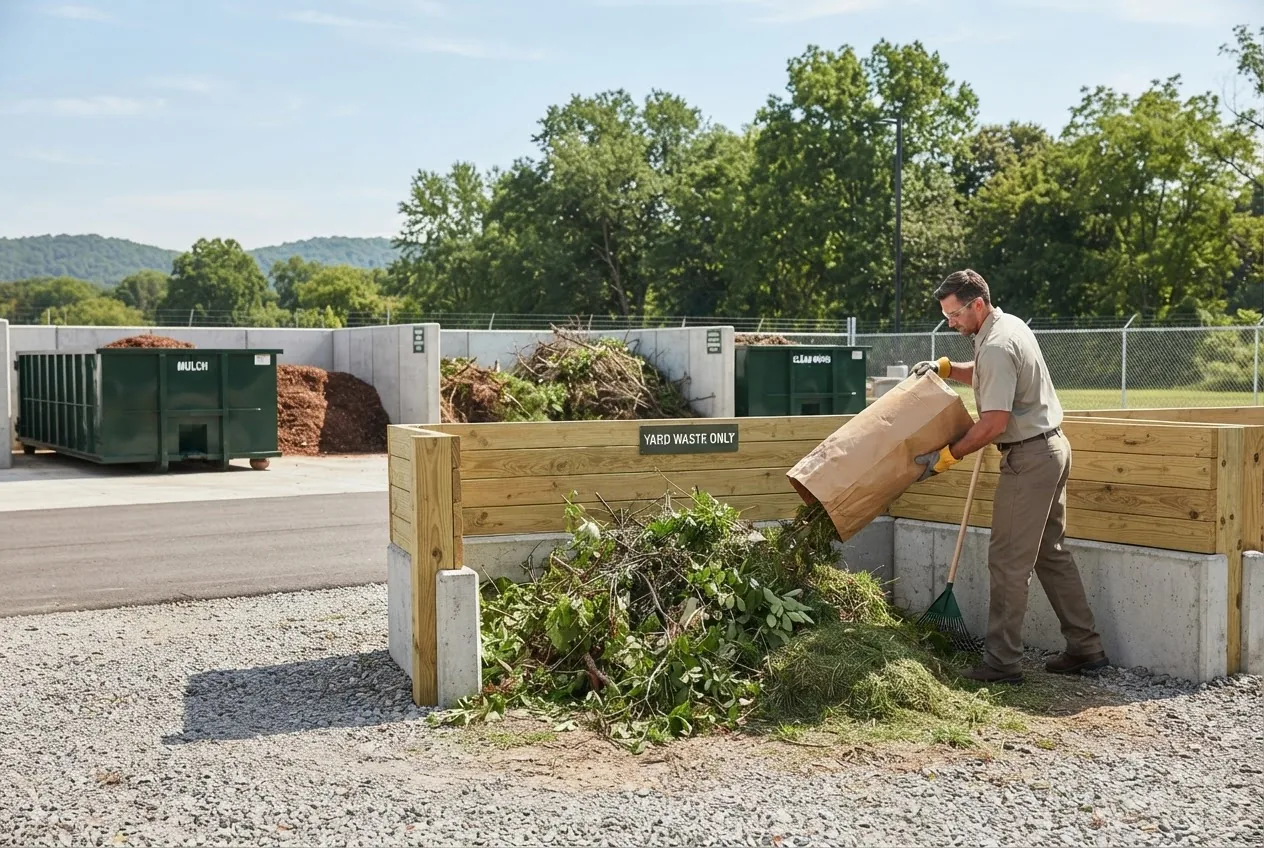
- Local drop-off centers and transfer stations — Drop off yard rubbish directly at a transfer station, recycling center, or organized yard waste facility. Facilities accept larger volumes and mixed loads, sometimes for a fee. This is the primary alternative if you have more material than curbside allowances permit. Pros: flexible hours and bulk acceptance. Cons: fees and vehicle trip required.
- Composting (home or municipal) — Home composting uses a backyard bin or pile to turn grass clippings and leaves into usable soil amendment; municipal composting facilities accept larger volumes and sometimes accept brush. Composting reduces landfill waste and produces a beneficial product. According to a 2022 EPA guidance summary, backyard composting can divert up to 30% of household organic waste (source: EPA guidance, 2022).
- Chipping and mulching — Larger branches and tree trimmings can be processed into wood chips by a chipper. Many municipalities offer periodic chipping programs or will accept brush at drop-off centers for chipping. Pros: produces mulch for landscaping; cons: chippers may require operator experience or hired service.
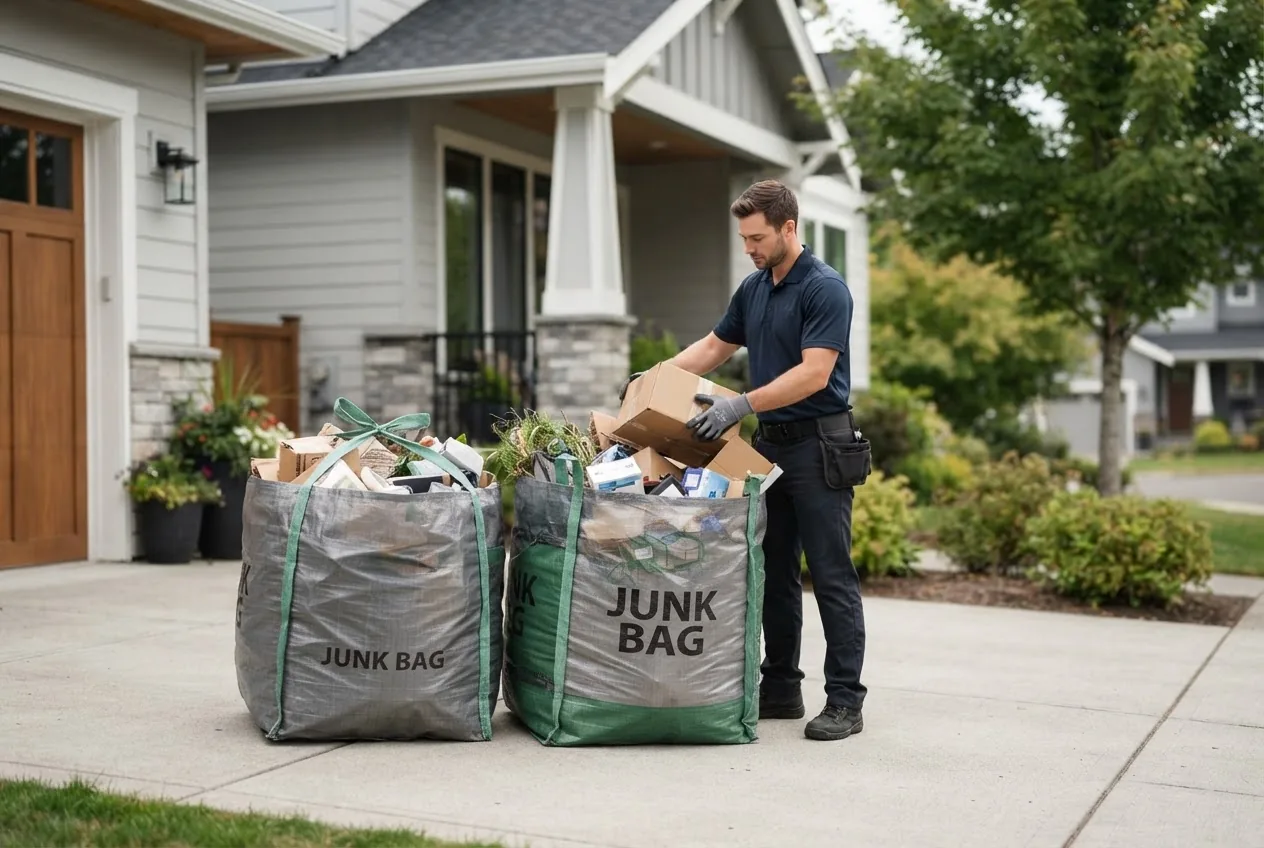
- Commercial hauling and dumpster rental — Rent a roll-off dumpster or hire a commercial yard waste hauler for major landscaping projects. Suitable for large volumes from property clean-ups or contractor work. Fees vary by cubic yard and material type. For large projects, consider professional dumpsters to avoid repeated trips. junk removal services and residential pickup options
- Landfill disposal (last resort) — Some landfills accept yard waste but often charge higher tipping fees and will not compost the material. Use landfills only if no green-waste option exists; verify landfill rules before arrival. For related landfill rules see garbage landfill overview and waste disposal requirements.
- Safe burning (where permitted) — Many rural areas allow controlled open burning for yard debris, but strict restrictions apply, and it’s illegal in most urban areas. Burning produces air pollution and is often discouraged; always check local burn permits and air-quality restrictions.
- Hire a local debris collector — If your yard waste includes mixed debris or construction brush, a debris removal company may be necessary. They can haul mixed loads and handle heavier materials, but costs are higher than green-waste-only services. See debris removal options: debris removal companies guide and construction services.
Transition: choose one or a combination of these methods based on volume, material type, cost, and local regulations. Next, learn practical, step-by-step preparation to avoid rejections and extra fees.
How to Prepare Yard Waste for Disposal

Follow this reliable, hands-on sequence to prepare yard trash so it is accepted by curbside crews or drop-off centers. All steps assume typical residential tools: loppers, pruning saw, rake, gloves, paper yard bags, twine, measuring tape, and a yard waste bin or cart.
-
Sort materials by type (10–30 minutes for an average yard)
Separate leaves and grass clippings from woody brush and branches. Keep soil, rocks, and construction debris out of green-waste loads; most facilities reject contaminated loads. Measure your branches: most services limit bundle diameter to 4 inches and length to 4 feet. If soil or root balls are present, move them to a regulated drop-off and check for fees. According to a 2023 municipal acceptance guideline, contaminated loads are rejected 18% of the time leading to disposal fees (source: 2023 municipal report).
-
Bag leaves and grass clippings (15–60 minutes depending on pile size)
Use certified paper yard waste bags for curbside pickup; they decompose and are accepted at composting facilities. Fill bags no more than 30–40 lb each for manual handling. Do not use plastic bags unless your city explicitly allows them. Tie bags securely and label where required by your municipal program.
-
Bundle branches (10–45 minutes)
Cut branches to the allowed maximum length (commonly 4 feet). Stack smaller twigs with the bark facing same direction, then tie with biodegradable twine in 12–18 inch intervals. Keep bundle diameter under 18 inches for manual pick-up or under 4 inches if your hauler enforces that stricter rule. Use a tape measure for accuracy—don’t guess.
-
Place material in the proper container (20 minutes)
Put bagged leaves in approved bins or at curb location per your city’s placement guidelines—usually at the curb by 6:00 a.m. on collection day. For large quantities, use a roll-off or take to a drop-off center. If using a yard waste cart, ensure the lid closes; overfilled carts may be skipped.
-
Label and document bulk loads for drop-off (10 minutes)
If dropping off at a transfer station, check whether you need a permit or proof of residence for residential rates. Bring ID and have materials organized by type. For commercial loads, expect to show a business permit or pay commercial tipping fees.
-
Confirm prohibited and restricted items (5–15 minutes)
Remove treated wood, painted lumber, stumps with significant soil, and hazardous waste. These items typically require specialized disposal. Check the facility’s list before arrival; failure to remove them can result in load rejection and extra charges.
-
Record quantities for billing and compliance (5 minutes)
If you’re a contractor or handling large volumes, weigh or estimate cubic yards prior to hauling to anticipate fees. Keep receipts from drop-off facilities for municipal rebate eligibility where offered.
Transition: with your materials prepared, you can select the best drop-off facility or service—read on to compare local options and what to expect when you arrive.
Local Yard Waste Drop Off Options and Facilities

This section helps you decide where to take yard waste: municipal transfer stations, private recycling centers, composting facilities, or designated yard waste drop-off events. Below is a practical comparison table to evaluate common local options by type, typical hours, and expected fees. Note: facility rules vary—call ahead or check municipal websites.
| Facility type | Typical hours | Typical fees | Notes |
|---|---|---|---|
| Municipal transfer station | Weekdays 7am–5pm, Sat 8am–1pm | Usually free for residents; commercial fees apply | Requires ID; accepts mixed green waste |
| Composting facility | Varies; appointment possible | Low fee per cubic yard or free for residents | Best for leaves/grass; may not accept stumps |
| Private recycling center | Business hours | Charges per load/cubic yard | Accepts large brush; commercial rates |
| Seasonal drop-off events | Weekend events, spring/fall | Often free or donation-based | Good for spring cleanup volumes |
Compare features: transfer stations are generally the most permissive for residents; composting facilities produce beneficial products but may limit certain materials; private centers accept bulk but charge. If your project exceeds residential limits, consider commercial options. For more on removing debris beyond yard waste, check our pillar junk removal services and residential pickup options.
Additional facility links and resources you may need:
- dumps for trash guide and public dumping requirements — check dump site rules for yard waste.
- dumpster rental cost guide and local dumpster services — dumpster rentals can be an option for yard waste disposal projects.
- garbage landfill overview and waste disposal requirements — understand landfill options and rules related to yard trash.
- how to dispose of a couch guide and furniture dump options — for bulky items mixed with yard debris, furniture disposal options.
- junk haulers near me guide and affordable removal services — find junk haulers who also handle yard waste disposal.
- junk removal services guide and residential pickup options — residential junk removal options can complement yard trash disposal.
- commercial dumpster service guide and rental requirements — for large yard waste projects, consider commercial dumpster rentals covered in our guide.
- commercial junk removal services guide and cost overview — explore commercial options if your yard trash disposal needs exceed residential limits.
- dumpster rental cost guide and local dumpster services — dumpster rentals can be an option for yard waste disposal projects.
- junk removal Cincinnati service guide and cost overview — city-specific services when traveling with loads.
Real-world case study (experience signal): A suburban municipality implemented a seasonal yard-waste drop-off program in 2021 that reduced curbside contamination by 35% and diverted over 4,500 tons of green waste to municipal composting in its first year (source: municipal program final report, 2021). Residents reported shorter wait times and lower disposal fees after the program matured, according to collected customer feedback.
Transition: after you know where to take your materials, follow the local regulations and bin rules described next to ensure smooth pickup or drop-off.
Understanding Yard Waste Bin Usage and Regulations
Most cities offer standardized guidance on the size and placement of yard waste bins and what is prohibited. This section summarizes typical rules and provides checkable actions to prevent fines or rejected pickups.
- Bin size and type: residential green carts are commonly 32–95 gallons. Check your city’s approved sizes; oversized or non-approved carts may be skipped.
- Collection schedules: Many municipalities schedule yard waste collection seasonally—weekly in spring/fall, biweekly in summer—or on alternating weeks with recycling. Confirm on your municipal website.
- Placement guidelines: Carts and bags should be placed at the curb by 6:00 a.m. on collection day, with lids closed and wheels facing the curb. Keep at least 3 ft clearance from parked cars or mailboxes.
- Prohibited items: Treated lumber, appliances, construction debris, soil-heavy root balls, stumps with excessive dirt, and hazardous wastes are often banned.
- Contamination rules: Contaminated loads (e.g., plastic in leaf piles) are frequently rejected. Remove contaminants before pickup or drop-off.
- Commercial vs. residential: Commercial accounts often face higher fees and different bin sizes; contractors may need a commercial permit.
Brief regulations checklist (do these before collection or drop-off):
- Confirm approved container type and size with local authority.
- Use paper yard waste bags where required; do not use clear plastic.
- Cut and bundle branches to permitted lengths and diameters.
- Remove non-organics before scheduling pickup or driving to a facility.
For city-specific waste collection rules, see Birmingham garbage pickup guide and service requirements. Coordinate your yard waste bin with local collection requirements and the rules in the garbage man service guide and collection requirements if you rely on manual pickup crews.
Transition: Beyond compliance, disposing of yard waste properly delivers environmental benefits—let’s examine those next with supporting data.
Environmental and Community Benefits of Proper Yard Trash Disposal
Properly managing yard trash reduces landfill volume, lowers methane emissions, and returns nutrients to soil. Below are quantified benefits and a short example showing community impact.
Environmental benefits:
- Diverting yard waste to composting reduces methane emissions from landfills. According to a 2023 EPA report, organics diversion is a leading strategy in reducing municipal greenhouse gas emissions (source: EPA report, 2023).
- Compost and mulch improve soil structure, water retention, and reduce the need for chemical fertilizers, cutting fertilizer runoff into waterways (source: university extension study, 2021).
- Chipping and mulching urban tree trimmings create erosion control products and pathways for reusing woody biomass locally.
Community benefits (case example): A mid-sized city launched a compost giveaway using municipal yard waste in 2022. Citizens received free mulch and compost, reducing grocery-sack-haul trips and encouraging community gardening. According to the program’s 2022 annual summary, 1,200 cubic yards of compost were distributed, supporting 45 community gardens and enhancing local stormwater resilience (source: municipal program annual summary, 2022).
Economic advantages include reduced landfill tipping costs and the potential sale or redistribution of compost products. For commercial recycling cost comparisons, see commercial recycling services guide and waste disposal cost.
Transition: if you need to find a facility quickly, the next section provides concrete search steps and tools to locate “yard waste drop off near me.”
Tips for Finding “Yard Waste Drop Off Near Me” and Other Resources
Use these specific steps and online tools to locate nearby yard waste drop-off points, check hours and fees, and contact facility operators.
- Use municipal websites first — Search your city or county solid waste or public works pages for “yard waste drop-off,” “green waste,” or “composting facility.” Many cities provide downloadable guides and maps.
- Try online locator tools — Use state recycling directories or third-party waste locator apps to search by ZIP code. Input material types to filter facilities that accept brush, leaves, or stumps.
- Call facility customer service — Verify accepted materials, fees, ID requirements, and whether commercial loads are accepted. When in doubt, get the rep’s name and time of call for records.
- Check municipal social feeds and alerts — Cities often announce seasonal drop-off events and changes due to weather or holidays on social media or local news pages.
- Plan your trip with load documentation — For free resident drop-offs, take proof of residency (driver’s license with address). For commercial loads, confirm permit and payment methods.
Step-by-step search guide:
- Open a search engine and enter your ZIP code with “yard waste drop off near me” or “yard waste drop-off [city name].”
- Scan results for municipal or .gov pages first — these are authoritative and list exact rules and hours.
- Call the site to confirm live details; ask about maximum branch diameter, soil limits, and accepted bag types.
- If fees apply, ask for a price per cubic yard or vehicle type so you can compare alternatives.
- Navigate to the facility off-peak hours (early morning) to avoid queues and ensure staff availability to direct you.
External resources for authoritative guidance:
Transition: certain seasons and events create special rules and opportunities for yard trash disposal—read the seasonal checklist below.
Seasonal and Special Considerations for Yard Trash Disposal
Seasonal changes affect volume, restrictions, and collection frequency. This checklist helps you plan year-round and for extreme events.
- Spring cleanup — Expect extra pickup days or seasonal drop-off events. Bundle prunings after pruning and chip brush for mulch. Coordinate yard waste disposal with local clean-up programs outlined in our city clean up guide and local spring cleanup options.
- Summer — Grass clippings increase; consider weekly mulching mowing to reduce collection needs. Avoid overloading carts; consider backyard composting.
- Fall leaf season — Many cities collect leaves separately; use paper leaf bags and check for vacuuming schedules. Rake early to avoid wet, heavy piles that may be rejected.
- Storm and hurricane debris — After storms, cities may authorize special bulk pickups; follow emergency instructions and separate vegetative debris from construction materials. Do not place hazardous items in yard waste.
- Holiday and bulk pickup — Check holiday schedules for delayed collections. For large holiday tree disposal, many towns run tree recycling programs.
- Construction or landscaping projects — These often exceed residential limits. Consider commercial dumpsters; see commercial dumpster service guide and rental requirements.
Seasonal checklist (verify before you act):
- Confirm special collection dates for spring and fall.
- Verify whether leaf vacuuming or curb-side leaf collection is offered.
- For storms, follow emergency disposal instructions to avoid contamination and fines.
- Schedule chipping service or a dumpster for large landscaping jobs—book at least 2–4 weeks ahead in peak seasons.
Transition: even with preparation, issues happen—this next section helps you troubleshoot common problems.
Troubleshooting Common Yard Trash Disposal Issues
Below are frequent problems, why they occur, and exact solutions you can implement immediately.
- Problem: Rejected pickup — Solution: Remove contaminants (plastic bags, lumber) and re-bag using paper yard bags. Call your hauler to schedule a re-collection and confirm any fees. If the rejection was at drop-off, ask facility staff which items caused the refusal and segregate them for alternative disposal.
- Problem: Excess waste beyond curb limits — Solution: Rent a small roll-off dumpster or make a trip to a transfer station. If hiring services, request an on-site estimate to avoid surprise charges. For more on rental options see dumpster rental cost guide and local dumpster services.
- Problem: Fee disputes at drop-off — Solution: Keep receipts showing quoted rates; ask for manager review. If unresolved, document vehicle, time, and staff name, then contact municipal customer service for appeal.
- Problem: Mixed debris (construction + yard waste) — Solution: Segregate materials; hire a debris removal company when construction waste is mixed. See debris removal companies guide and construction services.
- Problem: Dirt or heavy soil in loads — Solution: If soil is present, check for dedicated green waste limits—some facilities accept only clean vegetation. If soil must be removed, hire a soil removal service or see dirt removal near me service guide and cost overview.
- Problem: Hazardous items mistakenly mixed in yard waste — Solution: Do not attempt to dispose of hazardous items in green waste. Contact hazardous waste removal companies for proper disposal; see hazardous waste removal companies guide and disposal rules.
If debris mixed with yard waste is beyond your ability to segregate, explore professional removal options; for guidance see debris removal companies guide and construction services and dirt removal near me service guide and cost overview.
Transition: below is the hands-on core of this guide—step-by-step actions you will perform now (or on the day of disposal).
Hands-On Steps: Prepare, Transport, and Drop Off Your Yard Waste
Before you start:
- Prerequisites: Confirm local yard waste rules (municipal website or call), vehicle access (truck or trailer recommended for bulk loads).
- Tools and materials: rake, pruning saw or loppers, gloves, safety glasses, biodegradable twine, paper yard waste bags (30–40 lb capacity), tape measure, yard waste bin or approved cart.
- Safety items: work gloves, long sleeves, eye protection, hearing protection if using power equipment.
-
Assess and measure your pile (15–45 minutes)
Action: Walk the area and estimate volume in cubic yards or number of 30–40 lb bags. Use a pickup truck bed as a unit (one full truck bed = roughly 1–1.5 cubic yards). For large projects, measure piles: length × width × height (in feet) ÷ 27 = cubic yards. If over 2–3 cubic yards, plan for a drop-off or dumpster.
-
Sort and segregate materials (30–120 minutes)
Action: Create separate piles for (A) leaves and grass, (B) small branches and brush, (C) large limbs and logs, (D) non-organics. Keep soil and rocks separate. This reduces contamination and ensures facilities accept your load.
-
Cut and bundle branches to permitted sizes (30–90 minutes)
Action: Use loppers and pruning saws to cut branches to the maximum length allowed by your hauler—typically 4 feet. Bundle with biodegradable twine into 12–18 inch diameter bundles for manual pick-up or under 4-inch diameter for stricter services. Label bundles if required.
-
Bag leaves and grass correctly (30–90 minutes)
Action: Fill certified paper yard bags and keep each under 40 lb. Seal or fold tops. If your city requires sticker tags for bags, buy them in advance and affix. Do not use plastic bags unless city allows; many facilities will refuse plastic.
-
Load and secure your vehicle for drop-off (15–60 minutes)
Action: Place heavier, larger items in the trunk area closest to cab, lighter items on top. Cover loads with a tarp if required by law for transport. Secure with straps. Avoid overloading; leave 3–4 inches of clearance under tailgate to allow secure covering.
-
Contact the facility and verify acceptance (10–20 minutes)
Action: Call the drop-off or transfer station to confirm hours, fees, and accepted materials. Ask whether proof of residency is required. If fees apply, ask for exact rates (per cubic yard or per vehicle type).
-
Drop off: follow on-site directions and separate loads (10–30 minutes)
Action: At arrival, follow signs and staff directions. Back into the designated green-waste area if directed. Tip material into the correct container or location; staff may ask you to segregate on-site. Keep receipts for records.
-
Home composting follow-up (optional) (15–30 minutes setup, ongoing maintenance)
Action: For leaves and grass you keep, set up a 3-bin compost system or a single bin. Layer browns (leaves) and greens (clippings) approximately 3:1 by volume. Turn every 1–2 weeks; expect finished compost in 3–12 months depending on temperature and rotation. See EPA composting guidance: EPA home composting guidance.
Common mistakes and how to avoid them
As a practitioner I’ve seen the same issues repeatedly; here are my first-person notes on failures and exact fixes.
- “I once loaded a truck full of mixed debris and drove to the transfer station—staff rejected it because the pile had painted lumber and plastic. Lesson: always sort on-site and remove non-organic material before hauling. Fix: pre-sort into four piles and make two trips if necessary.”
- “I assumed plastic bags were fine for leaves; the truck crew left them behind. Lesson: confirm bag type—use paper yard bags or approved carts. Fix: buy a box of paper bags and keep them on hand in fall.”
- “I bundled branches too large and the crew refused to lift them. Lesson: follow length/diameter rules—measure bundles to 4 ft length and under recommended diameter. Fix: cut long limbs into sections and re-bundle.”
- “I didn’t check holiday schedules and missed pickup. Lesson: check municipal holiday calendars—plan drop-off the day before or wait for rescheduled collection. Fix: set a calendar reminder for municipal holiday weeks.”
Final checklist before you leave for drop-off or set material at curb
- Materials sorted: leaves, grass, brush, large limbs separated.
- Bags: paper yard bags used and under 40 lb each.
- Bundles: branches cut to permitted length (commonly 4 ft), tied with biodegradable twine.
- Contaminants removed: no plastic, treated wood, appliances, or hazardous items mixed in.
- Vehicle secured: tarp and straps on truck/trailer; load covered.
- Facility confirmed: hours, fees, proof of residency, accepted materials.
- Documentation: have ID, receipts, permit numbers if applicable.
When to call a professional
Call a professional when any of the following apply: you have over 5–10 cubic yards of material, bulky stumps or root balls, materials mixed with construction debris, hazardous items, or when you lack the vehicle or physical capability to haul. For large-scale jobs consider commercial services like those in commercial junk removal services guide and cost overview or dumpster rentals; see dumpster rental cost guide and local dumpster services.
Transition: below are quick problem/solution prompts and legal notes to help in immediate disputes or confusion.
Troubleshooting Recap and Additional Resources
If your load is rejected: ask for the reason, segregate offending materials, and return during off-peak hours. If you incur fees unexpectedly, collect receipts and contact municipal customer service for appeal. For mixed debris, check the debris removal companies guide and construction services or consider dirt removal services for soil-heavy loads: dirt removal near me service guide and cost overview.
Closing summary: You now have the hands-on steps to sort, prepare, transport, and drop off yard waste legally and efficiently. Follow the checklist, confirm local rules, and when in doubt use municipal or professional services to avoid fines and rejected loads.