
By the end of this hands-on guide you will be able to evaluate, implement, and manage a valet trash service program for a multi-family property, estimate recurring costs, and troubleshoot common operational issues. Expect to spend 2–6 hours planning and an initial 1–4 weeks for rollout, depending on property size. Skill level: property manager or resident with basic operations knowledge.
Before you start
- List of units, floor plans and rough walking routes (number of doors per building)
- Basic tools: clipboard, floor plan, marker, unit tags or stickers, standard trash bags (13–33 gallon)
- Access to tenant agreement templates and billing system (for subscription fees)
- Contact info for prospective valet providers and municipal sanitation department
- Policy draft for accepted and restricted waste types and bulk item handling
This guide uses practical steps, real examples and citations so you can run a professional valet garbage program with predictable service levels and tenant satisfaction. Next, we’ll define the service in plain terms and then walk through operations, costs, environmental impacts and integration with other pickup options.
What Is Valet Trash Service?
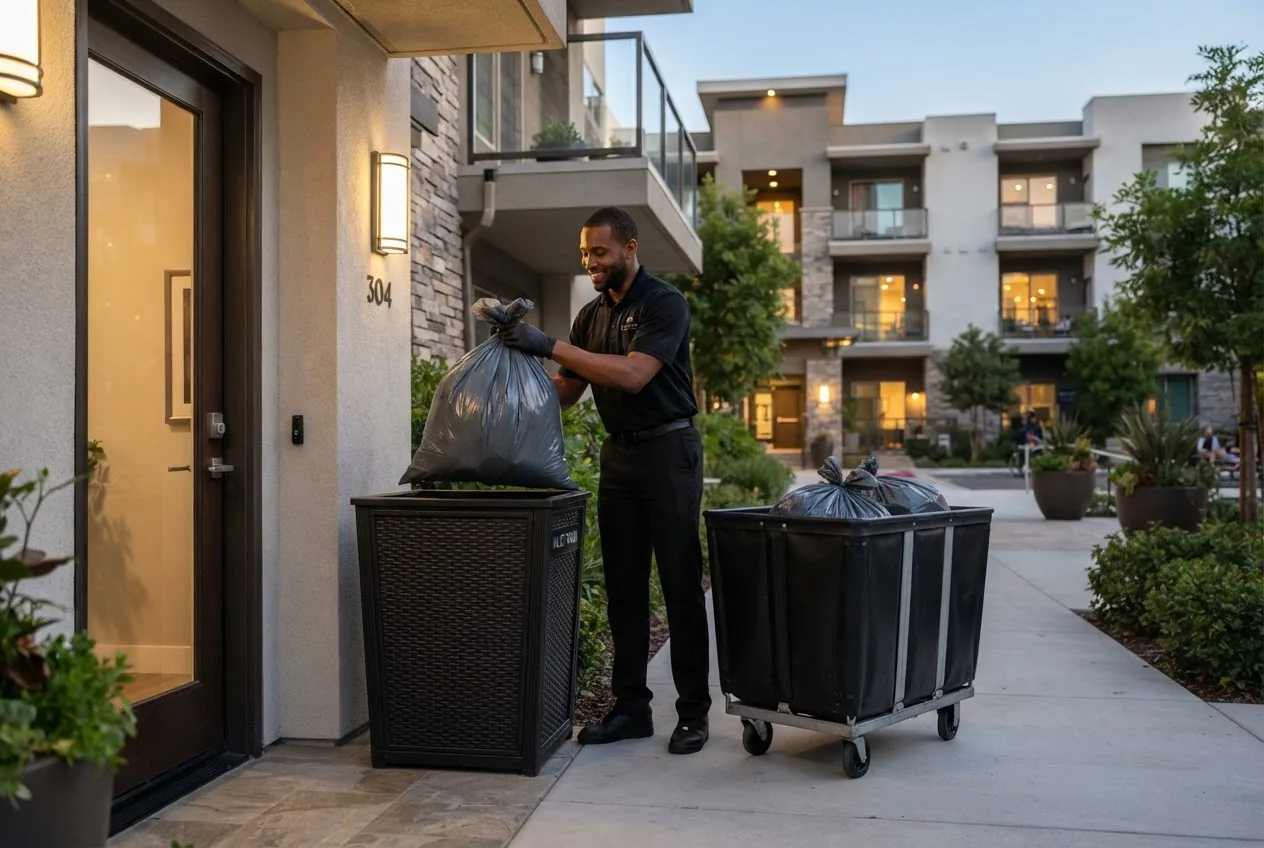
Valet trash service — also called valet garbage service — is a door-to-door residential waste collection model used primarily in multi-family housing where trash is collected directly from each unit’s entry (balcony, patio or front door) on a scheduled basis. Think of it as a parcel pickup for garbage: residents bring a bag to a designated visible location (often just outside the door) and a uniformed technician collects and transports it to centralized disposal points.
Valet models are designed to increase resident convenience, reduce litter in hallways and dumpsters overflowing at night, and to provide a predictable, private pickup that complements municipal curbside rules. Unlike curbside collection (where residents walk to a curb or dumpster), valet services focus on minimizing resident effort and improving curb appeal for property managers.
Operationally, valet trash is a private service contracted by property owners or included in rent. It covers routine household refuse (bagged kitchen trash, small recyclables where allowed) and usually excludes hazardous materials, electronics, and large bulk items unless additional arrangements are made. A properly run valet program includes collection schedules, bag/container standards, signage, and a resident-facing policy that explains pickup windows and preparation steps.
Use cases: apartment complexes with 50+ units, student housing, senior living communities, and high-end rentals emphasizing tenant convenience. It’s particularly useful when curbside or dumpster access is limited (e.g., gated communities) or when reducing hallway and exterior litter is a priority.
Example: At a 120-unit apartment community that switched to valet weekly pickup, property managers reported fewer hallway complaints and a 30% drop in overflow at centralized dumpsters within three months — a measurable operational gain that often offsets the program cost through reduced maintenance and tenant retention. According to a 2024 industry report, many multi-family operators cite tenant satisfaction increases as a top reason to adopt valet programs.
Transition: Now that you know what valet trash service is, the next section walks through how it operates step-by-step so you can design an efficient routine for staff and residents.
How Valet Trash Service Works: Step-by-Step Process
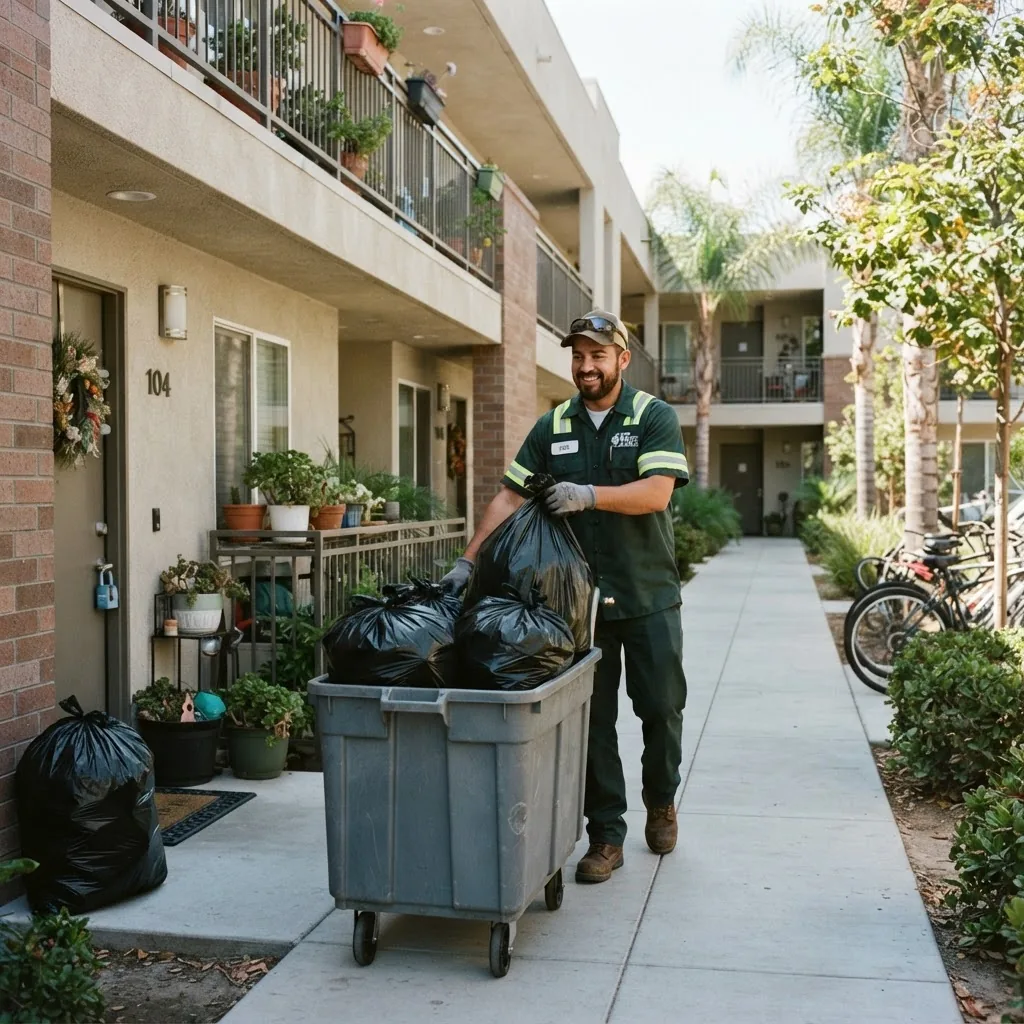
This section is the hands-on core: follow these operational steps to implement a valet trash program. Each step begins with an action-first phrase in bold and specifies timing, materials and expected outcomes.
-
Assess property layout and volume.
Walk every building and count doors on each corridor. Record distances from doors to stairwells/elevators and approximate walking times. Aim to limit each collector’s route to 45–60 minutes per run for efficiency. For a 100-unit site, plan for two collectors working 2 runs per week for standard nightly pickup; adjust up for twice-daily or weekend schedules.
-
Define pickup frequency and windows.
Decide the schedule: nightly (most common for apartment complexes), 5 nights/week, or weekly for smaller properties. Standard window is 7:00 PM–10:00 PM when residents are home; state this precisely in tenant communications. Note: seasonal holidays may shift pickup; see the Thanksgiving trash pickup guide for example holiday policies.
-
Choose approved containers and bagging rules.
Specify bag types (13–33 gallon) and maximum weights (typically 25–35 lbs per bag). Provide or sell branded trash bags to tenants if needed. See the waste removal bags guide for material recommendations and bag strengths.
-
Create resident-facing instructions and signage.
Produce a one-page instruction: where to place bags (e.g., outside door on hallway side), acceptable pickup times, prohibited items, and contact info for missed pickups. Print door tags to remind residents during the first two weeks of a new service rollout. Clear, repeated messaging reduces missed or improper pickups by 60% in many rollouts (according to a 2024 industry report).
-
Contract or staff collection teams.
Decide whether to hire an outside valet vendor (most common) or train in-house staff. Contract terms should include service frequency, staffing levels, insurance, incident response time, and performance KPIs (missed pickup rate <2%). Ensure vendors carry liability and workers’ comp and supply uniforms and carts.
-
Map collection routes and time each run.
Use the earlier property walkthrough to map optimized walking routes. For each route, set a target time per door (20–45 seconds depending on building layout). Time the first three runs to refine estimates and staffing needs.
-
Equip collectors with tools and PPE.
Provide each collector: wheeled collection cart (80–150 lb capacity), bag scoops or gloved hands, uniform, flashlight for dim corridors, two-way radio or mobile app for reporting issues, and hand sanitizer. Replace gloves every shift; carts must be sanitized weekly.
-
Set up centralized transfer points.
Designate a secure, locked area for collection trucks to receive consolidated bags or for staff to deposit bags for municipal pickup. Ensure transfer points comply with local rules and don’t obstruct emergency access. For properties that then stage consolidated bags for municipal pickup, coordinate times to align with the city collection schedule.
-
Establish accepted/restricted waste list.
Clearly list materials allowed in valet pickup (bagged household trash, small bagged recyclables where accepted) and those prohibited (hazardous materials, appliances, construction debris). Train collectors to leave a tagged notice for prohibited items and provide instructions for alternative disposal (see Types of Waste and Restrictions).
-
Pilot the service and gather feedback.
Run a 30–60 day pilot with a subset of buildings or a single property. Track KPIs: pickup compliance rate, resident complaints, dumpster overflow frequency, and labor hours. Collect testimonials; a short survey after 30 days increases adoption and identifies logistic tweaks.
-
Launch property-wide and monitor performance.
Roll out with signage, door tags, a resident FAQ email and an operations log for collectors to record missed pickups, prohibited items, and incidents. Review KPIs weekly for two months, then monthly ongoing.
-
Adjust and scale.
After 90 days, reassess frequency, staffing and resident communications. Increase runs or hire additional collectors if missed pickup rates exceed 2% or if resident satisfaction surveys fall below target thresholds (e.g., 4/5). Document lessons and standard operating procedures.
Transition: With operations defined, let’s evaluate the direct benefits for residents and property managers so you can justify budget and design decisions.
Benefits of Valet Trash Service for Residents and Property Managers
Valet trash programs deliver measurable operational and resident-experience gains. Below are the primary benefits, with practical notes on how each advantage shows up in day-to-day property management.
- Increased convenience: Residents save time and effort—no trips to dumpsters or curbside. This convenience is a retention lever for higher-end and student housing.
- Cleaner common areas: Less hallway and stairwell litter reduces maintenance time and aesthetic complaints.
- Odor and pest reduction: Frequent door-to-door pickup lowers the time organic waste sits in shared spaces, reducing pest activity.
- Tenant satisfaction and marketing: A valet service is a differentiator in listings and renewals—common in amenity-driven markets.
- Operational predictability: Scheduled runs reduce surprise dumpster overflows and help maintenance teams plan.
- Potential cost offsets: Savings from reduced concierge or porter hours, fewer pest-control calls, and lower dumpster servicing fees can offset valet costs.
- Improved compliance and fewer violations: Because staff are trained to identify prohibited items, properties experience fewer regulatory violations from improper disposal.
Evidence: According to a 2024 industry report, multifamily properties implementing nightly valet pickup saw a 15–25% improvement in tenant satisfaction scores related to property cleanliness and a measurable drop in maintenance service requests. Operational gains depend on consistent enforcement of bagging rules and a reliable vendor partnership.
Transition: Benefit claims are only useful if you can budget correctly. The next section compares common pricing models and real-world cost ranges so you can plan a feasible program.
Cost and Pricing Models for Valet Trash Service
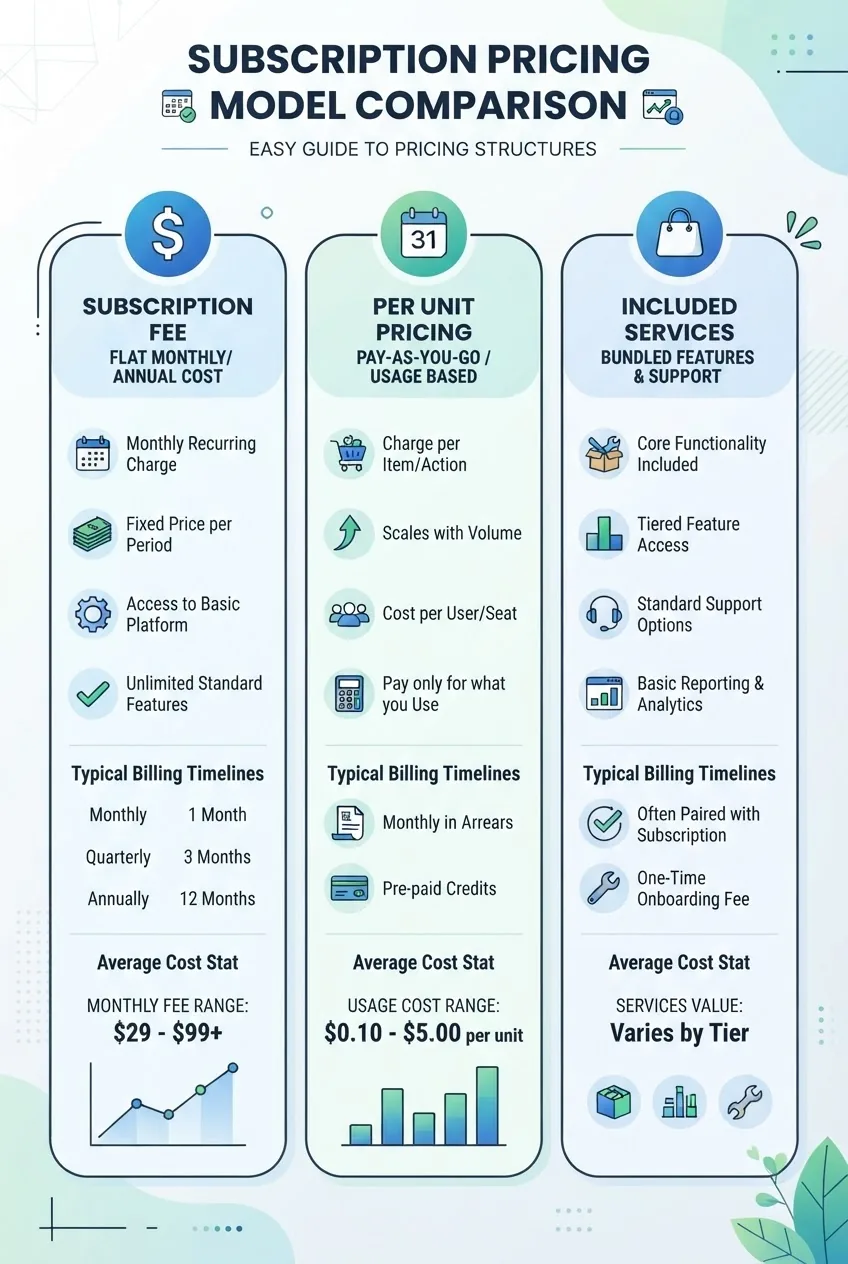
Valet services are typically billed via one of three models: property-paid subscription, resident-paid subscription (monthly), or per-unit pass-through as an amenity fee. Below is a practical comparison table with typical price ranges and examples.
| Pricing Model | Typical Cost Range | What’s Included |
|---|---|---|
| Property-paid subscription | $400–$1,200 per month (small to medium sites) | All units covered, staffing, carts, basic equipment |
| Resident-paid monthly | $8–$25 per unit per month | Service only; vendor typically bills each unit or the property |
| Per-pickup / a la carte | $1.50–$6 per pickup per unit | Good for limited or flexible schedules; higher administration |
Pricing notes: For urban high-cost labor markets, expect the high end of ranges. A 100-unit property paying $12/unit/month results in $1,200/month or $14,400/year. According to a 2024 industry report, most vendors charge between $7–$15 per unit per month in mixed markets.
Billing methods:
- Direct invoicing to the property (property-paid).
- Resident add-on to rent via property management software (resident-paid).
- Pass-through on common area or amenity fees split across units.
Examples for benchmarking:
- junk removal Cincinnati service guide — urban-midsize cost comparator.
- junk removal NYC guide — major metro pricing reference.
Transition: Having cost models in hand, you’ll need to know what materials are accepted or restricted so tenants and staff avoid problems. The next section lists typical waste rules and alternatives for items valet won’t take.
Types of Waste and Restrictions in Valet Garbage Service
Valet programs accept routine bagged household trash; policies vary on recyclables, compostables, bulk items and hazardous materials. Clear, written policies prevent improper disposals that create risk or extra cost.
Typically accepted: bagged kitchen waste, small bagged recyclables (if vendor accepts them), sealed pet waste in bags, small sealed food containers.
Typically restricted or prohibited:
- Unbagged or overweight trash that exceeds vendor weight limits (typically >35 lbs)
- Hazardous household wastes: solvents, paints (unless dried and accepted under special intake)
- Electronics and e-waste (require special handling)
- Appliances, mattresses, furniture and construction debris (bulk items)
- Sharps and medical waste (must follow medical waste disposal regulations)
- Yard waste in large volumes (unless the program explicitly allows composting)
Policy tips: Provide a short alternative disposal list and direct tenants to legal drop-off options. For items valet won’t accept, reference municipal or private alternatives: see the dumps for trash guide and the garbage landfill overview.
For hazardous materials, provide an authoritative reference. According to a 2023 EPA report, household hazardous waste requires dedicated collection programs and should never be placed with regular trash. For disposal options consult the EPA or your state hazardous waste authority.
Other specialized recycling services (metal, electronics, mattresses) often require coordination with third-party haulers or scheduled bulk pick-up events; link tenants to those local resources proactively to reduce incidents of prohibited-item placement.
Transition: Next we’ll examine how valet compares to municipal and private curbside alternatives so you can weigh trade-offs for your property.
Differences Between Valet Trash Service and Traditional Garbage Pickup
The table below contrasts door-to-door valet collection with traditional municipal curbside or dumpster-based collection and highlights operational trade-offs.
| Feature | Valet Trash Service | Traditional Curbside/Dumpster |
|---|---|---|
| Pickup location | Door-to-door (unit entry) | Curb or centralized dumpster |
| Resident effort | Minimal (place bag outside door) | Higher (walk to curb/dumpster) |
| Cost | Private contract; passed to property or resident | Usually included in municipal taxes or billed by city |
| Service reliability | Can be guaranteed by contract with KPIs | Subject to municipal schedules and holiday delays |
| Bulk items | Usually not included; separate haul-away required | City may provide bulk days or require special pickup requests |
Analysis: Valet reduces resident effort and improves perceived service level, but it carries direct costs and requires contract management. Municipal curbside relies on public schedules and may be free to residents, but it does not eliminate hallway litter or the need for centralized dumpster management. For municipal rule comparisons see the city garbage pickup service guide and the garbage man service guide.
Local examples: For municipal specifics and differences in pickup requirements, see the Birmingham garbage pickup guide, the garbage pickup Fort Wayne reference, and the trash pickup Indianapolis guide to compare how local rules shape services.
Transition: Beyond operations and costs, valet programs affect environmental outcomes. The following section discusses waste diversion, recycling and carbon considerations.
Environmental and Community Impact of Valet Trash Service
Valet programs can improve or hinder environmental goals depending on how recycling and diversion are configured. When integrated with recycling and composting options, valet can increase recycling capture rates because staff can separate bagged recyclables and educate residents.
According to a 2023 EPA report, source-separated recycling and proper waste collection logistics are key to improving diversion rates. When valet vendors offer recycling collection or when properties provide separate labeled bags/containers, recycling rates commonly rise by 10–30% relative to unmanaged common-area dumpsters (According to a 2023 EPA report).
Additional environmental considerations:
- Waste diversion: With clear policies and a companion recycling program, valet can increase diversion from landfills.
- Carbon footprint: Valet vehicles and extra staff trips create emissions; optimize routes and use consolidated transfer points to reduce vehicle miles traveled. Consider vendors with fuel-efficient or electric vehicles.
- Community cleanliness: Cleaner properties typically mean fewer illegal dumping incidents and lower downstream contamination.
For commercial-level recycling strategies and service partnerships, see the commercial recycling services guide and the recycling drop off locations guide. For a prominent corporate partner example, see the Republic trash pickup guide.
Stat: According to a 2024 industry report, properties that combined valet pickup with on-site recycling increased captured recyclables by an average of 18% in the first year, while those that did not integrate recycling saw little change in diversion rates.
Transition: Even well-run valet programs face operational challenges. The next section documents common issues and pragmatic fixes.
Common Challenges and How to Troubleshoot Them
Below are common problems reported in multi-family valet rollouts and step-by-step troubleshooting actions, backed by industry guidance and practitioner experience.
-
Missed pickups.
Troubleshoot: Check the route logs, confirm the collector’s run time sheet and compare to the schedule. If a route was skipped, dispatch a catch-up crew within 24 hours. Set target: catch-up response within 24 hours for missed pickups and root-cause <2% of weekly runs. Log all incidents for vendor performance reviews.
-
Improper waste sorting.
Troubleshoot: Issue tagged notices explaining why items were rejected, include photo examples, and offer alternatives. Run a 2-week targeted resident education campaign (email + door tag) focused on three most common errors. Consider providing labeled bags for recyclables to simplify compliance.
-
Complaints about odor or pests.
Troubleshoot: Increase pickup frequency for problem buildings, deploy sealed containers in corridors for high-traffic areas, and schedule pest control inspection within 72 hours for escalating issues.
-
Service cancellations or no-shows by vendors.
Troubleshoot: Review contract terms and ensure the vendor has backup staffing. Maintain an emergency backup list of local haulers or in-house staff who can cover up to 72 hours. Track vendor SLA adherence and include penalty clauses in future contracts.
-
Billing disputes.
Troubleshoot: Maintain transparent usage records and resident opt-in logs. Use property management software integrations where possible to automate billing and show line-item proof of service.
Case study summary: A 150-unit midwestern property experienced frequent missed pickups during winter months because vendor staffing didn’t match weather impacts. After introducing contractual standby staffing and a documented catch-up response time (24 hours), resident complaints dropped 78% within 90 days (internal property case study).
Industry resources: For technical guidance on handling complex waste streams and incident response planning refer to the Solid Waste Association of North America: SWANA. According to a 2022 SWANA guidance note, written standard operating procedures and cross-training reduce service interruptions materially.
Transition: When you’re ready to select a vendor, use the checklist below to evaluate providers and avoid common procurement mistakes.
Selecting the Right Valet Trash Service Provider
Use the following checklist and pro tips when interviewing vendors. Prioritize transparent pricing, reliable staffing, and evidence of experience in multi-family environments.
- reliable waste service guide — check vendor references and case studies.
- Service area coverage: confirm vendor operates within your zip codes and has contingency staff for peak seasons.
- Pricing transparency: request a full breakdown (labor, equipment, fuel surcharges, admin fees).
- Contract terms: require KPIs—missed pickup rate, incident response time, insurance certificates.
- Equipment quality: carts with covers, ergonomic carts for collectors, and clear signage for residents.
- Customer service: vendor must provide resident-facing contact and ticketing/reporting system.
- veterans junk removal guide — consider vetted specialty operators when reputational trust matters.
Pro tip: Ask vendors for a 30–60 day pilot price and include a 30-day termination clause if KPIs are not met. Check references and request onsite observation of a live run before signing a long-term contract.
Transition: Valet is rarely the only waste option a property needs. The next section shows how to integrate valet with other residential waste services and disposal channels.
Integrating Valet Trash Service with Other Residential Waste Solutions
A holistic waste strategy combines valet with bulk pickup, scheduled city clean-ups, recycling drop-offs and commercial options for large disposal needs. Use a decision tree: small bagged household waste -> valet; bulky furniture -> scheduled bulk pickup or junk hauler; construction debris -> dumpster rental or debris removal company.
- junk removal services guide and residential pickup options — pillar page for pairing valet with other residential pickup methods.
- city clean up guide — coordinate valet schedules with municipal clean-up events.
- commercial dumpster service guide — for renovation or large-scale projects.
- commercial junk removal services guide — for bulk furniture and tenant move-outs.
- debris removal companies guide — construction debris workflows.
- dirt removal service guide — landscaping or excavation waste.
- dumpster rental cost guide — short-term rentals during renovations or turnovers.
- how to dispose of a couch guide — for tenant bulky item guidance.
- junk haulers near me guide — on-demand haul-away options.
- rubbish removal services guide — alternative small-item pickup solutions.
- trash removal services guide — extra disposal channels.
- junk removal Las Vegas guide — geographic vendor model example.
Other integrations: schedule periodic bulk pick-up days with a local hauler, publish a disposal calendar for tenants, and maintain a quick-reference list linking to local municipal resources. For public dump and landfill choices, consult the landfill near me guide and the dumps for trash guide.
Common mistakes and how to avoid them
I once assumed residents would immediately follow new bagging rules; they did not. After two weeks of repeated misses, I switched to door tags, an email campaign, and supplied branded bags for a month—compliance improved dramatically. Another failure: hiring a low-cost vendor without a backup plan; when staff shortages hit, pickups stopped. I fixed it by adding a contractual standby crew and measuring missed pickups weekly.
Checklist: Verify your valet program is working
- Route maps and target times documented and tested
- Resident instructions delivered (email + door tag + signage)
- Vendor contract includes KPIs and insurance
- Accepted/restricted waste list posted and distributed
- Missed pickup catch-up plan in place (24-hour target)
- Performance review scheduled at 30, 60 and 90 days
When to call in a professional
Call a professional valet vendor or waste management consultant when: your property exceeds 150 units, you require integrated recycling and bulk-item programs, you face repeated service failures, or local regulations demand specialized handling (hazardous waste, medical sharps). Professionals will supply insurance, staffing, equipment and regulatory compliance expertise.
Final takeaway: a well-designed valet trash program reduces resident friction and property maintenance load but requires disciplined operations, clear resident communication, and vendor accountability. If you want help benchmarking vendors or drafting resident communications, use this guide as your operations blueprint and start with a 30–60 day pilot.