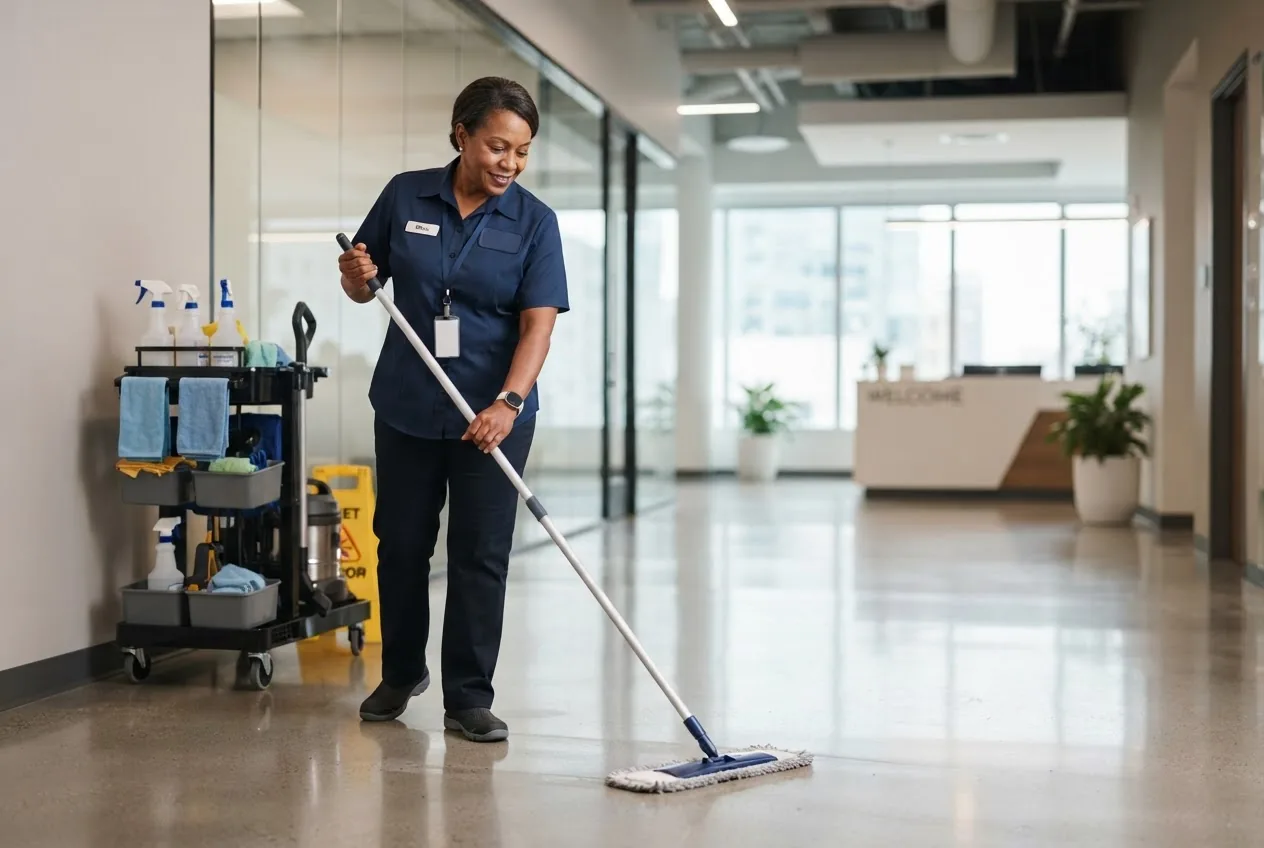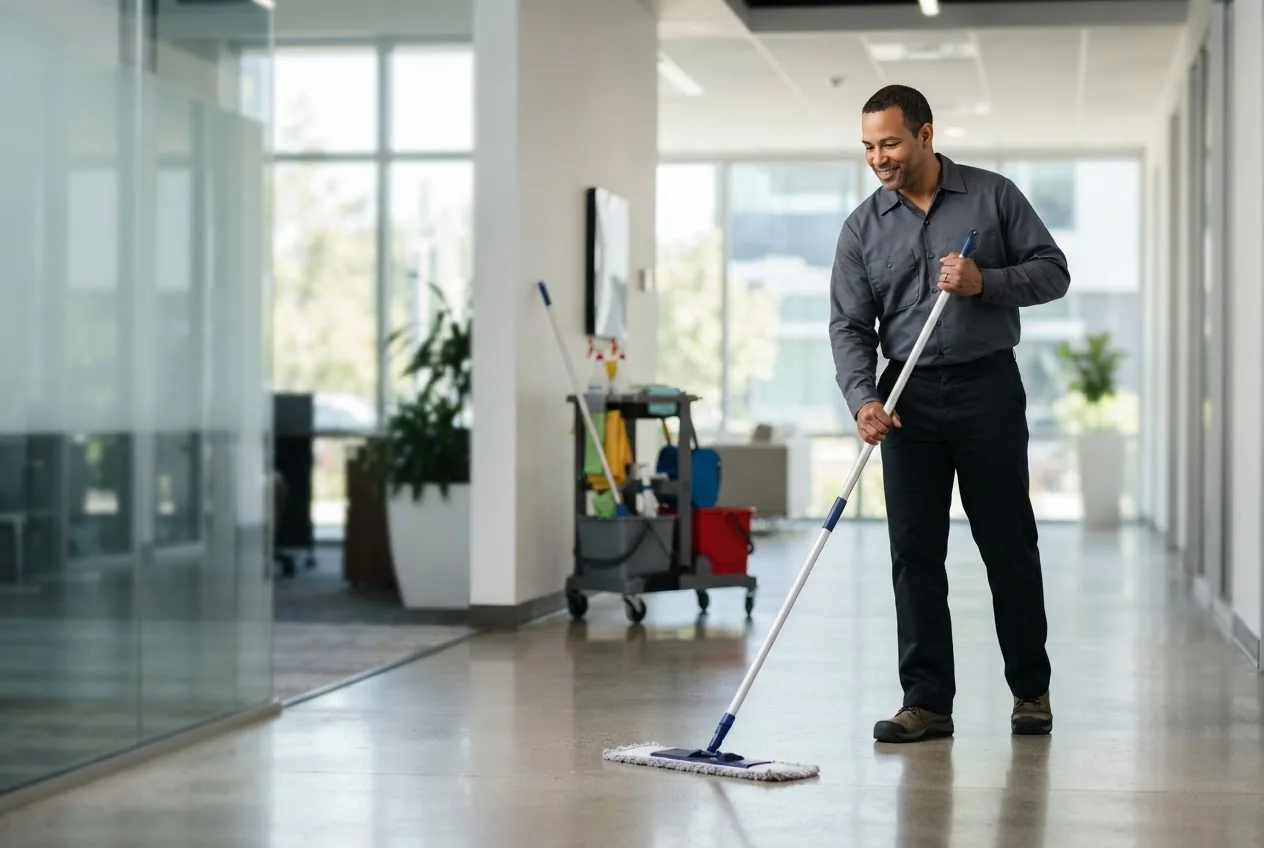
Janitor jobs near me are local custodial positions responsible for cleaning, maintenance, and basic facility upkeep; this guide explains who is eligible, how to search and apply step-by-step, interview prep, pay expectations, and advancement so you can apply and land a nearby janitorial role quickly.
What are janitor jobs near me?
Answer: Janitor jobs near me are local employment opportunities where workers clean, sanitize, and maintain buildings—schools, offices, hospitals, retail and more—often with varied shift patterns and employer types.
Term: Janitor: a worker responsible for cleaning, minor maintenance, and custodial tasks in commercial or public buildings.
Janitor roles combine routine cleaning (sweeping, mopping, trash removal), periodic maintenance tasks (changing light bulbs, reporting repairs), and safety checks (ensuring exits are clear, using approved chemicals). Demand is driven by local commercial activity, building size, and public health standards; facilities often hire full‑time, part‑time, or contract janitorial staff.
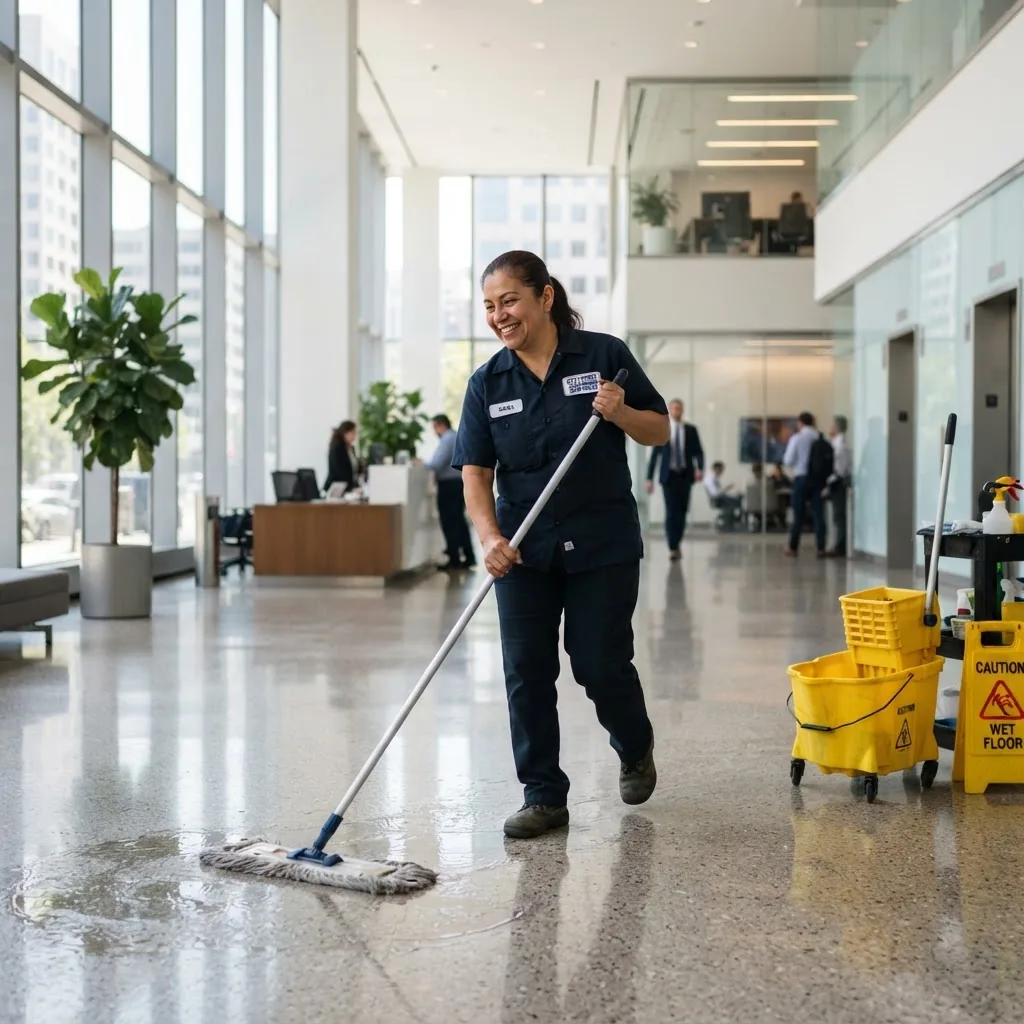
Common work environments include offices, schools, hospitals, retail stores, warehouses, restaurants, and post-construction sites—each setting alters daily duties and safety expectations. For specialized disinfection tasks or medically sensitive environments, janitorial work intersects with commercial disinfection services.
commercial disinfection services
Janitorial work is often the backbone of building upkeep—the “unsung heroes of workplace cleanliness”—and successful applicants show reliability, basic technical skill, and safety awareness. Next, we’ll detail the exact eligibility requirements hiring managers check.
What are the eligibility criteria for janitor jobs?
Answer: Eligibility for janitor jobs typically includes age and legal work authorization, basic education, physical ability, background screening, and sometimes job-specific certifications—requirements vary by employer and location.
Term: Background check: a process where employers verify criminal record, employment history, and sometimes credit or driving records to assess suitability for a role.
-
Minimum age and work authorization
Employers usually require applicants to be at least 18 for unsupervised or hazardous-site roles and to provide legal authorization to work (ID, Social Security number). High-school age or 16–17 hires may be available for limited tasks in certain regions. -
Physical fitness and medical considerations
Janitors must frequently bend, lift (often 25–50 lbs), climb ladders, and stand for long shifts; employers may require a basic physical ability assessment or ask about accommodations for disabilities under local labor laws. -
Background checks and screenings
Many employers run criminal-background checks, sex-offender registry checks, and verification of past employment; healthcare or school janitors may require additional clearances. -
Education and basic skills
Most janitorial roles accept a high-school diploma or GED, though some entry-level positions require only literacy and the ability to follow written or verbal instructions. Basic English or local language proficiency is often expected for safety communication. -
Certifications and training
While not always required, certifications such as bloodborne pathogen training, hazardous chemical handling (e.g., HAZWOPER basics) or floor-care certifications increase hireability for specialized roles.Term: Certification: a document or credential verifying completion of specific training or meeting standards in a skill or safety practice.
-
Driver’s license and transport
Some positions, particularly contract or multi-site janitors, require a valid driver’s license and reliable transport. -
Shift flexibility
Night and weekend availability boosts candidacy—many janitorial openings are overnight to avoid disrupting business operations. -
References and prior experience
Employers value steady employment history and references demonstrating reliability; on-the-job training often fills skill gaps, but documented experience speeds hiring. -
Legal and regional restrictions
Local jurisdictions may require additional clearances (e.g., vaccinations for healthcare settings); always verify regional requirements before applying.
cleaning job requirements and contracts
Hiring managers weigh physical ability, reliability, and legal eligibility most heavily. For office-specific roles, consult office cleaning job requirements for tailored standards and typical job expectations.
office cleaning job requirements
Keep documentation ready (ID, proof of address, work authorization), be honest about physical limitations, and pursue low-cost certificates when possible. Next, learn where and how to find local janitor openings effectively.
How do I find janitor jobs near me?
Answer: Find janitor jobs near me by combining local job boards, staffing firms, direct employer outreach, networking, and targeted searches on online portals and community resources for faster local matches.
Follow this step-by-step local search process to surface the best nearby openings.
-
Start with major online job portals
Search phrases: “janitor jobs near me,” “janitorial positions near me,” and set location filters and alerts; refine by shift, full/part time, and employer type. -
Check local government and nonprofit employment centers
City or county job boards and workforce centers list municipal janitorial roles and training programs. -
Use specialized janitorial staffing agencies
Janitorial staffing firms and contract cleaners place workers quickly, often with on-the-job training for multiple nearby sites. -
Search company and facility websites directly
Many schools, hospitals, and corporate campuses post openings only on their career pages—target facilities near you and check weekly. -
Explore local classified ads and community groups
Neighborhood Facebook groups, Craigslist, and community bulletin boards occasionally list immediate-hire custodial roles. -
Network with current janitors and building managers
In-person introductions at facilities, union halls, or professional meetups yield fast referrals—bring a simple resume and offer to work a trial shift. -
Leverage small business and franchise cleaners
Independent cleaning companies near you regularly need reliable staff; consider daytime or weekend positions that lead to steady work. -
Target employer categories
Focus on high-hiring sectors: schools (term-time peak hires), healthcare (strict screening), retail (weekend staffing), warehousing (early morning/overnight), and post‑construction cleaning (project-based). -
Set alerts and follow up
Use email alerts on portals, and when you apply, follow up via phone or email within 3–7 days to show initiative.
If you prefer employer-led hiring, search for local providers that manage cleaning staff; try a focused list of providers like office cleaning service providers or look for small office cleaning job opportunities to find roles in smaller employers.
office cleaning service providers
small office cleaning job opportunities
If you live in or are open to positions in California, consult lists of larger employers and staffing firms via cleaning companies in California when targeting regional opportunities.
cleaning companies in California
Next we’ll walk through an application process you can use immediately, including sample answers and follow-up templates.
How do I complete the application process for janitor jobs?
Answer: Apply for janitor jobs by preparing a concise resume, tailored cover note, completing employer or online forms accurately, submitting references, and following up promptly to secure interviews.
Term: Cover letter: a short personalized note that highlights why you’re a good fit for a specific job and what you bring to the employer.

Use this step-by-step how-to process with sample language and timing for each action:
-
Step 1 — Prepare a clean, targeted resume (30–60 minutes)
- One page, clear headings: Contact, Summary, Experience, Skills, Certifications.
- Summary example: “Reliable janitor with 3+ years in commercial cleaning, experienced in floor care, waste management, and chemical safety.”
- List specifics (shift availability, ability to lift X lbs, certifications) so employers see fit immediately.
-
Step 2 — Write a short cover note (10–20 minutes)
- 2–4 sentences: identify role, one relevant achievement, and availability; example: “I’m applying for the night janitor role. I have 4 years of experience with floor‑care machines and an OSHA 10 safety card.”
- Attach or paste the note into the application portal message field when available.
-
Step 3 — Complete online application or employer form carefully
- Use consistent dates for employment; complete all fields; upload resume as PDF to avoid formatting issues.
- Be honest about gaps—briefly explain in the form or cover note (e.g., caregiving, training).
-
Step 4 — Provide references and documentation
- Two work references with phone numbers; a supervisor endorsement is ideal.
- Have ID and work-authorization documents ready for in-person pre-hire verification.
-
Step 5 — Follow up 3–7 days after applying
- Call or email the hiring contact: “I applied for the janitor position on [date] and wanted to confirm receipt and reiterate my availability for an interview.”
- Polite persistence often moves candidates forward for entry-level roles.
-
Step 6 — Prepare for possible pre-employment tests
- Some employers use brief physical tasks, drug screens, or knowledge checks on cleaning chemicals and safety; review Material Safety Data Sheets (MSDS) basics when applying.
-
Step 7 — Accepting offers and onboarding
- Request written offer details: pay rate, shift, start date, reporting location, probation period. Confirm uniform and equipment policy.
- Complete any training or certifications required before or during onboarding.
Sample short email follow-up (use within 3–7 days): “Hello [Name], I applied for the janitor position on [date]. I’m available for interview evenings and weekends and can start within two weeks. Thank you for considering my application. — [Your Name]”
If you need job application examples or help drafting a resume, consider local workforce centers and staffing agencies that offer free prep and rapid placement. Next section: interview preparation that converts interviews into offers.
How should I prepare for janitor job interviews?
Answer: Prepare by practicing common janitor interview questions, demonstrating punctuality and professionalism, showcasing safety and equipment knowledge, and offering clear examples of reliability and problem-solving.
Below are enumerated interview tips with practical examples you can rehearse.
-
Practice common questions
- “Tell me about your cleaning experience.” — Answer with specific tasks and environment, e.g., “I managed night cleaning for a 50,000 ft² office, including restroom sanitation and floor stripping.”
- “How do you prioritize tasks during a shift?” — Discuss routines and flexibility for requests.
-
Demonstrate safety knowledge
- Explain proper PPE use, chemical dilution practices, and spill-response steps; reference OSHA basics when relevant.
-
Show reliability and professionalism
- Arrive early, dress cleanly (business casual or neat workwear), bring hard copies of your resume, and maintain a positive tone.
-
Provide short role-play examples
- Offer a quick walkthrough of how you would clean a locker room after a busy afternoon—step sequence and safety checks.
-
Ask targeted questions
- “What is the typical shift pattern?” “Who supervises the janitorial crew?” “Are there advancement opportunities?”—these signal engagement and reduce surprises.
-
Address gaps or issues proactively
- If you have a past conviction or employment gap, briefly explain context and emphasize current readiness and compliance with screening processes.
Real-world example: Maria, a night janitor, described a time she reduced restroom complaints by reorganizing cleaning rotation and logging cleaning times—employers value small, measurable improvements. Next we’ll compare janitorial job types and where they work day-to-day.
What are the different janitor job types and work settings?
Answer: Janitorial positions vary by sector—commercial, school, hospital, retail, restaurant, warehouse, and post‑construction—each with distinct duties, safety needs, and hours.
The table below compares common janitorial roles and typical work settings to help you decide where to target applications.
| Position Type | Typical Setting | Key Duties | Shift Pattern |
|---|---|---|---|
| Commercial Janitor | Offices, retail stores | Floor care, trash, restrooms, basic maintenance | Night or early morning |
| School Janitor (Custodian) | K–12 schools, campuses | Classroom cleaning, grounds checks, event reset | Daytime & after-hours |
| Hospital Janitor (Environmental Services) | Hospitals, clinics | Infection control, waste segregation, specialized disinfectants | 24/7 shifts, strict screening |
| Restaurant/Commercial Kitchen Janitor | Restaurants, commercial kitchens | Grease removal, floor scrubbing, sanitation to food-safety standards | Night or closing shifts |
| Warehouse Janitor | Warehouses, distribution centers | Large-area sweeping, spill cleanup, machinery area clearance | Early morning or night |
| Post-Construction Cleaner | Construction sites, new builds | Debris removal, detailed cleaning, safety compliance | Project-based schedules |
If you’re exploring specialized roles, check related service pages to understand required skills and employer expectations like commercial kitchen cleaning services, restaurant cleaning service jobs, retail store cleaning jobs, store cleaning services, and warehouse cleaning jobs.
commercial kitchen cleaning services
kitchen cleaning service options
restaurant cleaning service jobs
retail store cleaning jobs
store cleaning services
warehouse cleaning jobs
Different settings require different certifications and safety training; for example, hospitals typically require stricter infection control training than retail stores. Next: pay and growth prospects.
What wage and salary can I expect and what are career growth paths?
Answer: Janitor wages vary by region, experience, employer, and shift; expect local averages near minimum wage to $18+ per hour with overtime possibilities—advancement includes lead custodian, supervisor, facilities technician, or niche certifications for higher pay.
According to a 2024 industry report from the U.S. Department of Labor, median hourly wages for janitorial occupations vary significantly by metropolitan area and sector; entry-level rates often start near local minimum wages, while skilled or certified staff, especially in healthcare and industrial settings, earn higher rates.
U.S. Department of Labor data is the primary source for wage and employment statistics and regional differences.
Typical pay drivers:
- Region/cost of living (urban centers pay more).
- Employer type (hospitals and industrial sites often pay premium rates).
- Shift differential (night/weekend work may add pay).
- Certifications and special skills (floor care, disinfection, HAZMAT handling).
Career advancement paths commonly include:
- Lead custodian or shift supervisor roles—manage small teams and schedules.
- Facilities technician—add skills in minor repairs, HVAC basics, and building systems.
- Specialized cleaning technician—commercial floor care, disinfection, or hazardous‑material cleanup for higher hourly rates.
- Transition to operations, building maintenance, or vendor management with formal training or vocational education.
For safety standards and training expectations, consult OSHA guidance and recognized certification bodies to improve promotion prospects and pay.
OSHA is the authoritative source for workplace safety standards relevant to janitorial roles.
Real-world note: many employers offer small pay raises after a 90-day probation with consistent attendance and reliable performance; emphasize punctuality and safety awareness to accelerate raises and promotions.
What additional resources and tips help me succeed in janitorial roles?
Answer: Use local training programs, certification courses, safety manuals, veteran janitor advice, and employer training to improve chances and job performance.
- Local community colleges and workforce centers often offer low-cost cleaning and safety courses—search for “janitorial training near me.”
- Short certifications such as bloodborne pathogen awareness, OSHA 10, and floor-care certificates increase hireability.
- Shadowing experienced janitors or requesting a trial shift helps demonstrate competence and learn site-specific systems.
- Keep a simple cleaning log or checklist to present during interviews showing organization and attention to detail.
- For specialized floor and surface work, explore floor care training and requirements for certifications that lead to higher pay.
- Understand employer onboarding—ask about uniforms, equipment, and chemical handling procedures ahead of start date.
- For corporate or larger-company roles, review janitorial services company training standards to know what formal training to expect.
- Keep fitness and ergonomics in mind—proper lifting technique prevents injury and lengthens career longevity.
- Veteran tip: arrive with basic supplies (work gloves, durable shoes) and a positive attitude; reliability matters more than formal experience for many hires.
floor care training and requirements
janitorial services company training
For recognized certification programs and credentialing, consider bodies like the National Center for Construction Education and Research for validated coursework in building services and cleaning trades.
NCCER and similar certification bodies offer standardized training that employers recognize.
Apply these resources immediately—get a basic safety card and a short floor-care certificate and you’ll stand out in local listings. Next: frequently asked questions to answer practical queries quickly.