
By the end of this guide you will have a clear plan to complete a full apartment clean out—what to remove, how to price it, and when to call pros. Expect to finish a typical studio-to-two-bedroom clean out in 4–12 hours DIY or in 2–4 hours with a full crew; skill level required: basic physical fitness and organizational ability.
What Is Apartment Clean Out?
An apartment clean out is a targeted, practical clearing of an apartment that focuses on removal of unwanted items—furniture, trash, bulky items, abandoned belongings—and basic cleaning touches. Unlike routine cleaning or a move-out cleaning (which focuses on deep cleaning surfaces for deposit return), a clean out emphasizes haul-away, sorting, disposal, donation and sometimes light cleaning after removal. Think of it as “spring cleaning on steroids” where the first objective is to remove volume, then tidy.
Core tasks in a clean out include: trash removal and bagging, furniture disposal or preparation for donation, handling of bulky item pickup, separating recyclable materials, and documenting items for landlord or estate purposes. Clean out providers may offer add-on services like light sweeping, spot cleaning, or removal of carpets and fixtures, but the defining work is the clearance and proper disposal of items.
Common triggers for an apartment clean out include estate wind-downs, eviction clean-outs, hoarder remediation, post-tenancy turnovers, and pre-sale or pre-rental preparation. Industry vendors and property managers often coordinate clean outs with other services—repairs, deep cleaning and sanitation—to present an apartment ready for re-rental or sale.
Transition: Now that you understand the definition and purpose of an apartment clean out, let’s break the work into its key components so you can plan time, tools and costs accurately.
Key Components of an Apartment Clean Out
- Trash removal — Remove loose garbage, bag it in 13–30 gallon contractor bags; expect 1–6 bags for a lightly cluttered studio, 10–40 bags for a hoarded two-bedroom. Contractors sort hazardous-looking items for later evaluation.
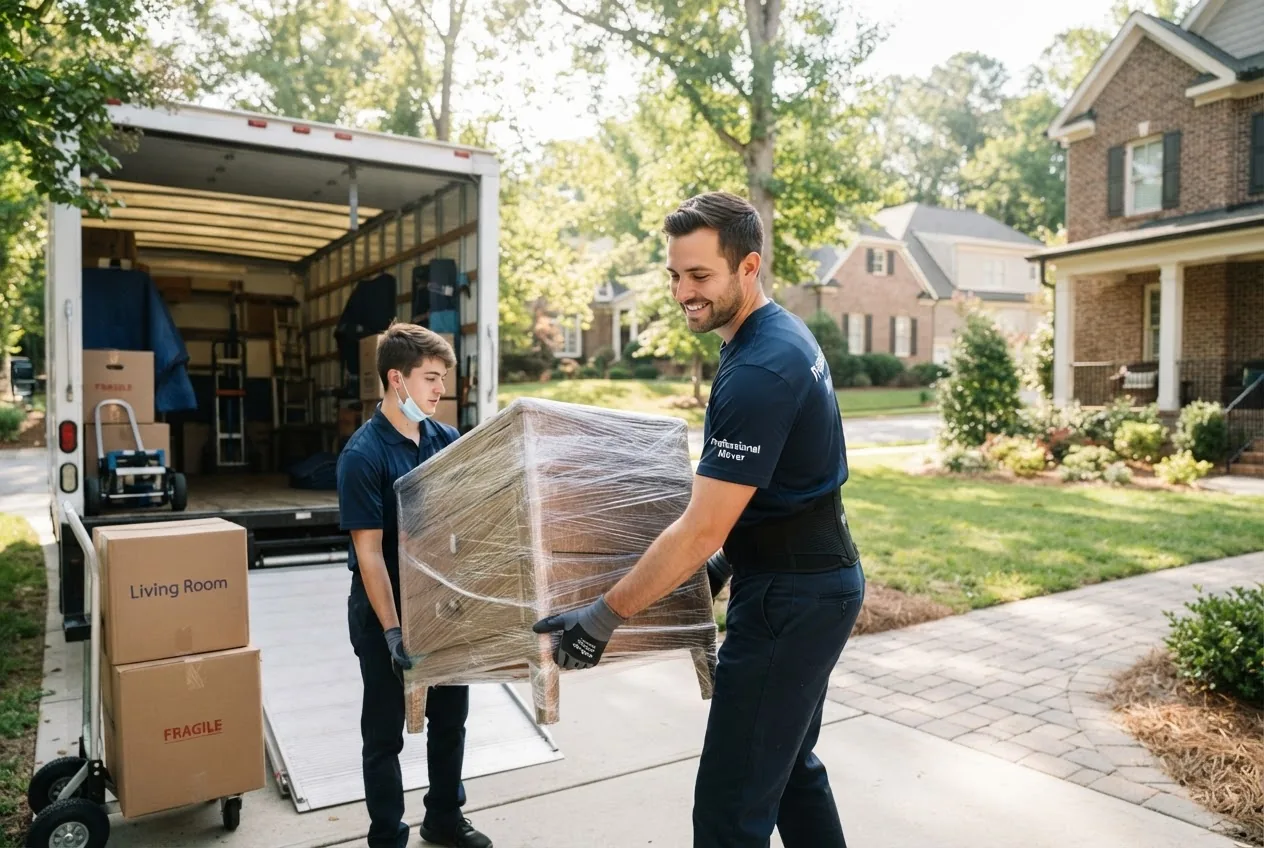
- Furniture disposal — Bulky-item removal covers sofas, beds, dressers and mattresses. Providers charge per item or by volume (cubic yards). For a 2-bedroom with 2 couches, 2 beds and 3 dressers, plan for a 10–15 cubic yard pickup or two-man crew for 2–4 hours.
- Bulky item handling — Includes disassembly, stair-carry fees and elevator coordination; add 15–45 minutes per large item if stairs are involved. Always flag heavy pieces (over 150 lb) ahead of time for equipment needs.
- Donation coordination — Items in good repair can be dropped at donation centers or scheduled for charitable pickup. Providers will often take reusable furniture for donation at reduced or no additional cost when routes align.
- Recycling — Separate metal, electronics (e-waste), cardboard and glass. Electronics may require certified e-waste processing and potentially a small fee depending on local regulation.
- Hazardous waste handling — Includes paint, solvents, fluorescent bulbs, batteries and some cleaning chemicals. These usually cannot go to curbside trash; they need municipal hazardous waste drop-off or special contractor disposal.
- Specialized disposal — Mattresses, tires, large appliances may carry municipal disposal fees or require certified disposal sites. Providers often charge per-item disposal fees to cover local landfill or mattress recycling costs.
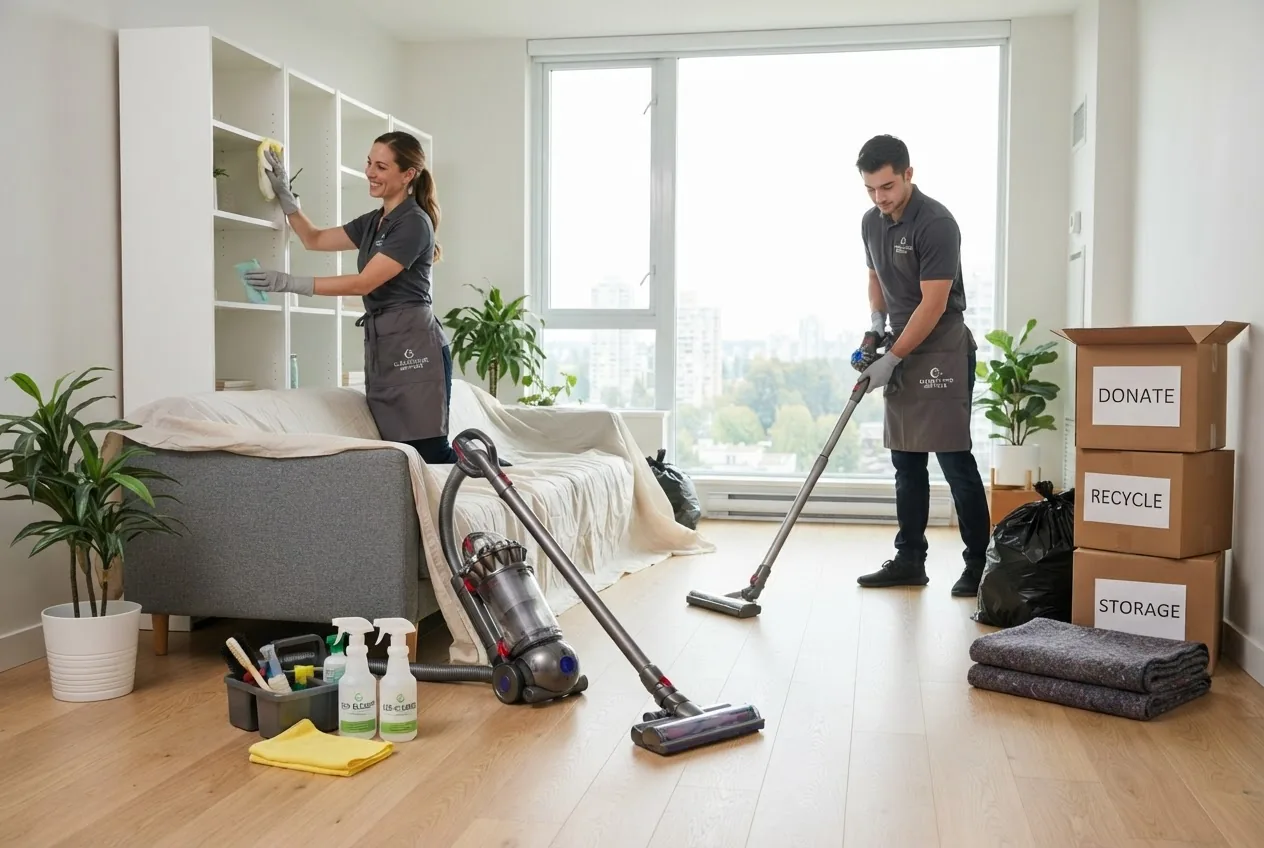
- Light cleaning touches — Sweeping, vacuuming, spot mopping and removing surface debris to make a space presentable; this is not the same as a full deep clean or move-out cleaning.
- Documentation and photo logs — Photographs of removed items, weights/volume estimates and signed manifests when coordinating with landlords or family members; useful for records, deposit disputes or estate inventories.
- Insurance and liability coverage — Reputable providers carry liability insurance and offer damage waivers for common tasks; confirm coverage levels for property damage and worker injury before booking.
- Permits and building rules — High-rises often require move-in/move-out permits, elevator reservations and debris chute rules. Providers typically secure these but confirm to avoid fines.
- Transport and disposal logistics — Routes to transfer stations, tipping fees and landfill restrictions affect final price; some providers include disposal while others pass through exact fees.
- Specialized services — Hoarder cleanouts, biohazard remediation, appliance disconnects, and carpet removal require trained teams and additional certifications.
- Final staging or organizing — Optional organizing services to leave the apartment staged or sorted for a landlord or next occupant; often billed separately.
Transition: With each component in hand, you can decide whether to DIY or hire professionals. The following section is a hands-on, step-by-step DIY process to clear an apartment safely and efficiently.
DIY Apartment Clean Out: Step-by-Step Process
Before you start a DIY clean out, estimate your physical capacity and time. A one-person pace moves 1–3 cubic yards per hour; a two-person team doubles that. Use a simple truck-size or cubic-yard calculator in your phone to estimate volume—many providers accept photos for remote quotes.
Before you start
- Tools and PPE: 2-3 pair work gloves, moving straps, dolly (rated 600+ lb), furniture blankets, basic tool kit (screwdriver, socket set), box cutter, masks (N95), and safety shoes.
- Materials: 30–50 contractor bags (3–6 mil), 10–20 heavy-duty boxes, labels, permanent marker, zip ties, and cleaning rags.
- Apps and estimators: take photos for quotes, use a cubic-yard calculator or photos-to-quote app, and a checklist app to track rooms.
- Permissions: notify landlord for elevator reservations and building move-out rules; reserve a truck or rental if needed.
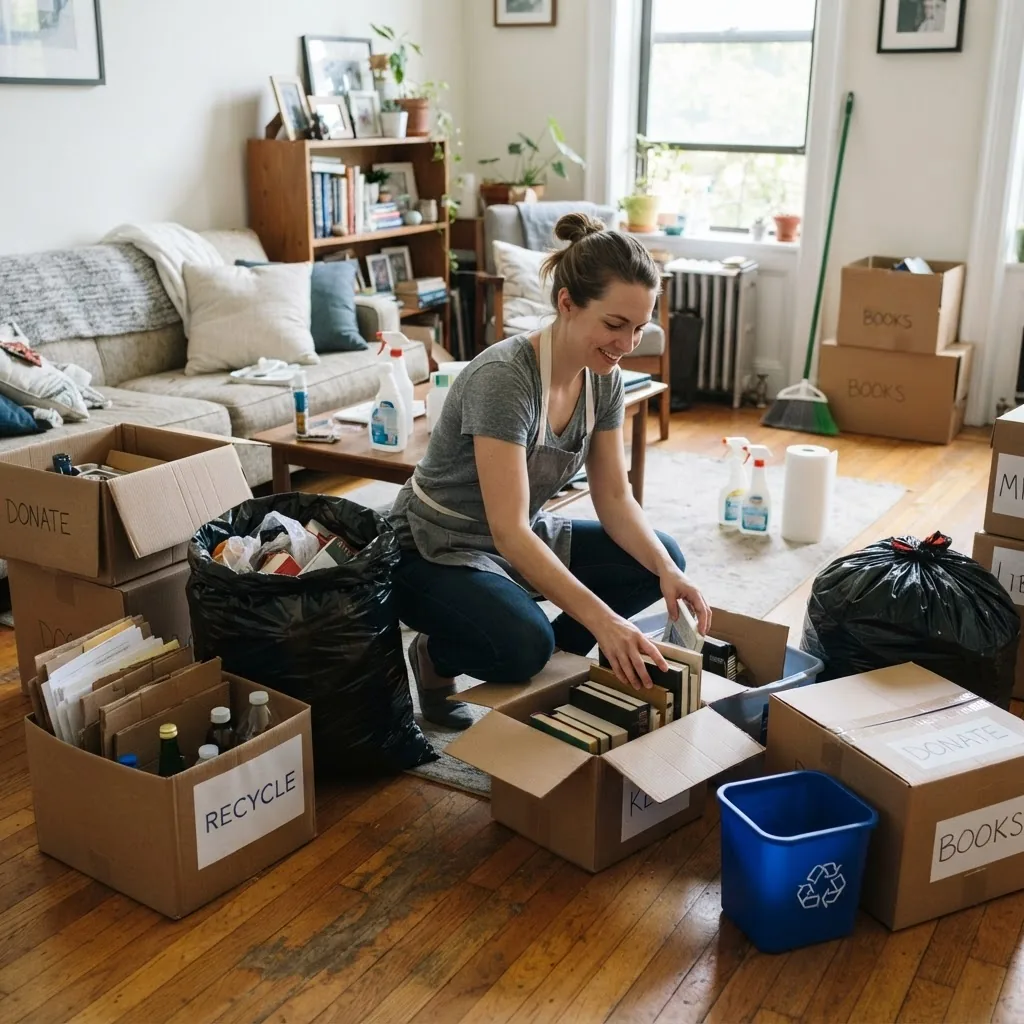
- Survey the space and document. Walk each room, photograph everything from multiple angles, note hazardous items and measure large pieces for stair/elevator fit. Record time estimates: 10–20 minutes for a studio, 30–60 minutes for a two-bedroom.
- Make a sorting plan. Create three zones: Keep, Donate/Resell, Toss/Recycle. Label boxes and place them in each zone. Allow 1 box per small room and 3–6 boxes for larger rooms.
- Start small: remove trash first. Collect loose trash into contractor bags, seal and move to a staging area near exit. Expect 1–2 hours for significant quantities; use bag carts to transport 10+ bags at a time.
- Break down furniture. Disassemble sofas, tables and bed frames to reduce bulk before moving them down stairs or into an elevator. Use the socket set; keep bolts in labeled zip bags taped to the disassembled piece.
- Use proper lifting technique. Team lift for items >75 lb: lift with legs, not back, and use moving straps. For very heavy items (>200 lb) use a four-person lift and furniture sliders.
- Handle electronics and appliances safely. Unplug, defrost refrigerators 24 hours before pickup, drain fluids where applicable, and secure doors. For e-waste, remove personal data and separate HDMI/charging cables.
- Separate hazardous waste. Place paint, solvents, aerosol cans, and batteries into a clearly labeled hazardous bin and arrange municipal drop-off or professional pickup. Do not put these into general trash.
- Sort for donation. Inspect items for damage; for furniture, check frame integrity and fabric stains. Contact charities for pickup windows—many require items to be intact and free of bedbug evidence.
- Load methodically into vehicle or staging for pickup. Load heavy items first, balanced left-right and front-back. Keep small boxes on top. Secure with ratchet straps and blankets to prevent shifting.
- Final sweep and light cleaning. Sweep or vacuum; spot-clean countertops and floors. If returning a deposit, take after-photos and note time spent.
- Dispose and recycle responsibly. Deliver recyclable materials to municipal centers, drop hazardous materials at designated facilities, and use mattress or appliance recycling programs when available.
- Log expenses and receipts. Keep records of donation receipts, disposal fees, and fuel/taxi charges for potential tax deductions or landlord accounting.
Practical timing guide: one person can clear a studio in 4–6 hours; two people can clear a one-bedroom in 4–6 hours; a hoarded two-bedroom may require 16–40 person-hours. Use a photos-to-quote app or cubic-yard estimate to confirm whether your DIY plan is feasible.
Transition: Below I share common mistakes I’ve seen and a short case study comparing DIY vs pro to help you choose the right approach.
Mini case study: DIY vs professional
Scenario: Two-bedroom with moderate clutter, one sofa, two beds, about 20 bags of trash and several small appliances. DIY (two people): 8 hours total, rented van $80, disposal fees $120, tools $40 = $240. Professional (two-person crew, full haul-away): 3 hours on-site, flat fee $320 including disposal. According to a 2024 industry report, average professional full-haul clean outs favor time savings for jobs over 8 cubic yards. The break-even here is around 6–8 hours of DIY labor when valuing your time at $25/hr.
Common mistakes and how to avoid them
I once underestimated stair carries and didn’t pre-disassemble a sleeper sofa; we lost two hours reworking it. I now always measure doorways and pre-disassemble items. I’ve also seen people mix hazardous paint with trash—don’t; keep hazardous materials separate and verify drop-off locations.
Compact DIY checklist
- Photographs of all rooms (before/after)
- Labels, contractor bags (30–50), boxes (10–20)
- Moving dolly, straps, blankets
- Contacts for donation centers and municipal hazardous waste
- Receipt folder for disposal/donation proofs
When to call a professional
Call pros when items exceed safe lifting thresholds (>200 lb), when biohazard or chemical contamination is present, if stairs/elevators or narrow hallways complicate removal, or when you need a same-day clear-out. Professionals reduce liability, provide insurance, and save time when labor costs and convenience outweigh DIY savings.
Transition: If you’re leaning toward hiring, here’s how professional clean out services work and what to expect.
Professional Apartment Clean Out Services Explained
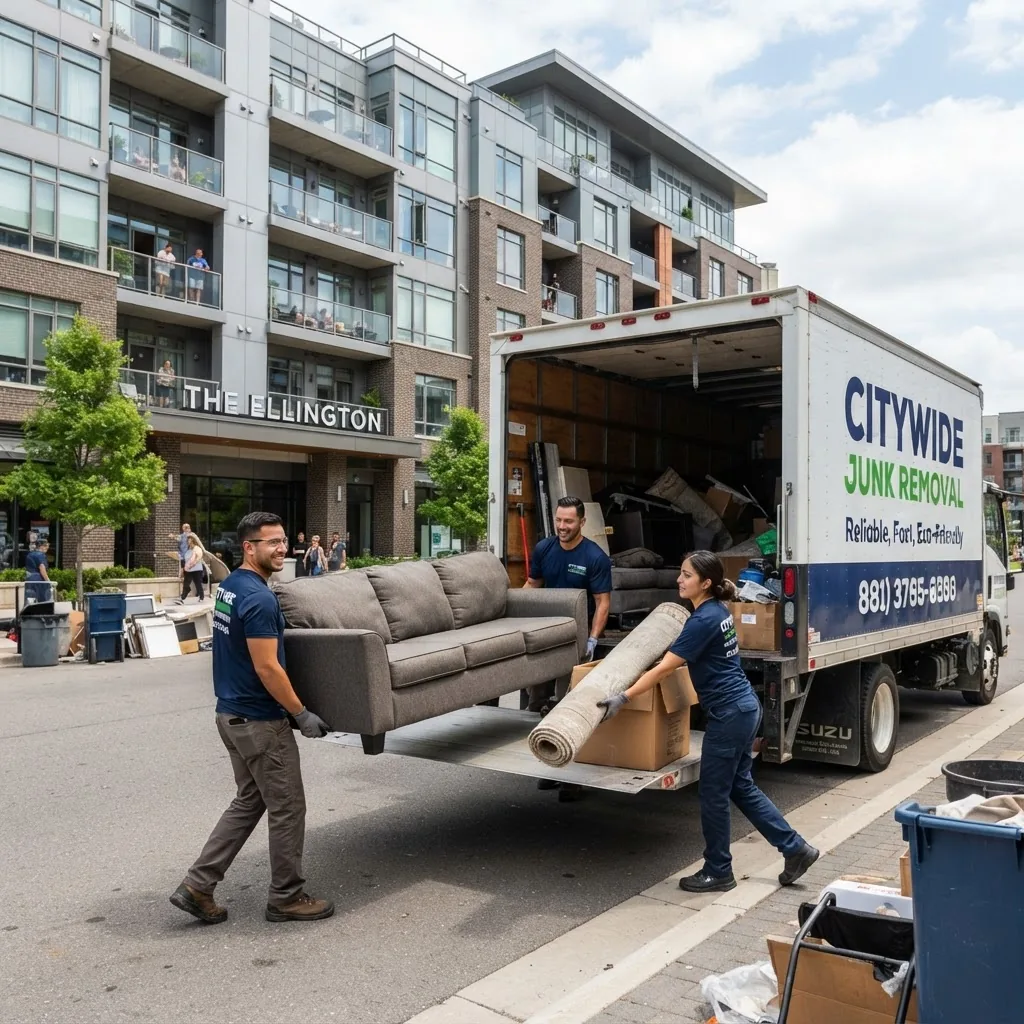
Professional clean out vendors offer a spectrum of service types: full-service clean outs (haul-away, debris removal, staging), partial clean outs (select rooms or single-item pickups), and specialized services (hoarder, biohazard, appliance disconnect). Industry experts recommend confirming insurance, licenses and disposal methods before booking. According to a 2024 industry report, demand for full-service clean outs rose 8% year-over-year, driven by aging-in-place transitions and rapid rental turnovers.
Below is a practical comparison table to help you choose between common service packages. Use the company’s quoting process or an online photo-quote to get an accurate local estimate.
| Service Type | What’s Included | Best For |
|---|---|---|
| Full-service clean out | Removal, hauling, basic sweeping, donation drop-off | Complete apartment turnover |
| Partial clean out | Room-by-room removal or single bulky item pickup | Selective removal |
| Specialized services | Hoarder remediation, biohazard, e-waste handling | Legal or health-sensitive jobs |
| Donation-only coordination | Pickup scheduling, receipt for donations | Charitable redistribution |
Service-level decisions hinge on liability, convenience and timeline. Industry standards—endorsed by trade groups such as the National Association of Residential Cleaning Services—recommend checking for worker comp coverage and proof of disposal methods for e-waste and mattresses.
commercial disinfection services are often offered by the same vendors if you need comprehensive sanitation after a clean out.
Other related professional options and regional examples:
- Long Beach clean out services
- Los Angeles clean out service prices
- cleaning companies in OKC
- deep cleaning services
- hire a housekeeper
- deep cleaning in Newark
- household cleaning services
- Airbnb cleaning requirements
- San Diego cleaning services
- property cleanout services
Transition: Understanding services leads directly to pricing. Next, get a clear cost breakdown and what drives the price so you can compare quotes fairly.
Apartment Clean Out Cost Breakdown and Pricing Factors
Stat block: Typical ranges (national averages as a planning guide)
- Studio: $150–$450 (small haul-away, minimal furniture)
- One-bedroom: $300–$700 (multiple rooms, a couch and a mattress)
- Two-bedroom: $500–$1,200+ (furniture, appliances, higher labor)
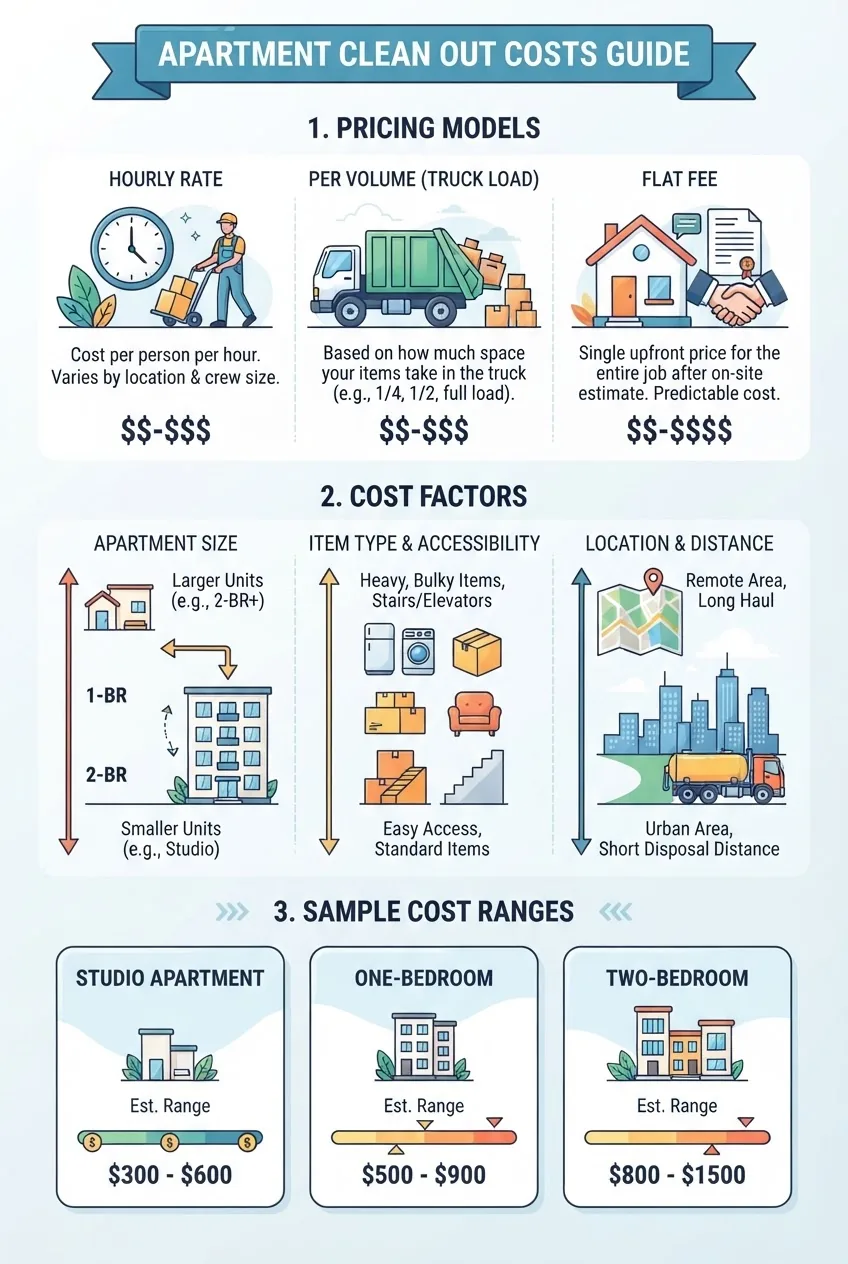
Pricing models explained:
| Model | How billed | Pros/Cons |
|---|---|---|
| Hourly rate | Charged per worker per hour ($45–$100/hr) | Good for small tasks; can exceed estimates if job runs long |
| Volume/pricing per cubic yard | Flat $/cubic yard; common with junk-haulers (e.g., $30–$60/yd³) | Transparent if volume estimated correctly; photos help |
| Flat fee | One-time price for scope (e.g., $400 for full studio) | Convenient; accuracy depends on upfront estimate |
Cost factors that change prices (ranked by typical impact): apartment size, volume of items (cubic yards), item types (appliances and electronics cost more), access complexity (stairs, elevator reservations), hazardous materials, local disposal fees, and scheduling urgency (same-day fees).
Hidden fees to watch for: stair fees ($20–$75/item), elevator reservation fines if not booked, per-item disposal fees (mattresses $30–$100), and long-carry fees (over 50 ft). Always get a written estimate that enumerates disposal fees.
how to get cleaning quotes online is a useful resource to collect accurate, photo-based estimates before booking.
Geographic pricing varies widely. Examples include:
- cleaning services costs in Florida
- Orlando cleaning service costs
- house cleaning costs in Scottsdale
- [example regional pricing—HVAC placeholder]
Sample estimate scenarios (rounded):
- Studio, curbside access, light furniture: Volume pricing → 3 yd³ × $45/yd³ = $135; plus $40 disposal = $175 total.
- One-bedroom, couch and mattress, stair carry: Hourly pricing → 2 workers × 4 hours × $60/hr = $480; plus mattress disposal $60 = $540 total.
- Two-bedroom, full-service, same-day: Flat fee → $900–$1,500 depending on volume and disposal.
apartment move out cleaning costs are complementary when you need a full turnover: combine a clean out with move-out cleaning for a single coordinated booking.
Transition: With pricing understood, selecting the right provider requires checks on licensing, reviews and service guarantees—covered next.
How to Choose the Right Apartment Clean Out Service
Choosing a provider is a mix of due diligence, local knowledge and service fit. Use this checklist to vet providers and then read the explanation below each item.
- finding cleaning services near me
- home cleaning services in Cincinnati
- home cleaning services in Phoenix
- cleaning services in Denver
- house cleaning services in San Jose
- housekeeping jobs
- free cleaning services
- compañías de limpieza cerca de mi
- property management cleaning
- housekeeping jobs
Checklist explanation:
- Licensing & insurance: Verify business license and worker comp. Ask for certificate of insurance. Industry experts recommend minimum $1M liability for larger jobs.
- Customer reviews & references: Check recent reviews and ask for two local references for similar jobs.
- Clear contracts & guarantees: Get written scope, disposal approach and rework guarantees.
- Eco-friendly disposal: Confirm donation partners and e-waste processors; reputable providers list disposal facilities and provide receipts.
- Transparent pricing: Require itemized estimates including disposal fees, stair fees and same-day surcharges.
- Scheduling flexibility: Confirm exact arrival window and cancellation policy; ask about rain or elevator delays procedures.
Transition: Scheduling and preparation make the day go smoothly. The next section offers a practical prep checklist and scheduling tips for high-traffic cities and tight building policies.
Scheduling and Preparing for Your Apartment Clean Out
Book at least 3–7 days in advance for standard clean outs; for large or high-rise jobs book 2–4 weeks to secure elevator reservations and permits. For same-day clean outs, expect a 10–30% premium.
- Confirm building rules and permits. Reserve elevator and loading zones 7–14 days ahead when required; gather building contact and access codes.
- Create a central staging area. Leave one hallway or room clear for staging removed items; mark it with signs and tape if allowed.
- Coordinate donations and pickups. Arrange charity pickup times and have donation receipts ready; many charities require 24–72 hour notice.
- Prepare access logistics. Provide gate codes, elevator keys and parking permits to the crew before arrival; email photos of access points to the vendor.
- Plan for timing: Morning appointments (8–11am) reduce wait and provide daylight for pickups; avoid late afternoon slotted near building quiet hours.
- Communicate occupant needs. If pets, children or elderly are present, notify the crew to follow extra precautions or schedule alternate times.
Local scheduling examples and resources:
- cleaning services in NYC
- booking cleaning services in Mesa AZ
- house cleaning services in Houston
- vacation rental cleaning cost guide
- vacation rental cleaning services
- cleaning service options in Las Vegas
- house cleaning services in San Jose
- house cleaning services in Phoenix
- house cleaning services in Houston
- booking cleaning services in Mesa AZ
Transition: Disposal responsibilities and environmental regulations are next—know local rules to avoid fines and support recycling streams.
Environmental and Legal Considerations in Apartment Clean Out
Disposal rules vary by jurisdiction. According to a 2023 EPA guideline, household hazardous waste must be separated and handled through municipal hazardous waste programs. Confirm your municipal waste management website for local drop-off days and rules.
Key environmental steps:
- Separate rechargeable batteries, paint, solvents and pesticides for hazardous disposal.
- Use certified e-waste recyclers for electronics to avoid data leakage and illegal export.
- Donate usable furniture rather than landfill—many charities accept large items with pickup schedules.
Authoritative resources:
EPA pages cover hazardous waste guidelines; check your local municipal waste site for specific drop-off locations and accepted materials. For professional standards, see industry guidance from trade associations such as the National Association of Residential Cleaning Services.
eco friendly cleaning services can reduce landfill impact and partner with recyclers and donation networks.
Example notes:
- Mattresses: many municipalities require special recycling; mattress disposal fees may apply.
- Paint: latex paint can often be solidified with kitty litter and then accepted by some landfills; oil-based paint is hazardous.
- Electronics: must be wiped of data and taken to certified e-waste centers; some providers collect and certify e-waste disposal.
Transition: Even experienced DIYers face problems; here are common clean out challenges and practical solutions.
Troubleshooting Common Apartment Clean Out Challenges
How do I remove heavy furniture?
Solution: Use a rated furniture dolly and moving straps; disassemble where possible. If >200 lb or awkward geometry, book a professional crew and consider a hoisting permit.
How to handle hoarder cleanouts?
Solution: Hoarder cleanouts often require staged work, social services coordination and biohazard checks. Professionals trained in sensitive cleanups should handle these.
What if a scheduled crew cancels last minute?
Solution: Maintain backup vendors and confirm cancellation policy. Keep temporary storage options (rental POD) for critical items.
How to prevent damage during removal?
Solution: Protect floors and walls with blankets and runners, use sliders, and secure items in transport. Document pre-existing damage in photos.
Need minor fixes or disassemblies?
Solution: Hire local handyman services for installations, disconnects or minor repairs.
Transition: Below are final summary takeaways and a clear next step checklist.
Summary and Final Tips for a Successful Apartment Clean Out
Key takeaways:
- Plan by volume: estimate cubic yards to choose hourly vs volume pricing.
- Separate hazardous items up front and check local disposal rules.
- Document everything with before/after photos and donation receipts.
- Get itemized written estimates from 2–3 providers; watch for stair/elevator fees.
- Call professionals for heavy lifts, biohazard, or hoarder situations.
Final CTA: If you need an instant photo-based quote, gather three clear photos of each room, note stair counts and elevator access, and request a flat-fee estimate to compare options.