
junk removal las vegas: by the end of this hands-on guide you’ll be able to plan, price, and complete a safe residential or small commercial junk removal project in Las Vegas in a single weekend (6–12 hours active work), assuming basic lifting ability and access to a pickup or contractor. This guide is written for homeowners, small landlords, and small contractors with no specialist permits already on hand.
Before you start
- Tools and materials: work gloves (2 pairs), steel-toe boots, 60–90 gallon heavy-duty bags (10–30), ratchet straps, dolly or hand truck, locking tie-downs for transport.
- Documents and info to gather: property address, photo list of large items, city sanitation account number (if applicable), any prior disposal receipts, and photos for contractor quotes.
- Skills assumed: ability to lift 50–75 lb items safely with a helper, basic sorting and labeling, ability to follow municipal directions for hazardous materials.
- Time estimate: small residential load 2–4 hours; full-house cleanout 8–12 hours plus contractor scheduling time.
- Survey and document the items. Walk every room and outdoor area, photograph each large item (furniture, appliances, mattresses) and note estimated dimensions and weights. For a typical 2‑bedroom removal, expect 10–15 photos and a 30–45 minute survey.
- Classify by disposal pathway. Mark items as donation, recycle, landfill, hazardous, or construction debris. Use stickers or a color-coded list. Example: refrigerators → hazardous (freon handling); drywall → construction debris.
- Get three local quotes for labor and disposal. Use your photos and measurements; request volume-based and flat-rate bids. For Las Vegas, insist the hauler states landfill and recycling destinations on the estimate.
- Confirm credentials. Ask for Nevada business license, waste hauler permit, and insurance limits (commercial general liability and auto). Verify the Nevada business license at the Nevada Secretary of State site and request a copy of their solid waste transporter permit.
- Schedule and prep the site. Remove personal effects, create a clear path 36–48 inches wide, and place large items near the curb where allowed. For apartment buildings, confirm loading dock permissions.
- On pickup day supervise and verify. Count items on arrival, confirm pricing triggers (volume or items), and get a disposal receipt listing final landfill/recycling facility. Keep receipts for 90 days for disputes.
Now that you have the core process in sequential steps, we’ll expand on the local specifics and decision points you’ll face in Las Vegas.
Overview of Junk Removal in Las Vegas
This section explains how Las Vegas approaches residential junk pickup and bulk trash collection, and where private junk haulers fit into the picture. Think of these services on a spectrum: municipal curbside collection at one end, and full-service private junk haulers—specialized movers for unwanted items—at the other.
- City collection (bulk/curbside): limited-size, scheduled bulk pickups handled by the city’s sanitation department or contracted vendors for residents in city limits.
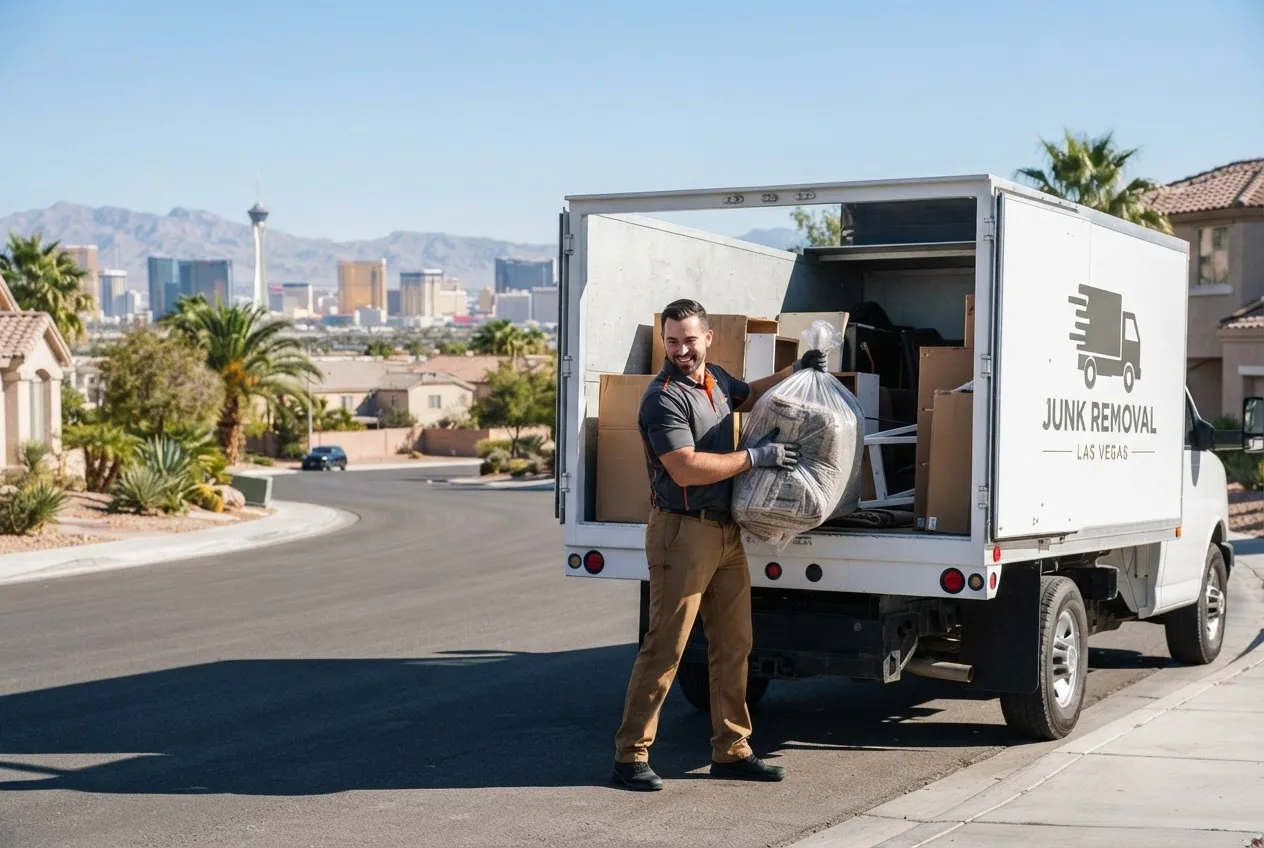
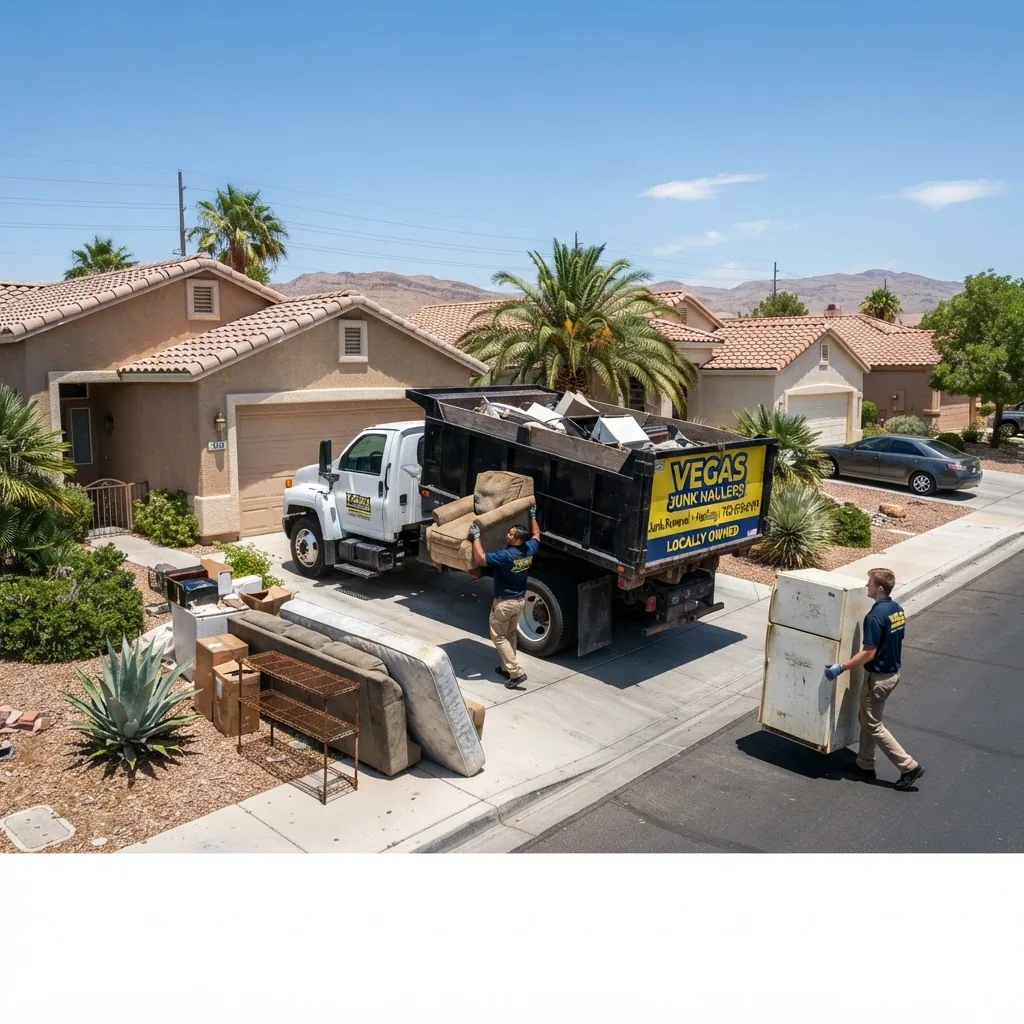
- Private junk removal: on-demand crews that pick up any sized load, sort on-site, and transport to transfer stations, donation centers, or landfills.
- Self-haul: residents can drive items to transfer stations and recycling centers (requires trip planning and fees).
Many people confuse regular curbside pickup with specialized junk removal. For a quick contrast, see the city garbage pickup service guide for routine collection rules and limits .
Transitioning from high-level choices to practical classification, the next section lists precisely what local services accept and how to handle special categories.
Types of Junk and Waste Accepted in Las Vegas
Las Vegas disposal options differentiate by material type, handling rules, and destination. Below is a categorized breakdown with what each category typically accepts and the practical handling notes you need for sorting and scheduling.
- Household furniture and appliances: sofas, mattresses, washers/dryers, refrigerators. Refrigerants must be recovered; use a licensed technician or a hauler that lists refrigerant reclamation on the ticket.
- Electronic waste (e-waste): TVs, computers, printers. Often accepted at municipal e-waste events or recycling centers; do not put e-waste in general landfill loads.
- Construction debris: lumber, drywall, shingles, concrete. Typically accepted at transfer stations or commercial landfills; large amounts usually require a dumpster rental or debris-hauler service. See debris removal and construction services for contractors’ workflows .
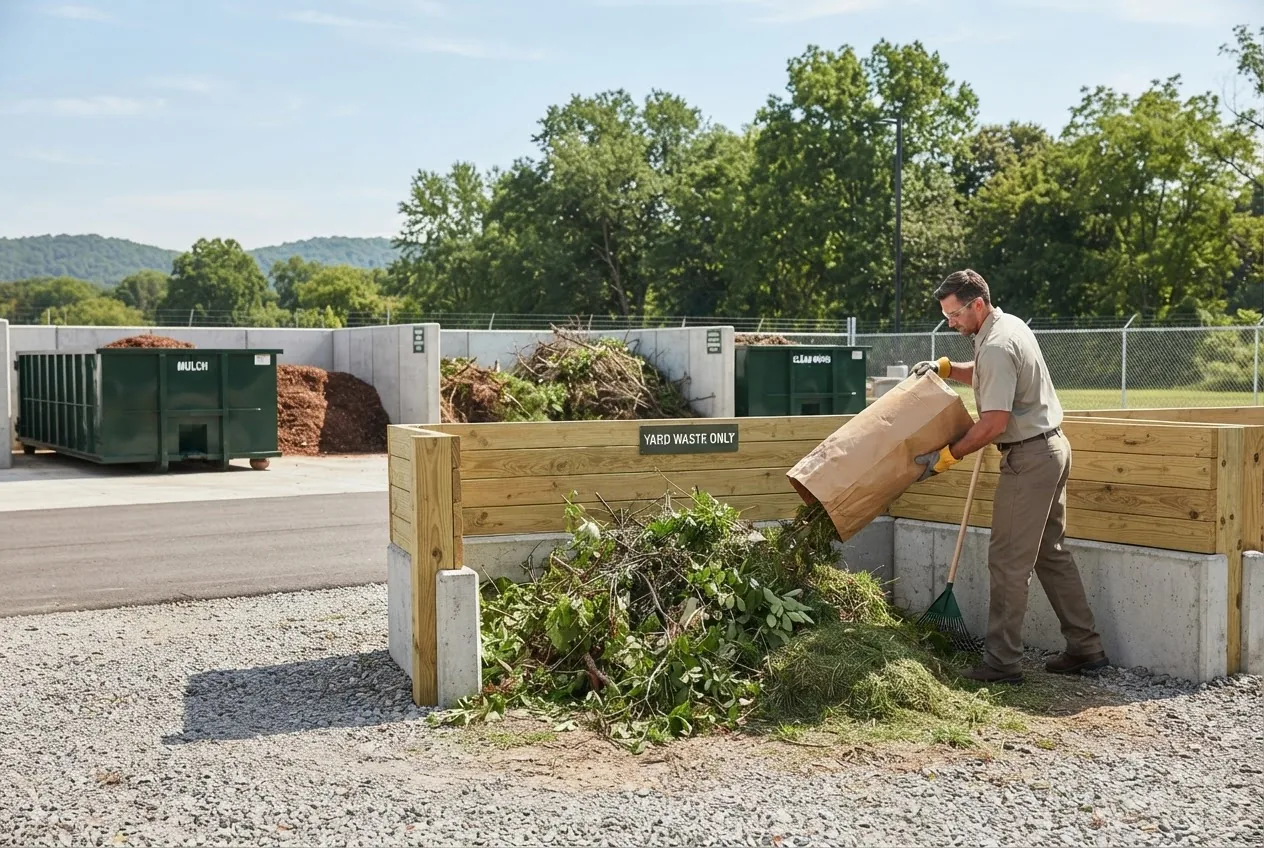
- Yard waste: branches, grass clippings, landscaping soil. City programs and yard waste drop-off facilities accept these; mulch and compost options exist seasonally.
- Hazardous materials: paints, solvents, pesticides, automotive fluids, batteries. Must be handled separately—see hazardous rules section for drop-off locations and limits.
- Salvageable donations: gently used furniture, working appliances, clothing. Donation centers and charities often accept pickups from haulers; get a tax-donation receipt when possible.
- Metal and scrap: appliances and scrap metal often have value — separate and take to scrap yards or have hauler give metal-only credit.
- Mixed loads: private junk haulers commonly accept mixed loads and sort curbside for diversion; municipal services usually do not.
Next we’ll cover how to choose a contractor in Las Vegas, what to verify on quotes, and how to avoid common rip-offs.
How to Choose a Junk Removal Service in Las Vegas
Choosing a provider involves balancing coverage, credentials, pricing models, and environmental practices. Follow this step-by-step selection process to reduce risk and get predictable pricing.
- Define your scope and timeline. List cubic feet estimate (example: 1/4 truck ≈ 60–100 cu ft, 1/2 truck ≈ 150–300 cu ft). For full-house cleanouts, expect 1–2 truckloads. Provide this scope when requesting quotes.
- Check service area coverage. Verify the hauler serves your ZIP code; Las Vegas metro includes multiple jurisdictions (City of Las Vegas, North Las Vegas, Clark County). Ensure the hauler accepts routes in your jurisdiction.
- Verify licensing and insurance. Ask for: Nevada business license, solid waste transporter permit, Commercial General Liability (minimum $1M recommended), and auto liability. Confirm license numbers where possible.
- Compare pricing models. Get both volume-based (cubic yard/truck fraction) and flat-rate options. Ask about minimum charges, disposal fees, and weight surcharges. Record the exact landfill or transfer station used.
- Request disposal receipts. A legitimate company provides a hauler ticket showing tonnage and destination. Use this to confirm proper disposal and diversion claims.
- Read recent customer reviews. Check multiple platforms and watch for repeated complaints about hidden fees or no‑shows.
- Assess eco-friendly practices. Ask what percent of loads are diverted from landfills, donation partners used, and e-waste recycling processes.
- Ask about crew scope and onsite fees. Confirm if movers will remove items from interiors, stairs fees, and whether hoisting over walls incurs extra costs.
- Get a clear cancellation and rescheduling policy. Verify any same-day or emergency pickup fees and deposit requirements.
- Find affordable local options. Search for affordable junk haulers near me and compare their itemized disposal practices .
- Consult the in-depth service primer. For comparison matrices and residential pickup tactics see the junk removal services guide and residential pickup options for longer checklists and contract examples .
Case study: A two-bedroom condo cleanout in Summerlin (June 2024) — contractor A quoted $375 flat, contractor B quoted $250 + $75 landfill fee. Contractor B required an interior fee for stairs ($60). After verifying disposal receipts, contractor B’s lower base price became more expensive. Always get the final disposed-ton invoice.
Local Waste Disposal Facilities and Recycling Centers
Las Vegas has a network of transfer stations, landfills, recycling centers, and hazardous waste collection events. Below is a directory-style list with key info: hours and common accepted materials. Confirm hours before you go—many sites have seasonal or event-based schedules.
- North Las Vegas Transfer Station — Typical hours: Mon–Sat 7:00–5:00. Accepts household garbage, construction debris, bulky items, and some appliances (appliance fees may apply). Call ahead for large commercial loads.
- City of Las Vegas Sanitation Yard/Drop-Off — Drop-off hours often limited to residents with proof of residency; accepts yard waste, bulky trash, and recyclables. Check the city’s event schedule for e-waste drop-offs. For official rules see City of Las Vegas Sanitation .
- Clark County Southern Nevada Recycling Center — Accepts cardboard, paper, metals, and some e-waste; hours vary. Many haulers deliver sorted recyclable loads here to lower disposal costs.
- Regional Landfill (commercial) — Open to licensed haulers and commercial customers; fees charged by ton. Large contractor loads typically go here.
- Hazardous Waste Collection Events — Hosted periodically by Clark County and the City. Accepts household hazardous waste, automotive fluids, and certain chemicals. For permanent and event schedules consult the Nevada Department of Environmental Protection at Nevada DEP .
- Salvage yards and donation centers — Area Goodwill, Salvation Army, and local furniture banks accept usable furniture and appliances by appointment; many haulers coordinate drops to these partners.
- Scrap metal yards — Pay cash for ferrous and non-ferrous metals; separate metal loads at pickup to maximize credit value.
- Electronics recyclers — Designated e-waste recyclers accept TVs, computers, and peripherals for certified e-recycling.
For public dumping details and local rules see public dumping requirements and dumps for trash for deeper operational constraints .
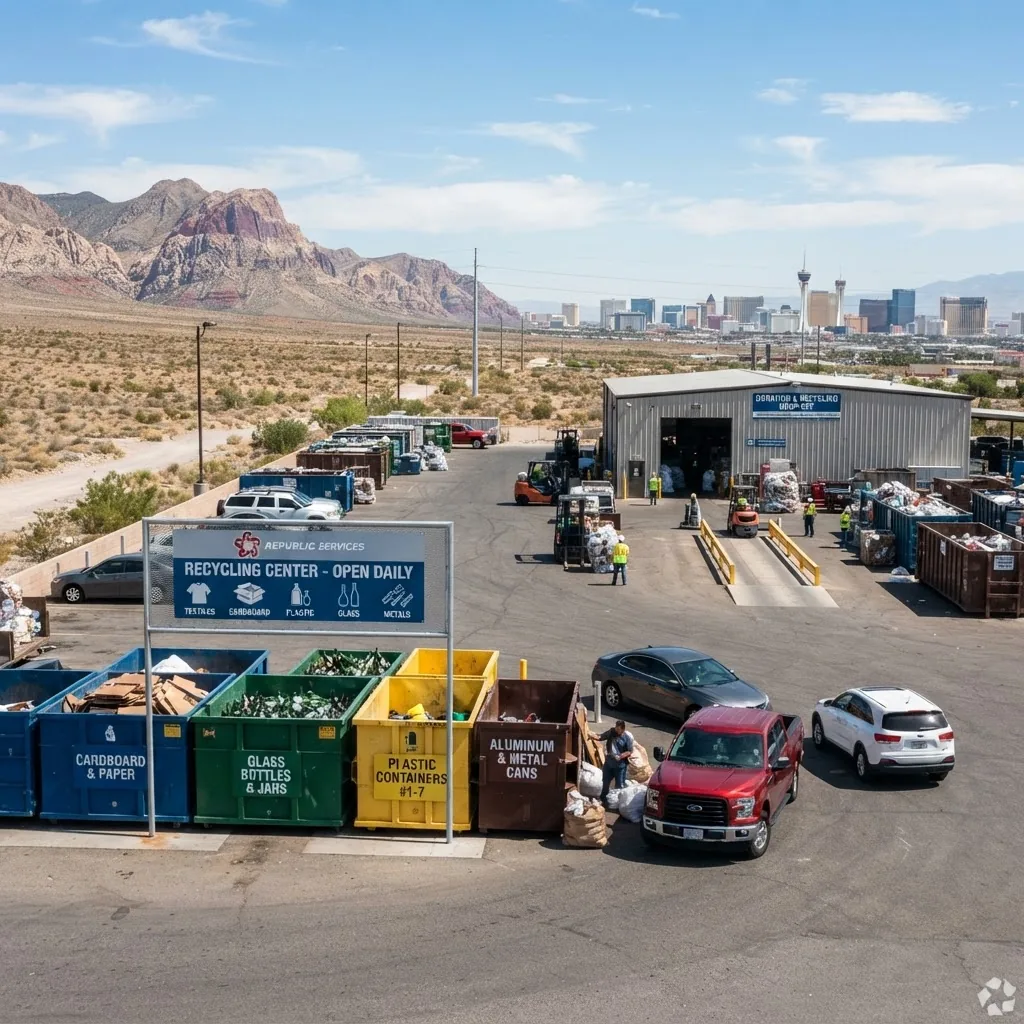
Transitioning from facility locations to money matters, the next section breaks down costs, common fees, and ways to save on Las Vegas junk removal.
Costs and Pricing Factors for Junk Removal in Las Vegas
Pricing in Las Vegas varies by volume, weight, type of material, travel distance, and disposal fees. Here’s how to interpret estimates and sample price ranges so you can spot an accurate quote.
Typical price components:
- Labor (per job or per hour)
- Truck/trailer use (flat or volume-based)
- Disposal fees (by weight/ton or per-item fees for appliances)
- Special handling (hazardous materials, mattresses, electronics)
- Access/hoisting fees (stairs, long carries, elevator use)
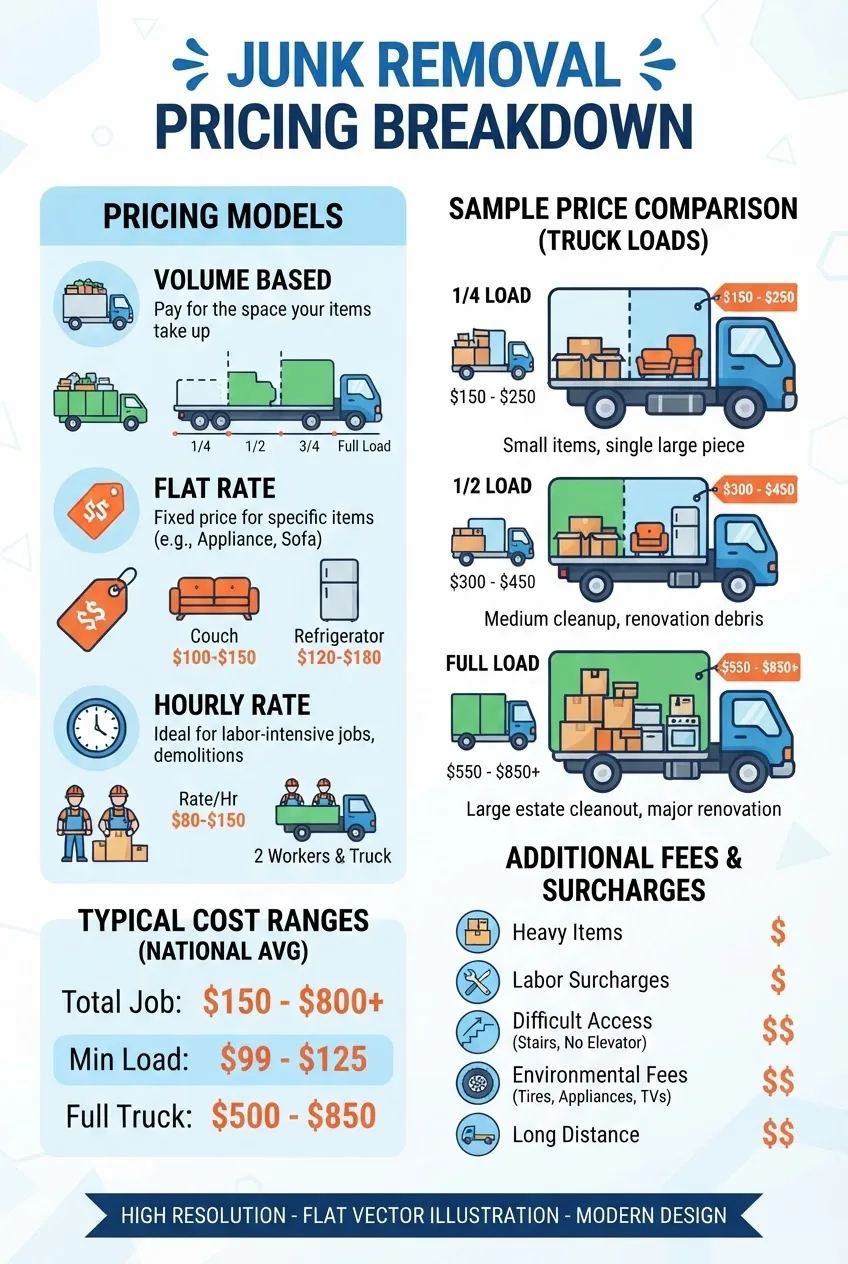
| Load Size | Typical Price Range (Las Vegas) | Notes |
|---|---|---|
| 1/4 truck (small load ~60–100 cu ft) | $125–$300 | Good for a few furniture pieces or appliances; appliance fees extra |
| 1/2 truck (~150–300 cu ft) | $250–$600 | Common for small home cleanouts; yard waste may be charged separately |
| Full truck (full load) | $500–$1,200+ | Large cleanouts and commercial loads; tonnage fees often apply |
Example fee breakdown (real scenario): Contractor quote $450 flat for 1/2 truck + $85 appliance disposal = $535 final. According to a 2023 industry pricing survey, average one-off household cleanout costs range widely due to disposal fees and hauling distance (source type: industry survey).
To save money:
- Donate usable items; haulers often deduct donation credit.
- Separate metal and scrap for cash credit.
- Bundle yard waste and use city yard collection where eligible.
- Compare flat-rate vs hourly: for large loads, flat-rate often better; for 1–2 small items, hourly may be fairer.
- Schedule during weekdays or off-peak times for lower service fees.
For commercial pricing structures, see the commercial junk removal cost overview for deeper rate tables .
Regulations, Permits, and Compliance for Junk Removal in Las Vegas NV
Las Vegas and Clark County enforce rules to prevent illegal dumping, improper hazardous waste disposal, and improper diversion claims. Below is a concise compliance checklist and important municipal rules.
- Bulk pickup rules: City of Las Vegas allows scheduled bulk trash collection for residents—size and frequency limits apply. Check the city’s sanitation page for current schedules and accepted items: City of Las Vegas Sanitation .
- Solid waste transporter permits: Commercial haulers must hold a state/local transporter permit and dispose of waste at approved facilities.
- Hazardous waste: Household Hazardous Waste (HHW) cannot go to regular landfills; use county HHW events or licensed hazardous waste handlers. See Nevada DEP for state rules: Nevada DEP .
- Illegal dumping penalties: Fines and potential criminal charges apply. Always obtain documentation from haulers showing legal disposal to avoid liability.
- Permits for special pick-ups: Some large or commercial pickups require temporary right-of-way or curb permits in city-controlled areas—verify at the municipal public works office.
- Statutory guidance: Follow EPA recommendations for landfill diversion and hazardous material handling; see EPA guidance for best practices .
For readers interested in how pickup regulations can vary across municipalities, read the Birmingham example of differing rules: garbage pickup service requirements to see how municipal requirements differ .
Specific legal verification steps:
- Ask hauler for transporter permit number, then verify with Clark County or the Nevada DEP.
- Keep a copy of the hauler’s disposal ticket (destination, tonnage, and date).
- Do not sign “release of liability” clauses that shift illegal dumping responsibility onto you.
DIY Junk Removal vs Hiring Professionals – Pros and Cons
Weigh labor, time, equipment, liability, and cost. The table below summarizes key trade-offs to help decide between renting equipment and hiring a crew.
| Aspect | DIY / Self-haul | Professional Junk Removal |
|---|---|---|
| Cost | Lower if you have a vehicle; rental + disposal fees add up. | Higher but includes labor; predictable flat-rate options available. |
| Time & Labor | High personal time; multiple trips possible. | Low personal time; crew handles heavy lifting and sorting. |
| Safety | Higher risk without proper equipment; consider renting a dolly and using gloves. | Lower risk when crew is trained; insured teams reduce your liability. |
| Permits & Disposal | You must arrange disposal and permits; watch for restricted items. | Haulers handle permits and destination; verify with receipts. |
If you prefer dumpsters for long renovation projects, compare rental requirements in the commercial dumpster service and rental requirements to see when a dumpster is preferable .
Short decision rule: If your load has more than 400–500 cu ft, multiple heavy items requiring stair carries, or hazardous components, hire professionals. If the work is under a half-day and you have a truck and strong helpers, DIY can save money.
Best Practices for Environmentally Friendly Junk Removal
Reduce landfill diversion by maximizing reuse and recycling. Follow these step-by-step tactics to increase diversion rates and lower disposal costs.
- Sort for donation first. Set aside items in reusable condition. Contact donation centers to confirm pickup windows and tax receipt policies. Record serial numbers for appliances when required.
- Separate metals and e-waste. Remove freon-containing appliances for proper reclamation and take electronics to certified recyclers that provide e-waste certificates.
- Use certified recycling providers. Request documentation from recyclers showing materials processed and diversion percentages.
- Plan construction debris recycling. For >1 cubic yard of concrete, brick, or asphalt, use a concrete recycler or crushed aggregate service to avoid landfill fees.
- Dispose hazardous waste at HHW events. Keep hazardous items in original containers and follow county event instructions.
- Track diversion metrics. Ask haulers for tonnage/volume diverted and obtain receipts for landfill, recycling, and donation destinations.
For commercial-scale recycling and cost structures consult commercial recycling services and waste disposal cost to understand enterprise-level diversion strategies .
EPA best practices stress waste hierarchy: reduce, reuse, recycle. According to a 2022 EPA report (source type: federal agency report), landfill diversion significantly reduces greenhouse emissions when implemented at scale.
Scheduling and Preparing for Your Junk Removal Appointment
Preparation makes the pickup efficient and keeps costs down. Follow this numbered checklist the day before and the morning of your appointment.
- Confirm appointment and final estimate. Call or message the hauler 24 hours ahead to reconfirm scope, crew arrival window, and final price triggers.
- Place items in designated pickup area. Move large items to the curb or staging area; ensure a 36–48 inch clear path from item to truck. For walkway or stair carries, expect a $45–$90 stair fee per flight.
- Label hazardous or contained items. Place paint, oil, and chemicals in a clearly marked bin and keep them separate for disposal or HHW drop-off.
- Protect landscaping and surfaces. Lay down plywood or moving pads when moving large furniture across lawns or tile.
- Prepare payment and ID. Have method of payment ready (card or cash), and keep your ID for verification if required.
- Plan for children and pets. Keep them away from the work area during loading for safety.
- Confirm final disposal paperwork. Request a signed receipt showing dates, items, and disposal destination before the crew leaves.
- Rescheduling and cancellation policy. Know the hauler’s policy to avoid last-minute fees (common penalties: 20–50% of quoted price if within 24 hours).
For seasonal city initiatives and community pickup events that reduce costs, see the city clean up and local spring cleanup options write-up .
Common mistakes and how to avoid them
I once hired a local hauler without checking the disposal ticket and found my load dumped at an unpermitted site; I learned to always require a signed hauler ticket showing legal disposal. I also paid an interior fee because I hadn’t moved items close enough to the exit—measure and stage items in advance.
- Failing to verify transporter permits — always ask and confirm.
- Not separating recyclables — missed opportunity for credits and lower fees.
- Underestimating labor needs — stair carries and narrow halls increase costs and injury risk.
- Accepting vague diversion claims — require receipts showing actual destinations.
Checklist: Verify your junk removal job is done correctly
- All items listed on the initial photo inventory are removed.
- You received a disposal receipt with destination and tonnage.
- Donation receipts provided for items sent to charities.
- Hazardous items handled at a certified HHW event and you have event receipts.
- Payment released only after the crew provides disposal documentation.
When to call in a professional
- Large-volume demolition or construction debris beyond 3 cubic yards — call licensed debris haulers.
- Items requiring refrigerant recovery, asbestos-containing materials, or lead-based paint removal — certified specialists required.
- Estate cleanouts or hoarder situations with biohazards — use professional remediation teams.
- Commercial accounts needing recurring pickups and diversion reporting — contract a commercial service with documented recycling programs.