
Free cleaning helps eligible households receive no-cost residential cleaning—typically provided by nonprofits, volunteers, or government programs—for essential maintenance, deep cleans after emergencies, or support for vulnerable residents; this guide explains where to find these services, who qualifies, how to apply, and what to expect at each step.
What Are Free Cleaning Services?
Answer: Free cleaning services are no-cost cleaning programs run by charities, community groups, or government agencies that provide residential cleaning—from light housekeeping to emergency disinfection—at no charge to eligible recipients.
Free cleaning: a no-cost cleaning service provided by charities, volunteers, or public programs to help people who meet specific eligibility requirements.
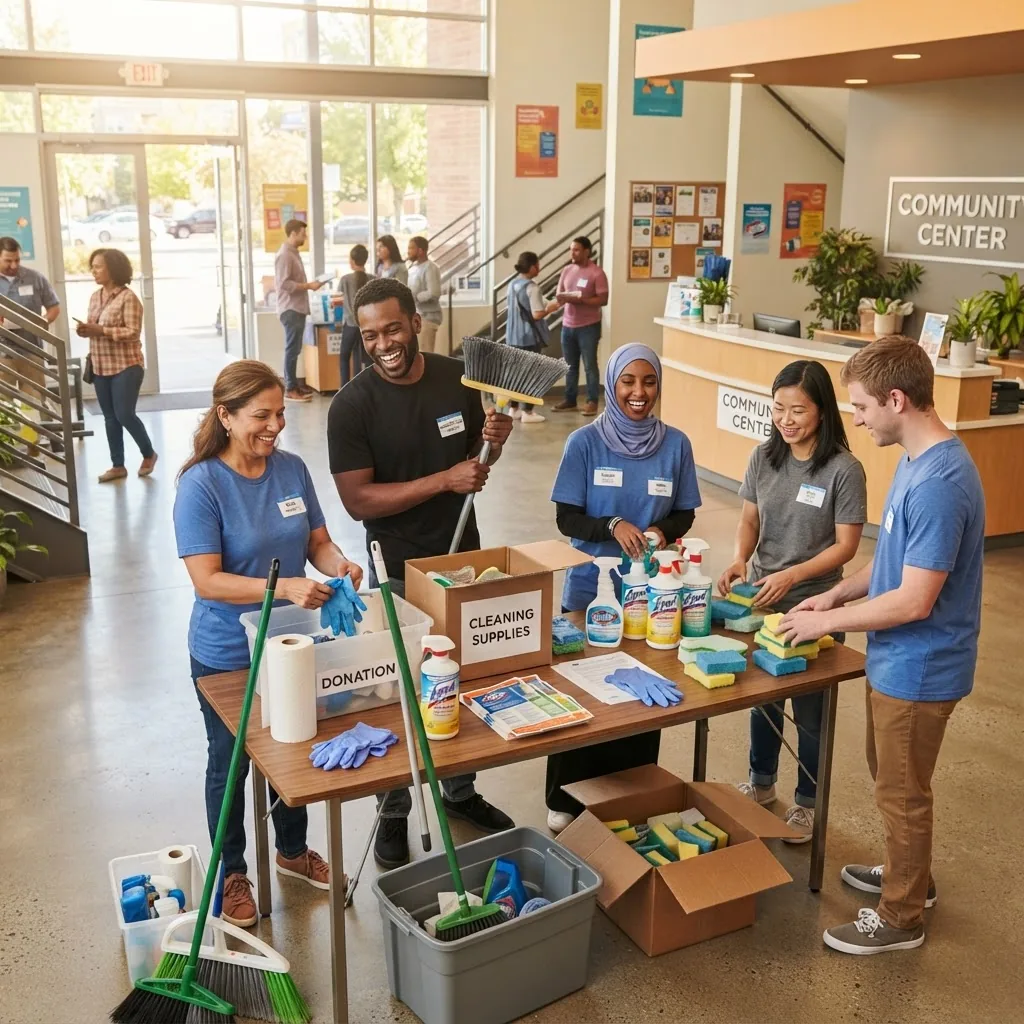
These programs vary widely: some are volunteer drives offering light housekeeping (trash removal, sweeping), others provide professional-level deep cleaning or COVID-19 disinfection after disasters. Examples include a community nonprofit scheduling monthly visits for disabled residents, a faith-based group organizing a one-time deep clean for flood victims, or a municipal program offering limited-time disinfection for seniors.
Free cleaning is distinct from paid services: it’s mission-driven, limited in frequency and scope, and generally targeted to specified populations rather than open-market booking.
Transition: Next, we’ll list the common types of no-cost cleaning you can reasonably expect from community programs.
Types of Free Cleaning Services Available
Answer: Free cleaning programs typically offer light residential cleaning, targeted deep cleans, emergency cleaning and disinfection, seasonal community clean-ups, and organizing assistance—each with defined limits on scope and frequency.
Residential cleaning: routine, light household tasks such as sweeping, dishwashing, trash removal, and surface wiping.
- Light housekeeping (most common) — Volunteers or staff perform routine tasks: sweeping, vacuuming, trash removal, simple tidying, and basic surface wiping. Ideal for short-term mobility or energy-limited clients.
-
Deep cleaning — Intensive cleaning including scrubbing bathrooms, kitchen degreasing, and floor treatments. Often done by trained volunteers or subcontracted professionals when funding permits; not guaranteed for every request.
basement cleaning services - Emergency cleaning and disinfection — Rapid-response cleaning after floods, fires, or public-health exposures; often partner-driven with Red Cross-like organizations or municipal agents.
- Disinfection services — Focused high-touch surface sanitation for infection control when guided by public health protocols; volunteer teams use approved disinfectants and PPE.
- Seasonal and community drives — Neighborhood clean-up days, spring cleaning drives, or targeted assistance (e.g., holiday support) organized by community centers or faith groups.
-
Organizing and light hoarding intervention — Short-term help to sort and remove clutter; programs limit scope and often require assessment to ensure safety.
cleaning and organizing services
Typical service scope varies by program; many free cleaning initiatives exclude hazardous-waste removal, structural repairs, and specialized services requiring licensed contractors.
Transition: Now that you know service types, learn who usually qualifies and how eligibility is determined.
Who Qualifies for Free Cleaning Services? Eligibility Criteria Explained
Answer: Eligibility generally targets low-income households, elderly or disabled residents, veterans, and disaster victims; programs require proof of income, identification, residency, or disaster status and follow specific verification methods.
Eligibility criteria: the rules you must meet to receive a service, usually set by the funding agency or nonprofit and enforced through documentation checks.
Low-income households
Most community cleaning programs prioritize households below a certain income threshold, often aligned with local Area Median Income (AMI) or federal poverty guidelines. Documentation typically requested:
- Recent pay stubs or a benefits award letter (SNAP, TANF, SSI).
- Photo ID and proof of address (utility bill, lease).
- Completed application form with household size.
Verification methods include scanned documents, in-person review, or eligibility databases used by municipal social services. According to a 2023 municipal program report, most nonprofit-funded cleaning programs used at least one income-verification document to confirm eligibility (source type: government program report).
Elderly residents (age-based programs)
Programs for seniors often require proof of age (government ID) and sometimes documentation of frailty or limited mobility from a clinician. Services are prioritized when safety risks or fall hazards are present.
People with disabilities
Eligibility usually requires documentation such as a disability benefits letter, physician note, or social worker referral. Some programs accept self-declaration with corroborating support from home health agencies.
Disaster and emergency victims
After floods, fires, or other declared disasters, eligibility is often tied to damage assessment, FEMA registrations, or Red Cross intake records. Emergency cleaning programs may waive typical income tests in declared emergencies.
For disaster guidance on sanitation and cleanup, see the CDC: CDC disaster cleanup guidance.
Veterans and special groups
Veteran-focused charities sometimes provide free cleaning as part of broader assistance; proof of service or VA records may be required.
Referrals from social services or healthcare providers
Many programs require a referral from a caseworker, public-health nurse, or community center; referrals streamline eligibility verification and prioritize high-need cases.
Common documentation and verification nuances
- Acceptable proof varies: some programs accept digital photos of documents; others require originals at intake.
- Income thresholds may reference federal poverty levels or local AMI; ask the program which standard they use.
- Programs often accept alternative documents for undocumented residents—check privacy and anti-discrimination policies.
According to a 2024 industry report on social service delivery, nonprofits increasingly accept emailed scanned documents and verified referral codes to speed approvals (source type: 2024 industry report).
Transition: With eligibility clear, the next section explains how to locate free cleaning services near you and which channels work best for local searches.
How to Find Free Cleaning Services Near Me
Answer: Start with local government social services, 2-1-1 or municipal helplines, community centers, faith-based charities, and national nonprofits; search specific terms like “free cleaning services near me,” call referrals, and use online intake portals to apply or request assessments.
Step-by-step search strategy:
- Call 2-1-1 or local human services hotline: These triage services maintain updated lists of programs and make referrals; ask specifically for “no-cost cleaning” or “assistance with housekeeping.”
- Contact municipal housing or social services: Your city or county website frequently lists programs for seniors, low-income households, and disaster recovery. For national guidance on housing benefits, see HUD: HUD.
- Reach out to local nonprofits and faith groups: Organizations such as Salvation Army or community action agencies often run or fund cleaning initiatives—call local branches directly. Example: Salvation Army.
- Ask healthcare providers and social workers for referrals: Home health agencies and case managers often coordinate volunteer cleaning for clients.
- Search targeted web queries: Use “free cleaning services near me,” “no-cost house cleaning,” or “volunteer housekeeping” plus your city name. For urban examples and booking options, check local services like NYC residential cleaning bookings which illustrate city-level service landscapes.
- Use community platforms and social media: Neighborhood Facebook groups, Nextdoor, and local volunteer networks post one-time drives and recurring programs.
- Call local community centers and senior centers: They maintain waiting lists or organize volunteer teams for in-home support.
- Check disaster-specific registries after emergencies: Use FEMA and local emergency management portals during declared disasters to register for cleanup assistance.
- Confirm eligibility and waitlist policies: Ask whether programs use first-come-first-served, triage by need, or referral prioritization.
Where paid-but-low-cost options fit: If free programs have long waitlists, explore affordable regional services and booking platforms for quick help—local examples and booking guides include Cincinnati home cleaning bookings or city-specific directories.
Transition: If you find a program, follow the next section’s step-by-step application guidance to submit a successful request.
Applying for Free Cleaning: Step-by-Step Process
Answer: Apply by completing the provider’s intake form, submitting required documentation (ID, proof of income or disaster damage, referral), scheduling an assessment, and confirming the appointment; follow up if waitlisted and keep copies of all submissions.

Application form: the required paperwork or online intake that records your contact details, household composition, and circumstances for review by the program.
- Step 1 — Identify the correct intake channel: Determine whether the program accepts phone applications, online portals, or in-person visits. Note the hours and preferred language.
- Step 2 — Gather documentation: Typical documents include photo ID, proof of address, pay stubs or benefits letters, medical notes (if disability-based), and damage assessment for disaster claims. Keep photocopies and digital scans.
- Step 3 — Complete the application accurately: Provide household size, special needs, mobility limitations, and any safety hazards (mold, pests). Flag urgent needs clearly.
- Step 4 — Request a referral if needed: If the program requires a social worker, get a referral and have the referring agency submit supporting documentation directly when possible.
- Step 5 — Schedule an on-site assessment: Many programs require a home visit to confirm scope; prepare access instructions, safe working areas, and a list of priorities.
- Step 6 — Confirm safety and liability agreements: Read and sign any waivers, consent forms, or liability releases; ask whether volunteers are background-checked or insured.
- Step 7 — Track your application and follow up: Note confirmation numbers and contact persons; if waitlisted, call monthly to check status or request updates.
- Step 8 — Prepare the home for service: Clear pathways, secure pets, and remove valuables; ask the provider about expected arrival window and worker IDs.
- Step 9 — Post-service feedback and documentation: Provide feedback and, if required, sign completion forms; keep records for subsequent applications or appeals.
Application timelines vary: many nonprofit programs respond within 1–4 weeks; disaster-driven programs may act within 48–72 hours depending on scale. According to a 2023 community-services survey, average nonprofit intake-to-service times ranged from 10–21 days in non-emergency periods (source type: 2023 community-services survey).
Transition: Before you accept a scheduled team, read the next section to understand common program limits and exclusions so expectations align with reality.
Common Limitations and Exclusions of Free Cleaning Services
Answer: Free cleaning services commonly limit service area, frequency, scope (no hazardous waste or structural repairs), and materials provided; beneficiaries often share responsibility for certain costs and must disclose health or safety hazards.
Common limitations include:
- Service area restrictions — programs often serve specific counties, cities, or ZIP codes.
- Frequency limits — many programs offer one-time assistance or set annual caps per household.
- Scope exclusions — hazardous-waste removal, pest extermination, asbestos, lead remediation, and licensed plumbing or electrical repairs are typically excluded.
- Material and supply limits — programs may supply basic cleaners and PPE but not specialty products or replacement appliances.
- Client responsibilities — some programs require households to remove personal items, secure pets, or supply electricity and water during service.
- Eligibility lapses — changes in income or residency can disqualify ongoing support mid-service cycle.
- Waitlists and prioritization — high-need and emergency cases are prioritized; routine requests may face long waits.
Be transparent about hazards like mold, biohazards, or structural damage—programs may refuse service for safety reasons or require subcontracting to licensed professionals with associated costs.
Transition: Knowing limitations helps you evaluate safety and quality; the next section explains vetting, expected standards, and safety practices for free teams.
Safety, Quality, and What to Expect from Free Cleaning Services
Answer: Free cleaning teams range from trained professionals to community volunteers; expect basic background checks, limited insurance coverage, volunteer training on cleaning standards, and adherence to public health guidance—ask about credentials, insurance, and safety protocols before service.
Background checks: brief criminal-history or reference checks for volunteers; professional providers may have more robust vetting.
Best-practice checklist before allowing workers into your home:
- Confirm worker identification and the organization’s contact person.
- Ask whether volunteers have completed training on cleaning protocols and PPE use.
- Request proof of liability insurance or director’s statement covering volunteer work.
- Verify whether the organization follows CDC disinfection guidance for infectious disease cleanup; see CDC cleaning and disinfecting guidance.
- Ask about complaint and incident-reporting procedures.
Differences between volunteer and professional free cleaning:
- Volunteer teams often provide compassionate, low-cost labor but may have limited training and no formal quality guarantees.
- Professional subcontracted services provide higher, measurable standards, trained technicians, and insured work but are less common in free programs due to cost.
For readers exploring professional-level disinfection beyond residential free services, see the pillar on commercial disinfection services and providers.
requirements for cleaning jobs
Ask these practical questions: Are volunteers trained in blood-borne pathogen safety? Is PPE provided? Who is liable for accidental damage? Programs should provide clear answers; if not, consider delaying service until assurances are documented.
Transition: If free services are unavailable or unsuitable, the next section compares alternatives and low-cost options so you can choose the safest, most affordable path.
Alternates When Free Cleaning Services Are Unavailable
Answer: When free services aren’t available, consider low-cost community programs, discounted professional services, barter or volunteer swap arrangements, or short-term paid hires; compare cost, turnaround, and scope to choose the best option.
Quick comparison table of common alternatives:
| Option | Typical Cost | Turnaround | Best for |
|---|---|---|---|
| Low-cost nonprofit programs | $0–$25 for supplies | 1–3 weeks | Income-based clients |
| Discounted professional services | 30–60% off market rates | 3–10 days | One-off deep cleans |
| Hourly hire/independent cleaner | $25–$50/hour | Same-week availability | Flexible, ongoing help |
| Barter/volunteer exchange | Trade value | Depends on network | Community-based arrangements |
Short prose summary: community organizations sometimes offer sliding-scale options or vouchers that reduce costs; independent cleaners provide rapid scheduling but at a fee; barter systems and community work-trade can be effective for sustained help without full cash outlay.
Practical resources and next steps:
- apartment clean out options
- move out cleaning services
- hiring a cleaner for your home
- cleaning companies OKC pricing
- cleaning quotes online
If you need apartment-specific affordable options, the guide on apartment clean out options explains cost-saving strategies and staged clean-outs.
Transition: Final section summarizes key safety and practical takeaways and offers a clear call to action.
Safety, Quality, and What to Expect from Free Cleaning Services
Answer: Expect variable quality: volunteer teams may be unpaid but motivated, while subsidized professional help provides documented standards; always confirm background checks, insurance, and adherence to CDC guidance for disinfection before allowing entry.
Best practices checklist (quick):
- Confirm IDs and program contact information before service.
- Request written scope of work and any waivers.
- Ask about training, PPE, and cleaning protocols.
- Verify insurance coverage or signed liability agreement.
- Document pre-existing damages and keep photos.
If you want professional-grade or commercial-level disinfection beyond what free residential programs cover, consider exploring commercial disinfection services and providers for certified vendors and standards.
For those curious about worker vetting and training, review local job requirements such as background checks and certification standards in the guide on requirements for cleaning jobs, which explains common employer checks and training expectations.
Trust and safety disclaimer: Program availability, eligibility rules, and safety protocols vary by locality and funding. If a program asks for money upfront or requests unusual personal data, refuse and confirm with the sponsoring agency—document requests to avoid scams. According to a 2023 consumer-protection bulletin, scams commonly impersonate nonprofit programs, so verify every contact (source type: 2023 consumer-protection bulletin).
Final summary and call to action: review eligibility, gather required documents, contact 2-1-1 or your local social services, and apply to the most relevant program; if free services aren’t available, use the alternatives compared above to get timely, safe help.