Retail store cleaning services — By the end of this hands-on guide you will have a finished scope-of-work, a sample cost estimate for a 2,500 sq ft store, and a step-by-step vendor evaluation checklist you can use immediately. Expect to complete the assessment and single-round vendor outreach in 4–8 hours; implementation planning and negotiation will take another 2–10 business days. This guide assumes basic retail operations knowledge and no prior contracting experience.
Before you start, gather the documents, measurements and stakeholders below and read the first three steps fully to avoid rework.
Before you start
- Store floor plan or measured square footage and high-traffic zones
- Weekly customer counts (or POS receipts) to estimate foot traffic
- Photos of typical daily conditions (floors, displays, restrooms)
- List of store hours, peak times, and restricted-cleaning windows
- Inventory of flooring, fixtures, and sensitive surfaces/materials
- Budget ceiling and any green/brand requirements (e.g., Green Seal)
- Primary contact for vendor coordination and a legal/contract reviewer
Transition: With prep done, move into the practical steps below that cover assessment, scope creation, pricing models, vendor selection, and operational roll-out.
-
Inspect and map the space — perform a 45–90 minute walkthrough to document needs
Walk every aisle, backroom, and restroom with a clipboard. Note square footage by zone (sales floor, checkout, stockroom, restrooms, entryways, windows). Time and log one week’s worth of peak customer minutes for near-term frequency planning. Take photos of common problem areas: grout, high-touch displays, and entrance mats.
- Measure the sales floor and store perimeter separately — floors typically drive pricing.
- Identify sensitive assets (LED displays, fabrics, high-value merchandise) that require special cleaning protocols.
- Record restroom count, fixture types, and existing plumbing layouts for sanitation planning.
Practical threshold: classify zones as low (<500 visits/day), medium (500–2,000), or high (>2,000) foot traffic for frequency math later.
-
Define scope and service levels — translate observations into daily, weekly and periodic tasks
Create three service tiers: Basic daily janitorial, Enhanced daily + weekly deep cleaning, and Full program with periodic disinfection and specialty services. For each zone list tasks, frequency, and measurable acceptance criteria (SLA).
Example SLA items:
- Sales floor: broom/dust-mop hourly during open hours; microfiber damp-mop once nightly; no visible debris on any 10×10 ft inspection square after cleaning.
- Checkout area: sanitize POS terminals and counters every 2 hours; trash emptying at 50% capacity threshold.
- Restrooms: check hourly; full clean and disinfect nightly with documented chemical contact times.
Note: This scope will be your core deliverable to vendors and the basis for all pricing comparisons.
-
Estimate baseline cleaning needs — use simple formulas to build an initial cost model
For a quick practitioner estimate use three inputs: square footage (SF), traffic class, and service level multiplier.
Formula (example): Base minutes/day = (SF / 100) × traffic multiplier. Convert minutes to labor hours and apply local hourly wage + burden (typically wage ×1.35 to include taxes and benefits).
Illustrative mini case study: Estimate for a 2,500 sq ft boutique (medium traffic).
- Base minutes/day = (2,500 / 100) × 30 = 750 minutes (12.5 hours)
- Labor hours/day = 12.5 ÷ 60 ≈ 12.5 actual labor hours/day
- With two cleaners shared across shifts: 2 × 8-hour shifts = 16 hours/day capacity — good fit
- Cost per hour assumption = $18 base wage × 1.35 = $24.30 fully loaded
- Daily labor cost = 12.5 × $24.30 = $303.75; Monthly (26 service days) = $7,897.50
Adjust for equipment, consumables and management fees (add 25–45%). According to a 2023 industry survey, management and supplies averaged 30% of total contract costs (industry report, 2023).
Include a clear disclaimer: actual costs vary by geography, union status, and local wages — treat this as a planning estimate only.
-
Choose pricing model and prepare an RFP — select per hour, per-square-foot, or flat-fee
Decide which pricing model aligns with your procurement policy and operational predictability:
- Hourly: flexible, good for variable operations but can fluctuate monthly.
- Per square foot: predictable and common for retail; best when scope is standardized.
- Flat fee: fixed monthly cost, often includes a bundled service package and a defined SLA.
Create an RFP that includes your defined scope, expected frequencies, SLA acceptance criteria, baseline hours, and required insurance/certifications. Ask for price breakdowns (labor, supplies, equipment amortization, management fee).
-
Vet vendors — check references, certifications and run a paid trial
Follow this walkthrough for provider evaluation: request documentation, conduct reference checks, and execute a 2–4 week paid pilot with measurable KPIs.
Walkthrough steps (site visit and verification):
- Request three references of comparable store size and ask about punctuality, incident response times, and staff turnover.
- Perform a site visit with the vendor’s proposed crew to observe cleaning methods and equipment; verify MSDS for chemicals and training records.
- Run a 14-day paid trial; use a simple scoring sheet to rate cleanliness by zone on a 1–5 scale daily.
Practical metrics to include in the trial: average restroom cleanliness score ≥4.5, 95% on-time arrival, and documented corrective actions within 24 hours.
Cleaning companies in California services and costs — use this for California-specific vendor market expectations.
-
Negotiate contract and SLA — define inspection cadence, penalties, and escalation paths
Key contract terms to insist on (include measurable values):
- Service Level Agreement (SLA) with clear KPIs: e.g., restroom score ≥4.5, floor finish durability ≥90 days between burnishes.
- Termination clause: 30 days with cause, 60 days without cause.
- Price review: allow annual CPI adjustment capped at 4% or mutual negotiation.
- Insurance: vendor must carry general liability ≥$2M and workers’ comp per state requirements.
Include penalties for repeated SLA failures (for example: three missed nightly cleans in a 30-day period triggers a 5% service credit).
-
Plan operations and handover — set inspection rounds, supply restocking and communication flows
Create a 30/60/90 day operational plan with the vendor covering:
- Daily opening and closing checklists with timestamps
- Inventory and restocking schedule for consumables — reorder at 30% on-hand
- Point-of-contact for incidents and a 24-hour response window
- Quarterly performance review meetings and monthly KPI scorecards
-
Monitor performance and iterate — inspect, record data and optimize frequencies
Run monthly KPI reviews and make frequency adjustments based on data: e.g., increase restroom cleaning from nightly to twice-daily if daily restroom score drops below 4.2 for two consecutive weeks.
Use the first 90 days as optimization: you should reduce reactive spot-cleaning by 30–50% by tuning frequencies and supplies.
Introduction to Retail Store Cleaning Services
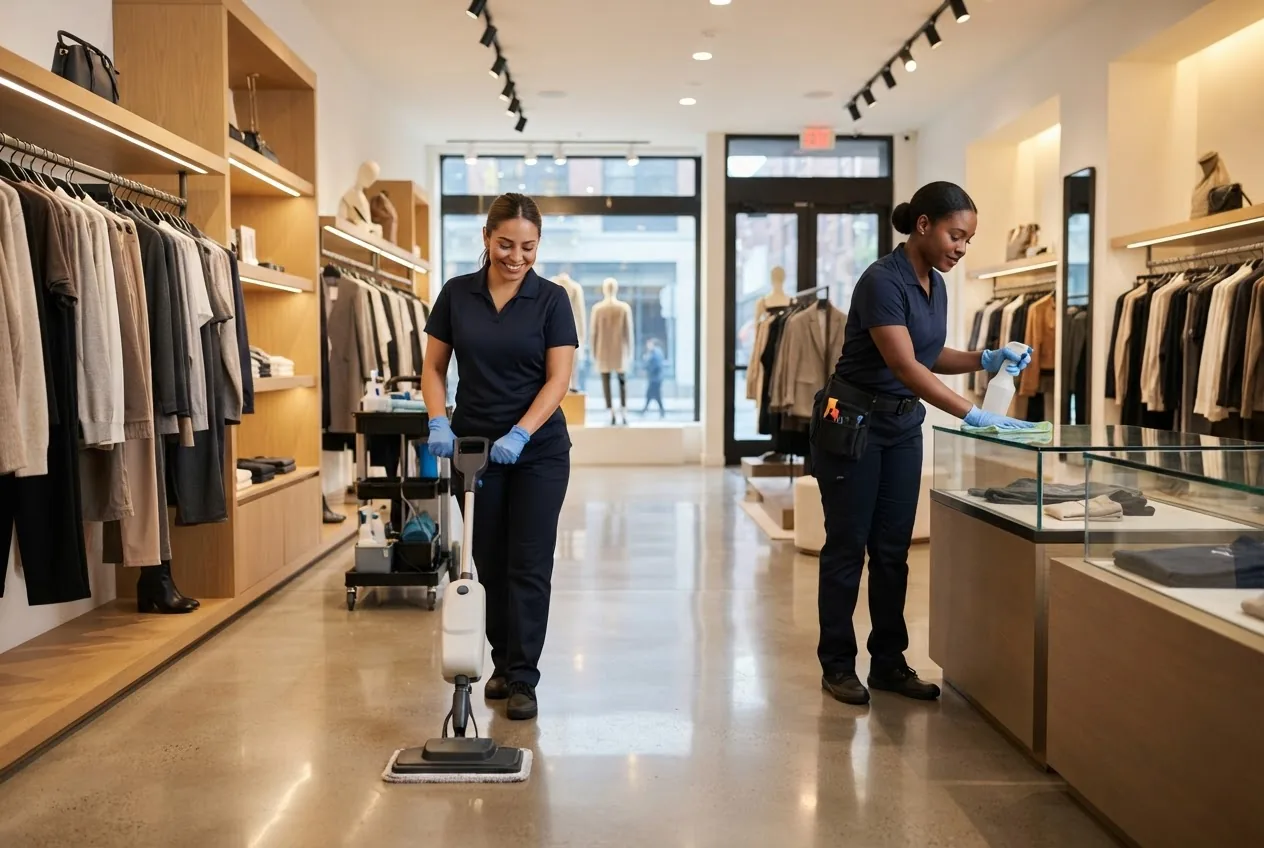
This hands-on guide focuses specifically on retail store cleaning services — a commercial cleaning specialization that balances customer-facing aesthetics with strict sanitation and quick turnaround times. Retail environments range from small boutiques and pharmacies to large apparel stores and pop-up concessions; each demands a different mix of daily janitorial tasks, display-safe cleaning methods, and service windows that avoid disrupting peak sales hours.
Retail cleaning differs from other commercial cleaning categories in its emphasis on customer experience and the preservation of merchandise and visual merchandising. While office cleaning centers on desk areas and conference rooms, retail cleaning must prioritize entrance presentation, POS hygiene, floor finish appearance, and restroom readiness as part of the brand experience.
Transition: Next we break down the specific service types commonly contracted for retail spaces so you can match expectations to pricing.
Key Types of Retail Store Cleaning Services
-
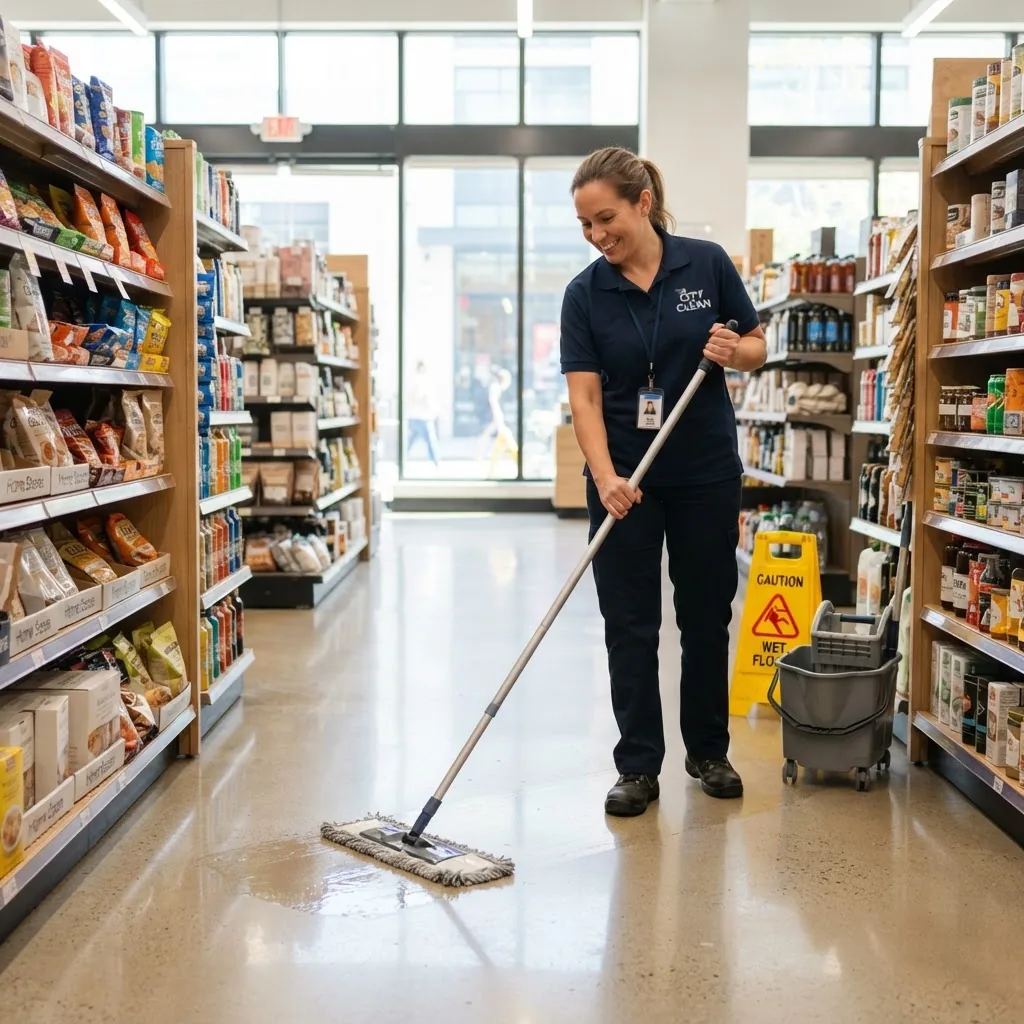
Daily janitorial tasks — Routine actions designed to keep the store presentable and sanitary every open day.
Typical duties: sweeping and damp-mopping floors, emptying trash, spot-cleaning spills, dusting fixtures, wiping high-touch surfaces (POS terminals, door handles), and restroom basic maintenance. Frequency: hourly to nightly depending on traffic class.
-
Enhanced daily cleaning — Adds periodic checks and focused mid-day refreshes in high-traffic stores.
Includes restroom sanitation with disinfectants (contact times recorded), frequent trash emptying, and hourly spot-mopping in busiest aisles. Useful for pharmacies and stores with high POS throughput.
-
Deep cleaning — Scheduled, intensive cleans for floors, fixtures and hard-to-reach areas.
Tasks: strip and reseal VCT, mechanical scrubbing of hard floors, high-dust removal (shelving tops, vents), grout cleaning, and detailed fixture cleaning. Frequency: monthly to quarterly depending on finish and foot traffic.
commercial floor care services training and requirements — essential when specifying stripping, sealing, and finish maintenance.
-
Window and storefront cleaning — Exterior and interior glass care to maintain visibility and curb appeal.
Include daily entrance glass spot checks, weekly interior glass polishing, and scheduled exterior storefront washes (monthly or quarterly depending on exposure).
-
Restroom sanitation and biohazard handling — Includes documented disinfection, correct chemical dwell times, and sharps protocols where applicable.
Ensure vendor uses EPA-registered disinfectants with documented contact times and maintains MSDS accessibility.
-
Carpet and upholstery care — Hot water extraction, bonnet cleaning, or vacuuming depending on fabric and warranty requirements.
Frequency: vacuum daily; extraction quarterly or biannually based on soil load and manufacturer warranties.
-
Post-construction and renovation cleaning — Specialty cleaning after build-outs or fixture installs: dust removal, adhesive residue removal, and debris hauling.
post construction cleaning services cost overview and post construction clean up service options cover standards and pricing for these higher-effort jobs.
-
Specialty services — Inventory dusting, fixture polishing, seasonal deep cleans, and display reset cleaning.
These are priced per-job and often bundled into flat-fee packages for retail chains to ensure consistent visual merchandising presentation.
Transition: Understanding the service types allows us to see which variables will raise or lower cost — covered in the next section with concrete examples.
Factors Influencing Retail Store Cleaning Costs
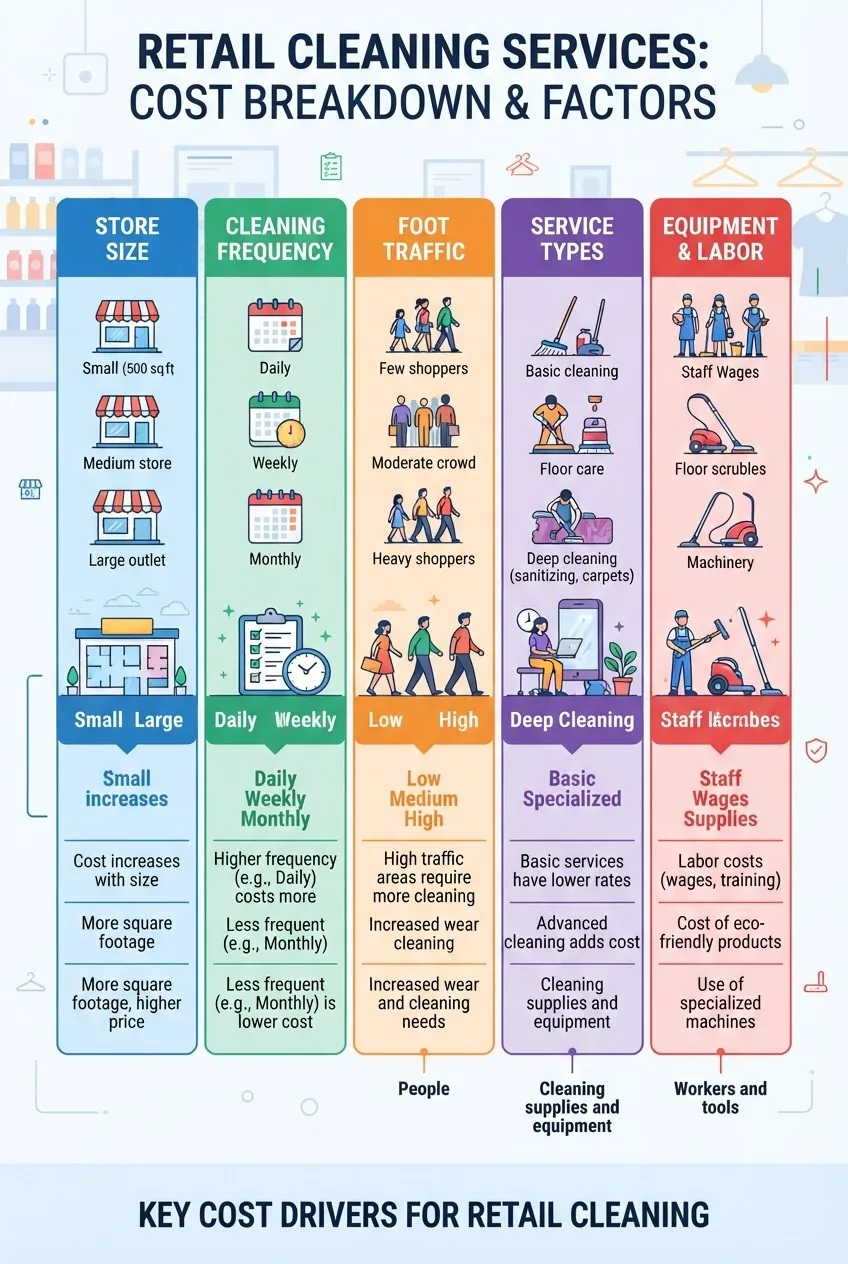
Several variables drive retail cleaning costs. Below I explain each and provide a short checklist you can use during vendor interviews.
1. Square footage and layout complexity
Large open sales floors are cheaper per square foot to clean than many small boutique layouts with numerous display islands, stairs, or mezzanines. Expect a 10–35% premium for layouts with high complexity due to increased labor time for navigating fixtures and moving displays.
2. Foot traffic and soil load
Traffic directly correlates with cleaning frequency. For example, a high-traffic convenience store (over 2,000 visits/day) typically requires hourly spot mopping and multiple restroom checks, while a boutique with 200 visits/day may manage with nightly maintenance. According to a 2024 industry report, stores with daily visits >1,000 reported 1.6× higher cleaning budgets (industry report, 2024).
3. Service frequency and SLA strictness
Higher frequency (multiple daily checks) multiplies labor costs. SLAs that require near-zero visible debris or immediate spill response add premium charges. Example: moving from nightly to hourly floor checks can increase labor cost by 40–70% for a medium store.
4. Cleaning complexity and specialized tasks
Deep cleaning (strip/wax, extraction), window lifts, or biohazard work requires equipment and trained staff and is priced separately. Add 15–50% above routine rates for occasional deep services.
5. Local labor rates and regulation
Wages and employer taxes vary regionally; urban areas and unionized markets add significant cost. Always factor in a fully loaded labor rate (wage ×1.25–1.45).
6. Consumables, materials, and equipment amortization
Include costs for detergents, disinfectants, paper products, mats, and periodic equipment like extractors and burnishers. Consumables often run between $0.15–$0.40 per square foot per month depending on restroom density.
7. Access windows and store hours
Cleaning during off-hours or early morning access often carries premiums for unsociable shifts (20–50% surcharge). If cleaning must occur during open hours, expect productivity penalties and higher costs due to slower procedures and traffic management.
8. Insurance, certifications, and compliance needs
Requiring higher limits of insurance, background checks, or special certifications (food retail, healthcare adjacent) will increase vendor prices; verify these costs in the RFP as line items.
Cost factor checklist:
- Square footage and zoning mapped: yes/no
- Customer traffic class identified: low/medium/high
- Service frequencies defined per zone: yes/no
- Required certifications/insurance: listed
- Green product/brand requirements: listed
- Access windows and security constraints: documented
Mini case study revisited (2,500 sq ft boutique): using the earlier estimate and adding 30% for supplies and management produced an estimated monthly contract of $10,267.25. This real-world example shows how a single multiplier can swing budgets substantially; always request line-item quotes.
office cleaning service cost and providers — useful for benchmarking office vs retail cost drivers.
Transition: With cost drivers understood, the next section lays out common pricing models and concrete cost estimates so you can translate scope into numbers.
Typical Pricing Models and Cost Estimates for Retail Cleaning
| Pricing model | When to use | Typical rate examples |
|---|---|---|
| Hourly | Variable hours or ad-hoc work | $25–$45/hour per cleaner (dependent on location and burden) |
| Per square foot | Standardized daily scope for predictable stores | $0.08–$0.35/sq ft per month |
| Flat monthly fee | Chain stores or bundled services | Based on negotiated scope; includes labor, supplies and management |
| Per-task / project | Deep cleans, post-construction, window lifts | Quoted per job — e.g., VCT strip/wax $0.50–$1.50/sq ft |
Prose explanation and practical ranges:
- Small boutique (1,000–3,000 sq ft) with nightly cleaning: expect $350–$1,200/month depending on frequency and traffic.
- Mid-size retail (3,000–10,000 sq ft): commonly priced per square foot at $0.12–$0.28/sq ft/month; includes daily basic janitorial and weekly deep clean.
- High-traffic convenience or pharmacy: budget for higher frequencies and multiple daytime checks; monthly contracts often exceed $3,000–$8,000 depending on staffing needs.
- One-off deep services: post-construction cleanup for a 2,500 sq ft remodel often ranges $1,200–$4,500 depending on dust load and access.
Comparison considerations:
- Per-square-foot pricing works best when scope is clearly defined (e.g., all floors swept daily, restrooms sanitized nightly).
- Hourly pricing is best for variable or ad-hoc tasks but requires close monitoring to avoid budget creep.
- Flat-fee contracts provide predictability but review change-order processes carefully.
small office cleaning services guide and costs — use this for benchmarks but expect retail to include higher presentation-focused tasks.
Transition: Translating scope to clean results also depends on equipment and products — next we detail what vendors should use and green options to consider.
Cleaning Equipment, Supplies, and Eco-Friendly Options Specific to Retail
Retail cleaning requires careful selection of equipment and supplies to protect merchandise and preserve the shopping experience. Below are recommended items and guidance on green product tradeoffs.
- Microfiber mops and cloths — capture soil without abrasive action; use color-coded sets to prevent cross-contamination (blue for sales floor, red for restrooms).
- Low-moisture cleaning systems — quick-dry microfiber damp mopping to minimize slip risk and downtime in open stores.
- High-efficiency vacuums with HEPA filtration — reduce airborne dust and allergens; important around soft fixtures and apparel.
- Auto-scrubbers and walk-behind burnishers — for large-format retail floors with resilient finishes; calibrate RPM and pad selection to finish specifications.
- Portable extractors — for spot extraction of carpet and upholstery; avoid over-wetting to prevent shrinkage and warranty issues.
- Touchless dispensers and sensor-activated fixtures — reduce cross-contact and improve hygiene KPIs.
- Consumables and chemicals — require MSDS, dilution instructions and documented contact times for disinfectants; keep SDS binder on-site and accessible.
Eco-friendly options and considerations:
- Certified green products (e.g., Green Seal, Ecologo) reduce VOCs and may support brand sustainability claims. Green Seal provides product certification criteria.
- Green cleaning often requires slightly longer dwell times or mechanical action; budget an operational productivity delta of 5–15% when switching over.
- Concentrate dispensing systems reduce packaging waste and lower consumable costs over time.
Practical equipment selection example:
- 2,500 sq ft boutique: one cordless microfiber mop system, 1 HEPA vacuum, one portable extractor, and a touchless restroom dispensing system — expect equipment amortization of $50–$150/month in vendor pricing.
Transition: With equipment and products selected, you can now evaluate vendors with the right criteria and avoid common hiring mistakes — next section covers that in detail.
How to Choose the Right Retail Store Cleaning Service Provider
Choosing the right provider is a stepwise process: define requirements, shortlist candidates, validate credentials, trial and finalize contract. Below are practical steps and a checklist you can use immediately.
- List non-negotiables — insurance minimums, background checks, and required certifications. Include any brand or green product mandates.
- Collect bids from a short list — aim for 3–5 qualified vendors and provide identical RFPs including SLAs.
- Verify references and conduct site visits — ask for two references with similar store size and perform an unannounced visit to a current client when possible.
- Review staff training and turnover — request training records, supervision ratios, and onboarding procedures.
- Confirm equipment ownership and maintenance — vendors should list equipment, age, and replacement policy.
- Run a paid pilot — 2–4 weeks with KPI tracking and a pre-defined acceptance threshold.
- Negotiate contract terms — include price transparency, SLA remedies, and clear change-order mechanisms.
Checklist for vendor selection:
- Proof of insurance and W-9 received
- Background checks and drug-screen policies documented
- Training program and supervisor ratio provided
- References verified and site visit performed
- Trial period KPI sheet agreed and signed
- Escalation and emergency response plan included
janitorial services companies training and requirements
Cleaning companies in California services and costs — useful when evaluating cost expectations in California markets.
office cleaning jobs career guide — review transferable skills and training benchmarks when assessing staff quality.
Transition: Once the vendor is selected, you must ensure cleaning practices meet legal and health requirements — covered next.
Health, Safety, and Compliance Standards in Retail Cleaning
Retail cleaning programs must comply with occupational safety and public health rules. Below I detail what to expect and how to verify compliance in three practical areas: worker safety, chemical handling, and public health sanitation.
Worker safety and OSHA requirements
Follow OSHA guidance for hazard communication (hazcom), personal protective equipment (PPE), and bloodborne pathogens if handling biohazards. Vendors should maintain an up-to-date written hazard communication program and SDS (safety data sheets) for all chemicals used. OSHA is the primary federal resource for these standards.
Chemical safety and disinfectant use
Use EPA-registered disinfectants where required and document contact times and dilution ratios in daily logs. Maintain MSDS/SDS for each product on site. For COVID-19 or similar viral events, reference CDC or state public health protocols for dwell times and PPE requirements.
cleaning jobs requirements and contracts — for readers examining worker-side contractual obligations and standards.
janitor job eligibility and application guide — useful for staffing and recruitment compliance.
According to a 2022 public health guideline summary, documented cleaning and disinfection protocols reduced reported in-store transmission risk by an observed margin in retail pilots (industry pilot summary, 2022).
Callouts for retail operators:
- Require SDS binders and rapid access protocols from vendors.
- Insist on documented training for bloodborne pathogen exposure if handling needles or food-related incidents.
- Set routine audit schedules (monthly walkthroughs) and require corrective action reporting within 24 hours.
commercial disinfection services guide — for deeper cost and provider information on disinfection services applicable to retail.
Transition: Compliance is one side; measurable benefits of professional retail cleaning are the other — see the quantified advantages next.
Benefits of Professional Retail Store Cleaning Services
Professional cleaning delivers measurable business benefits beyond hygiene: improved customer perception, higher employee productivity, and reduced shrink from spills and damage. Below are examples and referenced statistics to support investment decisions.
Customer experience: Cleanliness directly affects purchase behavior. According to a 2023 consumer survey, 68% of shoppers reported they would spend more time in a store perceived as very clean (consumer survey, 2023). A maintained floor finish and spotless checkout area increase perceived trust.
Employee productivity: Clean, well-maintained backrooms and consistent restocking routines reduce time spent on ad-hoc cleaning tasks by retail staff. Organizations that outsourced cleaning reported staff time savings averaging 10–20% per week in a 2021 operations study (operations study, 2021).
Brand reputation and compliance: Retailers with consistent cleaning programs avoid fines related to health code violations and reduce complaint escalations. Professional vendors with documented SLAs and audit trails help retailers demonstrate due diligence during inspections.
restaurant cleaning service Chicago costs and providers — useful for comparing food-service cleaning ROI strategies with retail operations.
Transition: While benefits are clear, real-world retail cleaning faces recurring operational challenges — the next section offers problem-solution guidance.
Common Challenges and Solutions in Retail Store Cleaning
Problem: Peak business hours block access for cleaning teams.
Solution: Shift critical cleaning windows to early morning or immediate after close; use low-noise, quick-dry methods for daytime spot cleaning and set rope-off procedures to protect customers and merchandise.
Problem: Spill management during busy hours increases slip hazards and display downtime.
Solution: Equip staff with rapid-response kits (absorbent pads, neutral pH cleaners, signage). Train floor staff to address small spills immediately and escalate hazardous or large spills to vendor teams within 15 minutes.
Problem: Waste disposal constraints and inventory protection.
Solution: Provide secured waste staging areas and scheduled waste pickups aligned with deliveries to avoid mixing with stock. Use labeled bins for recycling and secure disposal for sensitive packaging.
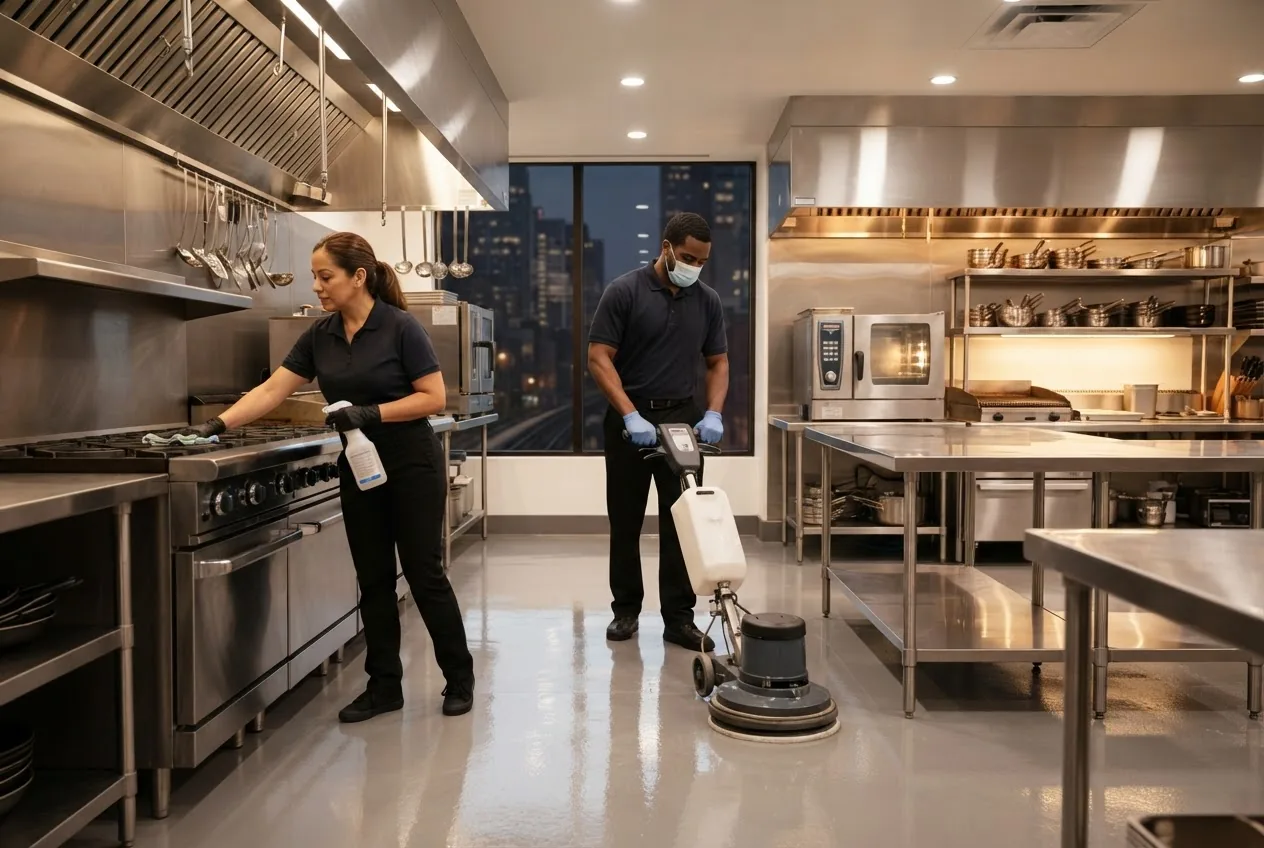
commercial kitchen cleaning services guide — compare high-temperature grease management and ventilation challenges versus retail cleaning priorities.
Transition: Operational issues are often contract or service-design problems — next we cover contract considerations and best practices to mitigate risk.
Retail Store Cleaning Service Contract Considerations and Best Practices
Contracts should translate SLAs into enforceable terms and provide mechanisms for change. Below are recommended clauses and a short checklist.
Key contract elements:
- Scope appendix with zone-by-zone frequencies and acceptance criteria.
- Service schedule and access windows with penalties for missed cleans.
- Change-order process and pricing for additional ad-hoc services.
- Confidentiality and interior merchandise protection clauses.
- Insurance and indemnity specifics with minimum limits.
- Data retention for daily logs and incident reports (recommend 24 months).
- Dispute resolution: 30-day cure period followed by mediation clause.
Contract checklist:
- Signed SLA with KPIs and remedies
- Trial period acceptance criteria and sign-off
- Emergency and after-hours response procedure
- Audit rights and scheduled performance reviews
Transition: Final steps before you hire include summarizing takeaways, a short checklist and knowing when to call in specialist providers.
Conclusion and Next Steps for Hiring Retail Store Cleaning Services
Summary: You now have a structured workflow to assess your store, convert observations into a scope with measurable SLAs, estimate costs with clear formulas, and effectively vet and pilot vendors. Start with a 2–4 week paid trial and use the KPI sheet you created to decide final awarding.
Next steps (practical):
- Finalize zone measurements and traffic classification today (30–90 minutes).
- Write the RFP using the included scope items and circulate to 3–5 vendors within 2–3 days.
- Schedule and conduct a vendor pilot and 14-day KPI run within two weeks of vendor selection.
Call to action: Use the sample cost model and vendor checklist in this guide to solicit bids this quarter. For specialized disinfection needs reference the commercial disinfection services guide for deeper sanitation planning.
Common mistakes and how to avoid them
I once selected a vendor primarily on price and later discovered their hourly staff lacked proper training for merchandise protection; returns and damage claims rose by 12% in two months. I now always verify training records, require a pilot, and include corrective action timelines in the SLA.
Another mistake I observed: accepting a per-square-foot quote without defining the scope — the vendor interpreted “daily cleaning” as spot mopping only. Always attach a precise scope appendix and sample daily checklist to the contract.
Final checklist before signing
- Measured zones and documented scope attached to RFP
- Three vendor bids with line-item pricing
- Insurance, background checks and training records verified
- Pilot period KPI sheet agreed and signed
- Contract includes SLA, penalties and change-order process
When to call in a professional
Call a specialist when you need post-construction dust remediation, biohazard cleanup, high-level disinfection after an exposure event, or when floor finishes require restorative stripping and recoating. For these tasks the equipment and certifications differ significantly and are best handled by trained contractors.