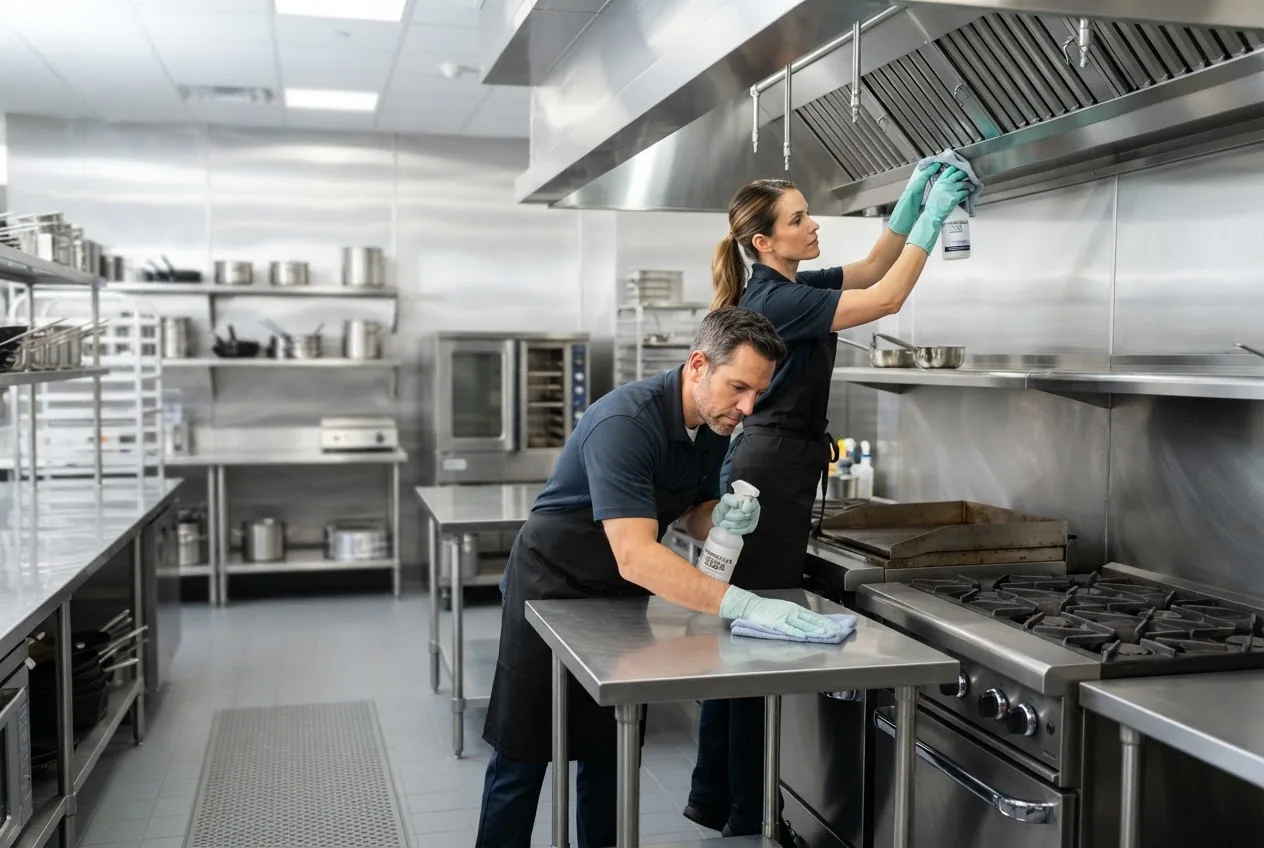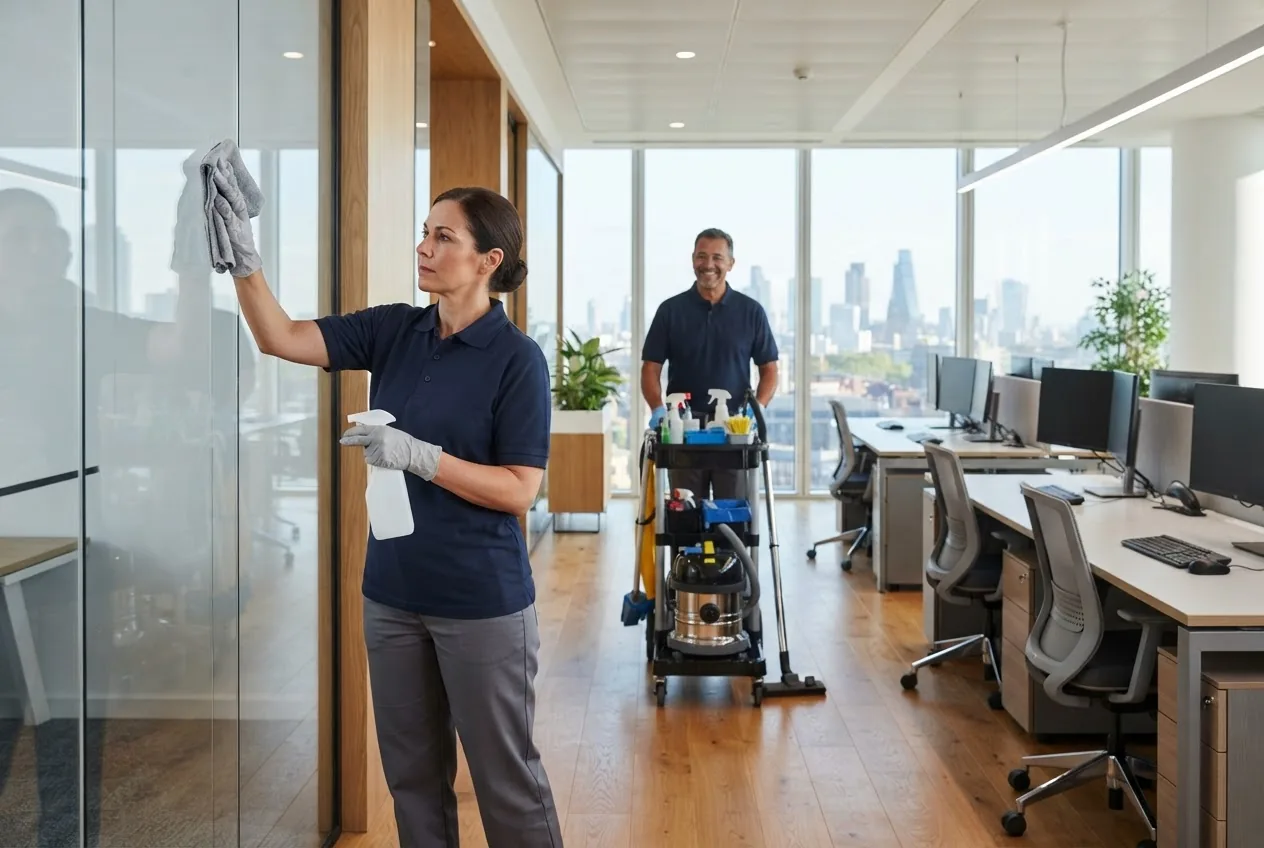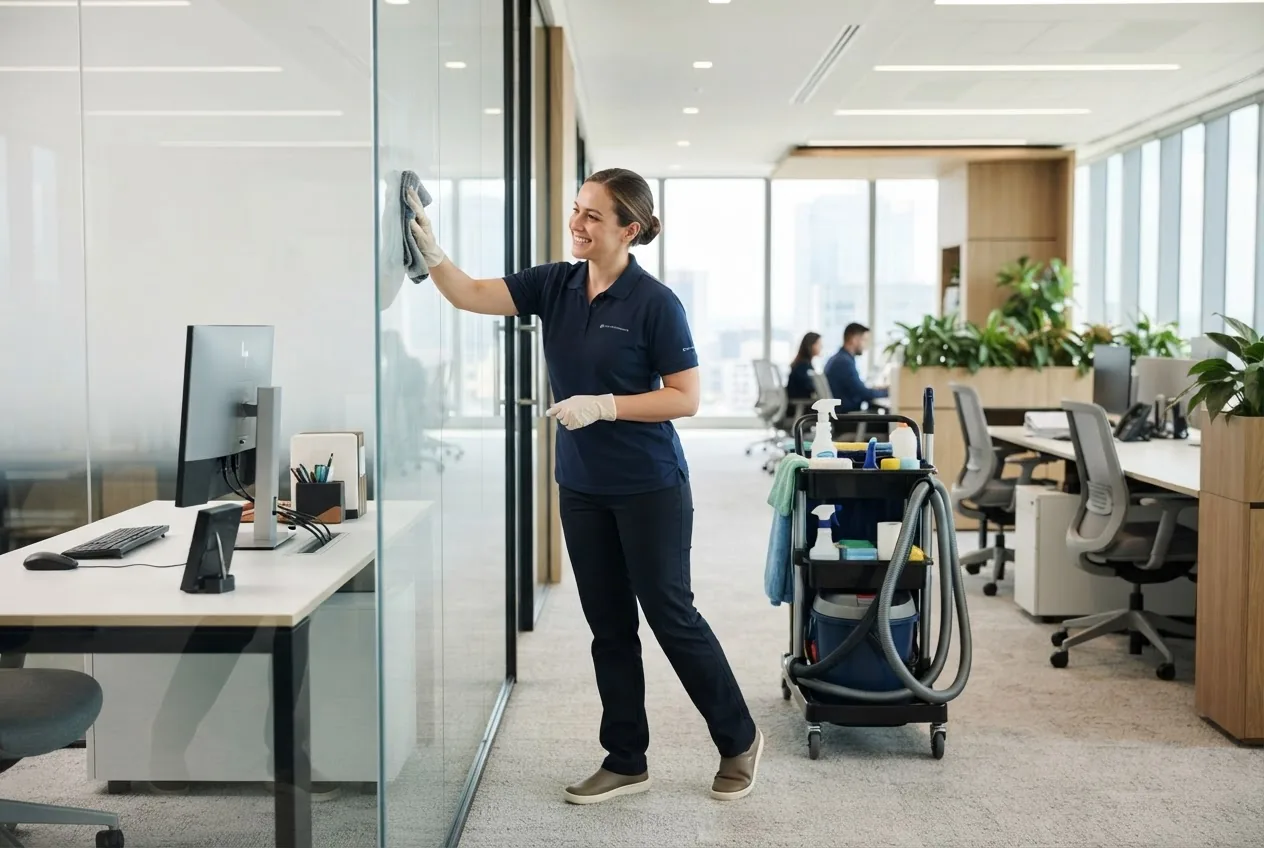
Office cleaning jobs are paid positions that maintain workplace cleanliness, hygiene and safety through routine cleaning, waste removal, surface disinfection and floor care; they include entry-level cleaners, night cleaners and supervisory roles and can lead to specialized commercial cleaning careers with certifications and advancement. This guide maps roles, skills, schedules and growth paths.
Introduction to Office Cleaning Jobs
Answer: Office cleaning jobs are roles focused on keeping administrative and corporate workplaces clean, sanitary and functional through daily or scheduled cleaning tasks, janitorial duties, and light facility maintenance; they differ from broader commercial cleaning jobs by emphasis on office environments, occupant safety and routine scheduling.
Term: Office cleaning jobs — paid roles that clean and maintain office spaces, including janitorial duties, waste handling, surface disinfection, and floor care.
Office cleaning careers cover a range of positions from entry-level day cleaners to night office cleaning teams and supervisors handling quality control and client communication. Typical employers include in-house facilities departments, third-party janitorial companies and contract commercial cleaning providers that serve multiple office clients.
Real-world example: a typical morning shift in a 150-person corporate office often begins with trash collection, kitchen sanitizing, restroom servicing, HVAC vent dusting, and conference-room surface disinfection—tasks planned on a checklist to meet client expectations and safety standards.
Transition: The next section lists specific roles and their primary duties so you can match job titles to daily tasks and expectations.
Common Office Cleaning Job Roles and Responsibilities
Answer: Office cleaning positions range from entry-level cleaners and night cleaners to team leads and supervisors; each role focuses on specific duties such as surface cleaning, floor care, restroom sanitation, and client reporting, often following a scheduled checklist and safety protocols.
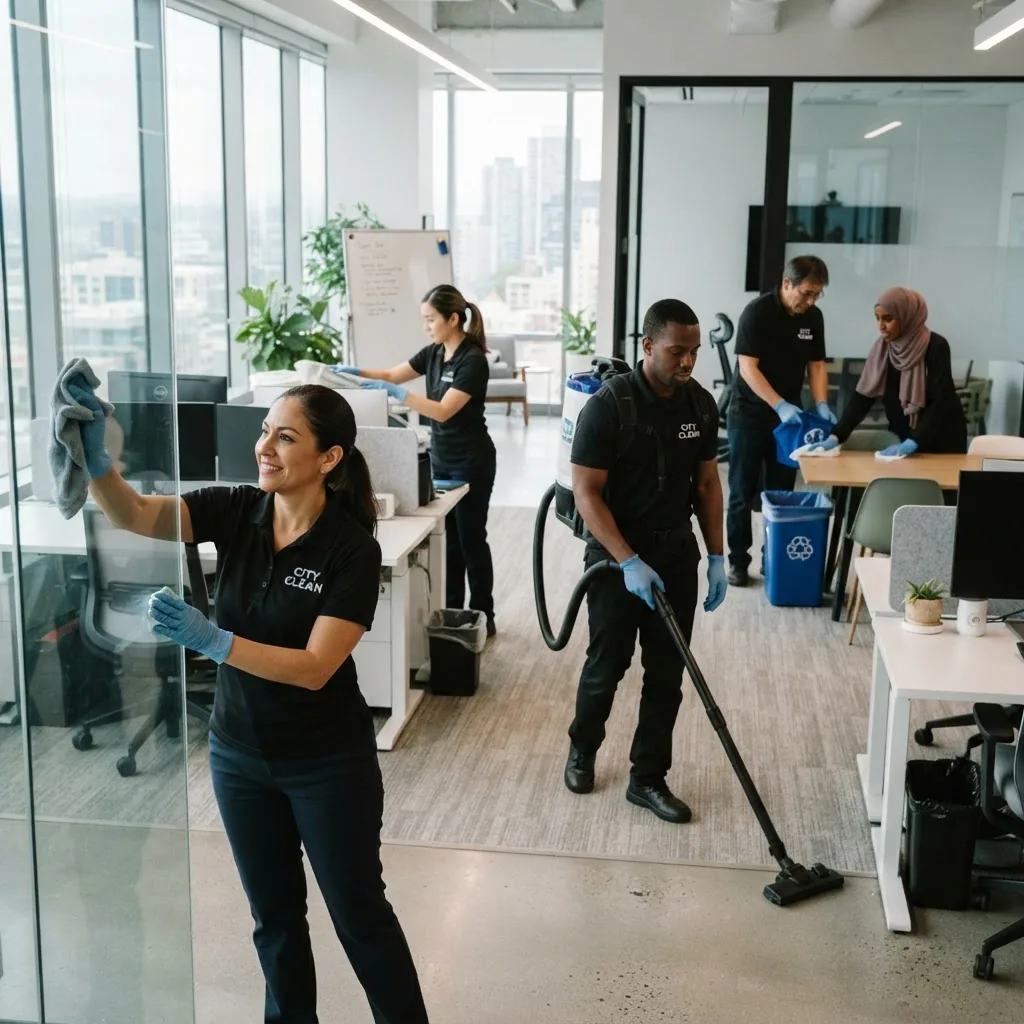
- Entry-Level Office Cleaner / Custodian: Routine tasks include emptying trash, vacuuming, mopping, dusting surfaces, restocking restroom supplies, and reporting hazards. These roles emphasize reliability and basic equipment handling.
- Day Shift Cleaner (Commercial Cleaner): Works during business hours to maintain common areas, kitchens, and high-touch surfaces, often coordinating around office schedules to minimize disruption and address immediate spills or spot-cleaning needs.
- Night Office Cleaner / Overnight Cleaner: Performs deep cleaning tasks when offices are unoccupied—floor stripping and refinishing, high-dusting, comprehensive restroom cleaning, and setting up rooms for the next day. Night roles may include shift differentials and require working independently.
- Specialized Floor Care Technician: Handles carpet extraction, hard-floor stripping and refinishing, burnishing, and machine operation for large open-plan offices—tasks that demand technical knowledge of commercial floor care equipment and materials.
- Window and Glass Technician: Cleans interior and exterior glass surfaces, conference-room partitions, and entrance systems using appropriate ladders, squeegees and safety gear; often scheduled during low-traffic periods.
- Restroom Sanitation Specialist: Focuses on deep sanitation of restrooms, urinals, fittings and touchpoints using approved disinfectants and PPE, and monitors supply levels for toilet paper and soap.
- Team Lead / Shift Supervisor: Oversees daily crews, assigns zones, inspects completed work against quality checklists, trains staff on procedures and safety, and fills in operational gaps; often communicates directly with facility managers or clients.
- Quality Control Inspector: Conducts audits, documents deficiencies, measures cleaning outcomes against KPIs (e.g., cleanliness scores), and implements corrective actions like retraining or re-cleaning.
- Client Account Coordinator / Site Manager: Manages client relationships, schedules, billing details, and contractor coordination; ensures contract terms are met and organizes special projects such as post-event cleaning.
- Specialized Disinfection Technician: Uses hospital-grade disinfectants, electrostatic sprayers and follows protocols for infectious disease control during outbreaks or contract-defined services.
- Post-Construction Cleaning Specialist: Handles debris removal, fine dusting, and project cleanup after build-outs or renovations—often requiring coordination with construction teams and safety compliance.
- Green Cleaning Specialist: Focuses on eco-friendly products and techniques, manages product inventories and may advise clients on sustainable cleaning practices.
Each position may overlap in smaller companies; night office cleaning jobs often combine duties (e.g., floor care plus restroom sanitation) to fit limited shift hours.
Transition: Understanding roles helps determine required skills and certifications, discussed next.
Skills, Qualifications, and Certifications Needed
Answer: Successful office cleaning careers require core skills—attention to detail, time management, safe equipment operation, chemical handling knowledge, and often background checks; certifications such as OSHA hazard communication, ISSA CIMS or floorcare certificates improve hiring prospects and pay.
Term: Certification — a documented credential proving training or competency in a specific cleaning practice, safety standard, or equipment operation.
Core skills and on-the-job qualifications:
- Attention to detail: Ensures high-touch surfaces, restrooms, and shared spaces are consistently sanitary and presentable.
- Time management: Ability to complete assigned zones within shift time while maintaining quality.
- Equipment operation: Competency with vacuums, floor machines, carpet extractors and carts to perform tasks safely and efficiently.
- Chemical handling and labeling: Knowledge of Safety Data Sheets (SDS), proper dilution, and storage to prevent accidents and ensure effective disinfection.
- Communication: Reporting issues, coordinating with supervisors and logging completed work in client systems or mobile apps.
- Physical stamina and mobility: Lifting, bending and standing for extended periods; safe lifting techniques reduce injury risk.
- Background checks and eligibility: Many employers require criminal background checks and proof of eligibility to work.
Recommended certifications and formal training (impact noted):
- OSHA Hazard Communication (HazCom) and Bloodborne Pathogens training: Basic compliance training required by many employers; improves safety awareness and is often mandatory for disinfection roles. (Cited: OSHA guidance.)
- ISSA CIMS or CIMS-GB certification: Management-level standards from a professional cleaning association; beneficial for supervisory or quality-control roles and to work with larger contractors. (Cited: ISSA.)
- Floor-care certifications: Manufacturer or vendor programs for scrubbers, burnishers and carpet extractors—these reduce machine misuse and improve efficiency.
- Electrostatic sprayer and disinfectant application training: Required for specialized disinfection work; demonstrates competency in product selection and application rates.
- First aid and CPR: Useful on larger sites and valued by employers.
Training sources and career impact:
- On-the-job training usually covers daily checklists and chemical use; adding formal coursework or vendor certification can raise hourly wages and open supervisory opportunities.
- Third-party courses strengthen resumes when competing for team leader and specialty roles; see janitorial services companies training and requirements for related employer expectations.
- For contract and freelance cleaners, reviewing cleaning jobs requirements and contract opportunities provides details on documentation and bidding for contracts.
Case study (experience signal): A site cleaner in a mid-size firm completed OSHA HazCom and a floor-care vendor course; within 12 months they were promoted to team lead and received a 12% hourly increase due to verified competency and lower machine downtime.
Transition: With skills and certifications clarified, the next section explains typical shift patterns and the trade-offs of night office cleaning.
Typical Work Schedules and Shift Types Including Night Office Cleaning
Answer: Office cleaning schedules include day shifts, evening/night shifts, split shifts and part-time hours; night office cleaning offers uninterrupted access to spaces and often pays shift differentials, but may require independent decision-making and higher safety awareness.
Common shift types with examples:
- Day shifts (example): 7:00–11:00 AM — ideal for touch-up cleaning, conference setup, and managing midday messes with direct interactions with facility staff.
- Evening shifts: 4:00–8:00 PM — accommodate after-hours meetings and light cleaning; often used in smaller offices where overnight deep cleaning isn’t necessary.
- Night/Overnight shifts (example): 11:00 PM–7:00 AM — allow for deep cleaning, floor maintenance and low-interruption disinfecting; may include a night differential and requires strong autonomy.
- Split shifts: Morning and evening stints for buildings with high daytime traffic; requires flexible availability.
- Part-time/flex shifts: 3–6 hours per shift, common in small offices or for contracted weekend services.
- On-call and emergency shifts: For spills, events or weather-related needs; requires rapid response readiness.
Pros and cons of night office cleaning:
- Pros: Less foot traffic enables deeper cleaning and use of large machines; many employers pay a night differential; reduced interruptions speed tasks.
- Cons: Increased isolation and potential safety concerns; limited on-site supervision; transportation and family-schedule challenges for workers.
Example schedule scenarios:
- Corporate HQ night crew: 11:00 PM–6:00 AM — team of three rotates deep-cleaning zones, runs carpet extraction and floor burnishing, and locks facilities at shift end.
- Small-office daytime cleaner: 6:30–10:30 AM — focuses on restrooms, kitchens, and trash; often part-time and provides cover for scheduled meetings.
- Event day flex team: Variable hours — pre- and post-event cleaning, may include weekend shifts.
Safety and solo-work considerations for night shifts include proper check-in systems, accessible emergency contacts, adequate lighting, and routine safety audits from supervisors.
Transition: Shift choices intersect with advancement opportunities—next we map career progression and steps to higher roles.
Career Advancement and Growth Opportunities in Office Cleaning Careers
Answer: Office cleaning careers can progress from entry-level cleaner to team lead, supervisor, and operations manager, or into specialized commercial cleaning niches like floor care, post-construction clean up, and commercial kitchen cleaning services; certifications and documented performance accelerate advancement.
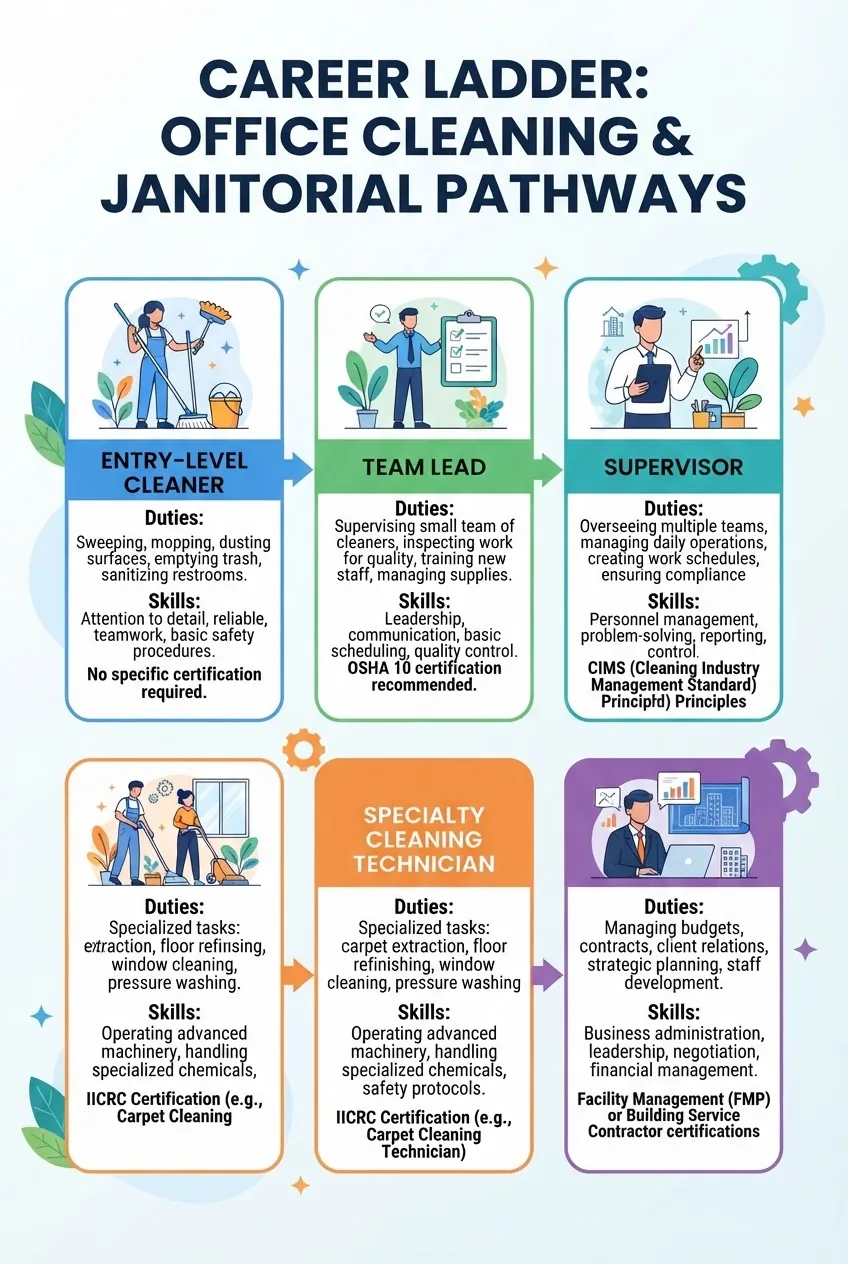
Growth pathways and considerations:
- Step 1 — Entry-level experience: Build reliability, learn equipment fundamentals, complete safety training, and consistently meet checklist standards.
- Step 2 — Skill specialization: Obtain floor-care certifications, electrostatic sprayer training, or advanced disinfection credentials to qualify for higher-paying specialty roles.
- Step 3 — Team lead positions: Demonstrate supervisory ability, communication and quality control to move into shift leader roles that oversee crews and client interactions.
- Step 4 — Supervisor / Site manager: Manage multiple teams, handle scheduling, client accounts and logistics; often requires administrative skills and process knowledge like ISSA CIMS principles.
- Step 5 — Operations / Regional management: Oversee contracts across facilities, handle budgeting and staffing decisions, and design training programs.
- Step 6 — Lateral specialization: Transition into related commercial cleaning niches—post-construction, restaurant cleaning, retail or warehouse services—where skills translate to higher hourly rates or project-based pay.
Paths beyond traditional office cleaning (examples with internal links):
- commercial kitchen cleaning services guide — kitchens require HACCP-aware cleaning and specialized degreasing techniques.
- kitchen cleaning service guide — expands skills to restaurant and food-service cleaning standards.
- post construction cleaning services guide and cost overview — project-based work with higher pay per job and technical cleaning demands.
- post construction clean up service options and cost guide — guides to specialized project workflows.
- restaurant cleaning service Chicago guide to costs — regional example of food-service cleaning demand.
- retail store cleaning services guide — retail contracts provide steady revenue and varied cleaning tasks.
- store cleaning services guide to commercial cleaning options — alternative career pathways in retail-focused cleaning.
- warehouse cleaning services guide and costs — industrial environments need heavy-equipment familiarity and can offer advancement into facility maintenance roles.
Limitations and geographic factors: Advancement speed depends on region, local demand and employer size—larger national contractors typically provide clearer promotion ladders and training budgets, while small local firms may offer broader hands-on experience but fewer formal titles.
Transition: Now review employment types and how they affect schedules, benefits and career stability.
Employment Options: Full-time, Part-time, Contract, and Temporary Office Cleaning Jobs
Answer: Office cleaning employment comes as full-time, part-time, contract and temporary jobs; full-time roles often include benefits and stable hours, while contract and temporary roles offer flexibility but can have variable pay and fewer perks.
Comparison of employment types:
| Employment Type | Typical Hours | Benefits | Best For |
|---|---|---|---|
| Full-time employee | 35–40+ hours/week | Health, paid time off, stable wage | Career growth and stability |
| Part-time | <10–30 hours/week | Limited; varies by employer | Supplemental income or students |
| Contractor / Subcontracted | Variable per contract | Usually none—self-managed taxes | Experienced cleaners bidding on contracts |
| Temporary / Seasonal | Short-term project hours | None or minimal | Event cleanup, post-construction peaks |
Practical notes and resources:
- Full-time positions are common with in-house facility departments and larger janitorial services that manage multiple properties; part-time and temporary roles are frequent for small office cleaning services and event-driven work.
- To find local employer options, review the office cleaning service near me cost and provider guide and small office cleaning services guide and cost overview for roles in different-sized offices.
Transition: With employment types clear, next is an equipment overview essential to daily work and safety.
Essential Tools and Equipment Used in Office Cleaning Jobs
Answer: Office cleaners rely on a mix of hand tools—microfiber cloths, mops, brooms—plus commercial machines like backpack vacuums, ride-on scrubbers, carpet extractors and electrostatic sprayers; proper PPE and training on equipment handling prevent incidents and improve productivity.
Term: PPE — personal protective equipment such as gloves, eye protection, and masks used to reduce exposure to hazards.
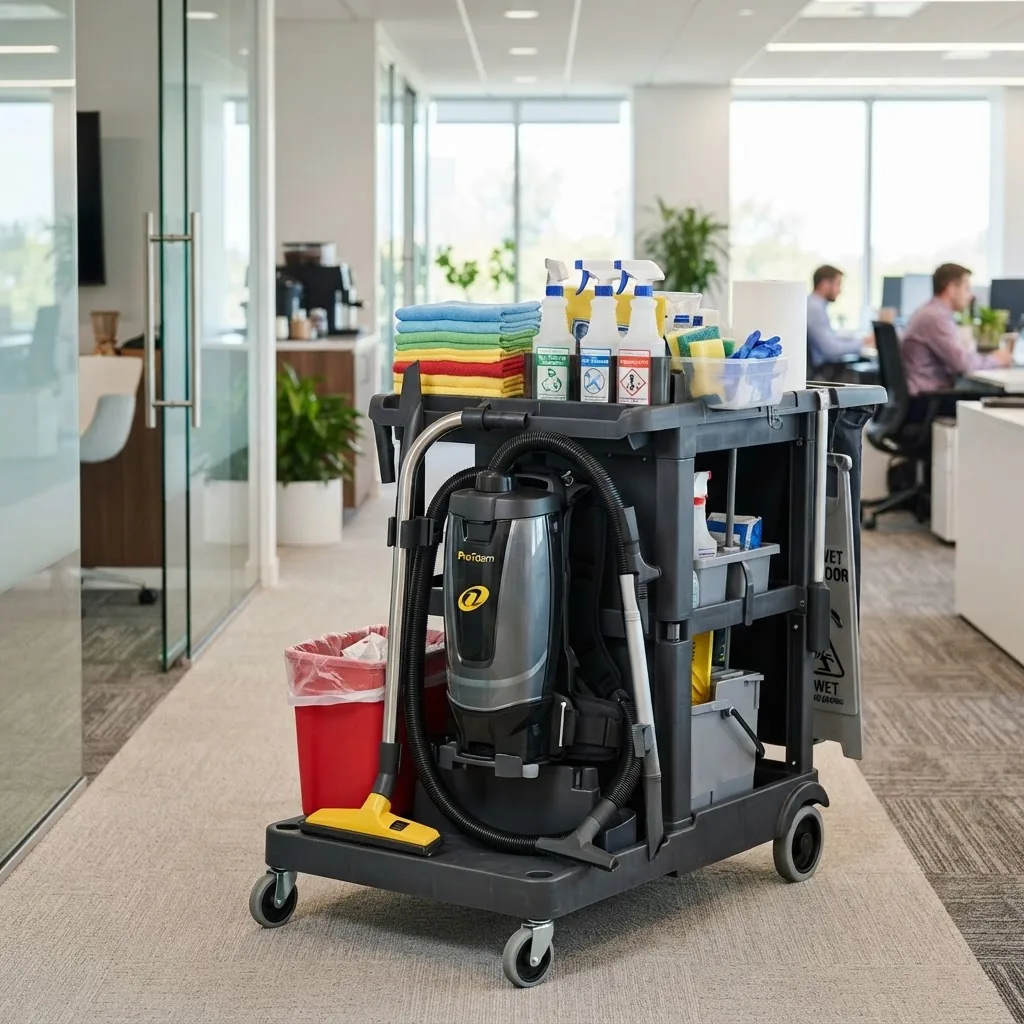
- Microfiber cloths and flat mops: Capture dust and microbes better than cotton; color-coded systems reduce cross-contamination.
- Commercial vacuum cleaners: Backpack or canister vacuums designed for long runs and HEPA filtration where required.
- Carpet extractors and spot machines: For stain removal and periodic deep cleaning; require training for proper detergent use and drying times.
- Floor-scrubbing machines and burnishers: Used for hard-floor maintenance; machine speed and pad selection affect finish quality.
- Electrostatic sprayers and foggers: Tools for broad-surface disinfection; require training on coverage and dwell time.
- Cleaning carts and signage: Organized carts with locking chemical cabinets improve efficiency; wet-floor signs are mandatory for safety.
- Personal protective equipment (PPE): Gloves, eye protection, and respirators as required by SDS for chemicals in use.
- Trash and recycling handling tools: Liners, tongs, and compactors for safe waste management.
Brief equipment-handling walkthrough (experience signal): When operating a carpet extractor, pre-treat stains with appropriate solution, keep machine speed consistent, and ensure extracted areas are sufficiently dried—this reduces re-soiling and prevents slip hazards. Manufacturer training reduces machine downtime and warranty issues; see commercial floor care services training and requirements for certification options.
Transition: Equipment affects pay and benefits, which we analyze next with wage data and typical compensation packages.
Salary Expectations and Additional Benefits for Office Cleaning Positions
Answer: Office cleaning pay typically ranges from entry-level wage rates to higher rates for specialized technicians and supervisors; shift differentials, overtime, and benefits vary by employment type, with unionized or large contractors often offering the most comprehensive packages.
Wage ranges and labor data:
According to a 2024 U.S. Bureau of Labor Statistics report, janitors and building cleaners had a median hourly wage around $15.00, with regional and role-based ranges commonly spanning $12.00–$22.00 per hour depending on experience, specialization and shift differentials. (Source: U.S. Bureau of Labor Statistics, 2024.)
Common compensation elements:
- Base hourly pay: Entry-level positions often start at local minimum wage or slightly higher; specialized roles (floor techs, disinfection technicians) earn premium rates.
- Shift differentials: Night office cleaning jobs typically pay an extra $1–$4 per hour as compensation for overnight hours.
- Overtime: Time-and-a-half pay for hours over 40/week is common for employees; contractors bill hourly or per-project rates instead.
- Benefits: Full-time roles may include health insurance, paid time off, retirement contributions and training reimbursements; part-time and contract positions often lack these.
- Bonuses and incentives: Some employers offer performance bonuses, attendance incentives or pay increases tied to certification completion.
Regional and employer variability caveats: Exact pay depends on location, local labor markets, unionization and company size; rural markets may pay less than major metropolitan areas.
Negotiation tips: Document certifications, machine competencies, and measurable outcomes (reduced rework, client satisfaction scores) to justify higher hourly rates or supervisory roles.
Transition: To apply successfully, follow the step-by-step guidance in the next section tailored for hiring managers and job seekers.
How to Apply and Succeed in Landing an Office Cleaning Job
Answer: Apply by preparing a concise resume highlighting experience, certifications and availability; complete background checks, secure references, tailor applications to employer types (in-house vs. contract) and prepare for practical interviews or on-site demonstrations.
Step-by-step application and success tips:
- Create a focused resume: List relevant cleaning experience, specific equipment handled, safety training and certifications; quantify achievements (e.g., supervised a team of X, reduced rework by Y%).
- Gather documents: Identification, proof of eligibility to work, and certification records (OSHA, vendor training).
- Complete background checks: Expect employer-requested checks; disclose relevant history honestly and provide references who can vouch for reliability.
- Apply via multiple channels: Use employer websites, local staffing agencies, and job platforms; to identify reputable employers in a region consult cleaning companies in California services and costs for local listings and hiring practices.
- Prepare for practical assessments: You may be asked to demonstrate cleaning techniques, equipment use or complete a short skills test during interview.
- Interview tips: Emphasize punctuality, reliability, ability to follow checklists, and willingness to work flexible schedules, including nights if applicable.
- Follow-up and onboarding: After an offer, complete employer orientation, safety training, and initial site walkthroughs to align on expectations and reporting processes.
- Local job-seeker resources: For nearby janitorial openings and application guidance see janitor jobs eligibility and application guide.
Practical success example (experience signal): A job candidate who listed floor-care certification, provided two supervisory references and completed a live skills demo received an offer within a week and negotiated a 10% higher starting rate due to verifiable machine competency.
Transition: Succeeding on the job requires strict adherence to safety and quality standards, which we cover next.
Safety and Quality Standards in Office Cleaning Jobs
Answer: Office cleaning safety is governed by standards such as OSHA hazard communication and product SDS usage, PPE requirements, and established sanitation protocols; quality is ensured through checklists, audits and documented commercial disinfection practices for higher-risk environments.
Term: OSHA — the U.S. Occupational Safety and Health Administration, which provides workplace safety regulations and guidance.
Key safety practices and standards:
- Hazard communication: Use SDS sheets, proper labels and training for all chemicals; follow dilution and PPE instructions. (Reference: OSHA.)
- PPE usage: Gloves, eye protection and respirators as dictated by product SDS and task risks.
- Slip, trip and fall prevention: Use signage, control wet floors, and manage cord routing for machines.
- Infection control: Follow dwell times, approved disinfectants and documented cleaning frequencies for high-touch areas; for advanced protocols, consult the commercial disinfection services guide and detailed commercial disinfection services guide to costs and providers.
- Quality assurance: Implement checklists, supervisor audits and client feedback loops; corrective actions and retraining are standard responses to failed audits.
Example quality-control practice: A supervisor conducts weekly unannounced audits using a 25-point checklist; recurring issues trigger retraining and a follow-up inspection to validate improvements.
External authority resources for standards and best practices:
- OSHA workplace safety guidance and hazard communication rules: https://www.osha.gov
- ISSA standards, training and certification resources for cleaning professionals: https://www.issa.com
- Labor statistics for wage and employment trends: https://www.bls.gov
When to engage commercial disinfection providers: For outbreak response, healthcare-adjacent sites or client-requested deep disinfection, follow the procedures and vendor selection guidance in the commercial disinfection services guide to costs and providers.
Transition: Below is a concise wrap-up of key takeaways and next steps for starting or advancing an office cleaning career.
Conclusion: Office cleaning jobs offer clear entry paths, diverse shift options including night office cleaning, and advancement into supervisory and specialized commercial cleaning careers—training, certifications and safety compliance accelerate growth; start by identifying target roles, obtaining core certifications, and applying strategically.
Ready to start? Review job openings, get basic OSHA training, and consider a floor-care or disinfection certification to stand out.