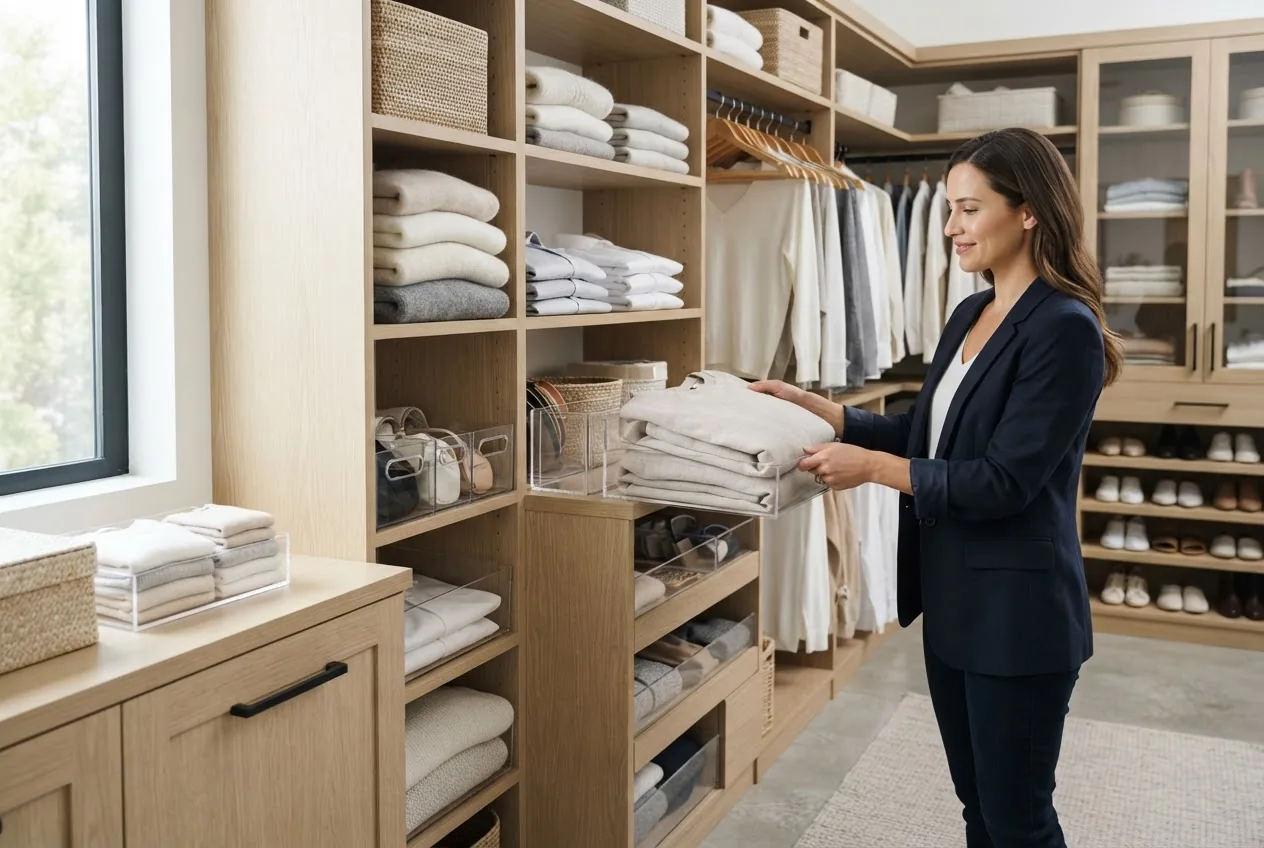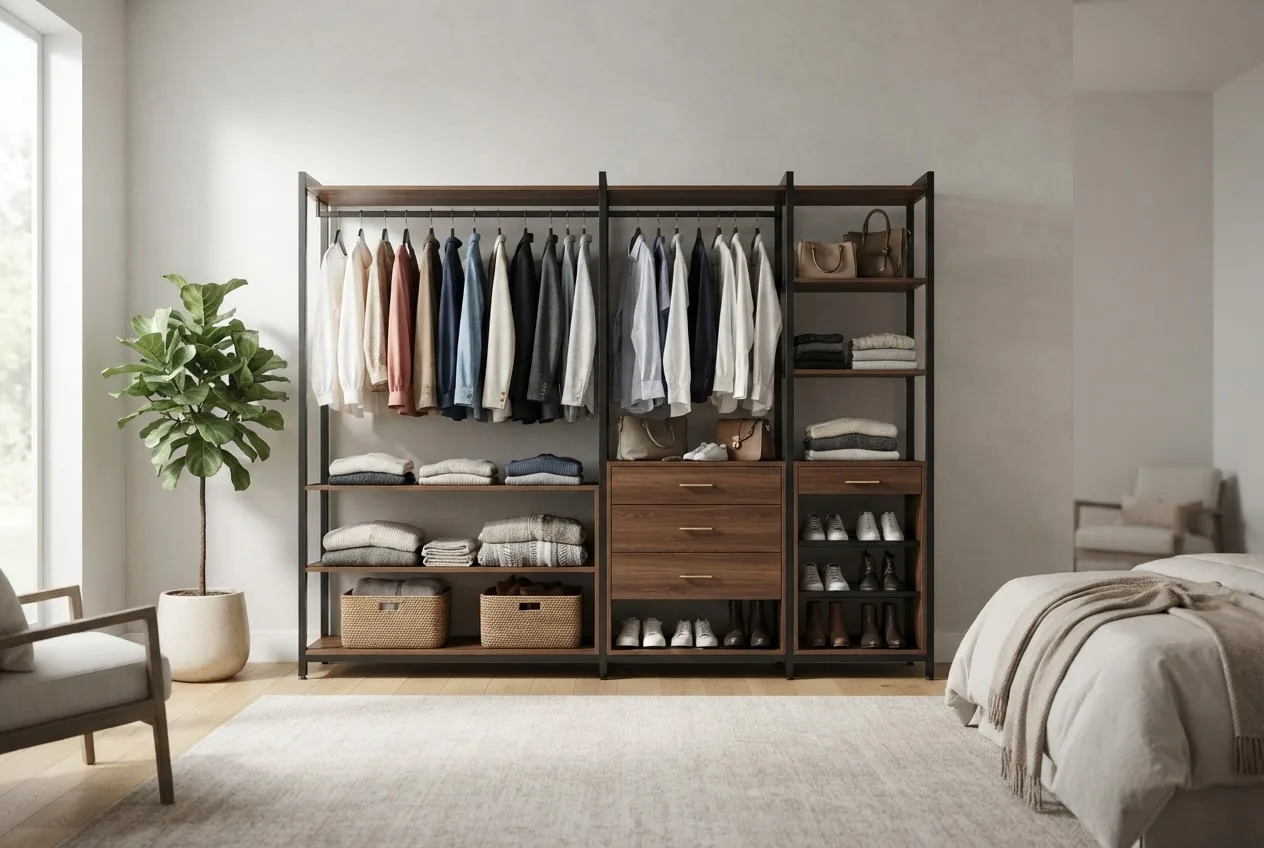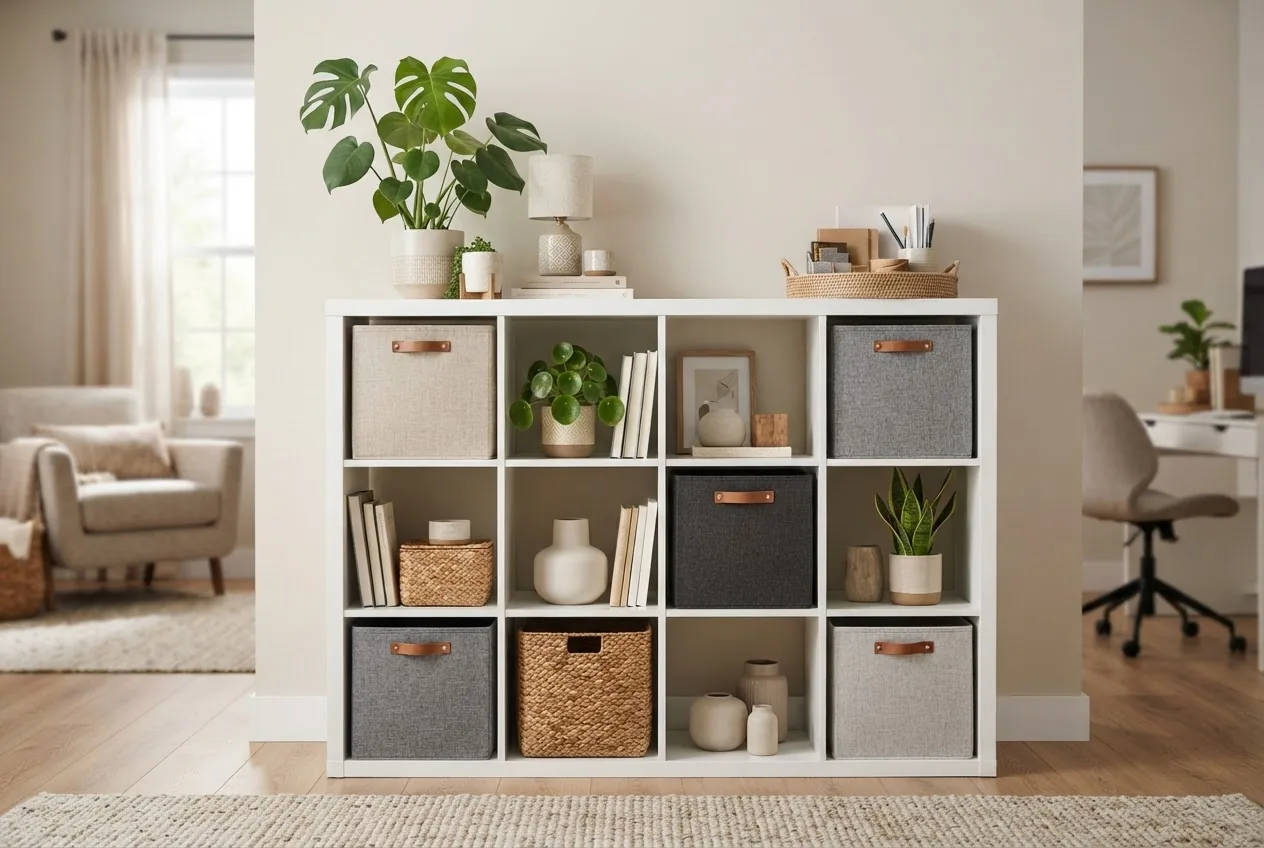
By the end of this hands-on guide you will have planned, selected, and deployed a practical cube storage system centered on cube storage with fabric inserts—sized, styled, and optimized for at least three rooms. Estimated time: 1–4 hours (planning + basic assembly). Skill level: beginner to intermediate (no power tools required).
Introduction to Cube Storage
This section explains what cube shelving systems do and how cloth-based options change the game for home organization. You’ll learn quick decision checks, the difference between shelving frames and soft bins, and one professional benefit relevant to service providers.
Cube storage refers to modular shelving units that accept interchangeable containers—boxes, bins, baskets, or fabric inserts—organized in a grid of square or rectangular compartments (often 10–15″ per face). These systems are popular because they combine visible structure (the frame) with flexible interior storage (the container), making them a smart multipurpose storage solution for living rooms, kids’ rooms, home offices, and entryways.
Why focus on fabric? Cloth-based options—fabric storage cubes or cloth storage cubes—offer breathability, lightweight portability, and aesthetic softness that wood or plastic can’t match. They’re often collapsible for seasonal storage, machine-friendlier for stains, and available in styles from linen blends to reinforced polyester. Expect trade-offs in weight capacity and long-term structural support compared to rigid options.
Organized spaces also support professional-grade services: a tidy, labeled environment speeds up visits by cleaners and service teams. For an example of how organization ties to professional operations, consider commercial cleaning and disinfection teams who benefit from decluttered access routes and clear labeling. commercial disinfection services.
Transition: With the concept clear, the next section breaks down the types of cube storage you’ll encounter with an emphasis on fabric and cloth options.
Types of Cube Storage: Focus on Fabric and Cloth Cubes
Cube systems can be classified by the frame (wood, metal, plastic) and the container (fabric, plastic, woven basket). Below are the most relevant fabric-forward types and how they differ in look, performance, and ideal use.
-
1. Standard Fabric Storage Cubes (soft-sided)
These are the classic fabric storage cubes: square or rectangular collapsible bins made of polyester, canvas, or linen blends with cardboard or lightboard inserts for shape. Sizes commonly run 10″x10″x10″, 11″x11″x11″, and 13″x13″x13″. Use them for clothes, toys, linens, and lightweight seasonal storage.
Pros: inexpensive, lightweight, wide color/pattern choices. Cons: limited weight capacity (usually 15–25 lb), may sag without internal inserts.
-
2. Reinforced Fabric Cubes (structured)
These add rigid panels or sewn-in frames to fabric bins, giving them near-rigid behavior while keeping soft exterior textures. Good for heavier books or stacked storage.
Pros: better load capacity (25–40 lb), holds shape. Cons: more expensive, slightly heavier.
-
3. Collapsible/Foldable Cube Storage Bins
Designed to fold flat when not in use. They ship compactly and are ideal for seasonal rotation, moving, or storage in spare areas.
Pros: space-saving when empty, portable. Cons: typically need reinforcements to carry heavy loads, potential creasing from folding.
-
4. Fabric Baskets and Open Bins
Less boxy than cubes, fabric baskets are flexible and excellent for overflow items or decorative storage on open shelves. Sizes are varied—measure shelf openings first.
-
5. Combo Units (fabric inserts with rigid lids)
These merge a cloth exterior with snap-on lids or framed tops for protection and stackability—useful where dust protection matters but you still want a softer look.
-
6. Specialty Fabric Dividers and Drawer Inserts
Smaller fabric compartments or divider inserts work inside larger cubes to organize socks, accessories, or craft supplies.
-
7. Alternative Containers for Cube Frames
For comparison, rigid containers like plastic drawer units, wooden boxes, or metal baskets can be fitted into the same cube frame. If you want sturdiness or locking lids, these are the alternatives. See trade-offs further down and consider plastic drawer storage and storage cabinets with drawers.
-
8. Outdoor/Utility Fabric Cubes
Water-resistant polyester blends for garages or covered patios exist, but if you need heavy-duty garage solutions, refer to garage cabinet storage options and garage wall organizers.
Transition: To help choose between a soft and a hard solution, the next subsection directly compares fabric storage cubes with rigid boxes.
Fabric Storage Cubes vs Rigid Boxes
| Feature | Fabric Cubes | Rigid Boxes (plastic/wood) |
|---|---|---|
| Durability | Moderate; reinforced fabric lasts 3–7 years under regular use | High; 5–15+ years depending on material |
| Weight Capacity | 15–40 lb depending on reinforcement | 30–100+ lb for thicker plastics and wood |
| Aesthetics | Soft, textile-friendly, many patterns | Clean lines, modern or industrial look |
| Breathability | Good—reduces mustiness for fabrics | Low—may trap moisture if sealed |
| Maintenance | Machine-washable options available; spot clean otherwise | Wipe-clean; more resistant to stains |
Collapsible and Foldable Storage Cubes
Collapsible (foldable cube storage bins) are designed to fold flat like soft luggage, often with a sewn-in spine or removable board for shape.
- How to fold and store foldable cubes:
- Remove contents fully and unzip any covers.
- Take out any insert panels and lay them flat.
- Fold the fabric sides inward; follow manufacturer seams for cleaner folds.
- Stack folded cubes flat—limit stacks to 50 lb when storing vertically to avoid deformation.
- Pros
- Save about 80–90% of storage volume when empty.
- Great for seasonal rotation or moving.
- Lightweight—easier to tote and rearrange.
- Cons
- Can crease with repeated folding; store with acid-free tissue if long-term storage is planned.
- Lose shape unless reinforced—avoid heavy books without structured inserts.
- Some cheaper models use thin fiberboard that bows after 6–12 months of heavy use.
Transition: With types and folding handled, the next major section helps you choose the right unit for your real-world needs.
How to Choose the Right Cube Storage for Your Needs

Deciding on cube storage is a three-step practical process: measure, match material to purpose, and select organization features. Use the checklist below while shopping or measuring at home.
- Measure the space: measure width, height, and depth of the shelf or wall area in inches. Allow 1/2″ clearance per side for fabric expansion.
- Decide frequency of access: daily access needs durable shapes and pull handles; seasonal storage can be collapsible.
- Estimate weight per bin: typical rules—clothes 5–10 lb/bin, toys 10–25 lb/bin, books 15–40 lb/bin. Match to bin weight capacity.
Quick buying checklist
- Slot size compatibility: frame opening should equal bin width + 1″ (example: 11″ opening => 10″ bin)
- Material choice: polyester for moisture resistance; canvas/linen for breathability and aesthetic
- Reinforcement: internal boards, sewn bases, or removable frames for heavier loads
- Handle design: reinforced handles rated for >20 lb for frequent moves
- Color coordination: pick two neutral tones and one accent for visual cohesion
- Labeling options: clear pocket, chalk tag, or sewn window
Size and capacity guidelines
- Small (8–10″ cube): underwear, socks, small craft items. Ideal for underwear organizers.
- Medium (11–13″ cube): T-shirts, toys, office supplies. Good all-purpose size for most frames.
- Large (14–16″ cube or rectangular): bulk linens and bulky sweaters—use reinforced fabric. See sweater storage methods.
Material and durability decision matrix
Choose materials based on location:
- Closets and bedrooms: cotton/linen blends for breathability and gentle contact with garments.
- High-traffic zones: reinforced polyester for stain resistance and easy spot cleaning.
- Garages or utility areas: heavy-duty woven polyester with water resistance—however, for true garage durability review garage cabinet storage options.
Transition: With an itemized buying approach, the following large section focuses on how to use fabric cubes effectively with concrete organizer techniques.
Organizer Tips for Fabric Cubes and Cube Storage Units
This hands-on section gives step-by-step organizing and layout strategies for fabric cubes, including labeling, compartmentalization, and integration with closet cubbies and box shelf organizers.

-
Step 1: Empty and sort before assigning cubes.
Time: 20–60 minutes. Action: Pull everything out of the target shelf, sort into keep/donate/toss piles, and weigh sample loads per category—use a luggage scale to estimate typical load per cube (record weights for items you plan to store frequently).
-
Step 2: Map functions to cube positions (daily use vs storage).
Place daily items at hip-to-eye level. Example layout for a 6-cube 2×3 frame: top row: decorative bins and occasional access items; middle row: daily access (phone chargers, wallets, keys) in labeled cubes; bottom row: heavy or overflow items (shoes in reinforced cubes).
-
Step 3: Choose reinforcement strategy for heavier contents.
Use removable hardboard inserts (0.125″ fiberboard) in every cube that will hold ≥20 lb. Add a non-slip shelf liner inside the cube to prevent sliding. When stacking bins vertically, limit to two stacked cubes per shelf when filled with 25+ lb to avoid sagging.
-
Step 4: Label effectively and consistently.
Label types: clear pocket inserts for changeable content; printed adhesive labels for long-term bins; chalk tags for flexible labeling. Use a two-word label rule—Primary (item type), Secondary (season or frequency), e.g., “T-Shirts / Daily” or “Crafts / Rare”.
-
Step 5: Add internal dividers and small boxes for micro-organization.
Insert fabric dividers or small containers inside a cube for socks, chargers, or small hardware. For nuts/bolts use a labeled set of boxes—see small parts use cases: small parts storage.
-
Step 6: Use color and texture to reduce visual clutter.
Pick two neutrals and one accent—apply the accent to one or two cubes per shelf to create rhythm. Keep high-visibility areas (entryway, living room) coordinated with room textiles for a cohesive look.
-
Step 7: Rotate seasonally and store empties correctly.
Fold and label cubes with season and contents. Use breathable bags for long-term storage of fabric cubes so they don’t trap moisture. Collapsible bins should be folded flat and stored under a bed or in a closet—don’t stack over 36″ high when empty to avoid crushing.
-
Step 8: Maintain an “access path” for frequently used items.
For items used daily, reserve easy-grab cubes with handles oriented outward and avoid internal dividers that require emptying the cube to reach contents.
-
Step 9: Label and store like items together for quick replenishment.
For consumables (cleaning supplies, toiletries), keep one cube per product category. When one cube becomes half-empty, move replenishment tasks to your weekly list—this keeps ordering and shopping compact.
-
Step 10: Integrate cube storage with closet cubbies and box shelf organizers.
Fabric cubes slide well into closet cubbies and box shelf organizers—use shallow cubes (8–10″) for shelf depths under 12″. When combining with freestanding systems, review compatibility and weight limits: freestanding closet systems.
For closet-specific guidance see garment storage tips and prefab closet organizers.
Transition: Below are room-by-room examples and micro-case studies showing how I (as a practitioner) used fabric cubes in real homes.
Organizing Different Rooms with Cube Storage
Here are practical examples and layouts used in actual projects.
- Kids’ room storage: Use six cube frames with medium fabric bins. Top row: art kits and seasonal toys; middle row: daily toys and labeled craft bins; bottom row: reinforced bins for books and board games. Use one dedicated “inbox” cube for end-of-day tidy-up.
- Closet organization: Insert fabric cubes as cubbies for shirts, scarves, and belts. Reserve an 11″ cube for daily T-shirts—fold with the KonMari roll for visibility. See additional clothing care recommendations at clothing storage care.
- Craft and hobby: Combine small divider bins inside fabric cubes for paints, markers, and brushes. For a deep dive, compare with specialized guides on art supply storage solutions.
- Home office: Medium cubes for reference books, a reinforced cube for a shredder, and small divider boxes for cables and adapters. Label clearly for hybrid work setups and apply cable tags for quick access.
- Living room: Use fabric baskets for blankets and a row of uniform fabric cubes for remote controls, chargers, and small electronics. Keep the TV-facing row low for easy reach.
- Entryway: One shallow cube for keys/face masks, one reinforced for shoes, and a laundry-sorting cube for quick drop-offs.
Transition: After organizing, keeping fabric cubes clean and odor-free preserves both fabric and the items inside.
Maintenance and Cleaning of Fabric and Cloth Storage Cubes
Maintenance depends on fabric type. Follow these practical steps to keep cubes fresh and functioning.
- Check manufacturer care labels first. Most cubes list cleaning instructions—follow them. If absent, test a hidden corner with soap and water.
- Spot clean daily stains within 24 hours. Blot liquid with microfiber cloth, apply a mild detergent solution (1 tsp mild detergent per pint of warm water), dab, and air-dry. For oil stains, sprinkle baking soda for 30 minutes before brushing out.
- For machine-washable covers: Remove inserts and wash covers on a gentle cycle with cold water and mild detergent. Air dry to avoid shrinkage; reshape while damp. Avoid bleach unless fabric is bleach-safe.
- For reinforced or structured cubes: Detach fabric shell and hand-wash or spot clean. Wipe inner boards with a damp cloth and dry fully—moisture will degrade fiberboard over time.
- Odor control: Sprinkle 2 tablespoons of baking soda in a cube and leave overnight—vacuum or shake out the next day. For persistent odors, place a cup of white vinegar in an open container near the cube for 24 hours (do not pour on fabric).
- Mold prevention: Keep humidity under 50% in storage areas. For high-humidity spaces, use moisture-absorbing packs (250–500 g silica beads per closet) and avoid stuffing damp items into cubes.
- Repair tips: Re-stitch handles with a 2″ back-and-forth stitch using heavy-duty polyester thread. Replace bowed fiberboard with a 0.125–0.2″ plywood or corrugated plastic panel cut to fit.
For additional garment care that complements cube maintenance, see clothing storage care.
Transition: The next section summarizes advantages and limitations so you can finalize your purchase and usage plans.
Advantages and Limitations of Fabric Cube Storage
Pros
- Flexibility: Collapsible and easy to reconfigure—ideal for renters and seasonal rotation.
- Aesthetics: Textile finishes offer a warmer look than plastic or metal.
- Breathability: Better for natural fibers and linens.
- Cost: Generally lower upfront cost for basic fabric cubes (budget models often $5–$15 each).
- Lightweight portability: Easier to move and reorganize by non-technical users.
Cons
- Weight limits: Many soft cubes top out at 15–25 lb—reinforced models improve this but increase cost.
- Longevity: Lower-end fabrics and thin inserts can bow or sag after 12–24 months of heavy use.
- Structural support: Not suitable as a sole solution for very heavy tool storage—consider metal racking or metal organizer racking.
- Cleaning trade-offs: Fabric requires more active maintenance than wipeable plastic.
Transition: If cost and sourcing are your next concerns, the following section maps price ranges, buying tips, and reputable places to shop.
Pricing and Where to Buy Quality Cube Storage Bins and Fabric Cubes
Price depends on size, materials, and brand. Here are practical price ranges and where to find quality options.
- Budget fabric cubes: $5–$15 each. Often thin polyester with cardboard inserts—fine for light items.
- Mid-range reinforced cubes: $15–$35 each. Reinforced bases, better zippers, and sturdier handles—my go-to for playrooms and offices.
- Premium fabric cubes: $35–$80 each. Features include metal-lined handles, heavy-duty panels, and designer textiles—good for visible living areas.
Where to buy:
- Large retailers and superstores (discount prices and seasonal deals).
- Specialty home goods brands for premium textiles.
- Online marketplaces for variety and user reviews—look for style pictures from buyers showing real use.
Buying tips:
- Compare load capacity in product descriptions and read three+ user reviews mentioning durability or sagging.
- Buy one sample cube and test it for two weeks under typical load before purchasing a full set. This reduces returns and mismatches.
- Check return policies and shipping costs—bulk sets often save money but can be costly to return.
Transition: The following section summarizes and gives final action steps including when to call professionals.
Conclusion: Maximizing Home Organization with Fabric Cube Storage
Fabric cube storage offers flexible, attractive, and cost-effective ways to declutter bedrooms, living rooms, and hobby spaces. Use this guide to measure, choose material, reinforce where necessary, and maintain fabric bins for years. If your project is a complex retrofit or you prefer expert execution, consider professional help: home organization services.
Before you start
- Tools: tape measure, luggage scale or small digital scale, marker and labels, microfiber cloth, mild detergent
- Materials: one sample fabric cube (medium), fiberboard or corrugated plastic inserts (0.125″ recommended), non-slip shelf liners
- Time estimate: 1–4 hours (measure + buy sample + install + label)
- Skill level: basic hand-sewing for small repairs and light cutting with utility knife for inserts
Step-by-step deployment (core steps)
-
Measure and record spaces
Action: Measure each shelf or wall area in inches (width × height × depth). Record openings and note any obstructions (baseboard, trim). Target: complete measurements for all intended locations in 15–30 minutes per room.
-
Choose cube frame and bin sizes
Action: Match bin width to frame opening minus 1/2″ clearance. If you have adjustable frames, pick bin depth ≤ shelf depth − 1″. Practical tip: for 11″ openings, use 10″ or 10.5″ bins to allow easy removal.
-
Select materials and reinforcement
Action: For items under 15 lb choose unreinforced fabric. For 15–40 lb, select reinforced fabric cubes or plan to add 0.125″ fiberboard or corrugated plastic panels. Buy inserts sized to cube interior dimensions.
-
Test one sample bin under real load
Action: Fill the sample with typical contents, close, and lift by handles 20 times to check seams and handle strength. Leave filled for 72 hours to check sag. If failure occurs, upgrade to reinforced model.
-
Install frames and mount securely
Action: Assemble shelving frame per manufacturer’s instructions. For tall freestanding frames, attach anti-tip bracket to wall at manufacturer-recommended height (usually 4–6′ from floor). If uncertain, hire a handyman.
-
Arrange cubes by frequency and weight
Action: Place heavy bins low, daily-access bins at mid-height, and seldom-used bins high. Always leave a 1″ gap behind fabric cubes for air circulation.
-
Label and divide inside cubes
Action: Use clear pocket labels for changeable content. Add small fabric dividers or boxes inside cubes for micro-items (e.g., socks, chargers). For small-item efficiency, consider storage boxes with dividers.
-
Maintain and rotate seasonally
Action: Schedule a 15-minute monthly check for sagging, stains, and label accuracy. Rotate seasonal cubes every 6 months; wash covers (if machine-safe) at 40°F gentle cycle and air-dry.
Common mistakes and how to avoid them
I once installed a set of budget fabric cubes in a playroom without reinforcement; within nine months the bottom row bowed under the weight of board games. Fix: I replaced the bottoms with 0.125″ corrugated plastic. If I were to repeat the project, I’d test a sample cube with realistic weight before buying a set.
Another time I put fabric cubes into a damp basement; mildew formed because I didn’t use moisture control. Fix: I added silica packets and moved the cubes to raised shelving. Lesson: verify humidity (<50%) before using fabric-based storage long-term.
Checklist: Verify your cube storage setup
- Measured all spaces and recorded three dimensions
- Tested one sample cube with realistic load for 72 hours
- Reinforced cubes expected to carry >20 lb with 0.125″ panels
- Installed shelving with anti-tip hardware for tall units
- Applied consistent label system and inserted dividers where needed
- Planned monthly maintenance and seasonal rotation dates
When to call a professional
Call a professional if you need wall attachments for heavy shelving, if you’re retrofitting a closet with electrical or built-in fixtures, or for large, complex builds requiring custom panels. For help with thorough reorganizations or when you need rapid deployment for business premises, consult a certified organizer—see the National Association of Professional Organizers for standards and referrals: National Association of Professional Organizers.
Practical final note: According to a 2023 consumer survey by a home storage market research firm, 62% of respondents preferred textile finishes for visible storage in living spaces because of the softer aesthetic—use that insight when selecting fabrics for public-facing rooms.
Material safety and standards: For product safety and consumer guidance on materials, consult the Consumer Product Safety Commission: Consumer Product Safety Commission. For fabric performance and care data consult textile industry resources like Textile Exchange: Textile Exchange.