Furniture delivery service: by the end of this hands-on guide you will be able to plan, schedule, and prepare a complete furniture pick up and delivery job, understand pricing and insurance, and handle special items. Time to complete: scheduling and prep typically 1–6 hours; execution on pickup/delivery day 1–4 hours. Skill level: beginner to intermediate.
Before you start
- Requirements: accurate item list (dimensions, weight estimates, photos), delivery address and access notes (stairs, elevator, parking), and preferred delivery dates.
- Tools & materials: tape measure, moving blankets, furniture pads, socket set (for disassembly), heavy-duty straps, shrink wrap, marker, and a smartphone for photos.
- Documents: proof of purchase or ownership, any floor-plan photos, and contact info for the delivery recipient.
Understanding Furniture Delivery Services
This section explains what a furniture delivery service covers, how it connects to pick up furniture service offerings, and what typical logistics look like.
What the service includes: A furniture delivery service arranges transport of large items from point A to point B, often offering optional handling levels such as carry-in, assembly, and removal of packaging. Delivery can range from curbside drop-off to full in-home setup.
Why it differs from standard parcel shipping: furniture moves are logistics-heavy—items are heavy, often awkwardly shaped, and may require two or more handlers, special equipment (dollies, straps), and coordination for narrow stairs or elevators. Think of it as moving a large appliance rather than mailing a box: route planning, vehicle access, and on-site handling matter.
Common delivery workflows (high-level):
- Retail or seller arranges delivery directly to the customer.
- Customer books an independent pick up furniture service to collect items from seller or storage.
- Delivery provider offers optional add-ons: assembly, white-glove handling, old-item haul away.
Service taxonomy and customer convenience: Service types (white-glove, curbside, freight) trade off price and convenience: white-glove offers door-to-room service, curbside is the most affordable but requires the customer to move items inside, and freight handles very large items often via palletized shipping.
Logistics basics: Contractors estimate time per stop (commonly 20–90 minutes depending on services), account for vehicle size and parking, and may assign two- or three-person crews for large items. Scheduling windows are typically 2–4 hours unless you pay for an expedited narrow window.
Key legal and safety constraints: Local vehicle and road-use rules apply to large moving trucks. For regulatory guidance on carrier safety and required permits, providers often refer to government standards such as the Federal Motor Carrier Safety Administration rules for commercial carriage.
Transition: now that you understand the basics of what a furniture delivery service does, next we compare the main types so you can match a service to your needs.
Types of Furniture Delivery and Pick Up Services
The main delivery and pick up service types are distinct in labor, equipment, timing, and cost. Below is a direct comparison to help you choose.
| Service Type | Pros | Cons | Best for |
|---|---|---|---|
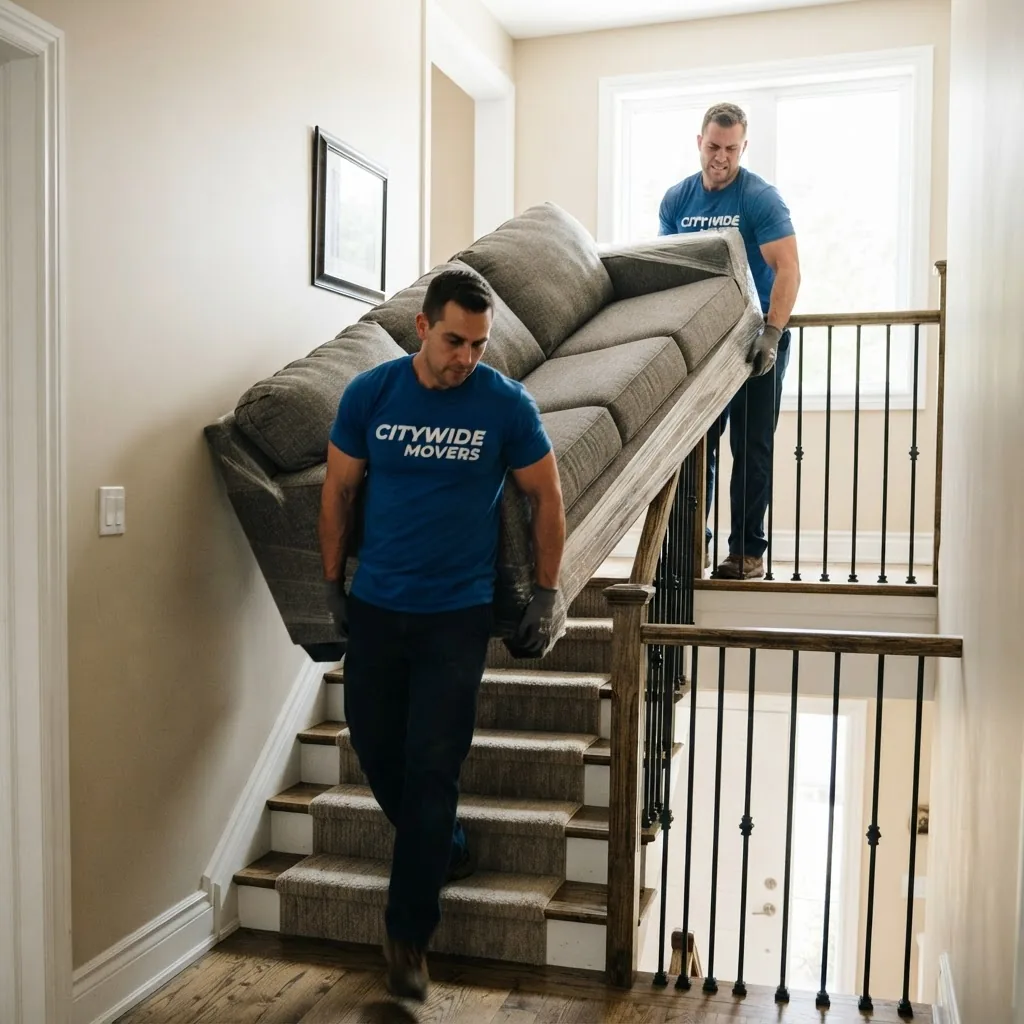
| White-glove delivery | Full room placement, assembly, packaging removal, experienced handlers. | Most expensive; may require appointment windows of 2–4 hours. | High-end furniture, fragile items, customers wanting hands-off service. |
| Curbside delivery | Lower cost, faster scheduling, suitable for accessible ground-floor locations. | Customer must move items inside; risk if not enough people or tools. | DIY customers with help, small furniture, apartments with loading access. |
| Freight/pallet delivery | Handles very large or bulk orders; cost-effective for long distances. | Often Curbside only; requires loading docks or forklift for large pallets. | Commercial deliveries, multiple-piece orders, oversize items. |
| Scheduled pick up services | Flexibility to collect items from sellers, storage units, or donation centers. | Extra stop fees possible; coordination required when seller has limited hours. | Buyers picking up from multiple sellers or needing cross-dock transfers. |
| Same-day / expedited | Fast service, suits urgent needs. | High surcharge, limited availability for large items. | Small items, last-minute moves, rental returns with tight deadlines. |
Choosing the right type: If you need minimal lift and quickest cost, curbside may suffice. If the item is fragile, heavy, or needs placement in a specific room, white-glove is usually worth the premium. If the move spans long distances or includes pallets, choose freight.
Transition: next is a practical, step-by-step sequence for scheduling and preparing a pick up and delivery so you can execute smoothly.
How to Schedule and Prepare for Furniture Pick Up and Delivery

This section is the core of the hands-on guide: follow these numbered steps exactly to book, prepare, and hand off furniture for delivery. Each step starts with a bold action-first phrase and includes exact quantities, times, and checks.
-
Inventory and measure everything (30–60 minutes)
Measure height, width, depth, and diagonal clearances for each piece. Record weights if known; if unknown, estimate: small chairs 20–40 lb, small tables 30–60 lb, sofas 120–250 lb, dressers 100–200 lb. Take three photos per item: close-up, full-face, and context showing stairs or doors. -
Confirm access and parking (15–30 minutes)
Walk the route from street to delivery room. Measure doorways and stair width; note elevator dimensions. Reserve on-street parking or a loading zone permit if required by your municipality (apply 3–10 days in advance). If you will need a dolly or ramp, request it when booking. -
Choose service level and get written quotes (30–90 minutes)
Request itemized quotes from at least three providers showing: base delivery fee, per-item handling, distance surcharges, assembly fees, insurance options, and any old-item haul-away fees. Ask for estimated crew size and vehicle type. Keep quotes valid for 7–14 days. -
Book the appointment with a confirmed window (10–20 minutes)
Prefer a 2-hour window rather than “AM/PM” where possible. Confirm crew size, access instructions, phone numbers, and any elevator reservations. For white-glove service, confirm approximate time-on-site per item (commonly 30–90 minutes each). -
Document pickup location responsibilities (15–30 minutes)
If items are at a third-party seller or storage unit, confirm hours, pickup procedures, and any gate codes. Provide staff names and photos to the pickup crew. If storage fees accrue, note the daily rate so you can schedule within grace periods. -
Prepare items for pickup (60–180 minutes)
Disassemble large items requiring lower clearance—tables, bed frames—using a socket set. Label screws in zip bags, tape bags to the corresponding piece. Wrap fragile surfaces with two layers: furniture pad plus shrink wrap. Use corner protectors on glass or mirrored surfaces. -
Reserve additional services if needed (10–20 minutes)
Add assembly ($50–$150 per item typical), stair carry fees ($20–$60 per flight per mover), or expedited scheduling (25–75% surcharge). Confirm these in writing to avoid surprise charges. -
Confirm insurance and liability limits (15–25 minutes)
Ask for the provider’s standard liability: many offer “released value” at $0.60–$1.00 per pound per article by default; to raise coverage, purchase full value protection. According to a 2024 industry report, roughly 40% of consumer claims arose when customers didn’t upgrade released value limits. -
Prepare the receiving location (15–60 minutes)
Clear pathways, remove rugs on the route, ensure elevator reservations, and set floor protection (drop cloths, runners). Confirm the receiving party will be present or provide written permission and a photo ID requirement. -
On pickup day: verify items, sign paperwork, and take timestamped photos (15–30 minutes)
Inspect items with the crew before loading. Note pre-existing damage on the bill of lading. Get the driver’s name and vehicle plate; take photos of loaded items and truck condition. Keep copies of all signed documents. -
Track delivery and confirm placement (time varies)
Use the provider’s tracking number. At delivery, inspect every item before the crew leaves. If assembly was requested, verify completed work and retain any removed hardware. For same-day or narrow-window deliveries, arrive 30 minutes in advance to receive the crew.
Case example (practitioner walkthrough): I scheduled a white-glove pickup of a 78″ sofa from a local showroom. Measurements and photos took 45 minutes. I confirmed a 2-hour window three days before, reserved a loading zone permit, and requested two movers. Pickup took 35 minutes; delivery (third-floor walk-up) required stair carry fee: two movers, two flights each, 75 minutes on-site. I documented pre-move photos and purchased full-value protection for a $300 premium. The total cost aligned within 8% of the written estimate—documenting everything avoided a dispute when a scuff was noted on delivery and covered by the purchased coverage.
Transition: with your booking in place and items prepped, understand how fees stack up so you can budget correctly.
Costs and Fees Associated with Furniture Delivery Services
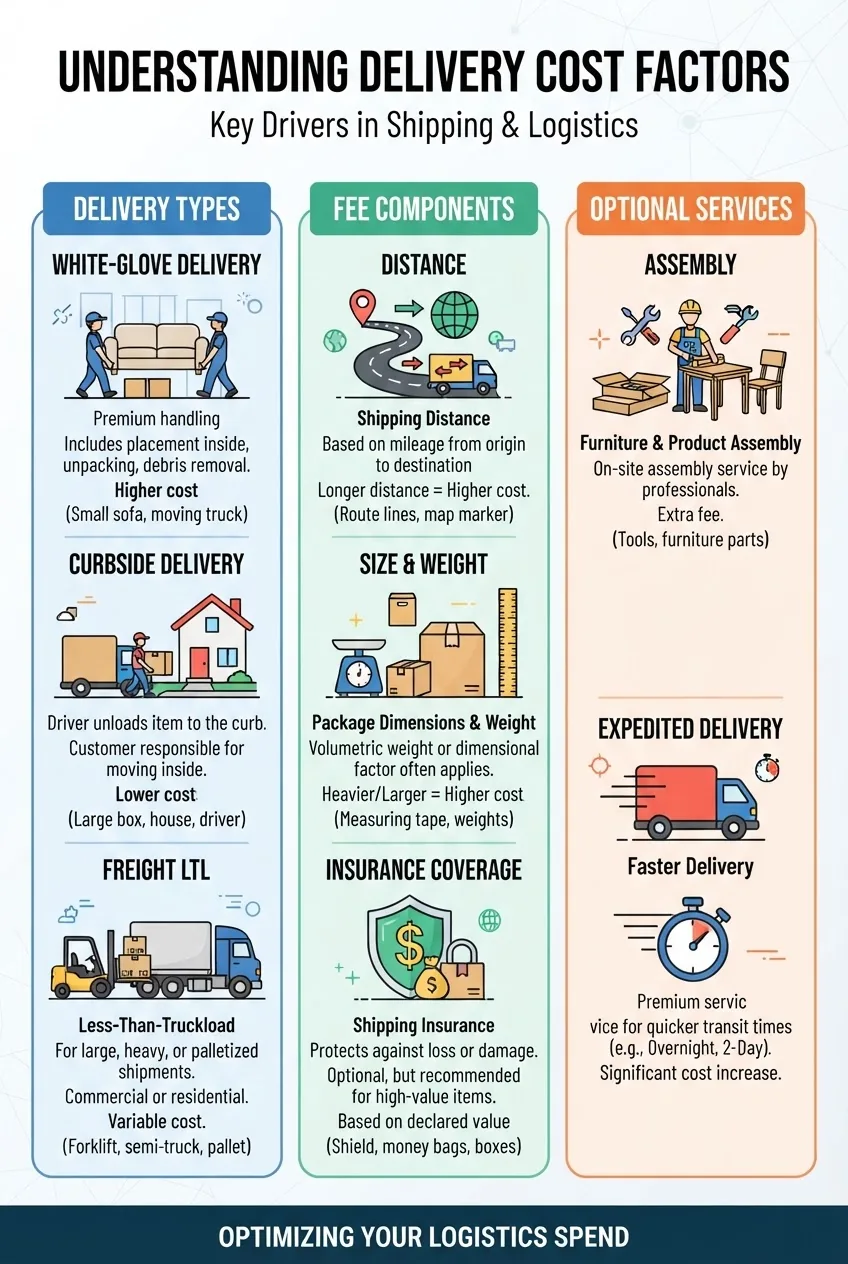
Pricing depends on service level, distance, item size/weight, access, and optional services. Below is a breakdown of common fees and sample numbers to help you estimate costs.
Typical fee components:
- Base delivery fee: $50–$200 local minimum (covers pickup and basic drop-off).
- Per-item handling: $20–$200 depending on weight and complexity (e.g., $75–$150 for a sofa).
- Distance surcharge: $0.75–$3.00 per mile for longer hauls or rural service.
- Stair carry: $20–$60 per flight per mover; steep flights or tight turns may be higher.
- Assembly/disassembly: $50–$150 per item depending on complexity.
- Expedited narrow window: 25–75% of total job cost.
- Insurance: released value is low-cost or free but limited; full value protection premiums vary — often 1–3% of declared replacement value.
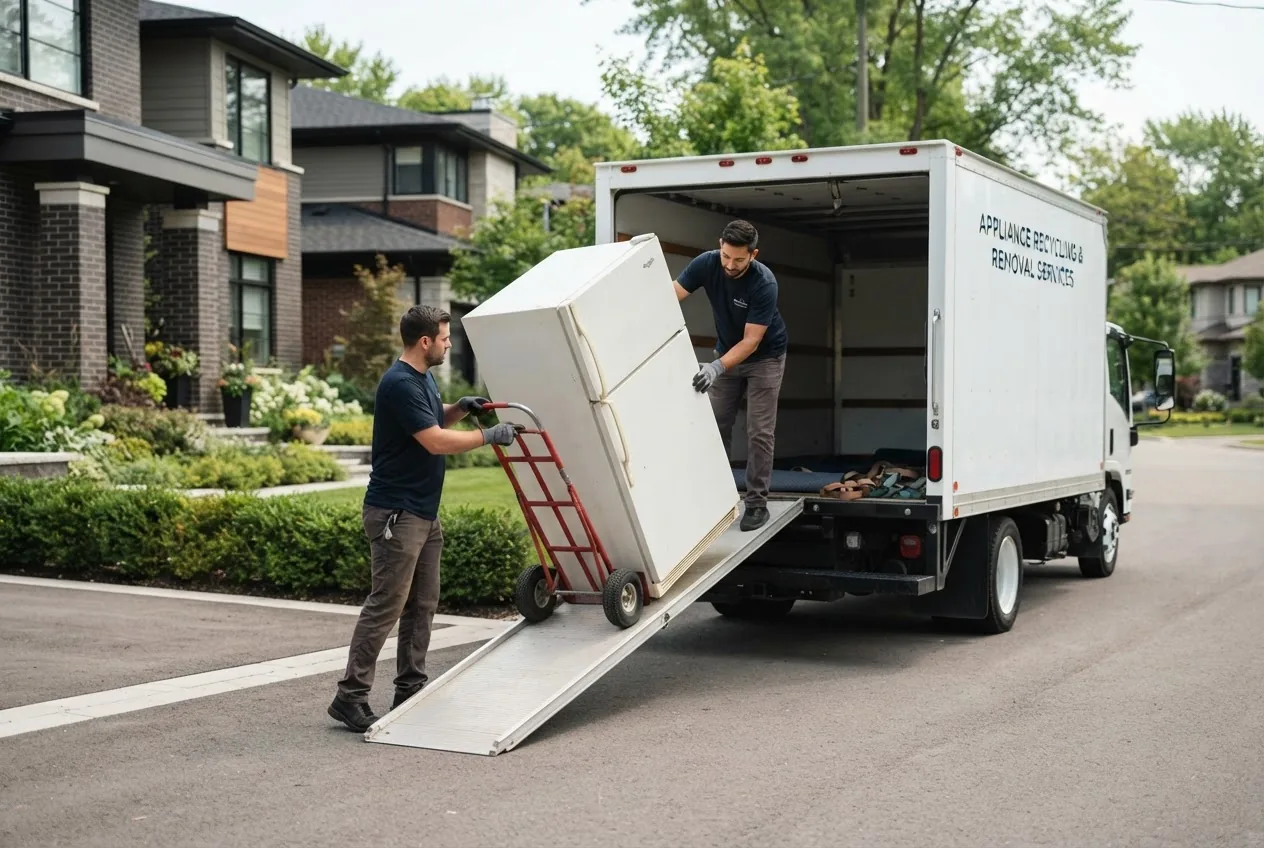
- Haul-away/cleanout: $40–$200 per item or flat fees by truckload for bulk removal.
Sample cost scenarios (assumptions clearly stated):
- Local curbside delivery of a 72″ sofa: Base $75 + sofa handling $90 + 5 miles @ $1.25/mi = $6.25 => approx $171 total (no assembly).
- White-glove in-home setup for a 72″ sofa in a 3rd-floor walk-up: Base $125 + handling $150 + 2 movers x 2 flights stair carry ($40 x 2) = $80 + assembly $75 => approx $430.
- Freight pallet for 6 chairs cross-state (200 miles): Pallet shipping $250 + liftgate/curb fees $75 + residential surcharge $50 => approx $375.
Hidden fees to watch for: long-carry fees when parking is far from entry, condo/HOA elevator reservation fines if not properly booked, re-delivery fees after a missed appointment (commonly 50–100% of original delivery), and fuel surcharges tied to weekly fuel indexes.
Insurance and regulation note: default released-value liability is often minimal—typical limits are $0.60–$1.00 per pound per article. For regulatory guidance on carrier requirements and liability documentation, consult the Federal Motor Carrier Safety Administration for interstate moves: Federal Motor Carrier Safety Administration.
Consumer data and expectations: According to a 2024 industry report, average consumer spending on delivery and setup per large furniture item was $210, with white-glove averages near $420. Regional variations can exceed 30% in high-cost urban areas. Always get written, itemized quotes.
Transition: once costs are clear, know precisely what to expect on pickup and delivery day to avoid surprises.
What to Expect During Furniture Pick Up and Delivery
This section outlines the on-the-day workflow and provides a concise checklist so you can verify the crew’s work and protect your property and wallet.
Typical arrival and inspection flow:
- Driver arrival: crew introduces themselves, shows ID, and reviews the work order (5–10 minutes).
- Pre-move inspection: use your photos and the crew’s notes to identify pre-existing damage — document everything (10–15 minutes).
- Loading and transport: secure items with straps, pads, and blocking; average load time per item 5–20 minutes depending on size.
- Delivery arrival: crew repeats inspection, unpacks and places items, assembles if contracted, and removes packaging if included.
Customer checklist (verify before crew leaves) (print and use):
- All contracted items delivered and placed in designated rooms.
- No new damage evident; if damage exists, document photos and mark on delivery receipt.
- Assembly completed to agreed standard; all hardware present and extra parts handed to you.
- Old items removed if haul-away service was contracted.
- Signed bill of lading and final invoice received.
Damage claims and timelines: Many providers require damage claims to be filed within 72 hours for visible damage and typically within 7–30 days for concealed damage after unpacking. Keep all paperwork and photos. For interstate moves, FMCSA guidance applies to timelines and documentation.
Transition: some items need special handling—read on for large or fragile furniture best practices.
Special Considerations for Large or Fragile Furniture Items
Handling oversized, high-value, or fragile pieces requires additional planning and possibly specialist equipment. Below are stepwise instructions and practical tips.
-
Identify fragility and declare it when booking
List glass tops, antique finishes, or loose joints. Request a crew with fine-art or antique handling experience if the piece is valuable. Note that some providers will refuse fragile items without additional packing. -
Plan for disassembly and parts management
Remove legs, mirrors, and shelves where possible. Use labeled zip-top bags for screws and taped directly to the item. For a large bed frame, expect 30–90 minutes of labor to disassemble and reassemble. -
Order special equipment when needed
Request a heavy-duty dolly for >250 lb items, an appliance dolly with straps for freestanding cabinets, and a disassembly kit for furniture that requires special tools. For piano or pool tables, hire a specialty mover—standard crews are often not insured for these items. -
Purchase adequate insurance
For high-value antiques, declare replacement value and purchase full-value protection. Claims for antiques often require appraisal documentation; keep provenance and valuation paperwork on hand. -
Use protective packaging
For glass, use double-layer corrugated board and bubble wrap, plus corner protectors. For upholstered items, use breathable fabric covers under shrink wrap to avoid moisture trapping. -
Test assembly tolerances on-site
Allow 15–30 minutes extra for adjusting fittings and leveling pieces on uneven floors. Keep shims and a small level handy.
office furniture removal guide is a recommended reference for bulky office pieces and custom-fit installations.
Transition: frequently, delivery ties into removal or estate cleanouts—learn how to coordinate both services efficiently.
Coordinating Furniture Delivery with Removal and Cleanout Services
Combining delivery with haul-away or a property cleanout can save time and reduce repetitive callbacks. Here are practical coordination strategies and scenarios.
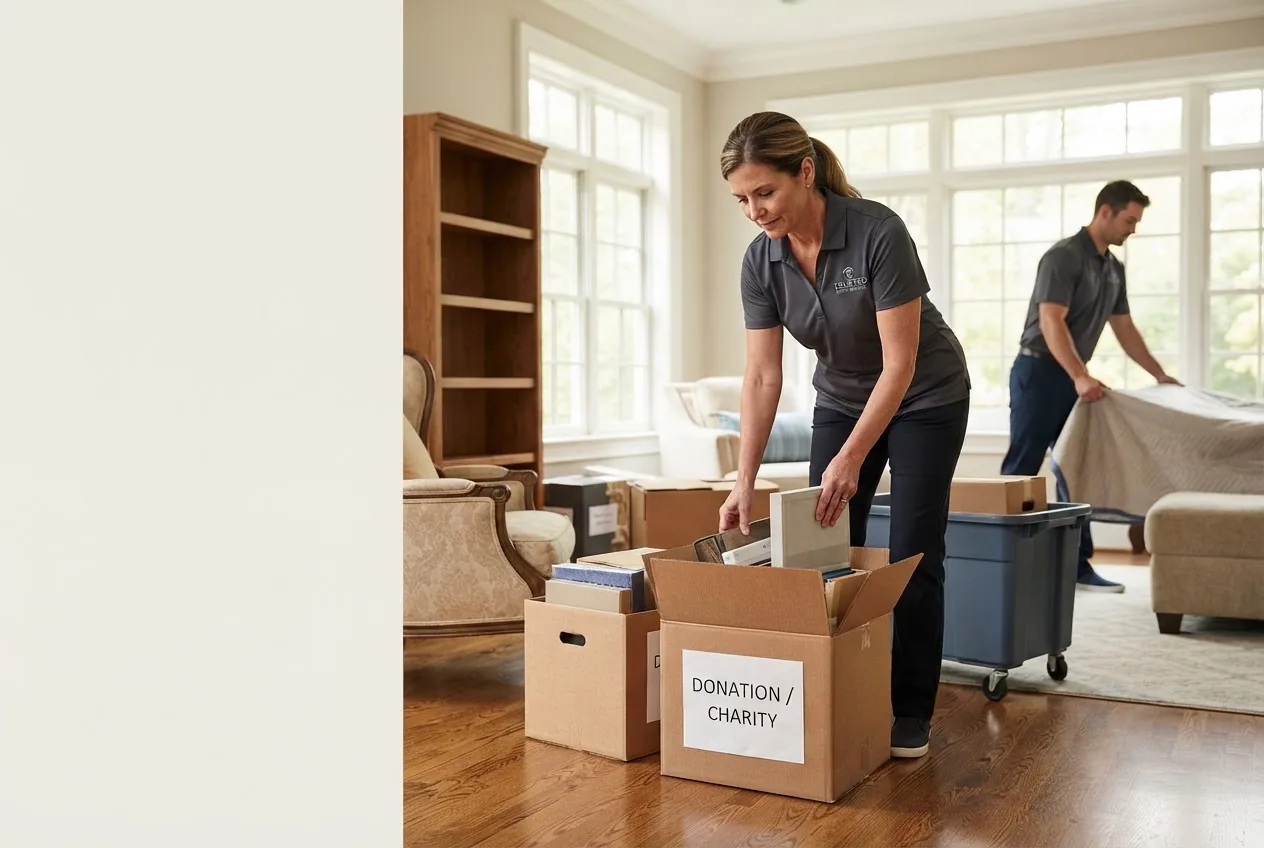
Scenario A — Delivery plus old-item haul-away: Schedule pickup and removal on the same appointment; the crew will remove the old item after delivering the new one. Confirm whether removal is included or billed separately. Ask for a single invoice to simplify claims or HOA approvals.
Scenario B — Delivery during an estate cleanout: Align delivery windows with cleanout crews to avoid obstructed access. For complex estate cleanouts involving multiple pickups, request a project manager or single-point contact.
Case scheduling example: For a three-item swap (sofa, bed, dresser) during an estate cleanout, I scheduled: morning cleanout crew 8:00–11:00 to clear pathways, noon delivery 12:30–2:30 for white-glove placement, and afternoon haul-away 3:00–4:00 to remove cleared items. This minimized double handling and kept crew walk times under targeted thresholds.
Couch Removal Guide for Furniture Haul Away and Disposal is a detailed reference when you need targeted removal options that complement delivery services.
estate cleanout services explains larger cleanout workflows that often involve coordinated delivery logistics and storage transitions.
Logistics tips: consolidate contact points, agree on order of operations in writing, and allocate a 30–60 minute buffer between crews. If the cleanout includes donation drops, confirm recipient hours to avoid repeated trips.
Transition: if you prefer alternatives to standard delivery services, explore retail pickup and third-party options next.
Alternative Furniture Pick Up and Delivery Options
Not every job requires a traditional mover. Here are alternatives and when to use them.
Retail pickup: Many big-box retailers offer in-store pickup or curbside service—this can be lower-cost but often requires customer loading or arranging a small delivery by the retailer.
Third-party delivery apps and couriers: Apps that connect independent drivers can be faster and cheaper for local, mid-size items, but check vehicle size and insurance. For large furniture or fragile items, these services may lack adequate coverage.
DIY rental truck or trailer: Rent a 10–16 foot box truck with an extra person or two to handle heavy items. Allow 1–3 hours for loading and 1–2 hours for unloading, plus travel time. Factor fuel, insurance add-ons, and equipment rental.
appliance pickup options are useful when you need combined furniture and appliance handling.
Transition: delivery choices can have environmental impacts—here are ways to reduce footprint and responsibly dispose of old items.
Environmental and Sustainability Aspects of Furniture Delivery
Furniture moves have a carbon footprint and create waste. Adopt these actionable steps to reduce impact and responsibly manage old items.
Actionable tips:
- Consolidate pickups and deliveries to reduce round trips—plan multi-item moves where possible.
- Choose providers that use fuel-efficient or hybrid trucks for local deliveries.
- Donate usable furniture to local charities; request donation receipts for tax purposes.
- Recycle materials where possible: mattresses, upholstery foam, and electronics often have specialized recycling programs.
- When clearing yards or properties, consider professional brush removal service options to prevent burn or landfill misuse.
According to a 2024 industry report, combining pickups and deliveries into consolidated routes can reduce per-item carbon emissions by up to 28% compared with multiple single-item trips. Prefer local reuse and donation networks to keep furniture out of landfills.
Common mistakes and how to avoid them
I once scheduled a curbside delivery without checking elevator reservations; the crew couldn’t access the building and charged a re-delivery fee. Now I always verify elevator booking and parking permits 72 hours before service. I also used to assume released-value coverage was sufficient; after a claim denial, I started purchasing full-value protection for items valued over $1,000.
Compact verification checklist
- Measurements recorded and photos taken (3 per item).
- Written, itemized quote received and saved.
- Access and parking confirmed and permits reserved if needed.
- Insurance level chosen and documented on the bill of lading.
- Hardware labeled and packed for disassembly/reassembly.
- Delivery window confirmed within a 2-hour slot or paid narrow window.
- Contact person at pickup and delivery locations assigned and reachable by phone.
When to call in a professional
Hire a specialist when dealing with antiques, pianos, pool tables, complex estate cleanouts, or when the item exceeds 250–300 lb. If stairs exceed three flights, or if there is any risk of property damage or personal injury, prioritize white-glove or specialty movers with certified equipment.
Final notes on risk and variability: Prices, available services, and liability rules vary by state and region. For interstate carriers and legal guidance on moving liability, see the Federal Motor Carrier Safety Administration: https://www.fmcsa.dot.gov. For consumer rights and dispute guidance, consult the Federal Trade Commission: https://www.ftc.gov. For industry best practices and standards, review American Trucking Associations resources: https://www.trucking.org.
Conclusion: Follow the steps above to measure, book, prepare, and inspect your furniture pick up and delivery with confidence. Document everything, expect the listed fees, and choose the service level that matches fragility and access. Ready to schedule? Start by measuring and photographing your items, then request three itemized quotes to compare.