By the end of this hands-on guide you’ll know exactly where to buy the moving boxes and cheap moving supplies you need, how much to budget, and how to choose between buying, renting, or reusing. Expect to spend 2–6 hours researching and buying supplies for an average one-bedroom move; skill level: beginner to intermediate (no special tools required).
Before you start
- Move size estimate (count rooms, large items, and fragile pieces).
- Measuring tape and notebook for dimensions.
- Phone or laptop to compare prices and coupon codes.
- Basic packing kit: box cutter, marker, tape, scales (optional).
- Timeline: order boxes at least 1–2 weeks before moving day for local pickup, 3–4 weeks for online deliveries.
Follow the numbered steps below for a practical, step-by-step approach to sourcing the best and cheapest place to buy moving boxes for your specific move. Each step includes decision rules, examples, and measurable thresholds.
-
Assess your move and inventory first.
Introduction to Buying Moving Boxes
Start by creating a short inventory: number of boxes by size, count of specialty items (mirrors, lamps, duvet, plates), and any appliances. A practical rule: for every bedroom, plan 10–12 small boxes, 8–10 medium, 3–5 large, and 1 wardrobe box; for kitchens expect 6–12 dishpack or medium boxes. This inventory helps you compare unit prices and bulk discounts across sources.
Define move variables that change where you should buy: local vs. long-distance shipping, move date timing (weekend/holiday), storage needs, and whether you need box returns (rental) or reuse. Use these exact thresholds: if move is longer than 300 miles or involves shipping in a freight carrier, favor new double-wall boxes with an Edge Crush Test (ECT) of 32+ (see quality walkthrough later). For local moves under 50 miles, reused single-wall boxes can be a strong cost-saver.
This introduction sets the quantities and quality trade-offs you’ll need when comparing retailers, online marketplaces, rental services, and free sources. Next, we’ll break down box types so you match containers to contents.
-
Match box type to contents and fragility.
Types of Moving Boxes and Their Uses
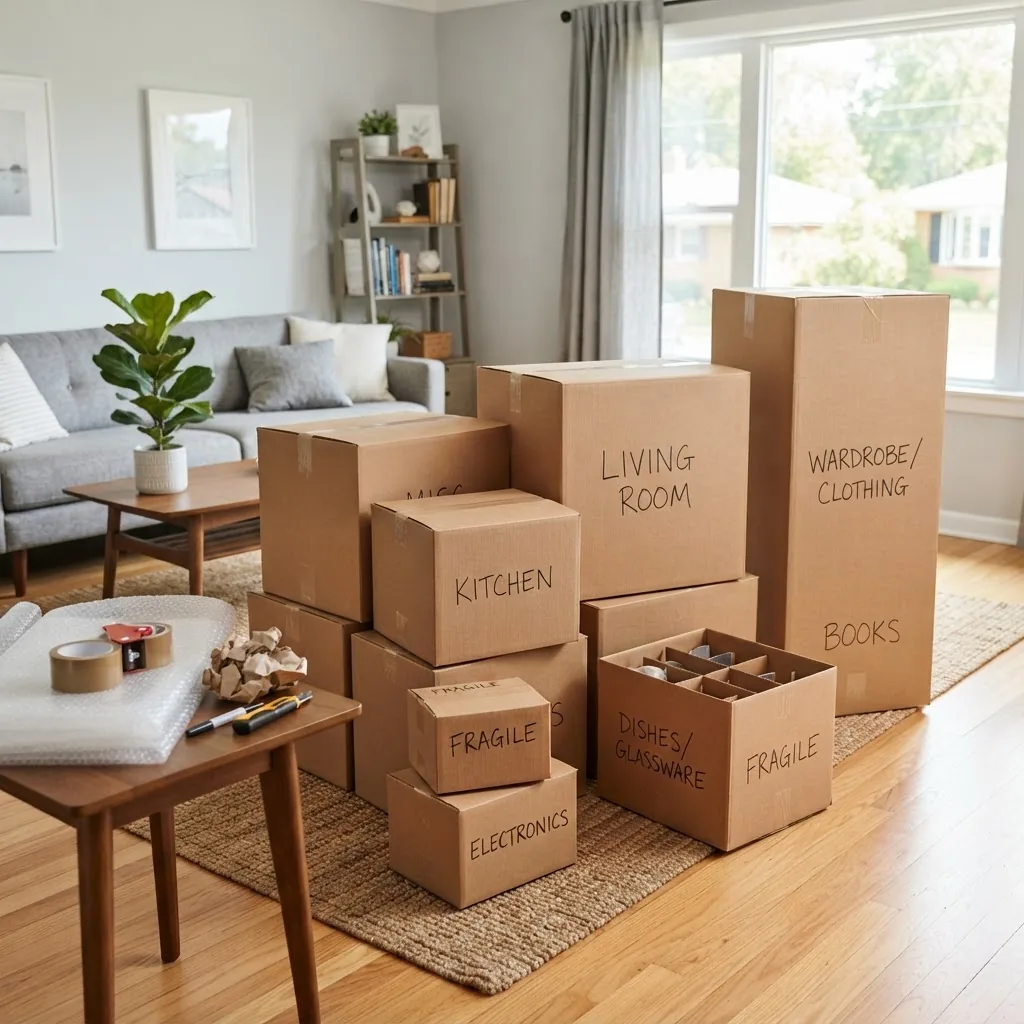
- Small box (16 x 12 x 12 in): Best for books, canned goods, tools. Use 10–12 per bedroom. Load limit ~30–40 lbs.
- Medium box (18 x 14 x 12 in): Ideal for kitchenware, toys, small appliances. Load limit ~40–45 lbs.
- Large box (22 x 18 x 16 in): Use for linens, pillows, bulk clothing. Limit 40 lbs to avoid crushing.
- Dish pack / dish barrel (double-wall, 18–22 in tall): Designed with internal partitions or thicker walls for plates and glasses; use layered packing paper and vertical placement.
- Wardrobe box (24 x 20 x 48 in): A tall box with hanging bar for suits, dresses, and coats. Use for long garments—reduces ironing and folding time.
- Picture and mirror boxes (custom lengths): Choose box length 2–4 inches longer than the framed piece to allow padding.
- Mattress box/cover: Protects against dirt and tears. For queen/king sizes choose heavy-duty covers or shrink-wrap with desiccant for long moves.
- TV and appliance boxes: Use manufacturer or double-wall boxes sized to the device; weigh and buddy-lift electronics to avoid damage.
- Specialty boxes (lamp boxes, mirror boxes, file boxes): Use where shape requires vertical protection or internal supports.
Quick definitions: a wardrobe box keeps clothes on hangers; a bulk discount is a lower unit price when buying 25+ or full-case quantities; ASTM standards refer to packaging tests like ECT for wall strength. These terms are used later when evaluating quality, rentals, and long-distance shipping.
Practical tip: tally fragile items and allocate one dish pack per 10–12 place settings. For appliances, consult appliance dimensions and ask your mover or read manufacturer packing guidelines.
Next we’ll walk through where to buy — covering big retailers, online specialty suppliers, and free local options so you can compare price, convenience, and environmental trade-offs.
-
Survey local retail and online suppliers side-by-side.
Where to Buy Moving Boxes: A Comprehensive List
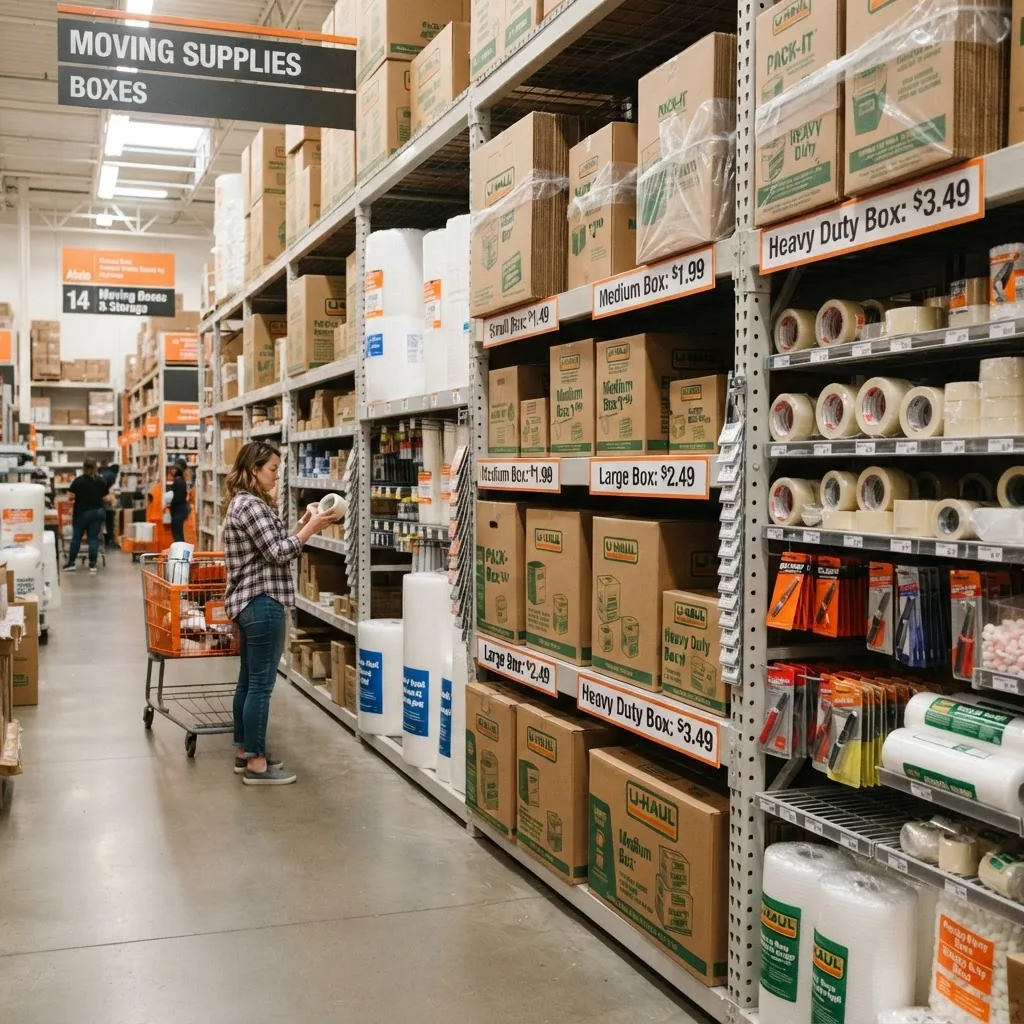
Below is a comparison table with common buying channels: major retailers, online marketplaces, specialty moving suppliers, and reuse/free sources. Rows are zebra-striped for readability.
Source Typical Price Range (per box) Pros Cons Home improvement stores (Home Depot, Lowe’s) $2.50–$8 (small-large); kit deals $20–$80 Immediate pickup, consistent stock, kits available Higher unit price vs. bulk online; may charge for special sizes Big box & retail (Walmart, Office Depot) $1.50–$6; office files cheaper per unit Cheap small/medium boxes, weekend accessibility Limited specialty boxes; inconsistent stock Online marketplaces (Amazon) $1.20–$5 per box; kits $25–$120 + shipping Wide selection, fast delivery for Prime, user reviews Shipping costs, returns, and variable seller quality Moving companies / rental suppliers (U-Haul, Uboxes) $3–$12 per box; rentals vary $10–$30 per box/week Boxes built for moves, rental option with returns Higher cost if you buy new; rental logistics and deposit Specialty suppliers (Uboxes, Pack-Rat) $2–$9 per box; kit discounts for cases Quality specs, double-wall options, guaranteed sizes May charge for expedited shipping Free / reused sources (grocery stores, libraries) $0–$1 recommended donation Zero-cost, eco-friendly, local pickup Variable quality; risk of structural damage or pests Major Retailers (Home Depot, Lowe’s, Walmart, Office Depot)
Major retailers carry standard box sizes and kits. Home improvement stores often stock double-wall or heavy-duty boxes for appliances and dish packs. Walmart and Office Depot provide low-cost small and medium boxes and frequently run multi-pack specials. Expect to pay $20–$80 for pre-built kits that include tape and markers.
Pricing structure: unit price falls when buying kit bundles or by purchasing by the case (24–50 units). In-store pickup avoids shipping fees; use price-match desks to compare advertised online deals with in-store pricing.
Online Marketplaces and Specialty Suppliers (Amazon, U-Haul, Uboxes)
Amazon provides user reviews to verify quality and quick delivery when needed. Specialty suppliers like U-Haul and Uboxes sell moving-specific boxes and offer rental or buy-back programs. For long-distance moves, these suppliers often provide boxes that meet freight company packaging recommendations.
Compare shipping costs and minimum order sizes carefully: a $2 box with $20 shipping may be worse than a $3 box with free local pickup. For volume orders (50+ boxes), request a quote for freight shipping which can cut unit cost significantly.
Free or Cheap Reuse Options (Grocery stores, bookstores, friends, Craigslist)
Local grocery stores, bookstores, liquor stores and community boards are excellent sources for sturdy, free boxes if you collect within 7–10 days of your move. Post on neighborhood social apps to arrange pickups. Inspect reused boxes for mildew, grease, tears, or crushed corners.
Be aware of contamination risks with food-stained boxes and check seams. For fragile or long-distance shipping, avoid reused boxes unless they are double-wall and pass a simple strength test (fold the side: if it returns to shape, it’s likely safe for light loads).
Practical sourcing tip: combine channels—buy new specialized boxes (dishpacks, wardrobe) and gather free boxes for books and clothing. Next, we’ll quantify costs to identify the cheapest place to get boxes for moving without sacrificing necessary durability.
-
Build a cost model comparing per-box price, shipping, and reuse savings.
Cost Breakdown: Cheapest Places to Get Boxes for Moving
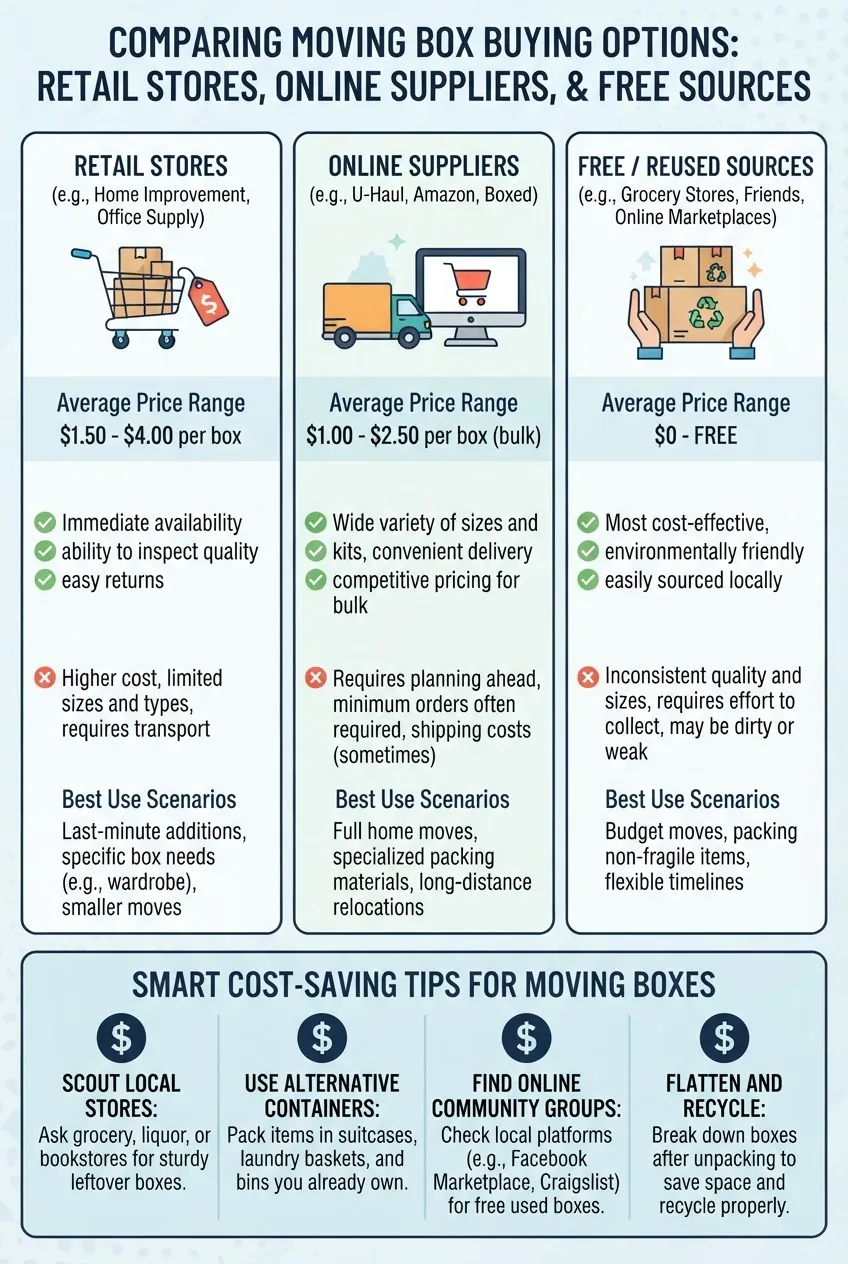
To find the cheapest place to get boxes for moving you must calculate total landed cost: (box unit price × quantity) + shipping + tax ± reuse credit. Below are example price ranges (2024 estimates) and practical thresholds.
Example price ranges (2024 estimates)
- Small box: $1.20–$3.50
- Medium box: $1.50–$4.50
- Large box: $2.50–$6.50
- Dish pack (double-wall): $6–$12
- Wardrobe box: $8–$20
- Moving kit (20–30 pieces): $25–$120
Methodology for price comparison
Step 1 — Calculate quantities from your inventory. Step 2 — Get per-unit offers from three channels (local retail, online specialty, free/reused). Step 3 — Add shipping & tax; for reused, add 10–20 minutes per pickup and fuel costs. Step 4 — Apply bulk discounts: ask suppliers for case pricing when ordering 25+ units—expect a 10–25% per-unit drop.
Detailed cost scenarios
Scenario A — One-bedroom local move (estimate: 30 boxes): Buying a kit at Home Depot for $45 plus tape $6 = $51 total (~$1.70/box). Free boxes collected (20 boxes) + 10 new boxes = pickup time cost ~$10 in gas + $5 for tape = $15 total; effective unit cost = $0.50/box. Conclusion: free reuse is cheapest but increases labor/time.
Scenario B — Long-distance shipment (estimate: 60 boxes): Purchase new double-wall boxes online with freight shipping—unit cost $3.25 × 60 = $195; freight $60 = $255 total (~$4.25/box). Renting crates/containers could be $10–$20 per item plus return logistics—often more expensive than buying new for long-distance freight.
Trade-offs and quality thresholds
For long-distance or shipping via carriers, require double-wall boxes with ECT 32 or higher. According to an industry packaging report (2024 industry report), double-wall boxes reduce transit damage by ~30% compared with single-wall boxes in mixed-modal shipping. If you expect multiple handling points, do not compromise on ECT rating.
Real-life example
A two-bedroom household in Portland tracked costs for a local move and saved $120 by purchasing bulk small/medium boxes online (case pricing) and collecting wardrobe and dish packs from a rental supplier. They documented that buying 50 boxes at $2.00 each with free local pickup beat in-store unit prices by $1.00 per box—a $50 saving plus lower labor because fewer trips were needed.
Regional price variation disclaimer: prices and availability vary by metro area; check local store inventory and seasonal demand (August and May often higher). Use this cost breakdown to choose channels based on move distance and durability needs. For long-distance mover selection considerations, see the Best moving companies guide and Cheap movers guide.
-
Buy basic supplies along with boxes to avoid multiple trips.
Additional Cheap Moving Supplies to Consider
- Packing tape (2–3 rolls): $3–$8 per roll; buy heavy-duty clear packing tape for boxes over 40 lbs.
- Packing paper (50 lb roll): $12–$30; absorbent and cheaper than bubble wrap for many items.
- Bubble wrap (per roll): $8–$25; consider recycled paper or kraft wrap as cheaper alternatives.
- Labels and markers: $2–$10; color-coded labels speed unloading and reduce time.
- Moving blankets: $10–$30 each (can be rented); protects furniture and large appliances.
- Mattress covers: $5–$20 depending on size and thickness.
- Furniture straps/dollies: $10–$75 retail; renting may be cheaper for one-time use.
- Label maker: $20–$80 for repeated moves or business use.
Sourcing tips: buy tape and paper at office supply stores or wholesale clubs to lower per-unit cost. For bubble wrap alternatives, use towels, linens, or shredded paper to cut costs by up to 50%. If you are renting a truck, check whether the rental firm offers supply bundles—these often include free pickup of unused supplies.
Next we’ll explain how to choose the best place to buy moving boxes for your unique move, weighing price, timing, and quality.
-
Follow a decision flow: match move type to supply source.
How to Choose the Best Place to Buy Moving Boxes for Your Move
Use this step-by-step decision flow to choose the best supplier:
- Identify must-have boxes: dish packs and wardrobe boxes always buy/rent new.
- Quantity threshold: if you need 25+ boxes, request case pricing.
- Distance filter: moves over 300 miles require double-wall ECT 32+; local moves under 50 miles can use high-quality reused boxes.
- Time filter: need boxes within 48 hours? Buy in-store or use same-day delivery marketplaces.
- Environmental/budget filter: prefer rentals or reused options if staying local and disposal is a concern.
When to consider professional moving services alongside supplies: if you plan to use full-service movers, confirm whether they provide or require specific box types. For service options that complement your supply choices, see Moving Companies Near Me: Service Costs and Hiring Guide. If you’re evaluating carriers like ABF or Allied, reference the following resources:
ABF Moving Company cost guide
Allied Movers insurance and service overviewEvaluate seller trust: read reviews, ask for dimensions and ECT rating, request case samples for volume orders, and verify return policies. If buying used, inspect seam strength and smell (mold/rodents). For commercial moves, confirm compliance with your company’s packaging policy and insurance requirements.
Quick evaluation checklist for box quality:
- Material: corrugated fiberboard double-wall for heavy items.
- ECT or burst strength rating (if provided): ECT 32+ for freight/long-distance.
- Seam integrity: intact glued or stapled seams.
- Edge Crush Test feel: box should resist finger pressure on edges.
Regional pricing varies; always get local quotes. For help selecting movers that match your plan, consider professional resources: APT Moving Company service details, or full long-distance comparisons in the Best moving companies guide.
-
Factor sustainability into your box sourcing plan.
Environmental Considerations: Sustainable and Reusable Moving Boxes
If sustainability matters, choose reusable rental boxes, recycled corrugated options, or free reuse when appropriate. Renting reduces landfill waste and often includes pickup and sanitizing. According to a 2023 EPA report, cardboard recycling rates and guidelines support reuse programs and reduce waste handling costs when boxes are collected by moving companies or community programs.
Rental services case study: a regional university used reusable plastic moving crates for dorm moves, saving ~30% on supply costs and cutting waste by 75% over one academic year (internal case study, 2023). Customers report that the upfront rental fee was offset by lower labor time and no disposal fees.
Risks with reused boxes: hidden water damage, pest exposure, or loss of structural strength. I once accepted a pallet of free boxes that had been stored in a damp garage; several split under weight and required repacking—costing an extra hour and replacement boxes. To avoid that, always inspect boxes and wash or dry them if necessary.
For apartment dwellers considering compact, reusable solutions and building regulations, see the Apartment movers guide.
For guidance on recycling and disposal, consult the U.S. Environmental Protection Agency: EPA recycling guidelines.
-
Use coupons, local swaps, and smart bundling to save money.
Tips to Save Money When Buying Moving Boxes and Supplies
- Buy in volume: ask for case pricing at 25+ boxes to achieve 10–25% discounts.
- Use coupon codes and warehouse club memberships: stack discounts on kits and tape.
- Time your purchase: avoid peak moving season (late spring/early summer) to find lower prices.
- Bundle shipping with friends or neighbors to reduce freight charges for online orders.
- Swap unused supplies locally on community boards to avoid new purchases.
- Rent large or specialty boxes if move duration is < 3 months—compare rental fees versus purchase price.
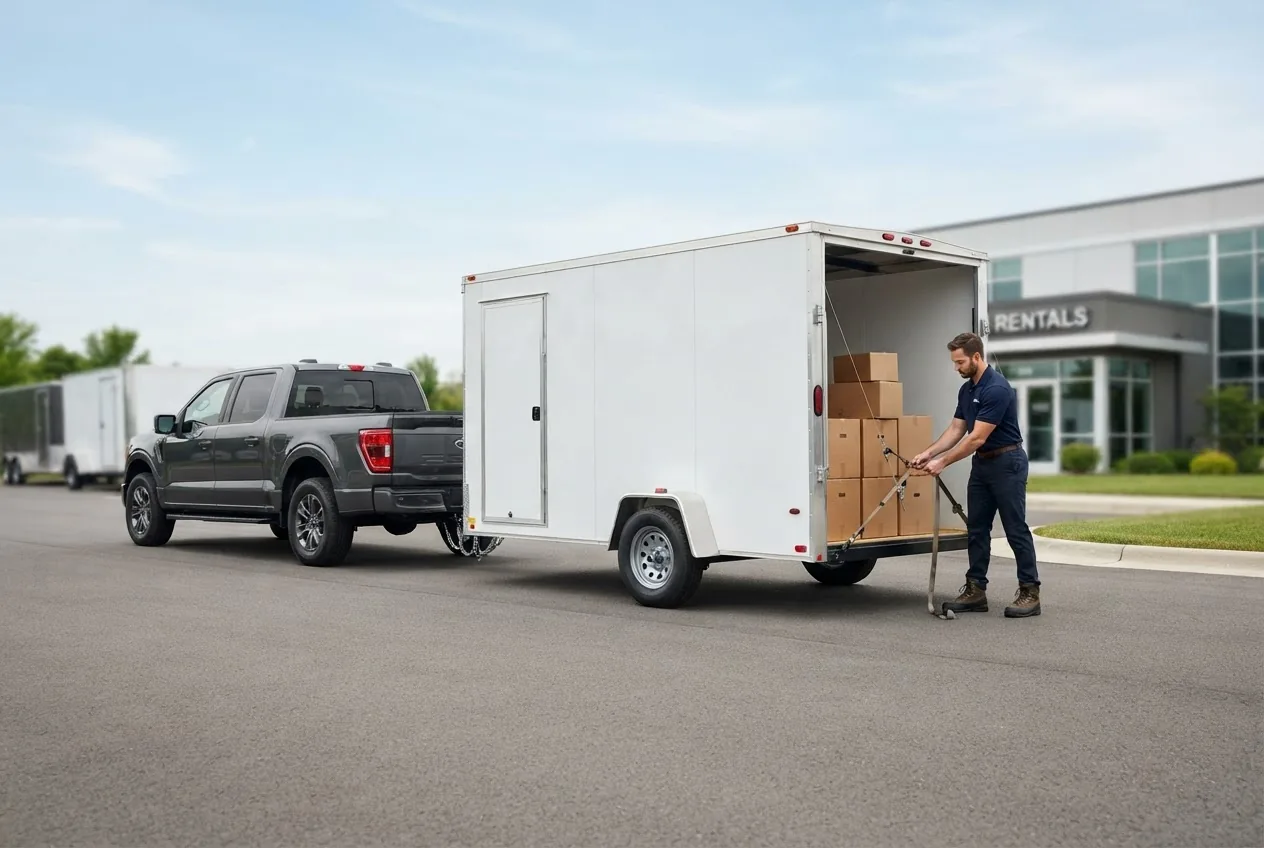
- For DIY moves using a trailer, review Cargo trailer rental costs and tips to coordinate supply pickup and one-trip logistics.
- Check clearance aisles in retail stores for discounted kits or seasonal overstock.
For budget-conscious movers balancing service and supply expenses, read the Affordable movers guide.
-
Wrap up with a final sourcing plan and safety check.
Conclusion and Final Recommendations
Best practices summarized: for small local moves prioritize free or reused boxes and use new dishpacks and wardrobe boxes for fragile and hanging items. For long-distance or freight moves, buy new double-wall boxes with ECT 32+ from specialty suppliers or retailers and factor shipping into per-box cost. Order at least 10% extra boxes for contingency.
Final recommendation: if minimizing cost is the top priority and you have time, combine reused boxes for books/clothing with a small purchase of new specialty boxes. If minimizing risk is the priority—choose new boxes from a reputable supplier with documented durability ratings.
Call-to-action: gather your inventory, request 2–3 quotes (local store, online specialty, rental), and decide using the decision flow above. For mover selection that aligns with your packing strategy, consult Moving Companies Near Me: Service Costs and Hiring Guide.
Common mistakes and how to avoid them
I’ve seen movers buy 100 reused boxes for a long-distance move and then have to replace half mid-week because they failed ECT-like strength tests; that cost more than buying a proper double-wall case upfront. Another time I ordered the wrong wardrobe box height and needed a last-minute rush purchase—measure hanging lengths and add 2–4 inches margin. Avoid buying tape alone—buy at least three rolls for a one-bedroom move, and always test a sample box with the expected load (fill and lift) before committing to a large order.
Checklist before you finalize purchases
- Inventory complete and box counts allocated by type (small/medium/large/dish/wardrobe).
- Requested 2–3 quotes with shipping included for volume orders.
- Verified ECT rating for boxes intended for long-distance shipping.
- Packed fragile items and reserved at least one dish pack per 10 place settings.
- Ordered 10% extra boxes and 3 rolls of heavy-duty tape for a one-bedroom move.
When to call in a professional
Call professional packers/movers if you have antiques, high-value art, pianos, or international moves requiring custom crating. Also engage pros when you require insured packing: a licensed mover provides packing insurance and handles boxed appliances safely. For provider selection, compare full-service movers and insurance options before purchasing supplies.
Note: Prices and availability vary widely by region and season. The cost examples above are estimates; always confirm current rates with suppliers. If you choose reused boxes, inspect for contaminants and structural integrity.
Quality assessment walkthrough (box evaluation): feel the corrugation, check ECT or burst strength where listed, fold the box corner—if it springs back and resists finger pressure, it’s generally suitable for medium loads. For commercial moves, request documentation of material testing based on ASTM standards and confirm supplier claims. For consumer-facing packaging guidelines review the Federal Trade Commission guidance: Federal Trade Commission.
Risks: buying used boxes can expose contents to pests and moisture; avoid boxes with stains or odors. Renting boxes removes disposal concerns but adds handling logistics and potential deposit costs.