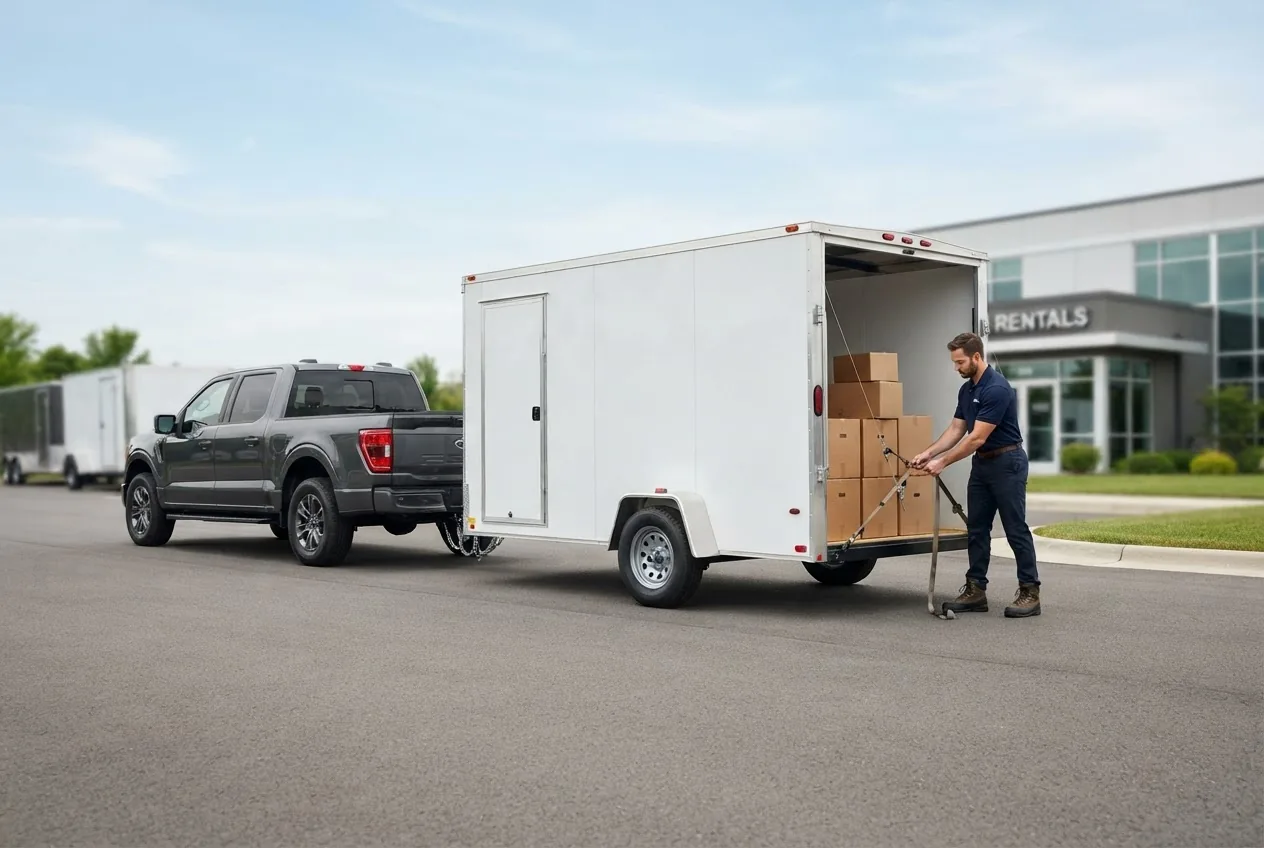
Answer: Cargo trailer rental lets you borrow an enclosed or open trailer—or a car transport trailer—for hauling goods or vehicles; costs vary by trailer type, rental length, mileage and insurance, while requirements typically include a valid driver’s license, minimum age, towing capability and proof of coverage.
This comprehensive cargo trailer rental guide covers trailer types (enclosed, open, car carrier), pricing models, rental requirements, one-way options, vehicle towing specs, insurance, contract terms, and hands-on loading and inspection tips so you can rent confidently for local or long-distance moves.
What Is Cargo Trailer Rental? Overview and Uses
Answer: Cargo trailer rental is a short-term lease of a trailer—enclosed, open, or a car transport unit—used to move furniture, equipment, retail stock, or vehicles when you don’t own a trailer or need extra capacity for a one-time job.
Term: cargo trailer — a towable unit designed to carry freight or vehicles; it can be enclosed (weather-protected) or open (flatbed), and may include ramps, tie-down points, and lights.
Typical uses include residential moves, small business deliveries, contractor equipment transport, vehicle recovery, and one-way relocations. Enclosed trailers protect furniture and boxes from weather and theft; open flatbeds are lighter for bulky items like lumber; car carriers are built with ramps and wheel restraints for vehicle transport.
Example scenarios:
- Weekend apartment move: rent a small enclosed trailer (5×8–6×12) to move boxed items and small furniture.
- Local contractor deliveries: use an open flatbed for ladders and building materials, avoiding unnecessary weight-based insurance.
- Long-distance single vehicle move: rent a car transport trailer with wheel straps and a low ramp to load a sedan for a one-way drop.
According to a 2024 industry report, renters increasingly choose enclosed trailers for urban moves because they reduce damage risk and secure items during short-haul trips; factor that trend into your trailer selection when balancing cost versus protection.
Transition: With that context, next we examine the trailer types you’ll commonly see at rental counters and how to pick the right one for your move.
Types of Cargo and Moving Trailers Available for Rent
Answer: Rental fleets commonly offer enclosed cargo trailers, open flatbed trailers, and car carrier trailers in several sizes; choose by volume, weight, security needs and towing capacity.
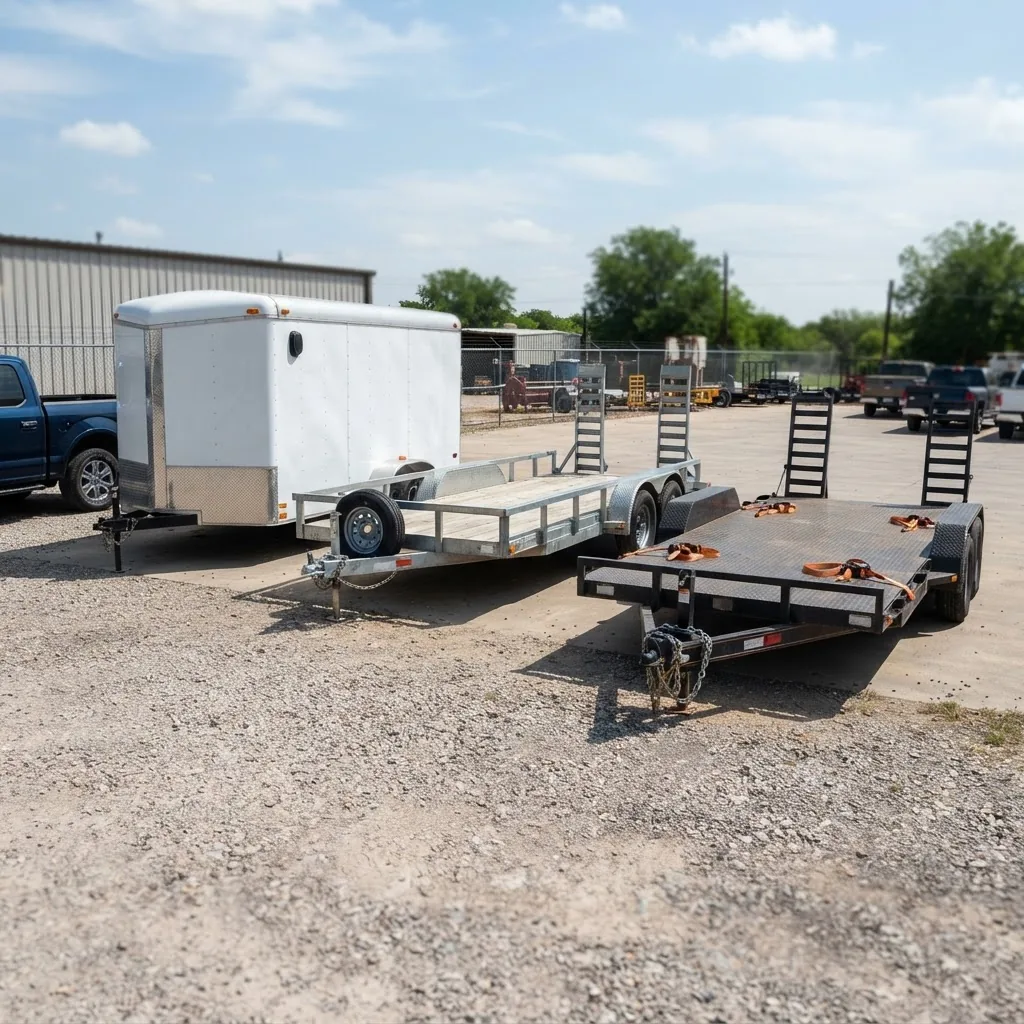
Below are the main categories, each with pros and cons and common dimensions. Measure your load and estimate cubic feet before booking.
Enclosed Cargo Trailers
Description: Box-style trailers with walls and a rear door or ramp, available in 4×6, 5×8, 6×12, 7×16 and larger sizes.
- Pros: Weather and theft protection; stackable space; tie-down rails and E-track available.
- Cons: Heavier (needs more towing capacity), usually higher daily and mileage costs.
- Common uses: Household goods, electronics, boxed retail inventory.
Open Flatbed Trailers (Open Cargo Trailers)
Description: Flat decks with optional stake sides or rails; common sizes include 5×8, 6×10, 7×14, and larger tilt models for equipment.
- Pros: Lighter, lower daily cost, easier loading of oversized items, simpler hitch setups.
- Cons: No weather protection; cargo must be tarped and well tied down.
- Common uses: Building materials, appliances (with tarps), landscaping equipment.
Car Carrier Trailers (Car Transport Trailers)
Description: Trailers with ramps, low decks, wheel chocks and strap points to transport cars, trucks, ATVs or small machinery.
- Pros: Designed wheel-securing points, ramps, and low center of gravity; purpose-built for vehicles.
- Cons: Often require higher deposit, additional insurance, and more stringent rental requirements.
- Common uses: Shipping a car for a one-way move, transporting a client’s vehicle to a show or repair shop.
Specialty and Moving Trailers
Description: Moving trailers often include built-in tie-downs, E-track, and sometimes dolly storage; they mirror enclosed cargo trailers but with residential move-friendly features.
- Pros: Optimized for household moves, ramped entry, interior lighting and E-track.
- Cons: Generally cost more than a basic enclosed trailer of equal size.
- Common uses: Full apartment or small house moves that don’t require a box truck.
How to pick: list the largest item (e.g., couch, mattress) dimensions and weight, add 20–30% buffer for packing inefficiencies, and pick a trailer size with adequate floor area and payload rating.
Transition: Understanding types is half the plan — the next section breaks down how much those options typically cost, and how different pricing models affect total rental fees.
How Much Does Cargo Trailer Rental Cost? Pricing Breakdown
Answer: Cargo trailer rental costs vary by trailer type, duration (daily vs weekly), per-mile charges (or mileage included), deposits, and optional insurance; expect small enclosed trailers from $25–$60/day and large moving trailers from $70–$150/day, plus mileage and deposits.
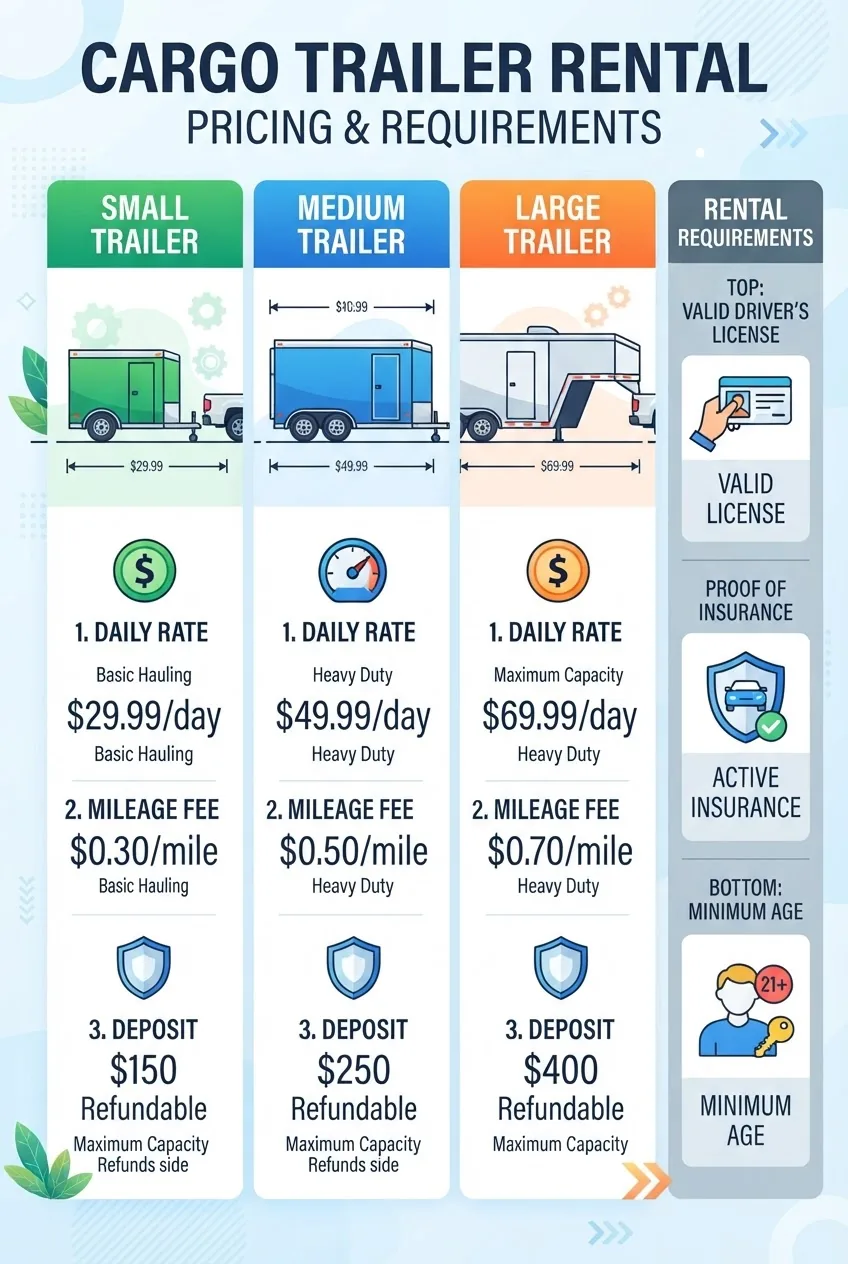
Pricing models you’ll see:
- Daily rate — base daily fee regardless of mileage (typical for local rentals).
- Weekly rate — package deal that reduces per-day cost for rentals 5–7+ days.
- Mileage fee — per-mile charge (e.g., $0.59–$1.20/mi) for one-way or long-distance use.
- Flat one-way fee — some companies charge a flat relocation fee instead of per-mile billing.
- Deposit and hold — security deposit held on card, refunded after inspection minus charges.
According to a 2024 industry report, average per-mile charges for one-way cargo trailer moves range from $0.80 to $1.10 per mile depending on trailer size and carrier policies.
| Trailer Type & Size | Typical Daily Rate | Typical Weekly Rate | Mileage Fee | Typical Deposit |
|---|---|---|---|---|
| Small Enclosed (5×8 to 6×10) | $25–$60 | $150–$350 | $0.59–$0.85/mi | $100–$200 |
| Medium Enclosed (6×12 to 7×16) | $45–$95 | $270–$575 | $0.75–$0.95/mi | $200–$400 |
| Large Moving Trailer (8.5×20) | $80–$160 | $480–$960 | $0.85–$1.20/mi | $300–$800 |
| Car Carrier (single vehicle) | $60–$140 | $360–$840 | $0.90–$1.25/mi | $500–$1,000 |
Typical fee examples:
- Weekend apartment move in a small enclosed trailer: 2-day rental $50/day = $100 plus 60 miles @ $0.75 = $45; deposit $150; estimated total $295.
- One-way sedan move on a car carrier 400 miles: daily $90 + mileage $0.95/mi = $380; plus deposit $600 hold; total due at pickup about $1,070 (deposit refundable after inspection).
Additional fees to watch for:
- Late return fines: often prorated daily + late pickup fee.
- Cleaning fees for heavily soiled trailers.
- Excess wear or damage charges based on per-item repair or replacement.
- Optional equipment rentals (ramps, tie-downs, moving dollies) — typically $8–$25/day each.
Compare rental quotes by checking daily vs weekly rates, per-mile charges, and how deposits are handled; for long-distance moves, compare flat one-way fees and negotiated mileage bundles. For a cost comparison against hiring movers, see best moving companies for long distance and the cheap mover options.
Transition: With pricing models clarified, the next section explains what most rental companies require before they hand over keys and a trailer.
Rental Requirements: What You Need to Rent a Cargo Trailer
Answer: To rent a cargo trailer you generally need a valid driver’s license, meet minimum age requirements (often 21–25), provide proof of insurance or buy the rental company’s coverage, supply a credit card for deposit, and demonstrate your tow vehicle meets hitch and payload specs.
Term: hitch class — a standardized rating (Class I–V) that indicates the tow hitch’s towing and tongue weight limits; your vehicle’s hitch class determines what trailer sizes it can safely tow.
- Driver’s license: Valid state-issued license in the renter’s name; some companies require a clean driving record for car carrier rentals.
- Age restrictions: Typical minimum is 21; many charge underage fees for drivers 21–24 or restrict certain trailers to 25+ drivers.
- Insurance proof: Show auto insurance that extends coverage to towed trailers, or purchase the rental company’s LDW (loss damage waiver) or trailer liability coverage.
- Payment & deposit: Major credit card in renter’s name for deposit hold; debit cards accepted by some companies with additional ID and holds.
- Tow vehicle specs: Towing capacity, hitch class, and wiring for lights; confirm your vehicle’s payload and hitch rating against the trailer’s GVWR (gross vehicle weight rating).
- Additional verification: For car carriers, companies may request vehicle registration and proof of ownership or a copy of the vehicle title.
Practical notes from experience:
- Inspect your tow vehicle beforehand and know the curb weight and towing capacity found in the owner’s manual or manufacturer website; overloading voids coverage and is unsafe.
- Bring the exact credit card used for booking to avoid pickup delays.
- If renting across state lines, check local rules — for example, some states have additional age or insurance requirements for towing. For regulatory guidance on towing and licensing, the federal resource is useful: U.S. Department of Transportation.
For renters comparing rental versus hiring movers, review full-service pricing and insurance alternatives in the ABF moving company cost guide, or explore affordable mover options and known service fees like those summarized in APT moving company costs.
Transition: If you meet these requirements, follow the step-by-step rental process below to book, pick up, load and return a trailer without disputes.
How to Rent a Trailer for Moving: Step-by-Step Process
Answer: Book a trailer by selecting type and size, confirm towing compatibility, reserve dates, review the rental agreement, inspect the trailer at pickup, secure cargo properly, and follow return and inspection procedures to clear the deposit hold.

This step-by-step checklist guides first-time renters through the full flow from planning to return. For situations where a DIY trailer rental is not ideal, compare hiring professionals using the moving companies near me rental guide.
- Step 1 — Measure and list what you need to move: Create an inventory, measure large pieces (length, width, height), and estimate total cubic feet to select trailer size. Include vehicle dimensions if using a car transport trailer.
- Step 2 — Check towing capability: Confirm your vehicle’s tow rating and hitch class; calculate tongue weight and trailer GVWR; consult your vehicle manual and the trailer spec sheet provided by the rental company.
- Step 3 — Get quotes and compare models: Compare daily vs weekly rates, mileage charges, deposit amounts, and included equipment. Ask about one-way availability and flat relocation fees for long-distance.
- Step 4 — Reserve and confirm terms: Reserve online or by phone, note cancellation windows, and confirm what insurance or LDW options are offered; keep the reservation number and pickup instructions handy.
- Step 5 — Arrival and pickup inspection: At pickup, walk through the trailer with staff using the inspection checklist; photograph any existing dents, scrapes, tire condition, lights and ramp function. Document odometer or hour-meter reading for mileage billing.
- Step 6 — Load safely and secure items: Use moving blankets, E-track straps, ratchet straps, and block heavy items over the axle for balance; distribute weight front-to-back evenly and secure all items to prevent shifting.
- Step 7 — Driving and towing practices: Drive defensively, allow extra stopping distance, use lower gears uphill and downhill as needed, and observe speed limits for trailers. Check lights at stops.
- Step 8 — Return inspection and deposit release: Return on time, clean the trailer, fill fuel or battery requirements if any, walk the inspector through the rental condition and present photos taken at pickup; request written damage findings to avoid surprise charges.
Inspection checklist (bring a phone and checklist): photo ID, payment card, reservation number, trailer walkaround photos (4 sides, interior, ramp, tires), odometer reading; keep copies of all paperwork and receipts until deposit is released.
Transition: If you need specialized trailer types for cars or appliance moves, the next section compares these options and when to pick them over a standard cargo trailer.
Specialized Rental Options: Moving Trailers and Car Transport Trailers
Answer: Specialized rentals—moving trailers and car transport trailers—offer features tailored to household moves or vehicle hauling (E-track, ramps, wheel straps) and typically have stricter insurance and towing requirements than generic cargo trailers.
Moving trailers are essentially enclosed cargo trailers tuned for residential moves with interior tie-down tracks, ramped rear doors, and sometimes built-in shelves for small items. Car transport trailers include dedicated wheel chocks, winches (for some models), and integrated ramps designed for loading low-clearance vehicles.
Compare moving trailers vs cargo trailers:
| Feature | Moving Trailer | Standard Cargo Trailer |
|---|---|---|
| Interior tie-downs | Standard (E-track) | Optional |
| Ramped entry | Usually | Often |
| Optimized for furniture | Yes | Varies |
| Special vehicle fixtures | No | No (see car carrier) |
When to choose a car transport trailer: when transporting an operable or inoperable vehicle that fits the trailer length and axle rating, or when you need zero-contact loading and secure wheel restraints. For appliance moves requiring careful handling, consult specialized handlers and consider services listed in the appliance moving service guide.
Specialized rental considerations:
- Insurance: car carriers often require additional liability limits and may reject renters without comprehensive auto coverage.
- Equipment: wheel straps, chocks and winches may be included or available as add-ons; confirm at booking.
- Deposit and age: expect larger holds and stricter age limits for car carriers.
For deeper guidance on moving-trailer-only policies and how they differ from cargo trailers, see the moving trailer rental guide.
Transition: After choosing the correct trailer, follow safe loading and towing practices to protect your load and avoid fines or damage.
Tips for Using Rental Trailers Safely and Efficiently
Answer: Load heavy items over or just forward of the trailer axle, secure everything with ratchet straps and E-track, check tire pressure and lights before driving, and practice towing techniques—these steps reduce sway, prevent damage, and protect you legally.
Hands-on loading tip (experience-based): think of trailer loading like packing a suitcase—place heavy items first and close to the trailer center and axle, fill gaps with smaller boxes, and use moving blankets to protect fragile pieces.
- Pre-trip vehicle and trailer check: Test lights, turn signals, brakes (if equipped), tire condition and inflation, hitch coupling, safety chains, and mirror adjustments.
- Weight distribution: Keep 60% of weight forward of the trailer axle, avoid stacking too high, and secure items to prevent load shift.
- Tie-downs and equipment: Use ratchet straps, cam straps rated for the load, E-track anchor points, wheel chocks for vehicles, and anti-sway bars if recommended.
- Safe driving: Reduce speed, increase following distance, avoid sudden maneuvers, and use lower gears on steep grades; practice turns and lane changes in a quiet area if inexperienced.
- Parking and apartment logistics: If you’re dealing with restricted parking or tight loading zones, check local rules and building policies first; for more advice on apartment-specific moves see apartment moving tips.
- Packing supplies: Use sturdy boxes, furniture pads, straps and plastic wrap. Find supply options here: where to buy moving boxes.
Maintenance check items to note during pickup and return: tire tread and pressure, spare tire and jack, hitch integrity, ramp function, door seals and interior flooring; photograph all issues and confirm staff notation to avoid disputed damage claims.
Transition: Beyond safe loading, you must understand insurance options, deposit handling and cancellation policies to minimize financial exposure—covered next.
Additional Considerations: Insurance, Deposits, and Cancellation Policies
Answer: Insurance options range from declining damage waivers (LDW) to liability add-ons; deposits are held as card authorizations and refunded after inspection; cancellation windows and fees vary—read the contract and consumer protections before paying.
Insurance overview:
- Personal auto policy: Some insurers cover towed trailers—confirm by calling your carrier and checking policy language; the Insurance Information Institute offers general guidelines: insurance industry guidance.
- Rental company coverage: LDW or damage waivers that limit renter liability for certain kinds of damage; these are optional but may be required for younger renters or car carriers.
- Third-party coverage: Purchase non-owner truck/trailer insurance or short-term policies from specialty providers when your auto policy excludes trailer use.
Deposits and hold procedures:
- Deposits are usually credit card holds that release within 5–14 business days after a clean return; debit card holds may take longer and sometimes require additional verification.
- Documented damage charges are itemized; renters should request copies of repair estimates or receipts for transparency.
Cancellation and refund policies:
- Most companies allow free cancellation up to 24–72 hours before pickup; later cancellations often incur one-day rental or administrative fees.
- For one-way reservations, relocation logistics may make refunds more restrictive; get cancellation terms in writing when booking across regions.
Consumer protection and dispute escalation: refer to government consumer agencies on rental contracts and cancellation rights; a useful general resource is the Federal Trade Commission: consumer protection guidance. For region-specific towing and vehicle rules, consult the Department of Transportation: DOT towing regulations.
According to a 2024 industry report, the most common deposit dispute stems from unrecorded pre-existing damage; avoid this by photographing the trailer thoroughly at pickup and having staff sign the condition form.
For professional mover insurance comparisons and when hiring movers might be preferable to renting, review Allied movers insurance overview.
Transition: Below are concise answers to frequent renter questions you’ll want at hand before booking or picking up a trailer.
Frequently Asked Questions About Cargo Trailer Rentals
Answer: The FAQ below provides short, specific answers to common questions about trailer types, costs, one-way options, insurance, damage handling and safe loading to support quick decision-making.
Transition: If you still need help after reading the FAQ, consider contacting local rental offices for quotes and availability or consult the linked mover and equipment guides earlier in this article.