
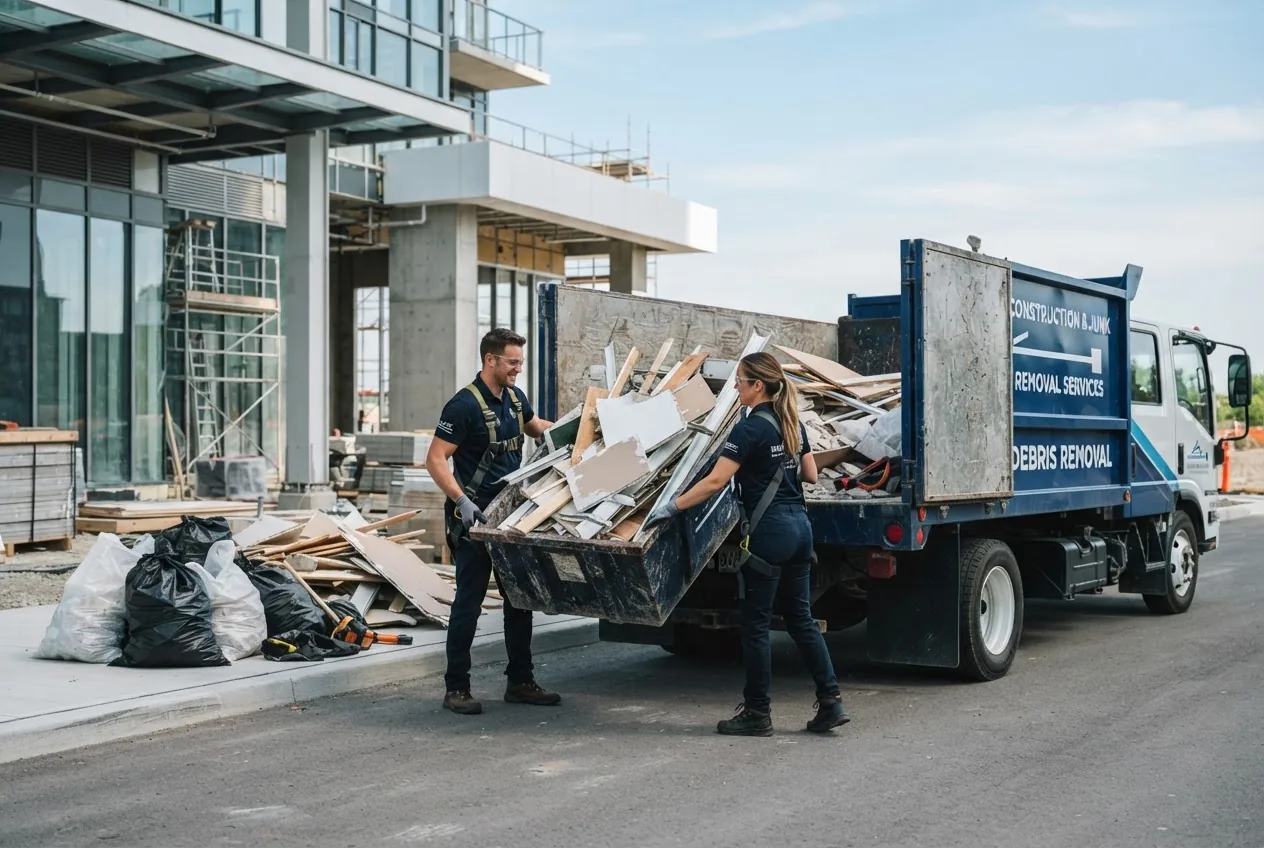
Debris removal companies provide specialized construction debris pickup, sorting, hauling and disposal services to manage building site waste safely and in compliance with regulations; they reduce project delays, minimize safety hazards, and handle recycling and hazardous waste streams so contractors can focus on construction work.
What Are Debris Removal Companies and Construction Services?
Answer: Debris removal companies and construction services are professional contractors that collect, sort, transport and dispose of construction-generated waste—ranging from wood and drywall to concrete and metals—using licensed equipment, trained crews, and regulatory-compliant disposal routes.
Term: Debris removal companies are businesses that specialize in hauling, sorting, and legally disposing of construction and demolition (C&D) waste from building sites.
Debris removal firms focus narrowly on construction site waste management rather than typical residential junk removal. Their crews are trained in site cleanup, on-site debris containment, and often provide temporary waste containers, roll-off dumpsters, and scheduled pickup for active job sites. They operate with professional debris haul vehicles, front-end loaders, skid steers, and certified trucks to meet commercial timelines.
These companies coordinate with haulers, recyclers and landfill facilities, and they manage permits for oversized loads or transfers to transfer stations. Hiring them prevents delays caused by piled materials, reduces safety incidents from loose debris, and ensures construction trash removal follows local and federal rules.
Transitioning to the types of material handled clarifies why specialist services differ from household junk removal and municipal pickup.
Types of Construction Debris and Why Proper Removal Is Critical
Answer: Construction debris includes inert materials like concrete and brick, recyclable metals, combustible wood scraps, gypsum-based drywall, roofing waste, soil/dirt, and hazardous items such as asbestos or lead-painted materials—each requires different handling to avoid safety risks, fines, and environmental harm.
Term: Drywall debris refers to scraps of gypsum wallboard (paper-faced gypsum panels) generated during framing, finishing, and demolition.
- Wood and timber scraps — Description: framing lumber, pallets, treated lumber, and OSB cutoffs. Risks: combustible piles increase fire risk; treated wood may contain chemicals requiring special disposal. Mitigation: segregate for reuse or chipping; untreated wood can often be recycled or used as biomass feedstock.
- Drywall and gypsum — Description: gypsum board pieces, joint compound residues. Risks: bulky, dusty material can increase worker respiratory exposure; landfill bans exist in some jurisdictions. Mitigation: collect clean drywall for recycling streams; control dust with wet methods during removal.
- Concrete, masonry and brick — Description: broken slabs, footings, block and pavers. Risks: heavy loads require mechanical handling; improper dumping can damage roads and cause erosion. Mitigation: crush and recycle as aggregate or transport to permitted inert waste facilities.
- Metals (steel, copper, aluminum) — Description: rebar, piping, flashing, wiring. Risks: value and theft risk if left unsecured; some metals must be separated for recycling. Mitigation: separate ferrous and non-ferrous metals; sell to scrap yards or arrange metal pickup.
- Insulation and roofing materials — Description: asphalt shingles, fiberglass batts, mineral wool. Risks: shingles often contain petroleum products and require designated disposal; certain insulation can contain hazardous fibers. Mitigation: shingles can be recycled into paving or disposed at permitted facilities; seal and bag loose insulation.
- Dirt and excavated soils — Description: excavated fill, topsoil, contaminated soils. Risks: contaminated soils may contain petroleum or heavy metals and require testing and special disposal. Mitigation: screen soils for contamination; use dirt and soil removal services near me for transport and remediation options.
- Hazardous construction waste — Description: asbestos-containing materials, lead-based paint chips, certain adhesives, solvents and caustic cleaners. Risks: serious health hazards, strict disposal rules, potential criminal penalties for improper handling. Mitigation: handled only by licensed hazardous waste removal contractors; follow testing and disposal protocols.
- Mixed C&D loads and incidental debris — Description: mixed pallets, packaging, salvageable materials. Risks: contaminated mixed loads complicate recycling and increase dump fees. Mitigation: pre-sorting and on-site staging minimizes disposal cost and improves diversion rates.
Improper disposal of construction waste can cause safety incidents on site, attract regulatory fines, contaminate land or waterways, and increase project costs. According to a 2024 industry report, projects that implement specialized debris handling reduce rework and disposal overcharges by up to 18% (industry report).
Next, we outline the specific services debris removal firms offer so you can match needs to capabilities.
Key Services Offered by Debris Removal Companies
Answer: Debris removal companies offer construction debris pickup, on-site sorting and staging, roll-off dumpster rentals, scheduled hauling and disposal, recycling coordination, hazardous material handling, emergency cleanup, and site final cleanup to meet construction schedules and compliance requirements.
Term: Construction debris pickup is the scheduled collection of construction-generated waste from a job site for transport to recycling centers, transfer stations, or landfills.
- Scheduled debris pickup — Regularly timed pickups (daily, weekly, or milestone-based) managed to fit project timelines; crews collect staged piles or containers.
- On-call or emergency cleanup — Rapid response for storm damage, accidental spills, or post-demolition clearing to reopen work areas.
- Roll-off and debris container rental — Providing and servicing roll-off dumpsters in various sizes, emptied on schedule or when full.
- Load-and-haul services — Crews load loose material into trucks for direct transport to recycling centers or permitted landfills; useful where roll-offs can’t be placed.
- Material sorting and diversion — On-site segregation of wood, metal, concrete and recyclables to reduce landfill volume and reclaim value.
- Hazardous material identification and disposal — Certified handling of asbestos, lead, contaminated soil and regulated liquids with manifests and chain-of-custody documentation.
- Documentation and compliance support — Provide manifests, weigh tickets, diversion reports and permit coordination required by municipalities or project owners.
- Site final cleanup and broom sweep — Fine cleanup after major phases to prepare for inspections or handover.

Practical examples of service packages:
- Small renovation package: One roll-off container (10–15 yd³), one pickup at 7–10 days, drywall and wood sorted on-site, single disposal invoice.
- Commercial demolition package: Multi-container staging, scheduled loader service, metal separation and scheduled metal pickup, hazardous materials subcontracted to certified abatement crews, detailed disposal reporting.
- Infrastructure/utility project: Daily load-and-haul, temporary material staging, traffic control and permited transports coordinated by the debris removal company.
Many companies also offer advisory services to reduce C&D waste, including material reuse programs and coordination with local recyclers or aggregate processors. Next, see the exact step-by-step process crews follow on a typical job site.
Process of Construction Debris Removal — Step by Step
Answer: A typical construction debris removal process follows six key steps: site assessment and scope, sorting and staging, container placement or loading, hauling, disposal/recycling processing, and final site cleanup with documentation for regulatory compliance.
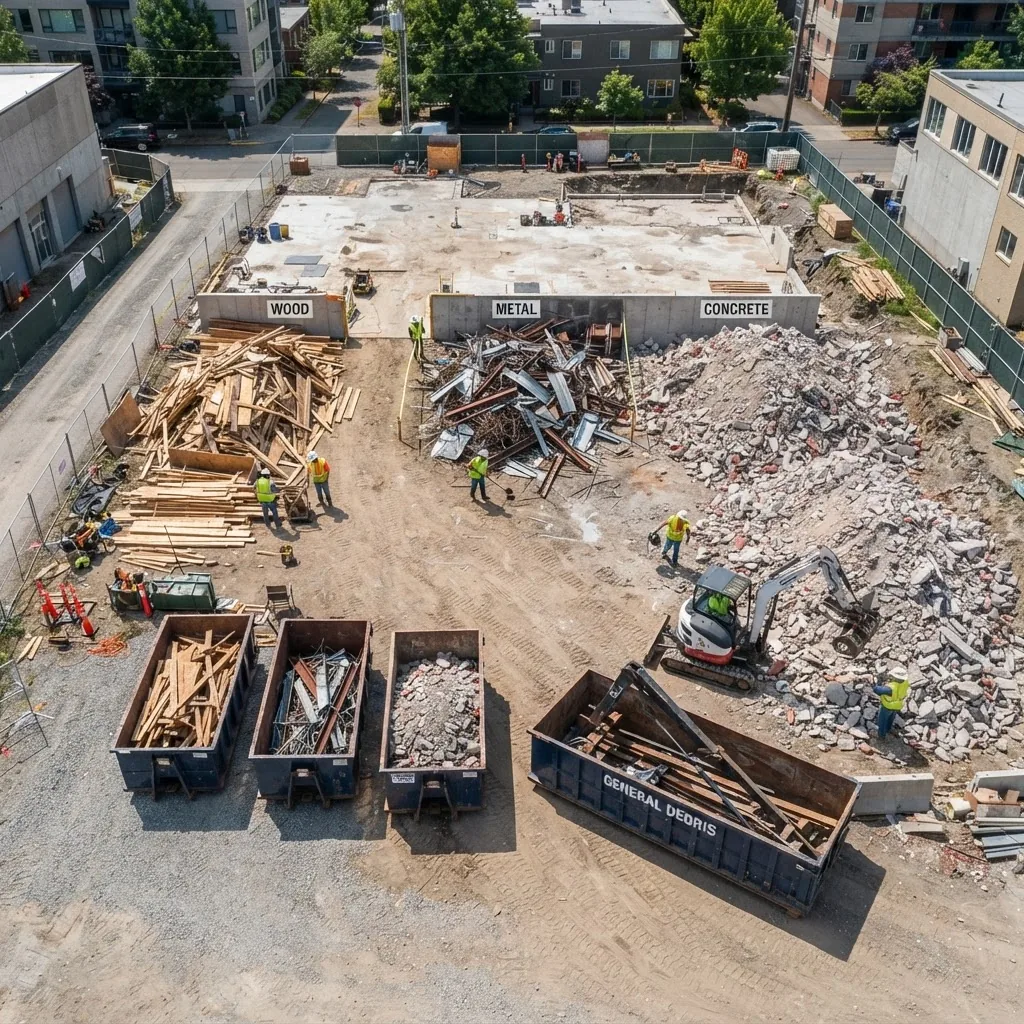
Term: Debris sorting is the process of separating materials on-site into categories (wood, metal, concrete, hazardous) to streamline recycling and disposal.
-
1. Site assessment and quoting
Crews or estimators visit the site to assess volume, debris types, access constraints, and regulatory needs; they provide a written scope and quote including estimated dump fees and recycling options.
Example: An estimator measures pile volumes and notes a need for a crane truck for oversized concrete—this becomes a line item in the estimate.
-
2. Permits and logistics
Obtain any required permits for street-side dumpster placement, oversized load movement, or traffic control; schedule times to avoid interfering with critical construction tasks.
-
3. Sorting and staging on-site
Workers separate materials into predefined piles or containers—wood, metal, drywall, concrete, hazardous materials—reducing cross-contamination and maximizing recycling.
Tools: skid steers, pallet forks, hand tools, tarps to prevent dust. Safety: crews follow OSHA standards for PPE and site cleanup.
-
4. Loading and container service
Based on the plan, crews load material into roll-off containers or trucks; heavier items may require mechanical loaders. Proper weight distribution prevents overloading trucks and minimizes road damage.
-
5. Transport and permitted disposal
Materials are hauled to appropriate destinations: recyclers for metals and concrete processors, licensed landfills for non-recyclable material, and hazardous waste facilities for regulated streams. Haulers provide manifests and weigh tickets.
-
6. Final cleanup and documentation
Crews perform a broom-sweep and provide disposal documentation, diversion percentages, and any manifests required by the owner or authorities to close out the project phase.
Case study (hypothetical): On a 30,000 ft² tenant improvement, a debris removal company scheduled three roll-offs staged for 14 days, coordinated a mid-project metal pickup, and provided diversion reporting that showed 42% material recycled—minimizing disposal costs and meeting the GC’s sustainability targets.
Next we examine how disposal choices interact with environmental laws and recycling options.
Construction Debris Disposal Methods and Environmental Compliance
Answer: Disposal methods include recycling, inert material processing, municipal landfill disposal, and regulated hazardous waste treatment; companies must follow EPA guidance, state landfill rules, and local ordinances to avoid penalties and protect the environment.
Term: Recycling construction waste means converting C&D materials (metals, concrete, wood, shingles) into reusable products or feedstocks rather than landfilling.
Key disposal pathways and compliance notes:
- Recycling streams: Metals (ferrous and non-ferrous) and concrete are high-value recycling streams; wood and asphalt shingles can be reclaimed for mulch or roadbase. According to a 2023 EPA summary, diversion of concrete and masonry has been identified as a leading method to reduce landfill volume (EPA guidance).
- Inert waste facilities: Clean concrete and brick may go to inert landfills or crushers; operators must confirm acceptance criteria and weight limits.
- Municipal landfills and transfer stations: Non-recyclable loads go to permitted landfills; haulers must account for local tonnage limits and tip fees. For local service distinctions see EPA construction and demolition guidance and relevant municipal rules.
- Hazardous waste facilities: Asbestos, lead waste, and regulated liquids require licensed hazardous waste transport and treatment; manifests and strict chain-of-custody are mandatory.
- Special programs and local cleanups: Some cities run programs that accept certain C&D materials during seasonal events; check local cleanup options for construction debris for community-driven diversion programs.
Regulatory references and resources:
- EPA guidance on C&D material management — describes best practices for diversion and material-specific guidance.
- OSHA standards — outline worker safety during cleanup and hazardous material handling.
- Local/state government waste information — local permitting and disposal rules vary; check state waste departments for permit requirements and landfill restrictions.
city garbage pickup service details
local cleanup options for construction debris
commercial recycling services and waste disposal cost
public dumping requirements and local dumps for trash
landfill overview and waste disposal requirements
Practical compliance tip: Always request facility acceptance letters and weigh tickets from your debris removal company. According to a 2024 industry report, projects that required destination documentation reduced regulatory audit findings by 30% (industry report).
Next: a detailed comparison of doing debris removal yourself versus hiring professionals.
Comparing DIY Debris Removal vs Hiring Debris Removal Experts
Answer: DIY debris removal saves labor costs on small projects but increases safety risk, time, and potential for regulatory mistakes; hiring experts costs more upfront but offers equipment, compliance, speed, and often lower total cost when accounting for disposal fees and fines.
Term: Dumpster rental is the temporary lease of a roll-off container placed on-site for storing construction debris until collection and transport by a waste hauler.
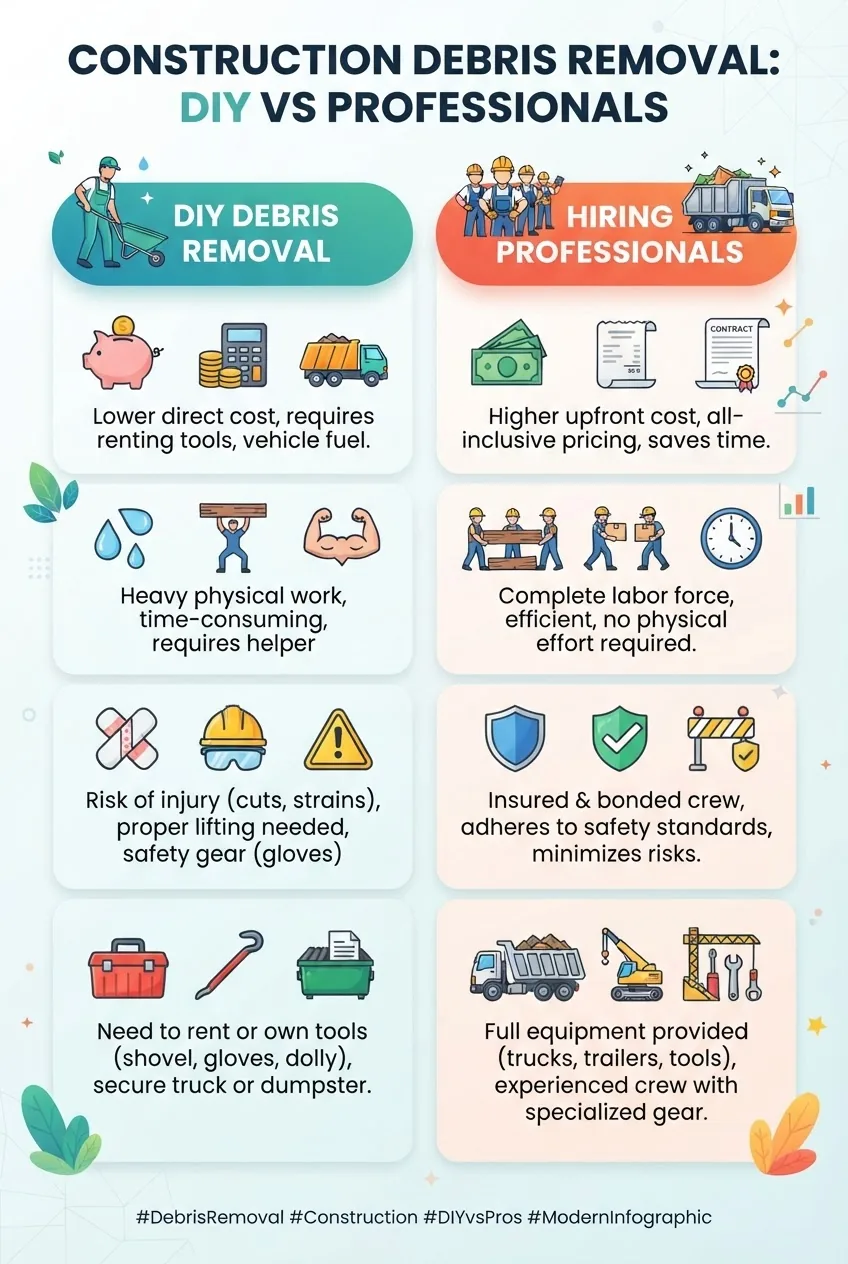
| Factor | DIY Debris Removal | Hiring Experts |
|---|---|---|
| Cost | Lower upfront labor cost, potential hidden dump fees and trailer rental. | Higher quote but includes labor, equipment, and handling; fewer surprises. |
| Time | Slower; ties up staff and can delay project phases. | Faster turnaround; scheduled hauls and experienced crews. |
| Safety | Higher risk without PPE and training; improper handling of hazardous items. | Lower risk; trained crews follow OSHA standards and have proper PPE. |
| Equipment | May require rented dumpsters, trailers, or loaders; logistical burden on GC. | Includes trucks, loaders, roll-offs, and material handlers as needed. |
| Compliance | Risk of misclassification and fines for improper disposal. | Documentation and manifests provided; lower regulatory risk. |
Relevant internal resources:
commercial dumpster rental guide and requirements
dumpster rental cost and local services
Analysis: DIY suits small cleanouts where materials are non-hazardous and access is simple; large demolitions or projects with mixed hazardous streams favor professional debris removal firms. Consider total cost: labor hours, vehicle rental, dump fees, permits, possible fines, and schedule impact. According to a 2024 industry report, projects using professional debris removal report 22% faster site turnover compared with owner-managed hauling (industry report).
Next we guide you through choosing the right company near you.
How to Choose the Right Debris Removal Company Near You
Answer: Choose a debris removal company by confirming licenses and insurance, reviewing references and recent project photos, verifying disposal documentation, comparing pricing transparency, and ensuring service area coverage and equipment matches project needs.
Term: Licensed debris haulers are contractors registered with local authorities to transport waste and often required to use permitted disposal facilities.
- Confirm licensing, insurance, and bonds; ask for proof of general liability and commercial auto insurance.
- Request three references or project photos that demonstrate recent work similar in scale and debris types.
- Verify disposal routes and ask for sample manifests and weigh tickets as proof of legal disposal.
- Compare quotes that separate labor, disposal, recycling credits, permit fees, and potential add-ons to avoid hidden costs.
- Check local reviews and Better Business Bureau listings for unresolved complaints or safety violations.
- Ensure the company provides trained crews with OSHA-compliant safety practices and PPE for hazardous handling.
- Confirm availability and scheduling flexibility to match project milestones and emergency response times.
- Ask about diversion programs and recycling partners if sustainability is a project objective.
For residential alternatives and to compare general junk pickup options, see the pillar resource: junk removal services guide and residential pickup options
Transition: once you have shortlisted vendors, price clarity is the next critical step.
Typical Costs and Pricing Models for Construction Debris Removal Services
Answer: Pricing models include volume-based (cubic yard), weight-based (tonnage), flat-fee per container, or hourly rates; costs vary with material type, required sorting, travel distance, and dump fees—expect additional charges for hazardous materials and special handling.
Term: Dump fees are charges levied by landfills or transfer stations based on weight, volume, or material type for accepting waste.
Common pricing structures:
- Volume-based pricing: Charged per cubic yard of container capacity (e.g., $X per yd³) — common for roll-offs.
- Weight-based pricing: Charged per ton with weigh tickets at the landfill; common for mixed heavy loads like concrete.
- Flat-fee per container: Single-price for delivery, pickup and disposal; convenient for smaller projects.
- Hourly labor rates: For crews performing loading and special handling; often combined with truck charges.
- Itemized hazardous disposal: Separate line items for asbestos abatement, lead waste disposal, and contaminated soil handling.
| Service | Typical Price Range (example) | Notes |
|---|---|---|
| 10–15 yd³ roll-off | $350–$700 per delivery | Includes delivery/pickup; disposal fee extra by ton or flat. |
| Load-and-haul truck (per hour) | $120–$250/hr (crew + truck) | Good for tight access where roll-offs not feasible. |
| Concrete disposal (weight) | $15–$45/ton | Crushing and recycling may lower net cost. |
| Hazardous material handling | Varies widely; $500–$5,000+ | Requires testing, manifests, and certified contractors. |
commercial junk removal cost overview
Cost-saving tips:
- Separate recyclables to capture credits for metals and concrete.
- Request a detailed breakdown of disposal and permit costs to avoid surprises.
- Schedule pickups to align with project milestones to reduce container rental days.
Next, common challenges contractors face and how to avoid them.
Common Challenges in Construction Debris Removal and How to Avoid Them
Answer: Common challenges include debris contamination, site access constraints, permit issues, hazardous materials misclassification, and unexpected dump fees; avoid them through pre-job assessments, clear contracts, permits, and by hiring licensed debris removal companies with compliance documentation.
Term: Debris contamination occurs when recyclable or inert materials are mixed with hazardous or prohibited waste, increasing disposal cost and reducing recycling eligibility.
Top challenges and mitigation:
- Improper sorting: Mixed loads increase tipping fees and reduce recycling — mitigation: clearly labeled staging zones and crew training.
- Site access and traffic: Narrow streets or weight limits complicate roll-off placement — mitigation: plan for off-hours delivery, temporary traffic control, or load-and-haul options.
- Permit requirements: Street permits and special hauling permits may be needed — mitigation: verify local rules early; the garbage pickup service requirements in Birmingham illustrate how local rules affect pickup logistics in some municipalities.
- Hazardous materials misclassification: Incorrectly labeling asbestos or lead wastes can result in fines — mitigation: use certified testing and licensed hazardous waste removal services.
- Unexpected landfill rejections: Some facilities reject loads with contaminants — mitigation: use pre-disposal inspections and get facility acceptance in writing.
garbage pickup service requirements in Birmingham
Safety reminder: follow OSHA standards for site cleanup and worker protection; failure to follow safety protocols can result in injury and costly shutdowns. Practical avoidance strategy: include disposal planning in contract bid packages and require documentation from your debris removal partner.
Frequently Asked Questions About Debris Removal Companies
Answer: The FAQ below answers common operational, cost, scheduling and compliance questions about debris removal companies so contractors and property owners can assess services quickly.
What services do debris removal companies typically offer for construction sites?
Debris removal companies offer scheduled pickups, roll-off and container rentals, load-and-haul services, material sorting and recycling, hazardous waste abatement coordination, emergency cleanup, and final broom-sweep and disposal documentation.
How is construction debris removal different from regular junk removal?
Construction debris removal handles large-volume, heavy, and mixed C&D materials with mechanical equipment, regulatory manifests, permits and recycling coordination—unlike residential junk pickup which focuses on household items and curbside service.
How do I find reliable debris removal services near me?
Search licensed local haulers, check insurance, request references and weigh tickets, compare itemized quotes, and choose vendors experienced with your debris types and local permitting requirements.
What is the process for construction debris pickup and disposal?
The process: site assessment and permit check, on-site sorting/staging, container placement or loading, hauling to appropriate facilities, disposal or recycling, and delivery of manifests and diversion reports.
How much does construction debris removal typically cost?
Costs vary by volume, weight, material type and location; expect roll-off delivery fees ($350–$700), concrete by ton ($15–$45/ton), and higher charges for hazardous wastes; always get itemized estimates.
Can I remove construction debris myself or should I hire experts?
DIY is feasible for small, non-hazardous jobs but risks safety, schedule delays, and misdisposal; professionals reduce risk, provide equipment and compliance documentation, and often lower total project cost.
What types of construction debris require special disposal methods?
Asbestos, lead-based paint, contaminated soils, certain adhesives and solvents require licensed hazardous waste handling and disposal at permitted facilities with manifests and testing documentation.
What environmental regulations affect construction debris removal companies?
EPA guidance on C&D management, state landfill and hazardous waste rules, and local ordinances (permits, tipping restrictions) dictate handling, manifests, and recycling requirements; firms must comply with these regulations.
Transition: read on for a concise wrap-up and recommended next steps.
Conclusion: Debris removal companies deliver specialized construction debris pickup, sorting, hauling and regulatory-compliant disposal that save time, reduce safety risks and often lower total project costs when compared to DIY efforts. For most projects, hire a licensed debris removal expert who provides documentation, certified hazardous handling and recycling coordination. To evaluate options, request itemized quotes, proof of insurance and weigh tickets, and verify references. Ready to compare providers? Start with detailed scope definitions and check vendor compliance and recycling programs before signing a contract.
Call to action: Request detailed estimates from at least two licensed debris removal companies, ask for destination documentation, and compare total lifecycle costs (labor, equipment, permits, dump fees) before awarding your next contract.