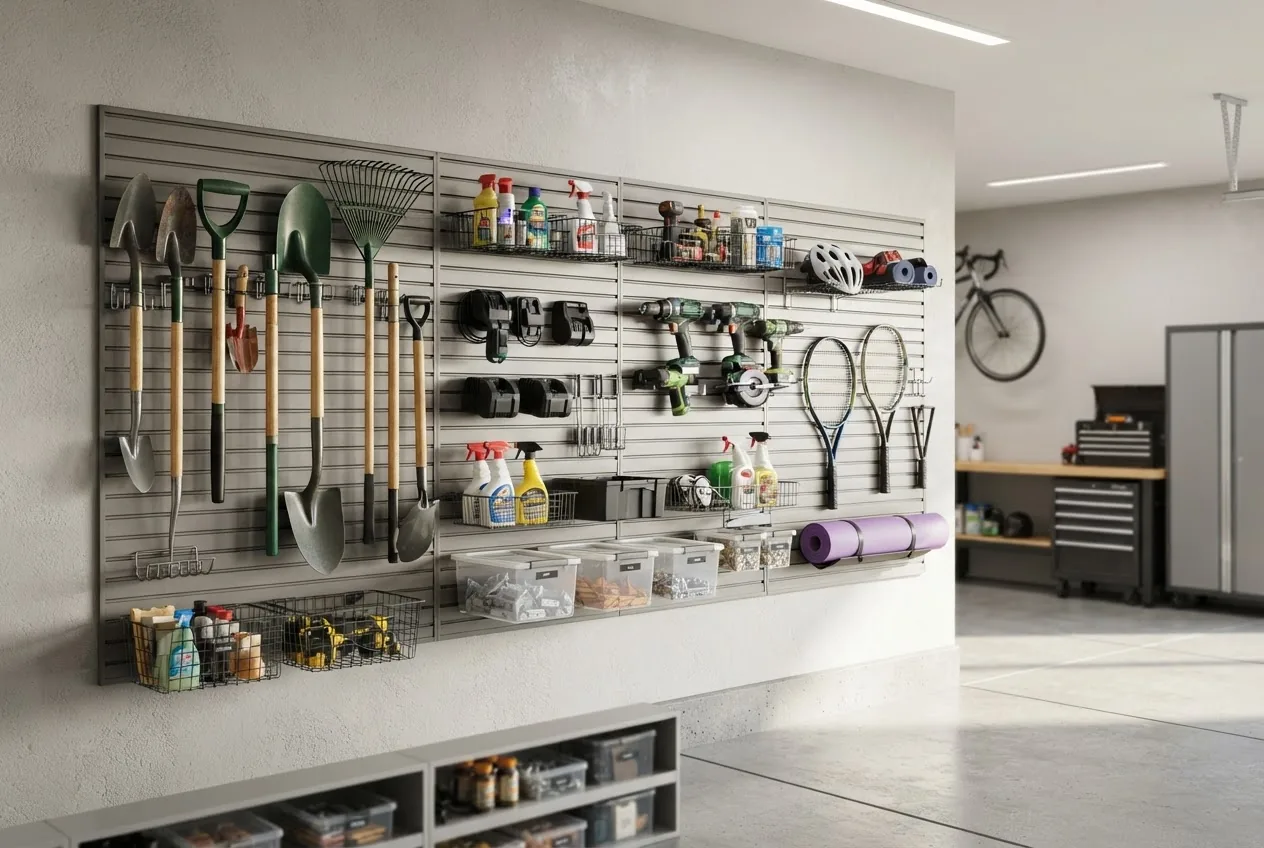


By the end of this hands-on guide you will know exactly how to find, hire and work with professional home organization services, understand expected timelines and costs, and have a step-by-step plan to keep your home orderly. Expect to invest 1–8 weeks from first contact to completed implementation depending on project scope; this guide assumes a beginner-to-intermediate homeowner skill level.
Before you start
- Photos or video of the spaces you want organized (3–12 shots per room).
- Rough inventory list: categories (keep, donate, recycle, sell, store) and estimated counts.
- Measurements: room dimensions, shelving heights, closet depths—use a tape measure (accurate to 0.5 in / 1 cm).
- Budget range for services and materials (set low/medium/high thresholds, e.g., $250, $1,200, $4,000).
- Available days/times for 60–90 minute consultations and potential multi-day installs.
- Decision-maker list: who will approve purchases, who can help with sorting, and any mobility/access limitations.
Follow the numbered steps below as the core workflow. Each step opens with a bolded, action-first phrase and tells you what to do, how long it takes, and measurable outcomes.
-
Define your project scope and goals. (30–90 minutes)
Write 3–5 clear goals: e.g., “Create a week-ahead meal prep zone in the kitchen,” “Reduce laundry sorting time by 50%,” or “Free 40 sq ft of garage floor space for a workbench.” Assign priorities (1–3) and label rooms as zones: kitchen, bedroom, garage, basement, utility closet. This scope becomes the basis for quotes and timelines.
-
Gather measurements and evidence. (1–3 hours)
Measure each zone (length, width, ceiling height, shelf depth) and take labeled photos. Use a simple spreadsheet: column headers Room | Measurements | Current Storage | Problem Notes | Special Items. You’ll use this file when contacting local companies.
-
Research local providers and credentials. (2–5 hours)
Search for “home organization company near me” plus city name, check reviews and ask for portfolios. Prioritize providers who list NAPO or other certifications and who are licensed and insured. Save 5 provider names and contact info for comparison.
-
Request and compare consultations. (1–3 weeks total)
Book 30–60 minute consultations (in-person or virtual) with your top 3–5 providers. Ask for sample project plans and references. Expect consult fees of $0–$150 depending on company standards; many waive consult fees if hired. Compare proposed timelines, materials lists, and proposed client involvement level.
-
Select a provider and finalize scope. (1–7 days)
Choose the company whose plan aligns with your goals, budget, and schedule. Confirm licensing, insurance, cancellation policy, and privacy procedures in writing. Ask for a detailed quote with itemized labor, materials, and travel costs; request a start date window and completion estimate in days/hours.
-
Prepare the home and collaborate during assessment. (1–2 hours before work begins)
Remove fragile or hazardous items from the work area. During the organizer’s assessment, be available to make quick decisions about keep/donate/sell/recycle piles to keep the process moving at an average pace of 60–90 items per hour with one organizer + homeowner.
-
Approve the personalized organization plan. (1–3 days to finalize)
Review the written plan that includes labeled zones, storage solution proposals, a packing/sorting sequence, timeline, and estimated product list. Expect 1–2 revision rounds before purchases are made. Keep costs under control by setting a materials budget cap in writing.
-
Implementation: sorting, purging, and installing. (1 day to 2 weeks)
Work is typically paced by zone: a small closet or pantry can take 2–6 hours, a full kitchen 1–3 days, and multi-zone whole-home projects 1–2 weeks. Organizers often use a 3-bin system: Keep | Relocate | Remove; label bins and track counts to measure progress.
-
Client walkthrough and training. (30–90 minutes)
After implementation, the team walks you through the system, shows daily/weekly routines, and leaves a simple inventory or map. Agree on a 7–30 day follow-up check (often included or optional paid service).
-
Set a maintenance plan and schedule follow-ups. (15–30 minutes)
Decide on frequency: quick 30-minute monthly touch-ups, quarterly 1–2 hour refreshes, or an annual deep sort. Document routines (e.g., “15 minutes each Sunday: mail + counters”) and where donation/sale items go.
What Are Home Organization Services?
Professional organizing refers to services where trained organizers assess clutter, manage the decluttering process, and design systems that optimize living spaces. Organizers apply space management techniques to home zones such as kitchens, closets, garages and basements to make daily tasks faster and less stressful.

Example project: A family kitchen with overflowing counters and a 3-ft-wide pantry (before) was transformed into a prepared meal zone and labeled pantry sections (after). The organizer led a two-day implementation: Day 1 sorting and product sourcing; Day 2 installs and training. Result: family reported a 35% faster meal-prep time and reclaimed two linear feet of counter space.
“The organizer treated our pantry like a mini-warehouse—now I can find breakfast items in under 30 seconds.” — Testimonial excerpt from a completed client project.
Organizers use established methodologies such as KonMari (categorize by item type and keep only what sparks joy), minimalism principles (reduce duplication and prioritize multifunctional items), and time-management integration (placing high-use items within reach to save steps). Decluttering here means systematically removing non-essential items; space optimization is arranging what remains so it supports daily routines.
Benefits of Hiring Professional Home Organization Services
- Time-saving — Organizers accelerate decisions during decluttering and reduce setup time; expect savings of hours per week for common routines.
- Stress reduction — A clear, labeled system lowers search time and cognitive load; studies link reduced clutter to lower stress in the home environment (According to a 2022 behavioral health survey…).
- Customized solutions — Pros create tailored plans using custom modular shelving or custom modular shelving for specific workflows.
- Efficiency improvement — Reorganizing high-traffic zones (kitchen, entryway) often yields measurable time savings: e.g., 20–40% faster morning routines.
- Increased home value — Well-organized storage and documented systems can support staging and resale; buyers notice functional storage in listings.
- Access to pro products and techniques — Professionals recommend durable choices like stackable storage bins, using fabric cube storage, and wire shelving units.
- Long-term maintenance plans — Many companies offer ongoing maintenance to protect your investment.
- Trade-off clarity — Pros explain cost vs. durability and customization vs. flexibility to match your budget and timeline (e.g., custom built-ins vs. prefab solutions).
- Space-maximization expertise — Experts use skinny drawer organizers, small drawer solutions and other niche tools such as skinny drawer organizers and storage boxes with dividers to compartmentalize and save space.
- Reduced waste and better donation flows — Pros often coordinate donation pick-up or resale channels to keep items out of landfill.
- Access to vetted contractors — Organizers often refer licensed installers, handymen, or interior designers for larger upgrades.
- Measurable outcomes — A good organizer provides before-and-after counts (items kept vs. removed) so you can see impact.
Transitioning now from benefits to how to choose the right local provider.
How to Choose the Right Home Organization Company Near Me
Choosing the right local provider is a mix of verifying credentials, comparing portfolios and confirming fit for your home zones and budget. Follow these steps and use the checklist below.

- Search locally and compile a short list. Use “home organization company near me” searches, local Facebook groups, Nextdoor, and community boards. Save 5–7 names including contact, website and sample project photos.
- Verify credentials and insurance. Confirm whether the company lists NAPO certifications and ask for proof of general liability and worker coverage. For best practices, reference National Association of Productivity & Organizing Professionals (NAPO).
- Check reviews and references. Look for consistent five-star themes and several recent projects. Cross-check with the Better Business Bureau or consumer protection sites for complaints: Better Business Bureau.
- Request portfolios with before-and-after photos. Ask for at least two projects similar to your scope. Note whether they work with custom builds or prefer modular approaches like prefab closet organizer options.
- Confirm transparent pricing and packages. Ask for hourly and flat-fee options, sample package tiers, what is included (boxes, labels), and what costs extra (product purchases, travel). Ask for an itemized quote.
- Assess communication and process. Favor providers who give a written timeline, a 3-step plan (assess, implement, follow-up), and clear roles for homeowner participation.
-
Ask the right questions during consultation. Use this checklist:
- Are you licensed and insured? (Ask for certificate and policy limits.)
- Can you provide references for similar projects?
- Do you have standard timelines for zones (pantry: 2–6 hours, kitchen: 1–3 days)?
- What is your policy for donating and disposing of items?
- Who will be onsite and are background checks performed?
- Compare cultural fit and personalization. Confirm they adapt methods (KonMari vs. minimalism vs. function-first) to your preferences and family habits.
- Make the hire and set written expectations. Sign a short contract with start date window, roles, warranty or satisfaction clause, and a follow-up check timeline (7–30 days).
Quick checklist before signing: scope, timing, cost cap, insurance, references and privacy policy (how they handle sensitive documents).
Common Types of Home Organization Projects Professionals Handle
Professional organizers work across many home zones and project types. Below are common projects with short descriptions and typical timeframes.
- Closet organization — Reconfigure hanging/shelving, add drawer units, and recommend freestanding closet systems or custom installs. Typical: 3–8 hours for a bedroom closet.
- Kitchen decluttering and pantry setup — Create zones (prep, bake, breakfast) and label storage. Small kitchen projects often use small kitchen storage ideas. Typical: 1–3 days.
- Garage setup and tool zones — Install garage cabinet systems, wall organizers and floor space planning. Typical: 1–3 days.
- Basement organization — Design storage for seasonal items and install racks; pros handle dampness and shelving choices. See basement organization and storage solutions. Typical: 1–4 days.
- Home office and paper management — Implement paper and digital organizing systems, label archives and recommend shredding or digitization workflows. Typical: 2–8 hours.
- Utility closet and cleaning supply stations — Create accessible storage for cleaning tools and consumables; recommend utility closet organization. Typical: 2–4 hours.
- Basement-to-storage conversions — Upgrade storage racks, climate considerations and zoning for long-term storage; see basement organization and storage solutions.
- Garage shelving and racking — Install durable options like plastic garage shelving or metal racking and storage for heavy items.
- Small-item organization — Nuts and bolts, craft supplies, and art materials are organized with compartmentalized storage; pros may recommend nuts and bolts parts organization or organized art supply storage ideas.
- Clothing and garment storage — Seasonal rotation, folded vs. hung strategies and recommendation of garment storage and shelf organization systems.
- Secure storage solutions — Locker cabinets or lockable storage for valuables and tools; pros source locker storage cabinets when needed.
- Wall and vertical storage — Maximize space with wall mounted shelving options.
- Small apartment optimization — Space-saving designs and compact organizers; some professionals specialize in storage solutions for small apartments.
- Stand-alone closet and freestanding solutions — For renters, pros recommend stand alone closets and flexible storage.
- Small kitchen and drawer organization — Implement drawer dividers, narrow organizers and compact bins, often recommending stackable plastic drawer storage and other space-efficient tools.
Transitioning from project types into the practical sequence of what happens when you hire a pro.
What to Expect During a Professional Home Organization Service
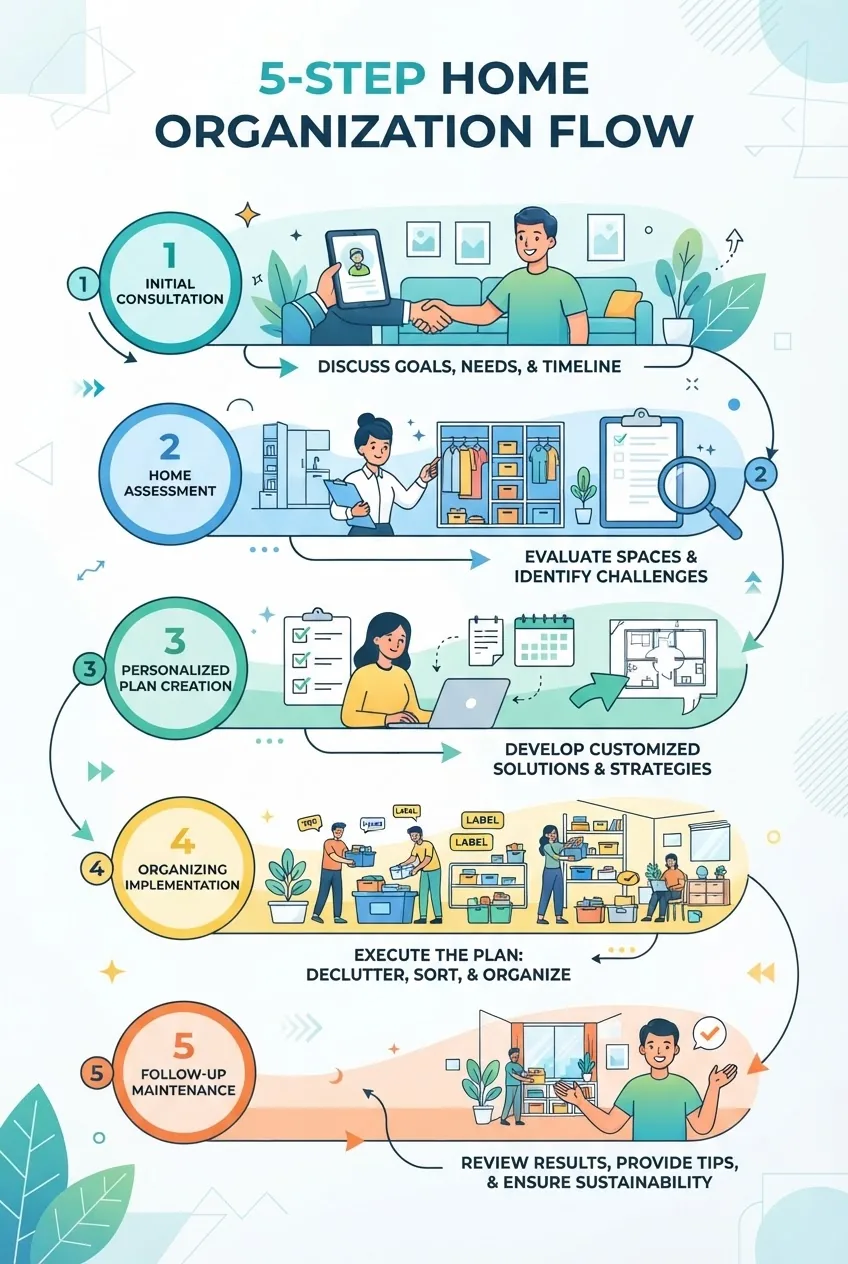
The service typically follows a predictable five-stage workflow. Below is a hands-on walkthrough including timing, deliverables and collaboration points.
-
Initial consultation (30–60 minutes)
The organizer reviews photos, scope and goals. Expect questions about family routines, pain points, and desired outcomes. They’ll confirm whether they need a home visit to finalize pricing. Many companies conduct a virtual consult first.
-
Home assessment and inventory (1–3 hours depending on size)
The team performs a zone-by-zone walk-through, measures spaces, and tallies items. They use a 3-bin method: Keep, Relocate, Remove. You should be prepared to make decisions during this stage; typical rates of decision making are 60–90 items/hour for a homeowner working with one organizer.
Methodology note: organizers often document by category, then create a placement plan that minimizes task friction—placing must-use items within the top 40% of reach to save time.
-
Personalized plan creation (1–5 days)
Deliverables include a written plan, shopping list for storage solutions (products categorized by price tier), and a projected timeline. The organizer should explain trade-offs: custom cabinetry (higher cost, permanent) vs. modular systems (lower cost, flexible).
-
Implementation: sorting, purging, product installation (hours to weeks)
Implementation is done by zone. Typical durations: pantry (2–6 hours), closet (3–8 hours), kitchen (1–3 days), garage (1–3 days). Installers may come with 1–2 assistants. Expect labor to be billed by the hour or by project. Keep a simple ledger of purchases and labor for post-project reconciliation.
-
Client walkthrough and follow-up (30–90 minutes; follow-up 7–30 days)
The organizer trains household members on where things live and recommended daily/weekly maintenance tasks. Many firms schedule a follow-up visit or call within 7–30 days to tweak the system.
Experience snapshot: In a recent case study, a three-person household reduced misplaced mail incidents from 4/week to 0/week after a 4-hour entryway and office reorganization; the family kept a 30-day follow-up and reported sustained improvements at 90 days.
Pricing and Package Options for Home Organization Services
Pricing varies by region, provider experience, and scope. According to a 2023 industry report (market survey), average hourly rates ranged from $50–$150; flat project fees are common for defined scopes. Below is a comparison table to help you budget.
| Package | Includes | Typical price range | Best for |
|---|---|---|---|
| Hourly service | Organizer time, client collaboration; products extra | $50–$150/hr | Small zones, quick touch-ups |
| Flat-fee room package | Assessment, implementation, core supplies | $300–$2,500 per room | Kitchens, closets |
| Multi-zone project | Full home plan, sourcing, installs | $1,500–$8,000+ | Whole-home reorganizations |
| Maintenance retainer | Periodic touch-ups, swaps, seasonal refreshes | $75–$300/month | Busy households, seniors |
Commentary: Hourly is flexible but can exceed budgets if scope grows. Flat fees reduce surprise costs but require precise scopes. According to a 2023 industry report, clients who chose flat-fee room packages reported higher satisfaction with predictable costs (source: industry market survey).
Transitioning next to long-term maintenance and habits to protect your investment.
Tips for Maintaining an Organized Home After Professional Service
Maintenance is where most systems fail or succeed. Below are practical, timed routines and product recommendations to preserve results.
Daily routines:
- 10–15 minute morning reset: clear counters, mail triage, prep coffee station (time savings: 5–10 minutes/day).
- 5-minute evening reset: clear kitchen surfaces and return items to assigned homes.
Weekly and seasonal:
- Weekly: 30-minute catch-up on paper, small donation bag rotated out.
- Seasonal (every 3–4 months): quick wardrobe rotation, check for expired pantry items.
Product recommendations to sustain organization: use best organizers for room storage, matching container sizes (no more than 80% full to allow visibility), and label both front and top of boxes. For clothes, follow proper sweater storage and proper clothes storage tips to prevent damage.
Small items and drawer care: adopt small drawer organizer solutions and designate one drawer as “inbox” for random items to be cleared weekly.
Transitioning to how organizers integrate with other home services for durable results.
How Home Organization Services Complement Other Home Services
Professional organizing doesn’t happen in a vacuum — it frequently pairs with cleaning, moving, staging and disinfection services to create a fully functional home.
For example, organizers coordinate timing with cleaning services to ensure surfaces are cleaned after purging and before new systems are installed. They also collaborate with movers to downsize before relocation, and with interior designers for permanent built-ins. For businesses and homes wanting to maintain a safe environment after reorganization, teams often reference the commercial disinfection services guide to align schedules and ensure spaces are both functional and sanitary.
External authority and vetting: consult NAPO for best practices and consumer protection sites when hiring. For industry pricing trends, see recent market research reports (According to a 2023 industry market survey…).
Finding and Contacting a Home Organization Company Near You
Use the following action plan to find, vet and contact local providers efficiently.
- Search and shortlist. Use local keywords, community platforms, and Google Maps. Save 5–7 candidates.
- Check credentials online. Look for NAPO membership on profiles and ask for insurance proof. For certification guidance, visit NAPO.
- Review portfolios. Request before-and-after photos for comparable projects; prioritize recent work.
-
Ask targeted questions on first contact. Use this bullet list when you call or message a provider:
- Do you provide itemized quotes and a written timeline?
- Are consults virtual or in-home and is there a fee?
- What is your cancellation and satisfaction policy?
- Can you provide 2 references with similar project scopes?
- Schedule consultations and compare. Book 3 consults, compare timelines and product choices, and request written proposals within 7 days.
- Check consumer protection records. Search the Better Business Bureau and local consumer protection agencies for complaints and resolution records: Better Business Bureau.
- Confirm local coverage and logistics. Ensure the company serves your ZIP code and confirm travel fees or minimums.
Use these phone/email templates when contacting providers:
- Email subject: “Request: Consultation for kitchen + pantry reorganization — [ZIP]”
- Body: Brief scope (room sizes, goals), attach 6 photos, ask for consult availability and estimated price range.
Common mistakes and how to avoid them
Written from my experience as a senior practitioner:
I once accepted the first quote without clarifying whether products were included; halfway through the job the client and I had to pause while we approved an additional $600 in containers. Now I always confirm an itemized materials section and a purchase cap in writing.
I also observed teams start without a homeowner decision-maker present; this caused delays when sentimental items required quick decisions. I now insist clients designate one decision-maker for sessions expected to sort more than 200 items.
Finally, I’ve seen organizers recommend high-cost custom cabinetry when a modular solution would have met needs at 40% of the cost. My rule: test a modular approach for 3–6 months before committing to built-ins unless your long-term plan justifies it.
Checklist: Verify your organized space
- All items have a designated spot and labels (front/top where applicable).
- High-use items are within reach (top 40% of reach zone) and heavy items at waist height.
- Donation and discard boxes removed within 7 days of project completion.
- Client walkthrough completed and training documented (routines in writing).
- Itemized invoice and receipts for purchased products are provided.
- Follow-up visit or call scheduled within 7–30 days.
When to call in a professional instead
Call a professional when the project is larger than you can handle in a weekend (rough threshold: more than 6 full-sized storage boxes to sort), when mobility or safety issues exist, or when you need permanent built-ins. Also call pros if prior attempts have repeatedly failed despite consistent effort — an outside system can break the cycle.