Basement cleaning services near me bring professional junk removal, deep cleaning, mold mitigation and debris hauling to basements and cellars; costs vary by size, contamination and pricing model, with clear booking steps to compare hourly, flat-fee and volume-based estimates before you hire. Book by requesting on-site quotes.
What Are Basement Cleaning Services?
Answer: Basement cleaning services are specialized residential services that remove debris, junk and contaminants, perform deep cleaning of concrete and surfaces, and prepare basements or cellars for storage or renovation.
Term: Basement clean up — targeted removal of accumulated items, trash and debris from a basement space.
Basement cleaning covers a spectrum of work focused on lower-level spaces that typically accumulate bulky items, water-damaged materials, dust and possible biological growth. Providers often combine light demolition (removing non-structural debris), junk removal (haul-away of furniture and refuse), and cleaning tasks tailored to concrete, cinderblock and unfinished surfaces.
Services differ from general house cleaning because basements frequently need heavy hauling, containment for contaminants, and equipment such as wet/dry vacuums, dehumidifiers and HEPA-filter vacuums. Providers trained in cellar cleaning and basement clean up understand access challenges (stair-only removal), moisture control and local disposal rules.
According to a 2023 home services industry report, basement-specific requests rose by about 12% year-over-year as homeowners repurpose storage areas—this trend affects availability and pricing.
Next: the exact types of basement services you can hire for and how they differ.
What types of basement cleaning services are offered?
Answer: Companies offer a range including basic clean ups, basement junk removal, deep basement cleaning, flood cleanup, mold remediation, and cellar cleaning — each tailored by scope and equipment required.
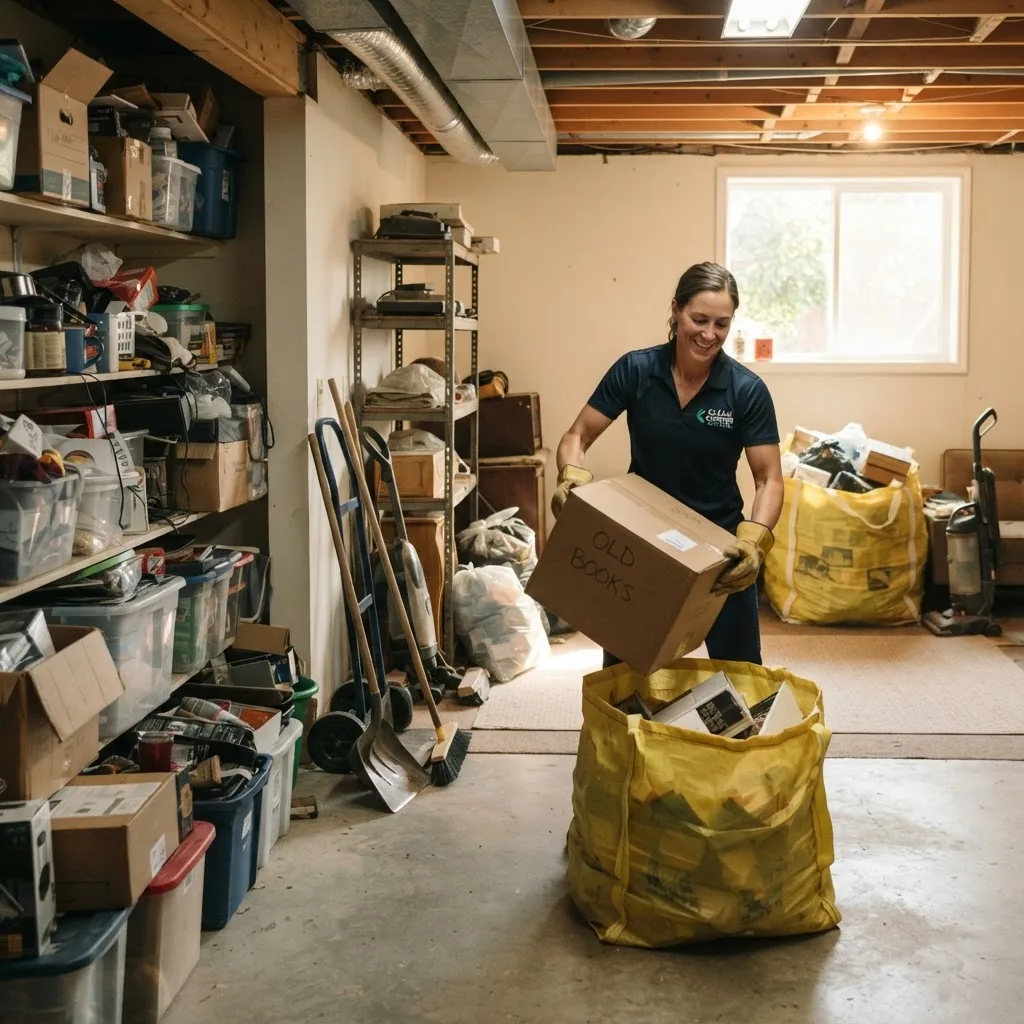
- Basic basement clean up: Sweeping, bagging trash, removing small debris, and light surface cleaning; suitable for lightly cluttered spaces.
- Basement junk removal: Full-service hauling of furniture, appliances, boxes and large items to local transfer stations or donation centers; often priced by volume or flat trip fee.
- Cellar cleaning services: Targeted work in older, often finished below-grade spaces (cellars), including careful dust control, shelving clearing, and finishing-surface cleaning; attention to fragile items and narrow access.
- Deep basement cleaning: Scrubbing concrete floors, degreasing, pressure washing sealed areas, HEPA vacuuming, and sanitizing surfaces to remove long-term dust and grime.
- Flood cleanup: Water extraction, drying with industrial dehumidifiers and fans, removal of saturated materials, and coordination with restoration contractors when structural drying or reconstruction is needed.
- Mold assessment and remediation (limited scope): Inspection and containment, removal of moldy porous materials, HEPA vacuuming and surface treatment; full remediation beyond small outbreaks may require licensed specialists.
- Hazardous material sorting (limited): Segregation and safe handling of household hazardous waste (paint cans, automotive fluids) for proper disposal — many companies partner with certified hazardous waste handlers.
- Sanitizing and deodorizing: Odor removal services, targeted disinfecting after infestations or bio-debris discovery — often an add-on and sometimes performed by commercial disinfecting specialists.
- Organizing and staging: Post-cleanup organizing to optimize storage and accessibility; often billed hourly or as a package with cleaning.
- Combination packages: Multi-phase jobs (junk removal + deep clean + organizing) where providers bundle services at a discounted package price.
Example mini case study: a suburban customer hired a crew for basement junk removal and deep clean after a long-term storage build-up; crew removed five pickup-loads, pressure-washed the concrete, and reduced odors with an ozone treatment. Total charged: flat fee plus disposal, with detailed invoice showing time, load counts, and disposal receipts.
Transition: understanding what drives those prices helps you compare local providers more effectively.
What factors affect basement cleaning costs?
Answer: Costs depend on pricing model (hourly, flat rate, volume), amount and type of junk, contamination level, accessibility, equipment needed, disposal fees and location-specific labor rates.
- Pricing model: Hourly charges suit labor-focused tasks; flat-rate pricing often covers defined scopes; volume-based pricing charges per cubic yard or truckload. Each model favors different job types and influences transparency.
- Volume of junk: The more items or cubic yards packed into trucks, the higher the disposal and haul costs; bulky, heavy items (appliances, masonry) increase labor hours and trip counts.
- Hours worked: Labor time multiplies with clutter complexity, sorting needs, and stair carries; narrow stairs or long carries inside the property add per-hour costs.
- Equipment used: Wet/dry vacuums, HEPA vacs, pressure washers, industrial fans and dehumidifiers raise job costs when required. Specialized containment or remediation tools add to rates.
- Contaminant type: Water damage, mold, biohazards, or hazardous household chemicals require special handling, testing, or third-party disposal — these items are cost drivers and may be excluded from basic services.
- Access and logistics: Ground-level basements with large doors are cheaper to service than those with tight stairwells or no elevator; parking restrictions and permits in urban areas add fees.
- Disposal and transfer station fees: Local landfill or transfer station tipping fees vary regionally and are usually passed to customers; donated items may reduce total disposal cost if accepted by partners.
- Regulatory requirements: Local rules for hazardous waste or bulky-item pickups can require third-party contractors or municipal pickup scheduling, increasing administrative costs.
- Service speed and schedule: Emergency or same-week appointments can carry rush fees; flexible scheduling often yields better pricing.
- Provider certifications and insurance: Companies with licensing, bonded crews, and specialized training may charge premiums but lower risk for customers.
Methodology note: service providers commonly combine these factors into estimates. According to a 2024 industry report, providers that itemize labor, disposal, and equipment show 20–35% lower customer disputes than flat vague estimates.
Practical tip: ask providers to show the pricing model they use and request itemized quotes listing volume, hours and disposal fees to compare apples-to-apples.
Next: concrete price ranges you can expect locally and how to read them.
What are typical cost ranges for basement cleaning near me?
Answer: Typical costs range from $150–$400 for small basic cleanups, $300–$1,200 for medium jobs, and $800–$3,500+ for large or contaminated basements, depending on price model and add-ons.
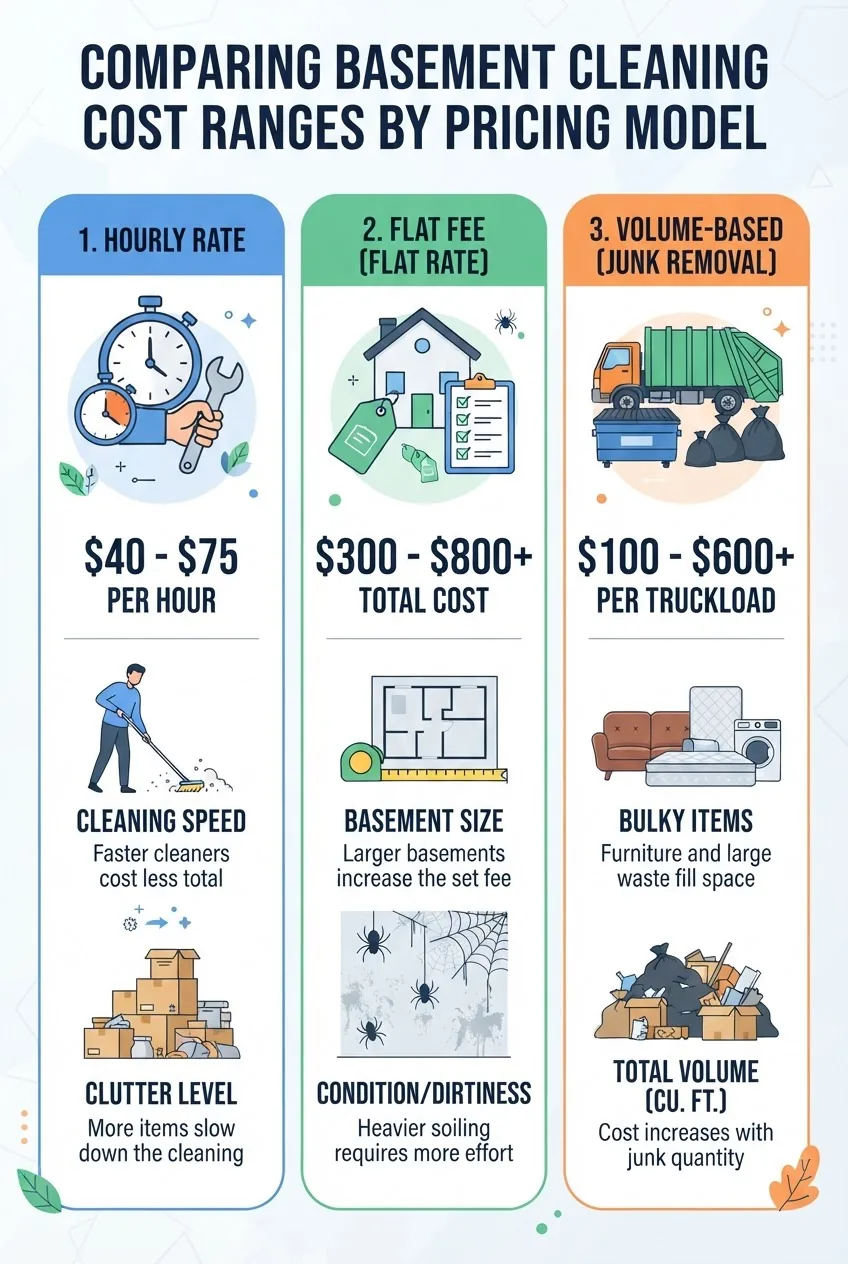
Use this table to compare common pricing models and example ranges; adjust for your region. For regional nuances see the Cincinnati home cleaning services cost and booking guide for Midwest benchmarks and the cleaning companies OKC service options and pricing guide for Oklahoma benchmarks.
| Pricing Model | Typical Range | Common Examples / Notes |
|---|---|---|
| Hourly | $50–$120 per hour (per crew) | Best for sorting/organizing and when debris volume is unknown. |
| Flat fee | $150–$3,500+ | Quoted after site inspection; includes labor, hauling and disposal for defined scopes. |
| Volume-based | $75–$500 per pickup/yard or truckload | Used by junk removal firms; multiple trips increase total cost. |
Examples:
- Small basement clean up (single room, light clutter): typically $150–$400 flat or 2–4 hours at hourly rates.
- Medium cleanout (multiple rooms, furniture removal): $300–$1,200 depending on loadouts and stairs.
- Large or contaminated site (mold, flood, heavy debris): $800–$3,500+ including specialized equipment, remediation prep, and disposal.
According to a 2024 industry report, average national basement cleanout jobs cost about $950, but local tipping fees and labor rates change that number significantly.
Transition: knowing prices helps, but choosing the right provider protects you from surprises.
How do I choose the right basement cleaning service near me?
Answer: Choose a provider by comparing itemized quotes, verifying licensing and insurance, reading local reviews, asking about disposal methods and safety protocols, and checking guarantees.
Start with these vetting steps:
- apartment move out cleaning cost and service guide — use this to compare vetting practices for move-out teams when you need reliability during tight schedules.
- cleaner for house cleaning hiring and cost information — apply hiring and background-check tips that also matter for basement crews.
- cleaning jobs near me requirements and hiring guide — review industry hiring standards to assess crew experience levels.
- cleaning quotes online how to get accurate cost estimates — practical steps to ensure quotes reflect true scope, access and disposal.
Key checklist before hiring:
- Verify insurance and general liability; ask for proof of workers’ compensation.
- Request itemized written estimates listing labor, disposal, equipment and potential surcharges.
- Read third-party local reviews and ask for references from similar basement jobs.
- Confirm whether they handle hazardous materials or will subcontract specialists.
- Ask about waste disposal pathways — transfer stations, donation partners and recycling.
- Ask about containment and PPE practices for mold or bio-debris.
- Get a clear timeline and any cancellation or change-order policies in writing.
Anecdote: one homeowner chose the lowest flat fee without an on-site estimate and later paid 40% more for added trips and disposal; asking for a site visit prevented this for others.
Comparative tip: when weighing professional crews vs. independent contractors, weigh trade-offs between cost and reliability. Use the hiring and cost guidance above and consider checking broader housekeeping hiring practices in the cleaner for house cleaning hiring and cost information to evaluate background checks and training.
Next: the typical step-by-step process crews follow when cleaning a basement so you know what to expect.
What is the step-by-step process of basement cleaning?
Answer: A professional basement cleaning typically follows: initial assessment and quote, sorting and removal, targeted cleaning and decontamination, disposal and final inspection; specialists add mold or flood protocols as needed.
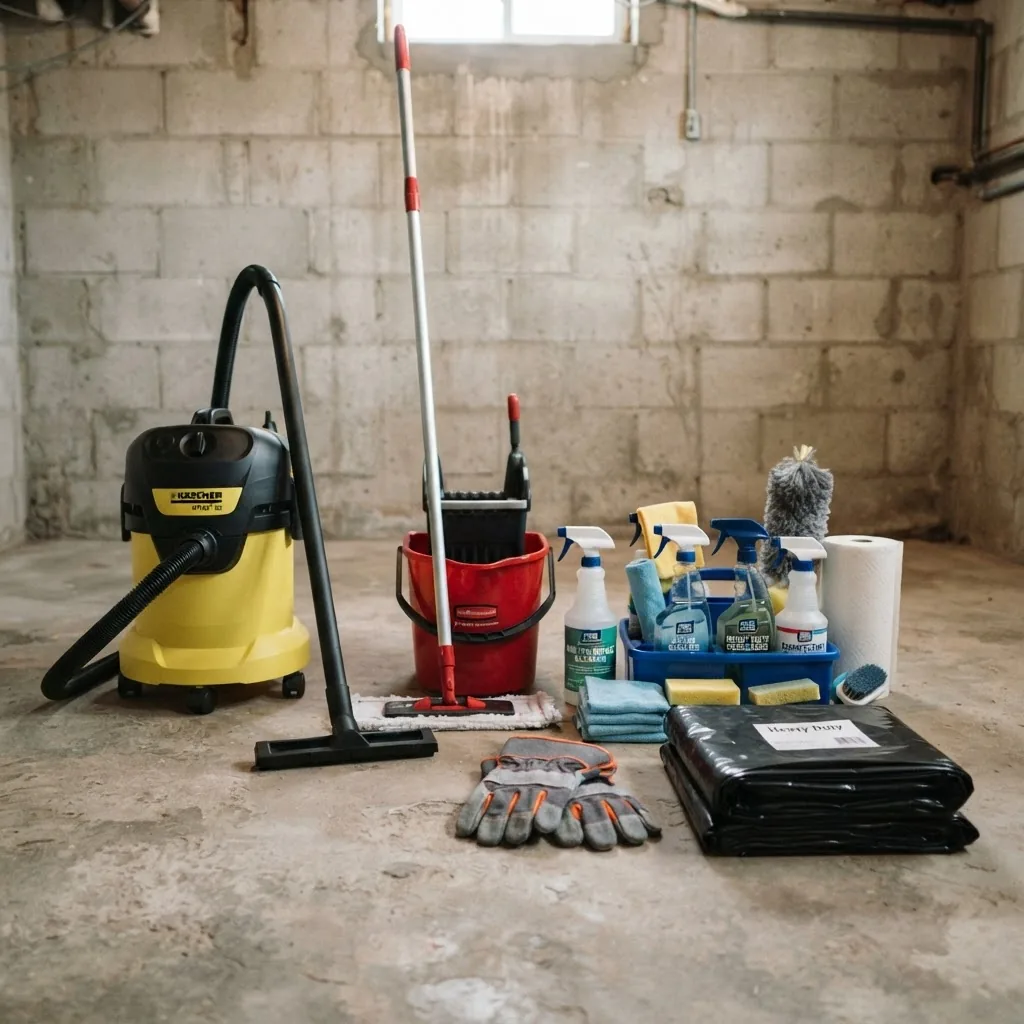
- Pre-job assessment and written quote: Crew inspects access, inventory, contamination, and estimates time, volume and disposal needs; expect itemized estimates.
- Site prep and safety setup: Workers don PPE (Personal Protective Equipment) such as gloves, N95 or P100 masks, and protective eyewear; set up containment zones if mold or bio-debris is present.
- Sorting and staging: Crews separate items into trash, recycling, donation and retention piles; large items are disassembled if needed for stair carries.
- Junk removal and hauling: Items are bagged and loaded into trucks. Volume-based jobs may record load counts or cubic yards for accurate billing.
- Targeted cleaning: HEPA vacuuming for dust and spores, pressure washing or scrubbing of concrete where appropriate, spot treatments for grease or mildew, and deodorizing treatments.
- Drying and moisture control: For damp basements, crews deploy industrial fans and dehumidifiers; they may coordinate with restoration specialists for severe water damage.
- Mold containment and remediation steps (if needed): Contain work area, remove affected porous materials, HEPA vacuum and apply EPA-registered antimicrobials when appropriate; large or structural mold requires a licensed remediation firm.
- Waste sorting for hazardous items: Identify paints, solvents and other hazardous household wastes and route them to certified disposal partners or municipal hazardous waste programs.
- Final walkthrough and quality check: Crew reviews the cleaned areas with the homeowner, documents disposal receipts if requested, and provides aftercare recommendations.
Equipment commonly used and why:
- Wet/dry vacuums — for water extraction and heavy particulate removal.
- HEPA-filter vacuums — capture fine dust and mold spores for safer removal.
- Industrial fans and dehumidifiers — accelerate drying to prevent secondary mold growth.
- Pressure washers — for sealed concrete and exterior entryways (used with care).
- Non-bleach EPA-registered disinfectants — for sanitizing after debris removal when appropriate.
Industry standards note: crews following ISSA best practices and wearing appropriate PPE report lower incident rates; see industry guidance at ISSA.
Transition: before a crew arrives, these prep steps help save time and reduce costs.
How should I prepare my basement before booking basement cleaning?
Answer: Prepare by clearing access paths, marking fragile items, listing large or hazardous items, and confirming parking and entry logistics; this can lower time-on-site and avoid unexpected fees.
- Clear main stairways and lock/unlock access doors so crews can move freely.
- apartment clean out guide with cost and service options — consult if you anticipate large-scale sorting or multi-room cleanouts akin to apartment cleanouts.
- Set aside items you want kept or moved off-site; label important boxes to avoid accidental removal.
- List or photograph hazardous materials (paints, pesticides) and inform the provider in advance for safe disposal planning.
- cleaning and organizing services near me cost and guide — consider hiring organizing help post-clean to optimize storage after debris removal.
- Provide clear parking for crew vehicles and confirm any permit needs in urban areas.
- Schedule during dry weather for outdoor access and to avoid complications from rain or freeze that affect hauling operations.
- Ask for an itemized start-time and approximate duration so you can plan to be present for the final walkthrough.
Tip: keeping an inventory of valuable or sentimental items prevents accidental disposal and can speed the sorting phase. If you’re moving or renovating, coordinate with your contractor to time cleanups appropriately.
Next: critical health and safety considerations when basements contain mold, bio-debris or hazardous waste.
What are the health and safety considerations in basement cleaning?
Answer: Safety considerations include mold spore containment, dust control, PPE usage, proper hazardous waste handling, ventilation and following public health or EPA disposal guidance.
Term: PPE — Personal Protective Equipment such as gloves, masks and eye protection used to reduce exposure to hazards.
Basements pose higher risks for airborne dust, mold spores and contact with water-damaged materials. Workers use PPE (gloves, N95/P100 respirators, protective eyewear) and containment methods to reduce spread. For significant mold or biohazards, licensed remediation specialists are recommended.
Authoritative resources and requirements:
- For mold health risks and guidance refer to the CDC’s mold resources: https://www.cdc.gov/mold/.
- For hazardous household waste disposal rules consult EPA guidance: https://www.epa.gov/hw.
- For industry cleaning best practices consult ISSA guidance on containment and PPE: https://www.issa.com.
Case note: According to a 2023 government health report, small household-level mold outbreaks can be addressed by trained cleaning crews using HEPA filtration and containment, but large-scale structural mold requires licensed remediation.
Operational controls professionals use:
- Area containment with plastic sheeting and negative air machines when disturbing moldy materials.
- HEPA vacuuming and wet-cleaning techniques to reduce airborne dust rather than dry-sweeping.
- Immediate segregation and proper disposal of water-damaged porous materials (insulation, carpeting) to prevent regrowth.
- Documentation of disposal receipts and manifests for hazardous items to maintain regulatory compliance.
Caveats and limitations: many basement cleaning services do not perform structural repairs, full-scale mold remediation, or asbestos abatement; confirm scope in writing. For suspected asbestos, contact an accredited abatement firm per public health guidance.
commercial disinfection services guide to costs and providers explains disinfecting and sanitization steps when biological contamination requires specialized treatment.
Transition: finally, answers to the most common homeowner questions about basement cleaning services.