
scrap pickup near me connects homeowners and businesses to local teams that collect, sort and recycle metal and other reusable materials; this guide explains how metal junk removal works, what materials are accepted, cost models, scheduling steps and safety tips so you can book confidently and maximize value.
What Is Scrap Pickup and How Does It Work?
Answer: Scrap pickup is a local service that collects unwanted metal and recyclable materials, transports them to a scrap yard or recycling center, and either pays customers for valuable metals or charges for removal when necessary.
scrap pickup — Term: a service that collects recyclable or reusable materials, especially metals, from residences or businesses for processing or resale.
Scrap pickup functions as a specialized subset of broader waste and junk removal workflows that focuses on reclaimable materials. Providers typically assess items either remotely (photos, lists) or in-person, quote by weight or volume, schedule collection, load materials according to safety standards, and deliver loads to licensed scrapyards or recycling facilities.
- Contact: Request a quote with photos or an inventory.
- Estimate: Provider gives per-pound or volume-based estimate.
- Schedule: Book a pickup window and confirm access.
- Preparation: Customer separates metals, removes hazards.
- Collection: Crew loads, signs paperwork, issues payment or invoice.
- Processing: Materials are sorted, baled, melted or sold.
This process mirrors standard junk removal steps but prioritizes material segregation and resale value. For homeowners wanting a broader overview of both junk and scrap options, see junk removal services guide and residential pickup options.
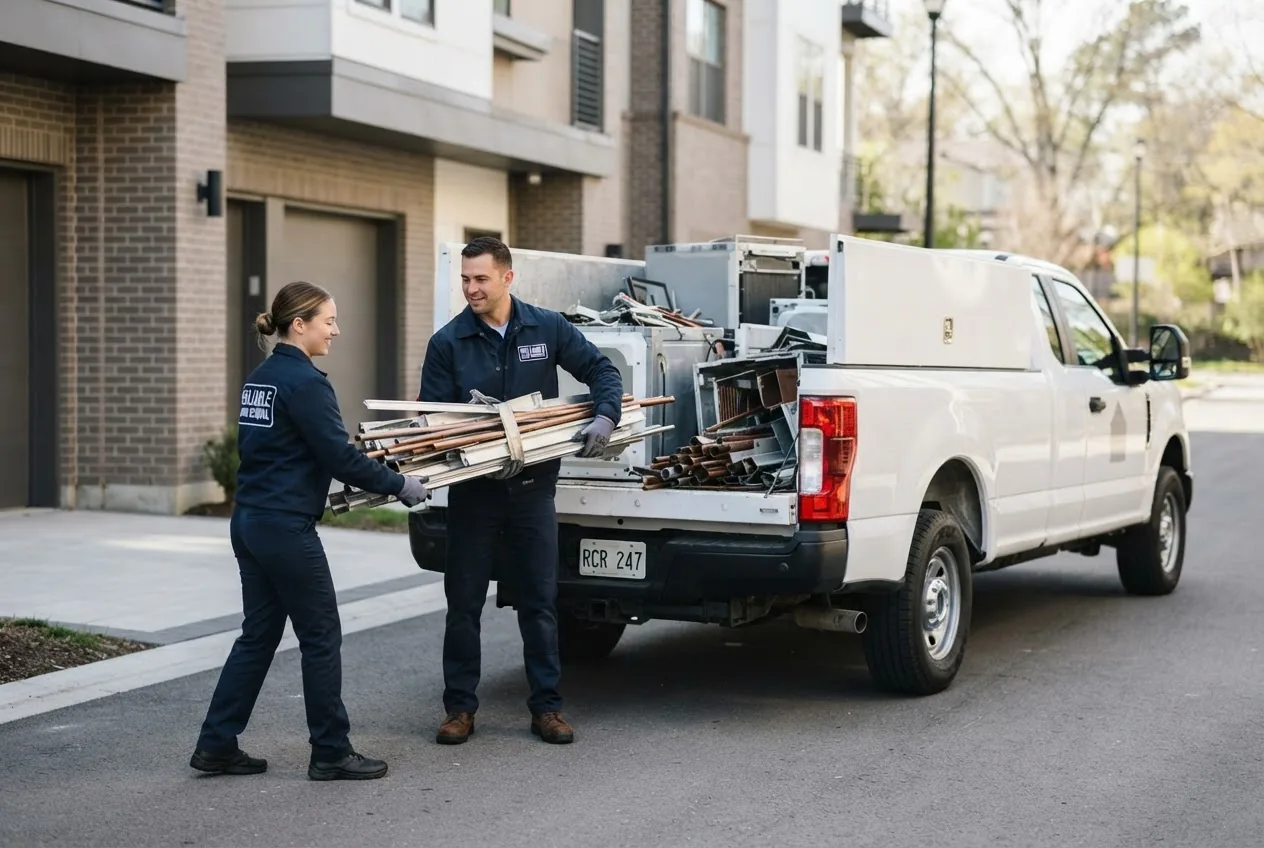
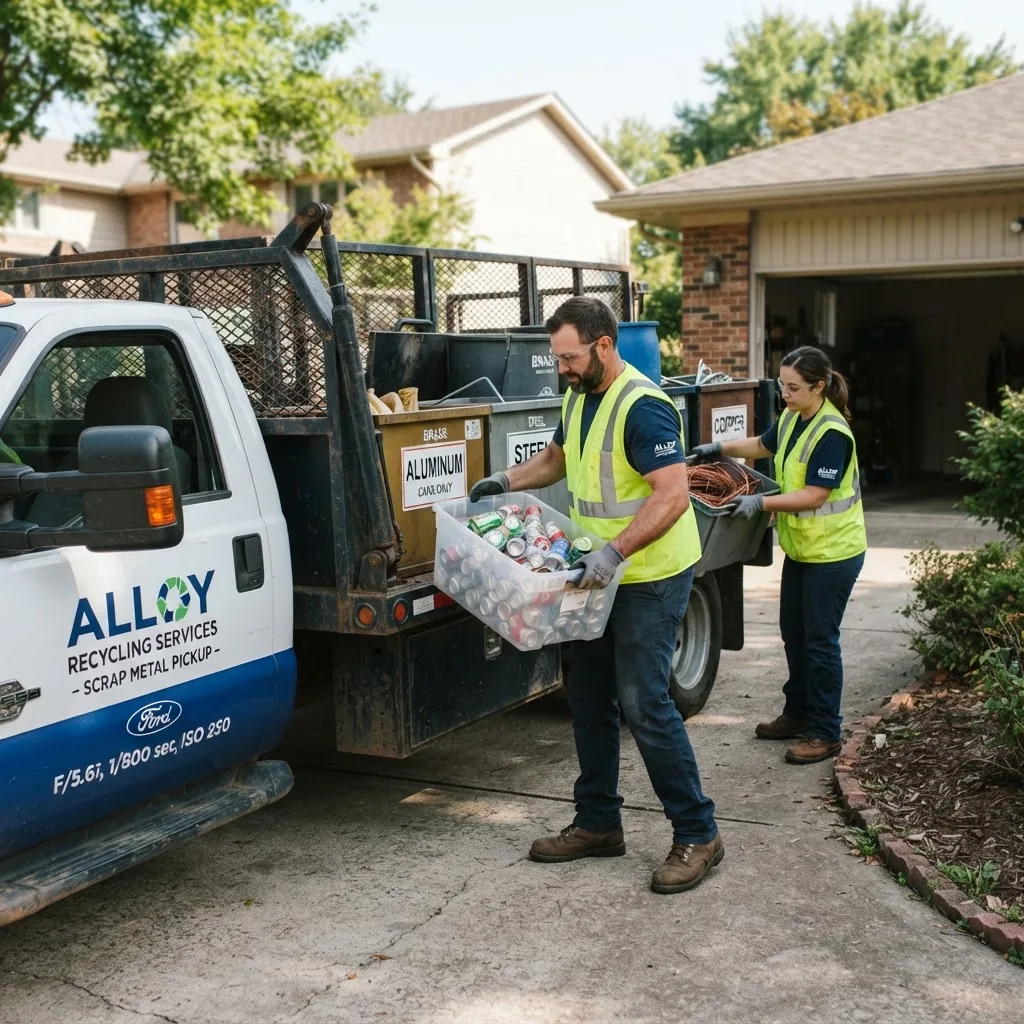
Practical example: a homeowner schedules a morning pickup for an old washing machine and 50 lb of copper wiring; crew arrives within a two-hour window, removes fluids per regulation, weighs materials, pays the homeowner market value for copper, and recycles the appliance shell. This scenario demonstrates the mix of logistics, regulation compliance and resale economics that define scrap pickup.
Types of Scrap Metal and Materials Accepted for Pickup?
Answer: Scrap pickup services usually accept ferrous and non‑ferrous metals plus mixed items like appliances, automotive scrap, and some electronic scrap—but acceptance varies by company and local regulations.
ferrous: metals that contain iron and are magnetic (e.g., steel, iron).
non‑ferrous: metals without significant iron content, non‑magnetic, often more valuable (e.g., copper, aluminum, brass).
Classification helps determine value, processing method and recycling stream. Many providers separate metals on site to maximize recycling value; hazardous or mixed-material items (e.g., appliances with refrigerant) may need special handling.
- Ferrous metals: structural steel, rebar, cast iron, steel appliances.
- Non‑ferrous metals: copper wiring, brass fixtures, aluminum siding, stainless steel.
- Appliances: refrigerators, washers, dryers (note: refrigerant-containing units require certified handling).
- Automotive scrap: radiators, engines, catalytic converters (value varies by metal content).
- Electronic scrap (e‑waste): circuit boards, transformers, some motors (often require special recycling).
- Miscellaneous: metal furniture, plumbing fixtures, metal roofing.
What providers usually won’t accept: mattresses, general household trash, untreated hazardous wastes, or large volumes of mixed non-metal trash without prior arrangements. For guidance on bulky non-metal disposal like sofas, consult dispose of bulky furniture.
Industry standards and safety rules from trade groups (for handling and classification) help scrapyards and pickup companies decide what they accept; see the Institute of Scrap Recycling Industries for best practices via ISRI best practices.
How to Find Reliable Scrap Pickup Near Me?
Answer: Find reliable local scrap pickup by verifying licenses and insurance, checking recent customer reviews, comparing written quotes, confirming accepted materials, and choosing providers with transparent weighing and payment policies.
Step-by-step vetting:
- Search locally for “scrap pickup near me” and shortlist companies with clear service areas and transparent pricing.
- Check licensing and insurance: ask for business license and proof of liability insurance.
- Read reviews from the last 12 months and request references for similar jobs.
- Confirm pickup procedures, payment methods, and whether they provide a written receipt and weight ticket.
- Compare quotes and ask about pickup windows, cancellation policies, and fees for difficult access.
Use community programs as alternatives: community or municipal events often partner with professionals for large pickups; look into local spring cleanup options for opportunistic collection.
Check for consumer protection resources before hiring: contact your local consumer protection or utilities board to review complaint processes and licensing standards; see consumer protection resources.
Search alternates for budget options: compare local listings for affordable junk haulers near me and affordable rubbish removal pickup options.
Regional notes: Urban areas may have specialized services—see Las Vegas waste disposal services or Fort Wayne garbage pickup options for local rules affecting pickup.
Look for provider certifications, like OSHA-compliant training, CETP certifications for e‑waste, and third-party environmental certifications that indicate adherence to safe handling standards. For trusted vendors with veteran staff, consider trusted veterans junk removal services.
Scheduling Scrap Pickup: What to Expect and How to Prepare?
Answer: Expect providers to require an inventory, schedule a pickup window, request preparation steps (empty fluids, sorted metals), and provide a weight ticket or invoice on collection day.
Follow this numbered preparation checklist before pickup:
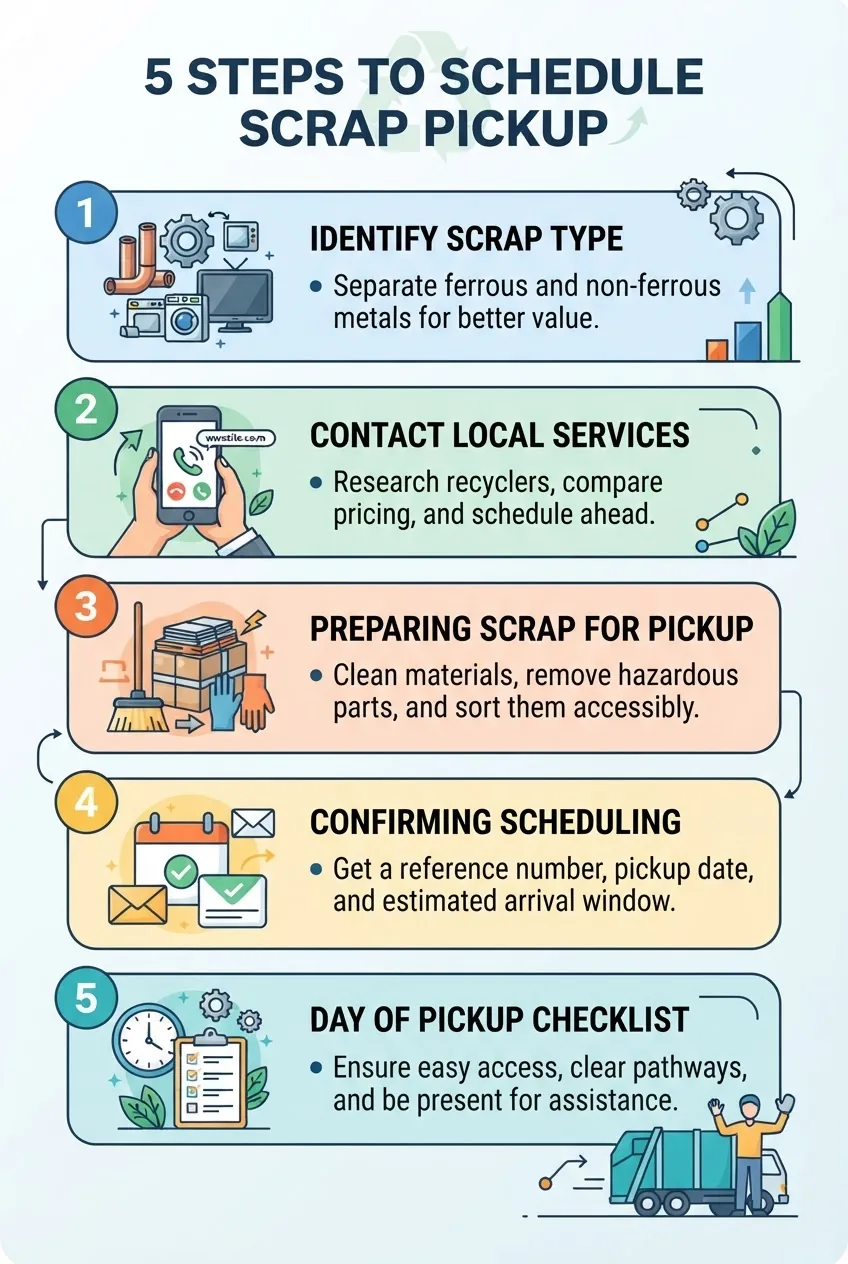
- Identify and list materials by type and approximate weight or size.
- Contact at least three providers for quotes; confirm accepted items and any extra fees.
- Prepare items: drain fluids (oil, coolant), detach batteries, and move scrap to an accessible curb or driveway location.
- Confirm scheduling details: exact time window, crew size, vehicle type, parking requirements.
- On pickup day: have ID, any permits (if required), and a safe clear path for the crew; review the weight ticket and payment terms before crew departs.
Logistics and requirements vary. Some municipalities restrict curbside scrap placement or require permits—compare general garbage rules via city garbage pickup service details and look up local municipal forms such as Birmingham garbage pickup service requirements to avoid conflicts.
Compare private pickup with municipal pickup: municipal crews may have limited acceptance lists and schedule constraints; review public trash collection and refuse centers for alternatives.
Special timing notes: urban customers often face stricter rules—see NYC trash pickup effectiveness. Allow a 48–72 hour lead time for larger loads or appliance removals; same-day pickup is possible for small loads but not guaranteed.
If pickup is on a holiday week, confirm schedule in advance and consult municipal holiday guides such as holiday trash pickup service info.
Service liability and proof: ask the carrier to provide a weight ticket or scale receipt, especially if seller pays you for metals. If your pickup is delayed or missed, contact the provider immediately and check their stated SLA and refund or rescheduling policies.
Pricing Models and Cost Factors in Scrap and Metal Junk Removal?
Answer: Scrap pickup pricing commonly uses per‑pound market rates for non‑ferrous metals and volume or flat fees for bulky items; additional charges may include hazardous handling, travel, labor and disposal of non-recyclables.
Below is a comparison table of common pricing models and typical trade-offs.
| Pricing Model | How It Works | Best For |
|---|---|---|
| Per‑pound pricing | Metals weighed; payment based on market price per pound. | Copper, aluminum, brass; small to medium loads of valuable metals. |
| Volume / truckload | Flat rate by cubic yard or truck size; useful for mixed materials. | Large cleanouts, mixed scrap with low individual metal value. |
| Itemized flat fees | Set fees per appliance or piece (e.g., refrigerator removal fee). | Appliance pickups and items needing certified handling. |
| Mixed model | Combination: per‑pound for metals, flat fee for labor and transport. | Commercial jobs with diverse material types. |
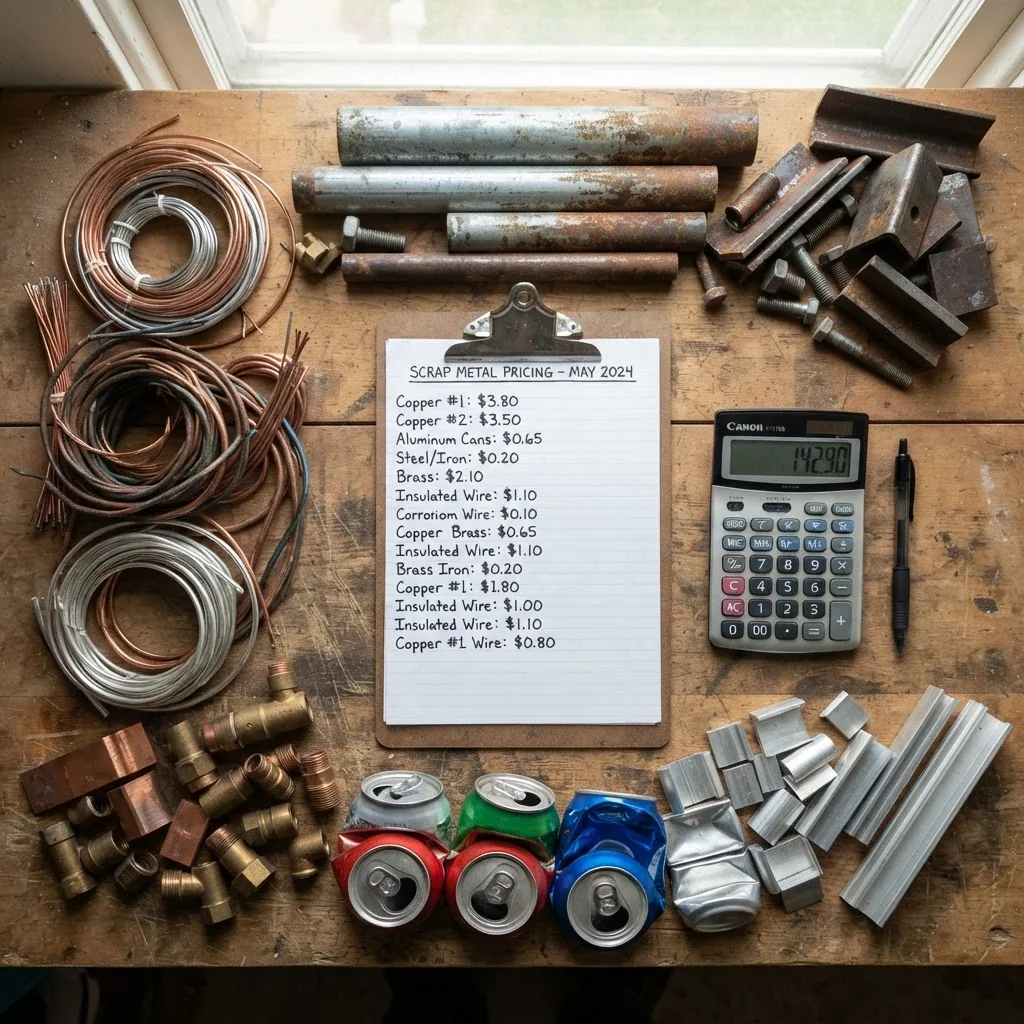
Cost factors to check:
- Market metal prices: per‑pound rates change daily for copper, aluminum and steel.
- Weight vs. volume: high-value metals favor per‑pound models; bulky low-value materials favor volume pricing.
- Transportation: distance and truck size can add fees.
- Labor and access: stair carries or tight spaces increase labor charges.
- Hazardous or regulated items: appliances with refrigerants or batteries require certified handling and may cost more.
- Minimum charges and hidden fees: ask for a full breakdown including disposal surcharges.
Commercial clients evaluating alternatives should compare with dumpster rentals—review local dumpster rental services and consider commercial dumpster service requirements if volume is continuous.
For commercial scrap versus full-service junk removal, compare with broader market services in commercial junk removal cost overview.
Regional price reference: market rates fluctuate—obtain a same‑day per‑pound quote. For regional comparisons, see localized cost guides such as junk removal costs in Cincinnati as a baseline.
If your project includes non-metal materials like soil or dirt, compare expected fees with dirt removal service costs.
Environmental Benefits of Proper Scrap Pickup and Recycling?
Answer: Proper scrap pickup and recycling conserve natural resources, cut greenhouse gas emissions, and divert metal from landfills, delivering measurable environmental and economic benefits.
Recycling metals reduces raw material extraction, energy use and associated emissions:
- Steel: recycling uses significantly less energy than primary production.
- Copper and aluminum: recovered metals avoid the energy cost of mining and refining.
According to a 2023 EPA report, recycling ferrous and non‑ferrous metals reduces landfill input and lowers net emissions compared with primary production. For regulatory guidance and national recycling targets, consult EPA recycling guidelines.
Commercial benefits: companies can reduce waste disposal costs and may earn revenue from recyclable streams; see commercial resources on recycling economics via commercial recycling services and costs.
Stat block: According to a 2024 industry report, recycling one metric ton of steel saves roughly 1,000–1,500 kg of CO₂ equivalent versus producing new steel from ore; recycling aluminum saves even more energy per unit weight.
Where recycling isn’t possible, proper separation helps identify items that must be disposed of at licensed facilities—review landfill and disposal requirements such as landfill waste disposal requirements and find nearby drop-off bins via recycling drop off locations and bin availability.
Note on limitations: recycling rates and accepted materials change by region; confirm with your pickup provider and local municipal guidelines such as the broader trash and recycling waste disposal guide.
DIY Tips and Safety Guidelines for Scrap Metal Removal?
Answer: For DIY scrap removal, separate metals, wear PPE, drain liquids, secure loads for transport, and follow local hazardous-waste rules; use professional services for refrigerant‑bearing appliances or suspect hazardous items.
Essential safety equipment and first steps:
- Personal protective equipment: gloves, safety glasses, steel‑toe boots, long sleeves.
- Tools: bolt cutters, adjustable wrenches, pry bars and ratchet straps for securing loads.
- Transport: use a properly rated vehicle or a rented dumpster bag; ensure weight limits are not exceeded.
Step-by-step DIY removal:
- Identify and segregate metals by type (ferrous vs non‑ferrous).
- Remove batteries and electronic components from appliances and electronics.
- Drain fluids: oil, coolant and refrigerants must be handled per regulations—if uncertain, hire certified technicians.
- Cut or disassemble large items into transportable pieces while keeping safety in mind.
- Secure load and label any hazardous segments for the scrapyard or hauler.
Legal and hazardous limits: certain items (painted metals with lead, asbestos-containing parts, mercury switches) require regulated disposal by licensed specialists—check hazardous waste removal rules.
Practical DIY resource: use durable waste removal bags and dumpster rentals for small structural metal pieces and segregate valuable wiring for per‑pound payouts.
Warning: never attempt to remove refrigerant lines or handle PCB-containing capacitors yourself; always hire a certified technician for pressurized or hazardous components. Certified handling protects you and prevents illegal dumping penalties.
What Happens to Scrap Metal After Pickup?
Answer: After pickup, scrap metal is transported to a scrapyard or recycling center where it is sorted, cleaned, shredded or baled, and then sold to mills or remelters to be refined into new metal products.
Processing steps generally include:
- Weighing and documentation with a scale ticket.
- Sorting by metal type and removing contaminants.
- Shredding or shearing larger pieces to size for melting.
- Melting and refining at mills; non‑recyclables are sent to approved disposal sites.
Some scrap flows to specialty processors: electronic scrap may go to e‑waste recyclers for precious-metal recovery; catalytic converters are handled by licensed buyers for precious metal extraction. For construction-related scrap, contractors often use debris removal companies for construction waste.
If materials are not accepted for recycling, providers may direct them to licensed dumps; check public disposal rules and public dumping requirements at local dumps or find a nearby landfill via local landfill garbage dump locations.
Example traceability: a truckload of shredded aluminum will be baled at the scrapyard, sold to an aluminum remelter, and reintroduced into supply chains for cans or extruded products—closing the loop while offsetting raw‑material extraction emissions.
Non-recyclable residuals are disposed of at permitted facilities in compliance with local waste disposal requirements and reporting standards.
Frequently Asked Questions About Scrap Pickup Near Me?
Answer: Below are concise answers to common concerns about service scope, timing, preparation, cost and safety to help you act quickly and confidently.