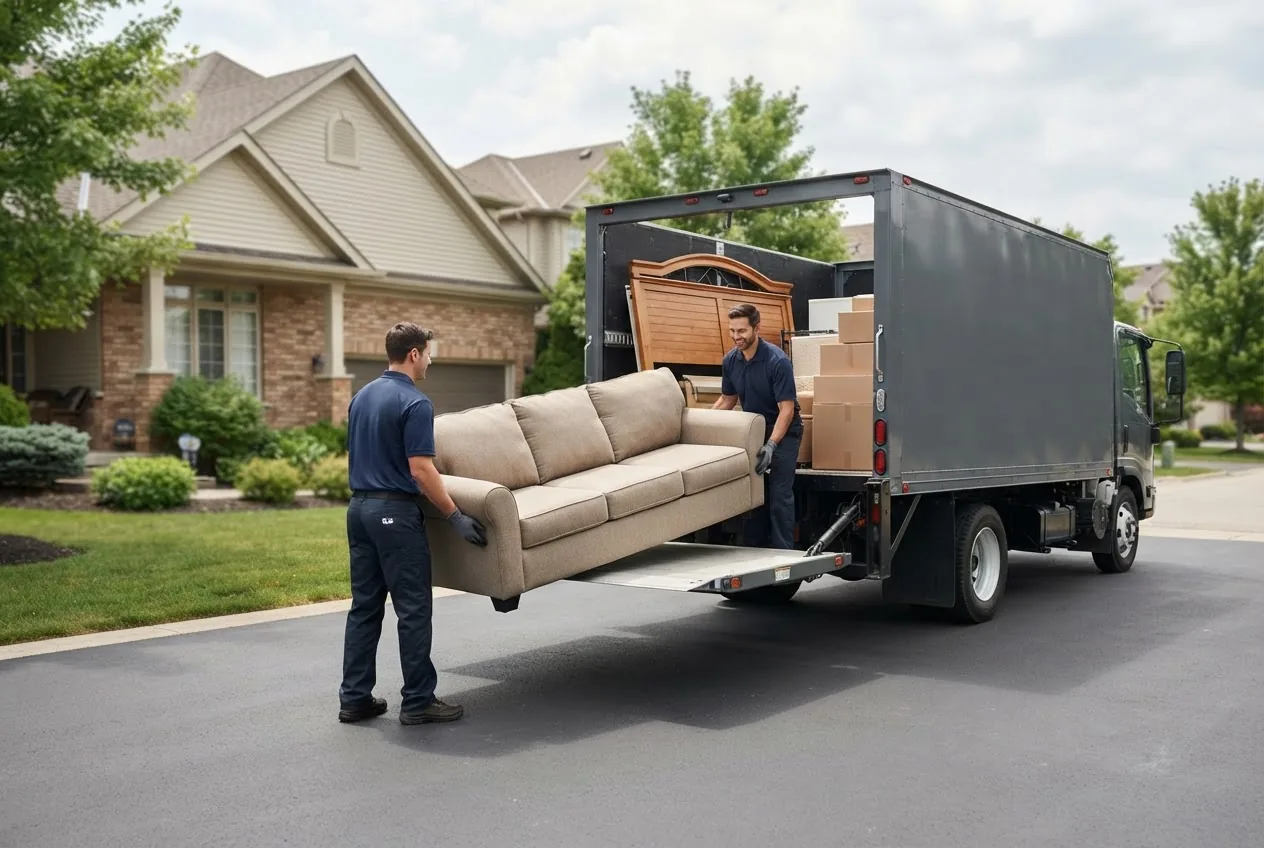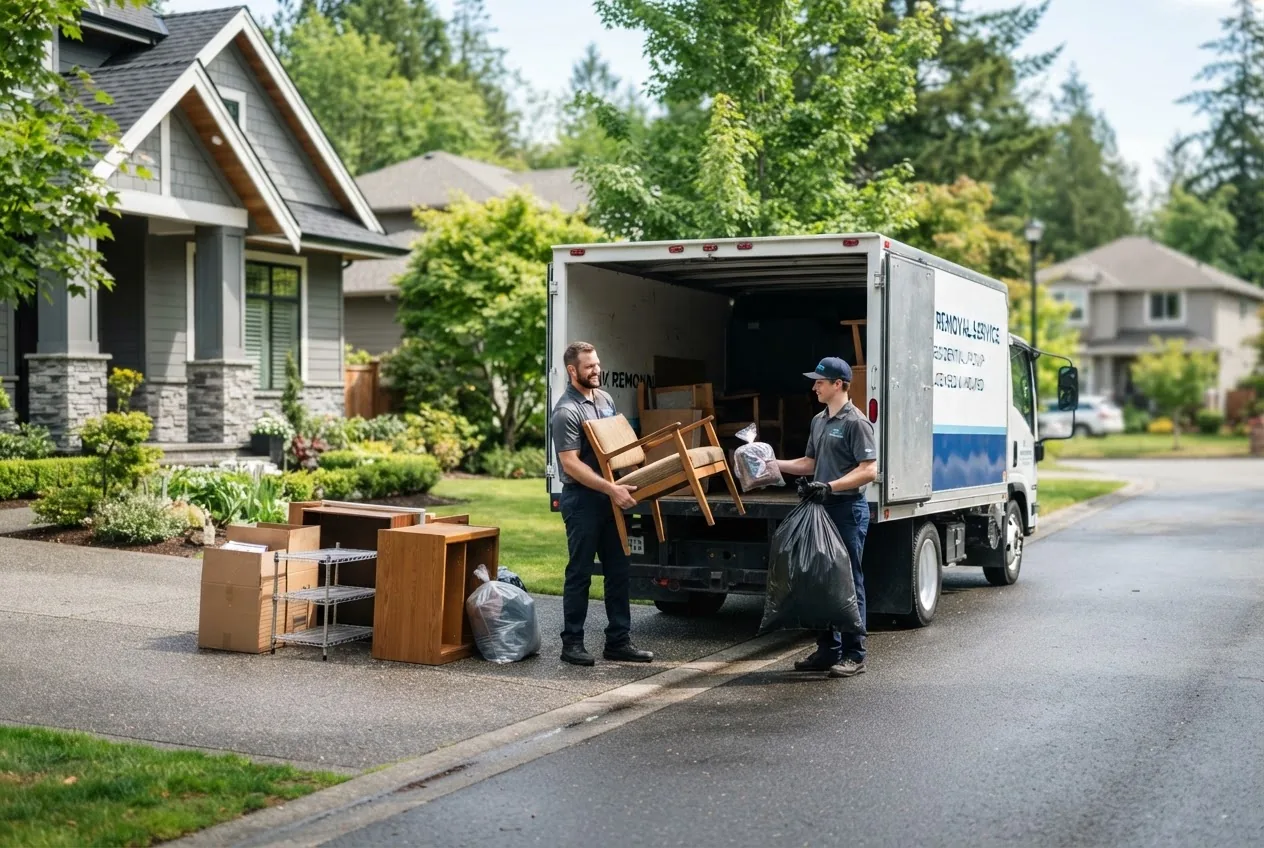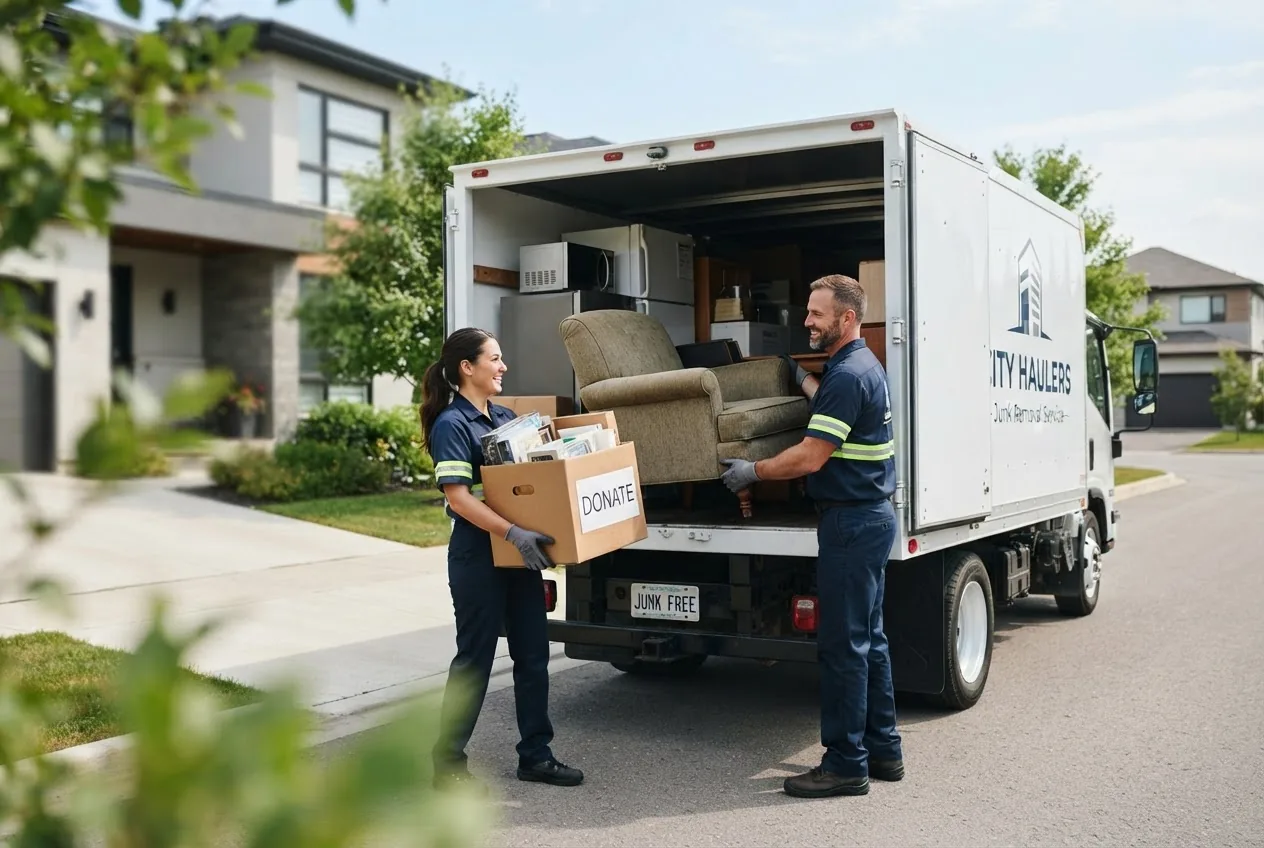
Junk haulers near me provide local pickup, loading, transport, and proper disposal for household junk; they offer free curbside pickup programs, low-cost one-time trash removal, and full garage clearouts. This guide explains how to find affordable nearby haulers, compare cheapest options, schedule service, and dispose or donate items responsibly.
What do junk haulers do and how do I find “junk haulers near me”?
Answer: Junk haulers remove unwanted household and residential items, handle loading and transport, and coordinate disposal, recycling, or donation; find local providers by searching service areas, comparing quotes, reading reviews, and confirming licensing and insurance.
Junk hauler: a company or crew that collects, loads, transports and disposes of non-hazardous household and residential waste and bulky items.
Junk hauling services vary by service area and specialization: some focus on single-item pickups while others offer full-property cleanouts. Use the checklist below to identify the right local hauler:
- Service type: curbside pickup, in-home or garage junk removal, one-time pickups, recurring junk pickup contracts.
- Coverage area: confirm the hauler lists your city/neighborhood as part of their residential service areas.
- Equipment: small pickup trucks, box trucks, or roll-off trucks for larger loads; ask what they will bring.
- Disposal plan: landfill, transfer station, recycling center, donation drop-off — verified before booking.
- Pricing model: volume-based, flat-rate, or hourly — get a clear written estimate.
- Licensing and insurance: request proof of business license and liability insurance to protect your property.
Common service types offered by local junk removal companies:
- Residential junk pick-up (single-item to multi-item)
- Garage cleanouts and attic/ basement clearances
- One-time trash removal and bulky-item pickup
- Yard waste and appliance removal
- Donation pick-up and resale coordination
- Construction debris hauling (often subcontracted)
How to search and vet: use localized search terms like “junk haulers near me” plus your ZIP/city, verify recent customer reviews, and ask for on-site or photographic estimates for volume-based quotes. For broader context on residential pickup options and service types, see junk removal services guide and residential pickup options.
Transition: Next, learn who will pick up junk for free and practical ways to lower your bill.
Who will pick up junk for free and what are cost-saving strategies for affordable junk removal?
Answer: Free pick-up is offered by donation centers, municipal bulky-item programs, some charities, and occasional retailer take-back programs; combine free pickups, donation, resale, and DIY transport to minimize paid hauling fees.
Free junk pickup: programs or services that accept unwanted items at no charge, usually limited by item types, condition, or scheduling windows.
- Donation centers (Goodwill, Salvation Army, local thrift stores) will often pick up usable furniture and appliances for free if items are in sellable condition.
- Municipal bulky-item pickup: many cities offer scheduled free bulky-item or curbside pickup for residents—check your city’s waste department for eligibility and limits.
- Nonprofits and social programs: veteran, student, or low-income assistance programs sometimes offer free haul-away for qualifying residents; see veterans programs and community drives.
- Retailer take-back or haul-away: when buying a replacement appliance or mattress, retailers often offer to remove the old unit for a small fee or free with purchase.
- Scrap metal collectors: metal items may be removed at no or low cost if sold for scrap.
Practical, step-by-step cost-saving tips:
- Sort and segregate: separate reusable/donatable items, recyclables (metal, electronics), yard waste, and non-recyclables to avoid paying hauling fees for items that can be donated or recycled.
- Ask for a written estimate: local haulers use different pricing models—get explicit breakdowns to avoid hidden fees.
- Bundle pickups: combining several items into one scheduled pickup often reduces per-item cost compared to multiple single-item calls.
- Book off-peak: midweek or off-season bookings may be cheaper than weekend or end-of-month slots.
- DIY drop-off: if you can transport items to a transfer station or donation center, you can often save the cost of labor and truck charges.
- Compare nearby providers: get at least three quotes and ask about minimum fees, travel charges, and disposal surcharges.
- Look for discounts: military, senior, student, and veterans discounts exist—ask providers directly.
Real-world example: A homeowner saved approximately 45% by donating five usable furniture pieces to a local charity and scheduling a single paid pickup for non-donatable items, rather than paying a full-house removal fee. Customer feedback: “Crew arrived on time, separated donations and junk, and the final invoice matched the estimate” — verified review example from a residential service listing.
Sources and limits: free-pickup eligibility often limits item size, electronic waste, mattresses, or hazardous materials. Disclaimer: confirm donation acceptance rules—many charities reject stained or broken mattresses and require scheduled appointments.
Related specialized removals and disposal partners can expand low-cost options: debris removal companies guide and construction services, dirt removal near me service guide and cost overview, and rubbish removal services guide and affordable pickup options.
Regional examples and rollouts: some cities run seasonal free pickup or “Spring Cleanup” events—see local spring programs and charity drives. For a city-specific example of how local programs reduce costs, view junk removal Las Vegas guide and waste disposal services and veterans-oriented options at veterans junk removal guide and trusted service options.
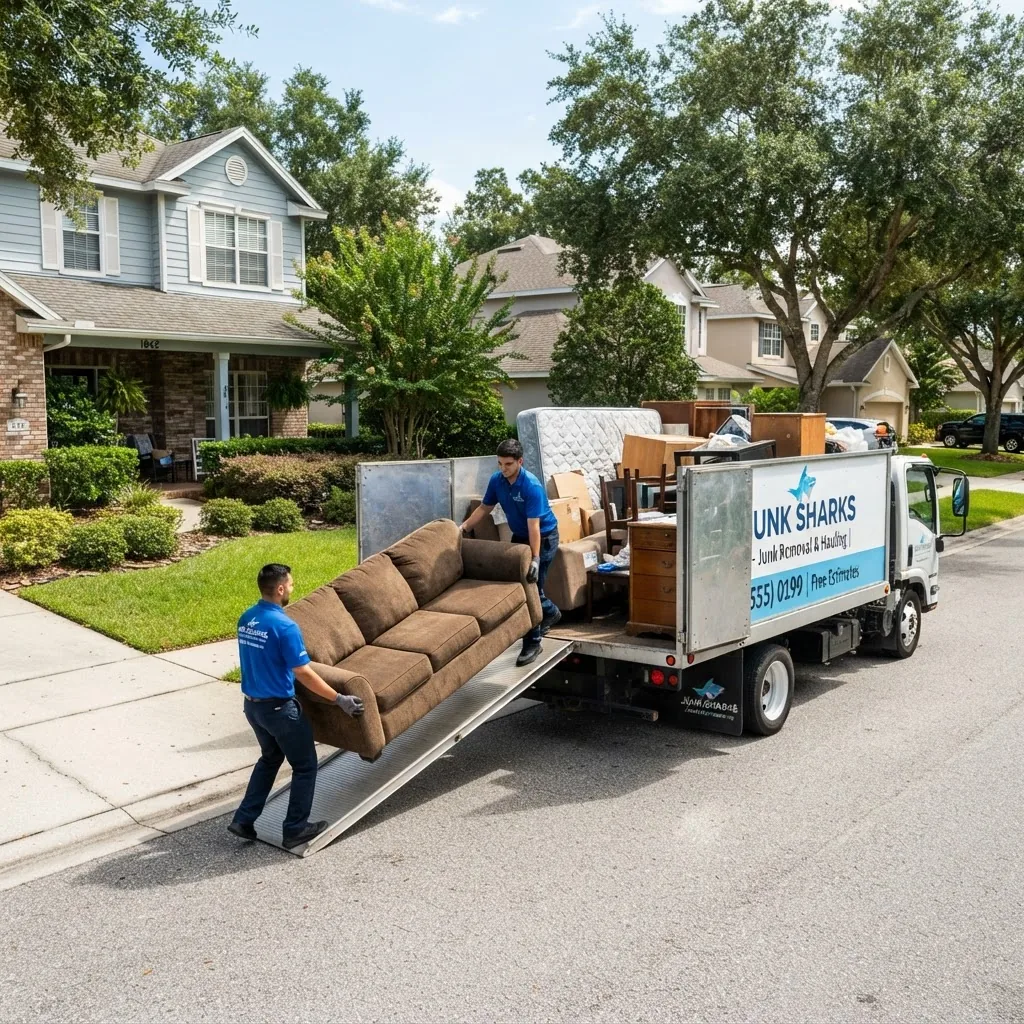
Transition: After maximizing free and low-cost opportunities, learn how garage cleanouts and one-time pickups work and what to expect.
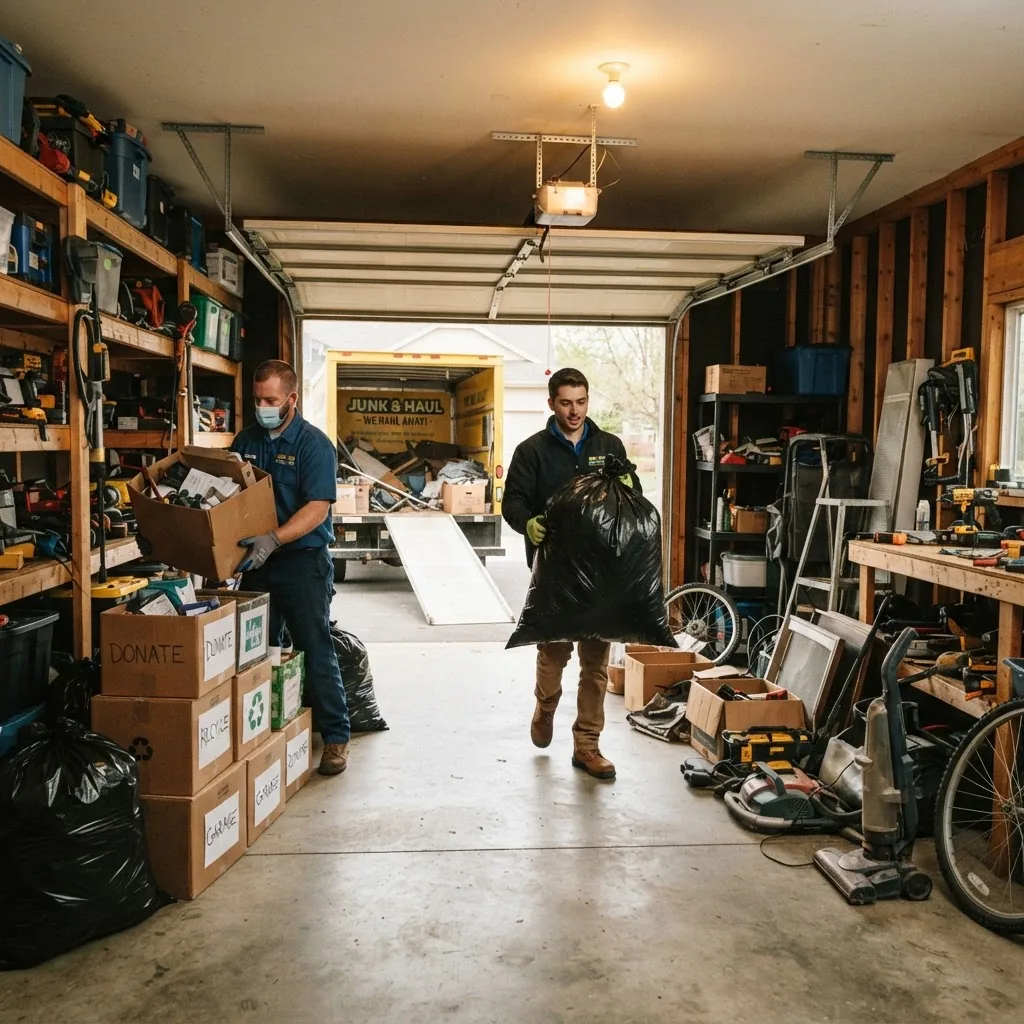
How does garage junk removal work and where can I find one-time trash removal near me?
Answer: Garage junk removal is a focused service that clears cluttered garages—crews sort, haul, and load items into trucks; one-time trash removal handles bulky or surplus items on a single scheduled pickup and can include yard waste and appliances.
Garage junk removal: a targeted service to empty and organize a garage area, including removal of stored household junk, broken equipment, and unwanted furniture.
How a professional garage removal typically proceeds (step-by-step):
- Pre-visit estimate: provider offers on-site estimate or asks for photos to assess volume and any heavy items.
- Scheduling: choose a pick-up window; same-day or next-day options are often available for local crews.
- On-site assessment: crew confirms final scope and provides a final price (for volume- or labor-based models).
- Sorting and separation: haulers separate donations, recyclables, and trash; if requested, they will place items for donation separately.
- Loading and transport: workers load items into appropriate trucks and transport to donation centers, recyclers, or landfills.
- Final walk-through and payment: crew checks the cleared area and accepts payment via cash, card, or digital methods.
Practical tips to prepare your garage for removal:
- Clear a path to heavy items and mark fragile belongings you want kept.
- Photograph items for insurance or inventory before removal.
- Separate hazardous materials (paints, solvents, batteries) and check which items haulers will not accept.
- Label donation items or move them into a single area to speed sorting.
Examples of one-time trash removal use cases:
- Estate cleanouts where the homeowner needs a single comprehensive haul-away.
- Move-out cleanups for tenants or landlords needing quick clearance.
- Pre-sale house cleanouts to improve curb appeal.
Service feature comparison (quick):
- Garage removal: often labor-intensive, recommended to get on-site quotes; ideal for sorting and donation coordination.
- One-time pickup: typically priced by load or per-item; best for bulk trash and single-day needs.
- Yard waste pickup: may be offered on schedule or as a separate paid service; check composting or city yard-waste programs.
For seasonal or neighborhood-focused events tied to garage and one-time cleanouts, refer to community clean-up resources like local spring cleanup options. For furniture-specific disposal tips, see how to dispose of a couch guide and furniture dump options, and for yard waste logistics consult yard trash disposal guide and local waste drop off options.
Transition: If price matters most, the next section explains how to compare pricing models and find the cheapest junk removal near you.
How do I find the cheapest junk removal near me and compare prices and service packages?
Answer: Compare local providers by pricing model—volume-based (by truck load), flat rate, or hourly—then factor in minimum fees, travel charges, disposal surcharges, and recycling credits to identify the true cheapest option.
Volume-based pricing: a model where cost is determined by how much space your load takes up in the hauler’s truck, often quoted as a fraction of a truckload.
Typical pricing models and what they mean:
| Pricing model | How charged | Typical pros | Typical cons |
|---|---|---|---|
| Volume-based (per truckload) | Quoted by fraction (e.g., 1/4, 1/2 truck) | Easy for bulky items; predictable for large jobs | May overcharge for light but bulky loads |
| Flat-rate | Single price for defined scope | Transparent; no surprises | Requires detailed scope to avoid add-ons |
| Hourly + labor | Charged for crew hours plus truck | Good for heavy-labor jobs; fair if speed is priority | Can balloon if job takes longer than expected |
Common hidden costs to query before booking:
- Travel or minimum-fee charges for distant service areas.
- Disposal surcharges for mattress, appliance freon handling, or electronics.
- Stair or heavy-item fees when additional labor is required.
- Extra sorting or separation fees if the crew must separate recyclables on-site.
Cost estimation example: According to a 2024 industry report, average local residential single-truckload services range from $200–$550 depending on region and disposal needs; smaller two- to four-item pickups often start around $75–$150.
Negotiation and estimating tips:
- Provide photos and an itemized list to get accurate volume estimates.
- Ask how they treat donationable items—some offer discounts if they can resell usable goods.
- Request the exact disposal facility and ask whether landfill or recycling credits apply.
- Compare dumpster rental alternatives if you have continuous or heavy debris needs; see dumpster rental cost guide and local dumpster services and commercial dumpster service guide and rental requirements.
Comparison checklist when collecting quotes:
- Does price include loading and hauling or just haul-away?
- Are disposal fees included or billed separately?
- Is water, shutter, or handling of hazardous items excluded?
- What forms of payment are accepted and when is payment due?
Additional local cost references and service options: garbage pickup Fort Wayne guide and service options, junk removal Cincinnati service guide and cost overview, and dirt removal near me service guide and cost overview. If comparing commercial options for larger jobs, consult commercial junk removal services guide and cost overview and commercial dumpster service guide and rental requirements.
Alternative low-cost option: dumpster bags or rental sacks can cost less for small-to-medium projects; read the waste removal bags guide and dumpster bag rental services before deciding.
Transition: Now that you can compare costs, learn what actually happens during a booked service and how to prepare for a smooth pickup.
What should I expect when hiring junk haulers near me: process, scheduling, and customer expectations?
Answer: Expect a pre-visit estimate or photo quote, arrival within a scheduled window, on-site confirmation of the final price, loading and removal, and payment at completion—verify license, insurance, and accepted items beforehand.
Scheduling service: booking can be done by phone, web form, or app; same-day options exist but schedule earlier for weekend or high-season slots.
- Contact and quote: many haulers offer instant online quotes or photo-based estimates; confirm inclusions and exclusions.
- Appointment window: typical arrival windows are 2–4 hours—ask for narrower windows if timing matters.
- On-site confirmation: crew will reassess volume or heavy items and confirm a final price before loading.
- Payment methods: most accept card, cash, and mobile payments—authorize payment after completion and receipt issuance.
- Service completion: crew performs a final walk-through; request before/after photos for records.
What to prepare on pickup day:
- Clear access for trucks and a safe loading path.
- Separate donation items and label anything you want kept.
- Be present or designate a trusted person to approve the scope and payment.
Customer expectations and protections:
- Check online reviews and request proof of insurance and business license prior to booking.
- Ask for a written invoice showing disposal fees, labor, and taxes to avoid surprise charges.
- If a hauler refuses an item on arrival, they should explain the reason—hazardous items or prohibited materials are common causes.
Local municipal coordination and public collection: for city-managed pickups and curbside coordination, consult municipal guidance like city garbage pickup service guide and collection details, public trash collection guide and refuse center services, and trusted provider practices in reliable waste service guide and trusted trash pickup.
Examples of expected service timelines: small one- or two-item pickups often complete within 30–60 minutes; full-garage removals can take 3–8 hours depending on sorting needs. For city-specific scheduling practices, see regional guides like junk removal NYC guide and effective trash pickup options and Thanksgiving trash pickup guide and holiday service info.
Transition: With scheduling details covered, the next section addresses environmental responsibilities and recycling options.
How do junk haulers handle recycling and donating junk items responsibly?
Answer: Responsible haulers separate recyclable materials, transport electronics and metals to recycling centers, divert usable items to donation organizations, and follow local hazardous-waste rules; always ask for the disposal plan and receipts.
Recycling centers: facilities that sort and process materials like metal, cardboard, electronics, and certain plastics for reuse or raw-material recovery.
Responsible disposal workflow:
- Segregation on-site into donationable items, recyclables, scrap metal, and trash.
- Donation drop-off or scheduled charity pickup for usable goods; charities may provide receipts for tax purposes.
- Recycling for metals, appliances, and electronics at licensed facilities.
- Safe handling and disposal of hazardous wastes per local rules (see hazardous section below).
Nearby facility examples (generic, not location-specific):
- Local donation centers (e.g., regional Goodwill/ Salvation Army branches)
- Municipal transfer stations and drop-off recycling centers
- Scrap metal yards and electronics recycling drop-offs
- Household hazardous waste (HHW) collection events or centers
Environmental and regulatory references: follow national and local guidance on disposal and recycling. For federal guidance on materials management and source reduction, consult EPA guidelines on sustainable materials management. For industry standards and recommended operational practices, see National Waste & Recycling Association resources. For municipal program details and free pickup initiatives, check your city’s official waste department or USA.gov local government resources.
Hazardous vs non-hazardous junk (definition on first use):
Hazardous junk: items containing chemicals, PCB, batteries, paints, solvents, and asbestos that require special handling and cannot be disposed of in regular landfill or standard hauler loads.
Why proper handling matters: mishandling hazardous junk can create environmental harm and legal fines; licensed hazardous waste removal companies follow strict transport and disposal rules—see hazardous waste removal companies guide and disposal rules for details.
Additional facility references for disposal and recycling logistics: dumps for trash guide and public dumping requirements, landfill near me guide and local garbage dump locations, and recycling drop off locations guide and bin availability.
Case scenario: A garage cleanout crew diverted 60% of items to donation and metal recycling, lowering landfill fees by an estimated 30%—an example of how responsible sorting reduces costs and environmental impact.
Transition: Below are common questions customers ask before hiring a hauler.
Frequently asked questions about junk haulers near me
Answer: Below are concise, practical answers to common customer questions about services, licensing, free pickup eligibility, and disposal rules—read each for quick clarity.
Term: “volume-based pricing” — charging based on the amount of truck space used rather than individual item count or hourly labor.
For guidance on choosing trusted local services and provider responsibilities, consult reliable waste service guide and trusted trash pickup and the municipal collection protocols at garbage man service guide and collection requirements.
Conclusion: Choose a nearby hauler who provides clear written estimates, separates donation/recycling, and shows proof of licensing and insurance; combine free pickups and donation to cut costs, and use the pricing-comparison checklist above to find the cheapest reliable option. Ready to clear your space? Request three local quotes and schedule the earliest convenient pickup.