
By the end of this hands-on guide you will have planned, priced, and scheduled a residential junk removal pickup and prepared your items for safe, compliant haul-away. Expect to complete the process in 1–3 days for routine clearouts or under 4 hours if you choose same-day pickup; this guide assumes a basic homeowner skill level (ability to move medium-weight items and follow simple prep steps).
Before you start
- Photos of the items and areas to clear (for quotes and records)
- Measurements of large pieces (sofa length/width, mattress size)
- Basic tools: gloves, moving dolly, straps, protective blankets
- Payment method ready: card, cash, or mobile pay
- List of hazardous materials to exclude (paint, solvents, batteries)
- Local municipal pickup schedule or contact details
Transitioning from planning to action, the next section explains what professional junk removal services include and why people hire them instead of hauling themselves.
Introduction to Junk Removal Services
Junk removal means hiring a professional team to pick up, haul away, sort, and (where possible) recycle or donate unwanted items from residential or commercial properties. Typical types of junk include old furniture, mattresses, appliances, construction debris, yard waste, electronics and boxed household goods. People hire junk removal when the job is too large, hazardous, or time-consuming to handle themselves—in short, it’s like hiring a moving company for your trash.
Benefits of professional service include speed (teams can clear a small house in 2–6 hours), safety (trained crews reduce injury risk), proper disposal (licensed providers route items to recycling or appropriate disposal facilities), and convenience (door-to-door pickup and post-job clean-up). Full-service junk removal includes onsite sorting and hauling for you; partial or self-service options reduce cost but require more homeowner effort.
Expect regional variation: municipalities handle basic curbside garbage differently from private haulers, and some items require special handling or permits. For specific local rules, residents should consult municipal guidance. According to a 2024 industry report by the National Waste & Recycling Association, professional haulers increase recycling rates by diverting 20–35% of collected items from landfill when properly sorted.
Quick definitions you’ll see repeatedly in this guide:
- Full service junk removal: Crews remove items from any room, load them into a truck and handle disposal.
- Debris hauling: Focused hauling of construction or landscape debris, often requiring special permits.
- Same day junk removal: On-demand pickup scheduled for the same calendar day—typically costs more.
- Haul away junk: General term for transporting items from point A to disposal or resale location.
Next, you’ll find the core, step-by-step way to handle an actual residential pickup from selecting a provider to post-job checks.
How Residential Junk Removal Works
Below is a practical stepwise walkthrough that mirrors a typical residential pickup process and shows how municipal and private options interact.
- Assess and document your junk: Walk each room, photograph items, note dimensions for large pieces, and make a short list that separates reusable (donate), recyclable (metal, electronics), hazardous (paint, electronics with batteries) and landfill-bound items. This helps get accurate quotes and avoids surprises at pickup.
- Check municipal pickup rules: Many cities include standard residential trash and recycling pickup for weekly curbside items, but not for bulk items or construction debris. city garbage pickup service guide covers local collection types and what to call municipal services for bulky items.
- Decide between municipal pickup and private haul: Use municipal pickup for regular trash and routine bulky-item collection (if offered). Choose a private hauling service for fast, full-service removal, apartment moves, or mixed loads with recyclables and donations.
- Request photos or an itemized list for quotes: For residential junk removal, most providers offer three quoting methods: phone estimates, photo-based quotes (send images), or on-site estimates. Provide clear photos and measurements to lower variance in pricing.
- Schedule pickup and confirm access: Note stair limits, elevator requirements for apartment junk removal, and whether a parking permit is needed. If you live in a building, contact management to permit truck access or use the valet trash service if available—see valet trash service options.
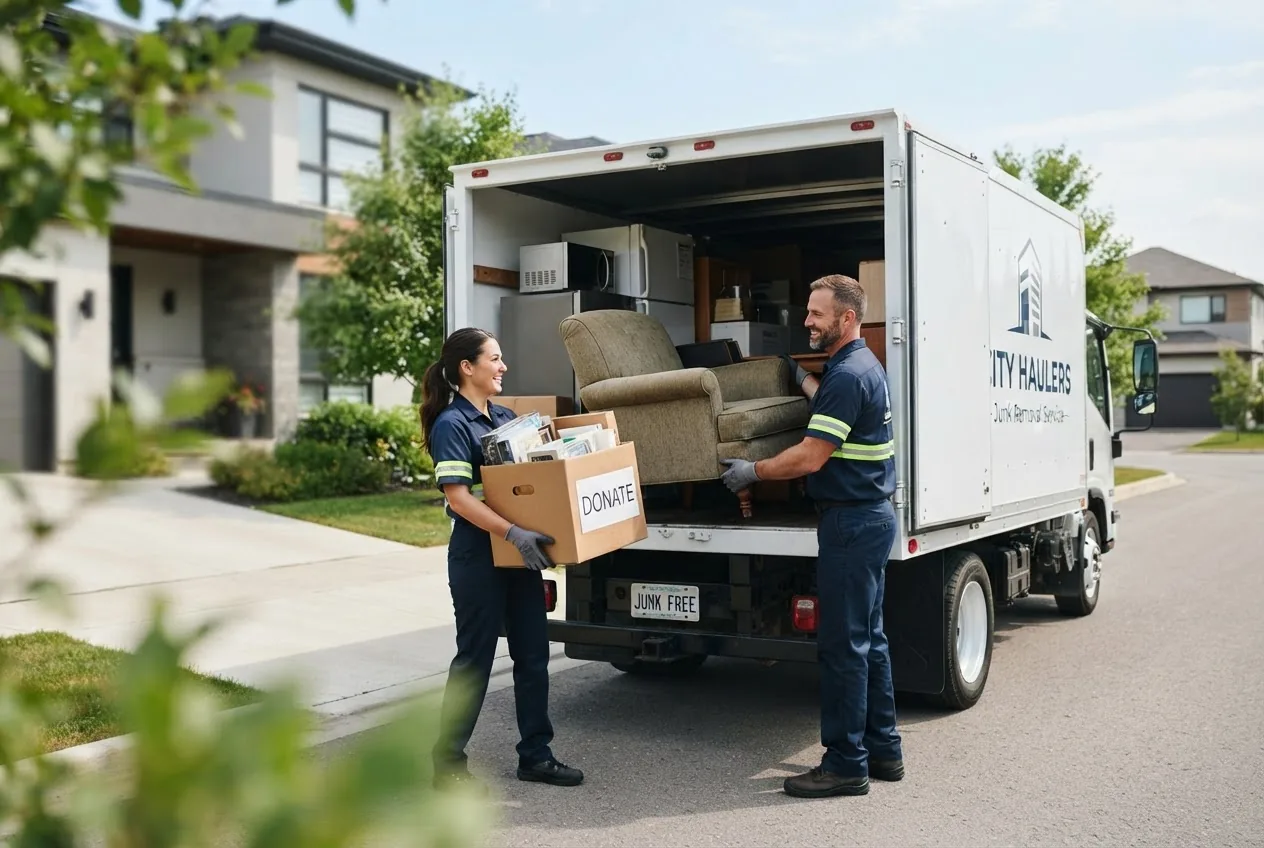
- Prepare items for pickup: Clear walkways, wrap sharp edges, tape cabinet doors, and separate electronics. Place small reusable items in boxes, and label them for donation if you want the crew to drop off at a charity.
- On pickup day—inspect and agree the final price: Reputable haulers will confirm what they are removing and quote a final price based on volume, item type, and labor. If you agreed to an on-site inspection price, request written confirmation and ask about hidden fees such as heavy-item surcharges.
- Track disposal and request receipts: Ask where items will be taken—donation centers, recycling depots, or landfill—and request a disposal receipt if needed for records. This is especially important for estate cleanouts or rental property turnovers.
- Follow up post-job: Check the area for debris and confirm no damage occurred. If an item was supposed to be donated or recycled, request confirmation or a photo proof of delivery if the company offers it.
For municipal-specific rules like curb placement, acceptable bulk items, and how to get a municipal pickup scheduled, see the public trash collection and refuse centers page and the garbage man service and collection requirements.
Types of Junk Removal Services Available
Choose a type of junk removal service based on volume, speed, specialized needs, and budget. Below are common service models, with pros, cons and use-cases.
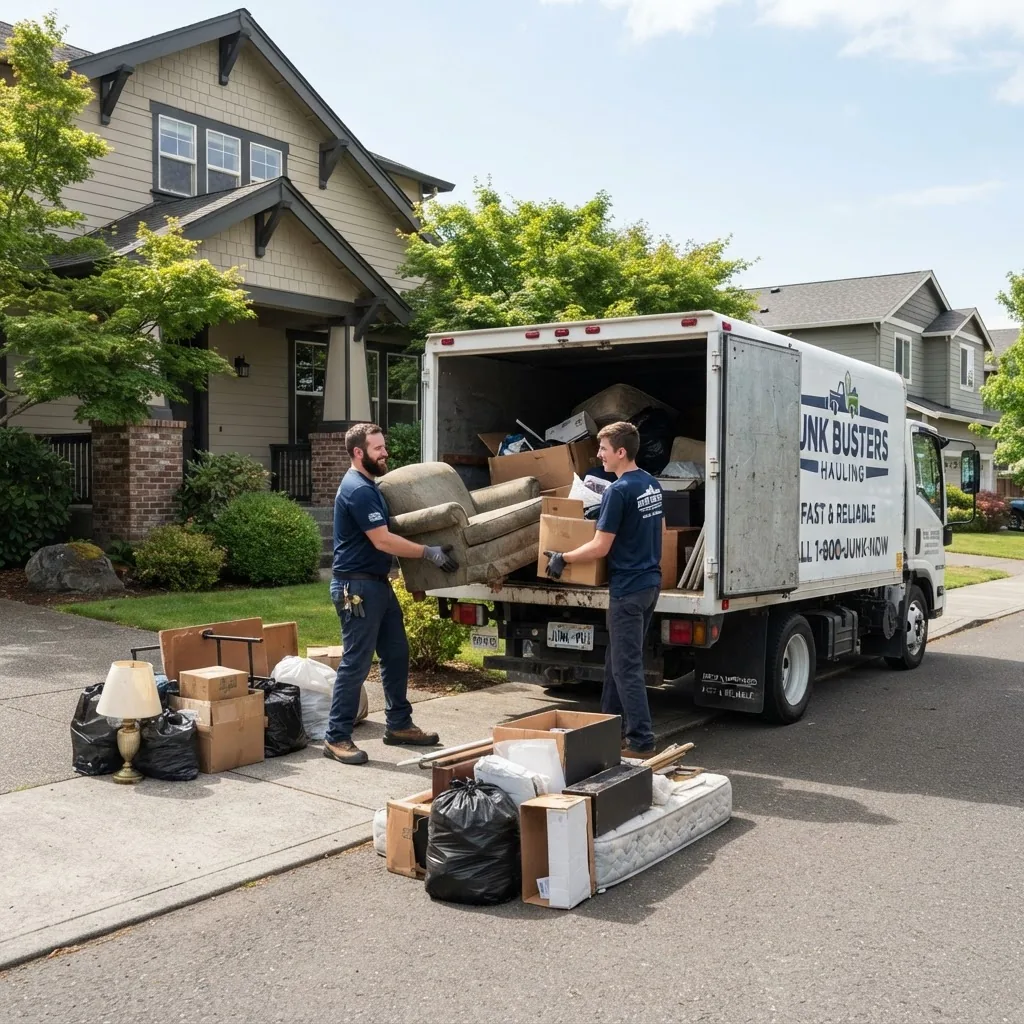
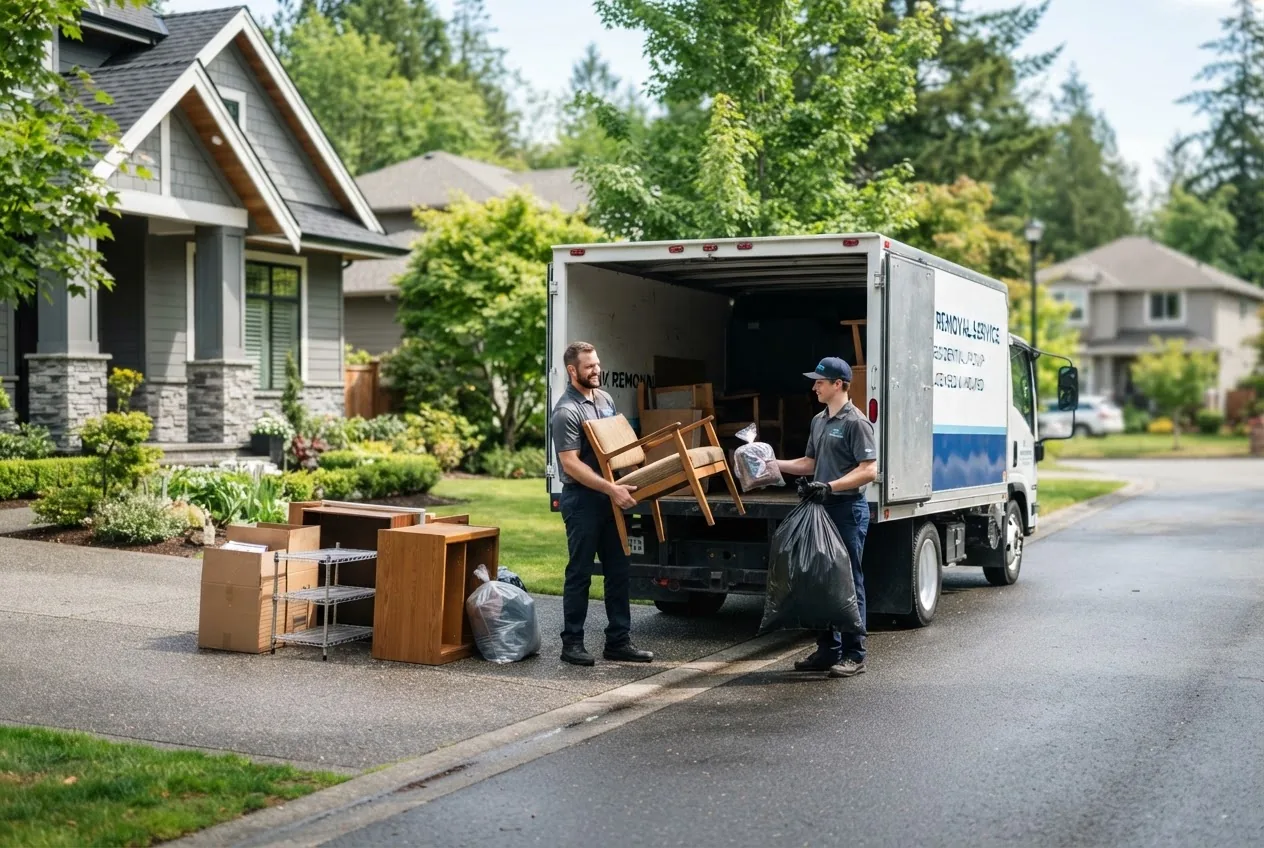
- Full service junk removal — Crews enter the home, remove items room-to-truck, load, haul and handle disposal. Best for hoarding cleanouts, estate cleanups, and large furniture removal. Pros: fastest, safest; Cons: costlier (labor + disposal). Typical time: 2–6 hours for a 2-bedroom home.
- On-demand same-day junk removal — Rapid-response teams provide same day or next-day pickups. Good for urgent needs (evictions, last-minute moves). Pricing often includes a premium for expedience. Expect a same-day booking window of 3–8 hours and surcharges of 15–40% above standard rates.
- Truckload / volume-based hauling — Pricing is by truck size or percentage of truck filled. Use for garage cleanouts and moving large volumes. Requires accurate pre-quote photos to avoid upsells. For heavy loads, confirm if weight limits incur per-ton charges.
- Apartment junk removal — Teams trained for stairs and elevators; often require building coordination. Expect additional labor charges for flights of stairs and time constraints imposed by building management.
- Debris hauling — Specialized for construction, renovation scraps, roofing waste, and concrete. May require permits and contain hazardous components; see our debris removal companies guide for contractor-focused workflows.
- Appliance and electronics removal — Technicians remove large appliances and e-waste and route them to the correct recycling streams. Refrigerants and batteries require special handling; providers should be certified to handle them.
- Yard and green waste pickup — Branches, stumps, and grass clippings handled separately from household refuse. Some haulers compost; municipal programs may offer seasonal pickups. See yard trash disposal and waste drop off for local options.
- Donation pickup and sorting services — Providers that separate high-quality goods for charity donation, often saving you disposal costs and generating tax-deduction receipts if requested.
- Self-service dumpster rental — You fill a rented dumpster on-site; haul-away company collects when full. Ideal for renovation projects and large cleanouts. See commercial dumpster rental for commercial guidance and rental rules.
- Dumpster-bag / bag rental — Temporary heavy-duty bags placed curbside for pickup—cheaper than a full dumpster for small landscaping or cleanup jobs. Review the waste removal bags and dumpster rentals guide for sizing and weight limits.
- Scrap and metal pickup — Specialized haulers collect ferrous and non-ferrous metals, often paying per pound. For local metal services see our metal scrap pickup services.
- Affordable rubbish removal services — Low-cost providers that limit service scope (curbside only, no heavy lifting). Vet for licensing and insurance; see affordable rubbish removal services for cost-cutting strategies.
- Specialty dirt and soil removal — For landscaping and foundation projects; consult the dirt removal services near me guide for weight-based pricing and trucking requirements.
- Local-market and city-specific services — Cities like Las Vegas or big metro areas offer specific disposal options; see Las Vegas junk removal and disposal for an example of local rules and facility lists.
For project-level decisions that may require rental containers, compare costs in our dumpster rental cost guide before deciding between a truckload service and a dumpster rental.
Next, learn the detailed scheduling options, including how to secure same-day pickups and tips to avoid timing issues.
Scheduling and Same-Day Pickup Options
Scheduling a pickup is the practical heart of the process: you choose date/time, confirm access, and understand lead times and costs. Same-day junk removal is increasingly available through app-driven platforms and local haulers but usually at a premium.

How to schedule:
- Request a quote online or by phone: Provide photos and list items. If you need same-day pickup, explicitly request “same-day” and provide availability windows. Platform-based services often show real-time slots and prices.
- Confirm crew arrival window: Most providers give a 2–4 hour arrival window. If you need an exact time, expect an extra fee or a guaranteed appointment slot.
- Get clear terms for cancellation and rescheduling: Ask about free rescheduling windows (most providers allow free reschedule 24 hours out; same-day changes may incur fees).
- Apartment and HOA constraints: Ensure building management approves truck access or shared loading zones; schedule around restricted hours. If using valet-style pickup, confirm pickup points with your property manager.
- Payment and tipping policy: Confirm payment methods accepted and whether tips are expected. Ask for an itemized receipt showing disposal fees if you need documentation.
Will garbage be picked up today? If you’re asking “will garbage be picked up today” from a municipal service, check your city schedule or the Fort Wayne garbage pickup guide or the local equivalent. For private same-day junk removal, availability depends on fleet size and demand; apps will indicate open slots.
Tips and FAQs (practical):
- Tip: Book early—same-day windows fill quickly; if you have flexibility, booking 48–72 hours ahead lowers cost by 10–25%.
- Tip: Consolidate pickups—grouping multiple removal needs into one appointment saves per-visit fees.
- FAQ: If your municipal garbage is not scheduled for pickup today, do not block curbside space with items requiring a special pickup; instead schedule a private haul-away to avoid fines.
For seasonal and community cleanup events, including spring pickup programs, consult our city clean up guide and local spring cleanup options. For major cities with special rules like New York City, see NYC junk removal and trash pickup. For holiday pickup disruptions and rules for Thanksgiving or other holidays, consult holiday trash pickup schedules.
Tip: If you need to coordinate a same-day pickup with donation delivery, confirm the hauler’s donation partners first—some companies make a single stop to drop donations, which can extend the pickup window.
Pricing and Getting a Junk Removal Quote
Pricing for junk removal varies by four primary factors: volume, item type, labor required, and distance to disposal facilities. Below is a practical approach to getting accurate quotes and a pricing comparison table.

Typical price methods:
- Volume-based: charged by truck load (e.g., half-truck, full-truck)
- Itemized: flat fees per item (sofa $60–$250, mattress $40–$150)
- Weight-based: per-ton charges for dense items (construction debris, dirt)
- Time-and-materials: hourly labor plus disposal fees
Real pricing examples (practical figures):
- Small-load local pickup (couch + boxes): $150–$300 total, typically 1–2 hours.
- Full truckload (single-family 3-bedroom cleanout): $600–$1,200 depending on volume and disposal fees.
- Construction debris haul (per ton): $60–$120 per ton plus landfill tipping fees; heavy loads may require a permit.
- Same-day pickup surcharge: 15–40% above standard price depending on provider urgency.
According to a 2024 industry report from the National Waste & Recycling Association, national average small-load residential junk removals range $200–$450, with metropolitan areas skewing higher by 10–30% due to labor and disposal costs.
| Price Factor | How it affects price | Typical range / example |
|---|---|---|
| Volume of Junk | More cubic feet = larger truck or extra trips | Half-truck $300–$600; full truck $600–$1,500 |
| Type of Junk | Hazardous and heavy items increase disposal cost | Mattress $40–$150; fridge $75–$250 |
| Labor Required | Stairs, fragile handling, and sorting add hourly time | $50–$120 per crew hour |
| Distance to Disposal Site | Longer travel adds fuel/hauler time and fees | Local tip fees vary; out-of-area transfer +$50–$200 |
How to get a reliable quote: send clear photos, list item dimensions and accessibility details, request an itemized estimate, and ask whether disposal fees, fuel surcharges, and labor for stairs/elevators are included. For commercial projects, compare with our commercial junk removal pricing overview.
If you’re considering a dumpster, compare costs with on-demand hauling in our dumpster rental cost guide. For Cincinnati-specific pricing patterns, see the Cincinnati junk removal cost guide.
Note: Cheap quotes are often missing disposal, fuel, or labor surcharges. Always confirm total out-the-door price and ask for a written quote to avoid hidden fees.
Choosing the Right Hauling Service for Your Needs
Selecting a provider requires balancing price, speed, environmental practices, and trust. Use the checklist below to evaluate candidates and make a final decision.
Checklist for vetting hauling companies:
- Licensed and insured—confirm business license and insurance limits for property damage and worker injury.
- Transparent pricing—provide itemized written estimates that list disposal fees, labor surcharges, and travel costs.
- Recycling and donation partners—ask where items are routed and request proof for donation pickups.
- Customer reviews—look for mixed reviews about punctuality, price accuracy, and crew professionalism.
- Special equipment—ensure the provider has dollies, straps, and protective blankets for heavy furniture.
- Local knowledge—providers familiar with municipal rules and landfill locations reduce permit delays.
When you need lower-cost options, see our guide to affordable junk haulers near me for proven budget approaches. For trustworthy providers and recommendations, consult our reliable waste service providers page or explore veteran-operated teams at veteran junk removal trusted services.
Case example (scheduling + haul away): A homeowner with a three-piece sofa set and 10 boxes requested a photo quote on a Monday at 9:00 a.m. The hauler replied within 90 minutes with a $275 estimate, scheduled a 4–6 p.m. same-day window, added a $25 fuel surcharge, and completed the job in 75 minutes. The crew provided a receipt showing disposal and donation destinations. This is a typical efficient small-load scenario if you prepare measurements and photos ahead of time.
Environmental Considerations and Waste Disposal
Environmentally responsible junk removal reduces landfill burden and, in some cases, lowers your cost. Providers that recycle, donate, or refurbish items can divert large volumes from landfills—important for both sustainability and compliance.
Start with the EPA guidance on household waste to understand regulated items and recycling best practices: Environmental Protection Agency. For local disposal policies and where to take specific materials, consult municipal pages for your area (search your city’s waste management website) or a centralized government resource: local government waste resources.
Common environmentally relevant practices:
- Segregate e-waste, batteries, and CFLs—these require special handling and cannot go in normal trash.
- Request donation pickup for furniture and reusable household goods—many haulers partner with charities to avoid landfill disposal.
- Compost yard waste when possible—check for municipal green-waste programs or private compost facilities.
For commercial recycling and cost options, see commercial recycling services and waste disposal. If you need landfill rules and tipping requirements, consult the garbage landfill waste disposal requirements and our guide on public dumping requirements. To find recycle bins and drop-off centers near you, use our recycling drop off locations page or check local landfill maps: local landfill locations.
Hazardous and regulated waste: never place paints, solvents, pesticides, medical sharps, or certain batteries in general pickups. For rules and licensed handlers, consult the hazardous waste removal and disposal rules.
For commercial recycling models and industry best practices, the National Waste & Recycling Association provides standards for route optimization and transparency—consult their guidance for hauler-level policies: National Waste & Recycling Association.
Tips for Preparing Your Home and Junk for Pickup
- Label and photograph items: Photograph large and fragile items; label boxes “donate” or “trash” to guide the crew.
- Clear pathways and measure tight spots: Measure all doorways, stair widths and elevator sizes; record measurements if an item is close to the limit.
- Disassemble bulky items: Remove couch legs and table leaves when possible—this reduces labor time. Keep hardware in a labeled bag taped to the item.
- Contain loose debris: Put nails, small scraps and dirt in sealed bags to prevent crew injuries and lost materials.
- Move small items to curb or staging area: Put boxes and small furniture in a single staging area to speed loading—avoid blocking sidewalks or fire lanes.
- Know items not accepted: Many haulers reject hazardous waste, medical sharps and liquids—refer to our furniture disposal guide for bulky-item specifics.
- Use the right rental if needed: For large demolition or renovation waste, consider a roll-off dumpster versus multiple truckloads. See dumpster rental cost guide.
- Prepare donation items: Clean and box household goods and request a donation receipt if you plan to claim a charitable deduction.
Common Challenges and How to Avoid Them
Problem: Hidden fees on arrival. Solution: I once watched a homeowner accept a vague verbal estimate and then pay 40% more at pickup when the hauler counted extra items. Always get written, itemized quotes and confirm surcharge conditions (stairs, heavy items, hazardous materials).
Problem: Missed pickup windows. Solution: In one apartment building the crew couldn’t park due to an HOA rule. I now always check parking and permit needs in advance and provide photos of truck access points when requesting on-site quotes.
Problem: Illegal dumping risk—some low-cost operators may dispose of waste improperly. Solution: Verify company credentials and ask for receipts showing legal disposal locations; if a provider refuses to provide disposal receipts, do not hire them.
Problem: Misidentified recyclables. Solution: I’ve seen crews empty mixed loads to landfill because items weren’t pre-sorted; clearly separate recyclables and donation items and label them—ask the crew how they handle mixed loads before hiring.
Problem: Damage to property during removal. Solution: Request insured providers and confirm protective measures (blankets, corner guards). Inspect the route and take pre-job photos of areas the crew will travel through.
Conclusion and Next Steps
Summary: You now understand the major service types—from full-service junk removal and debris hauling to same-day pickup and dumpster rentals—how residential pickup works, pricing components, environmental responsibilities, and practical steps to prepare for a haul-away. Start by documenting your items, requesting 2–3 photo-based quotes, and scheduling a pickup time that fits your building and municipal rules.
Next steps (quick CTA): Gather photos and dimensions, then request estimates from local providers. If you need municipal rules or seasonal community cleanups, consult the city clean up guide and local spring cleanup options or schedule a private pickup for faster service.
Common mistakes and how to avoid them
I once underestimated the time to empty a garage: bulky items and a broken dolly added two hours and a surcharge. To avoid that, always list heavy items and confirm equipment needs beforehand. I also accepted a cheap quote that omitted disposal fees—always ask for a total, out-the-door price.
Final checklist
- Photos and measurements taken for each large item
- Three written estimates compared (itemized)
- Confirmed pickup window, parking, and building access
- Items separated into donate/recycle/landfill/hazardous
- Protective coverings ready for fragile items
- Payment method prepared and receipt requested
When to call in a professional
Call a licensed full-service provider when you have heavy or hazardous items, large-volume cleanouts, or limited mobility that prevents you from assisting—also when your building requires certified removal teams or when permits are needed for debris removal.