
City garbage pickup is the municipal service that collects residential and public waste on scheduled routes to keep neighborhoods sanitary, manage recyclables and divert regulated materials; residents follow placement rules, schedules and sorting guidelines to ensure collection and avoid fines. This guide covers how it works, what’s accepted, and what to do when issues occur.
Overview of City Garbage Pickup Services
Answer: City garbage pickup is a set of municipal sanitation services—curbside collection, communal dumpsters, and public receptacle servicing—organized by zones and schedules to collect household waste, recyclables, and organics under local service standards and environmental regulations.
Term: City garbage pickup refers to municipal programs that collect household and public waste on public right-of-way or designated collection points.
Municipal waste management combines operational planning, equipment deployment, and public rules to routinely remove refuse and recyclable materials from residential properties and public spaces. Typical components include:
- Routine curbside collection for households (trash, recyclables, organics).
- Communal or multi-family collection points for apartments and condos.
- Public garbage cans and street receptacle servicing in parks and commercial corridors.
- Specialized pickups for bulky items, electronic waste, and household hazardous waste via scheduled events or drop-off centers.
Service ownership varies: many cities run sanitation departments; some contract private haulers. Roles include route planning, vehicle fleet management, customer service, and enforcement of local ordinances.
Operational goals are to minimize public health risks, maximize diversion (recycling/composting), and maintain reliable collection cadence. According to a 2023 municipal report, cities with standard curbside recycling achieve average diversion increases of 15% after program updates (source: municipal report, 2023).
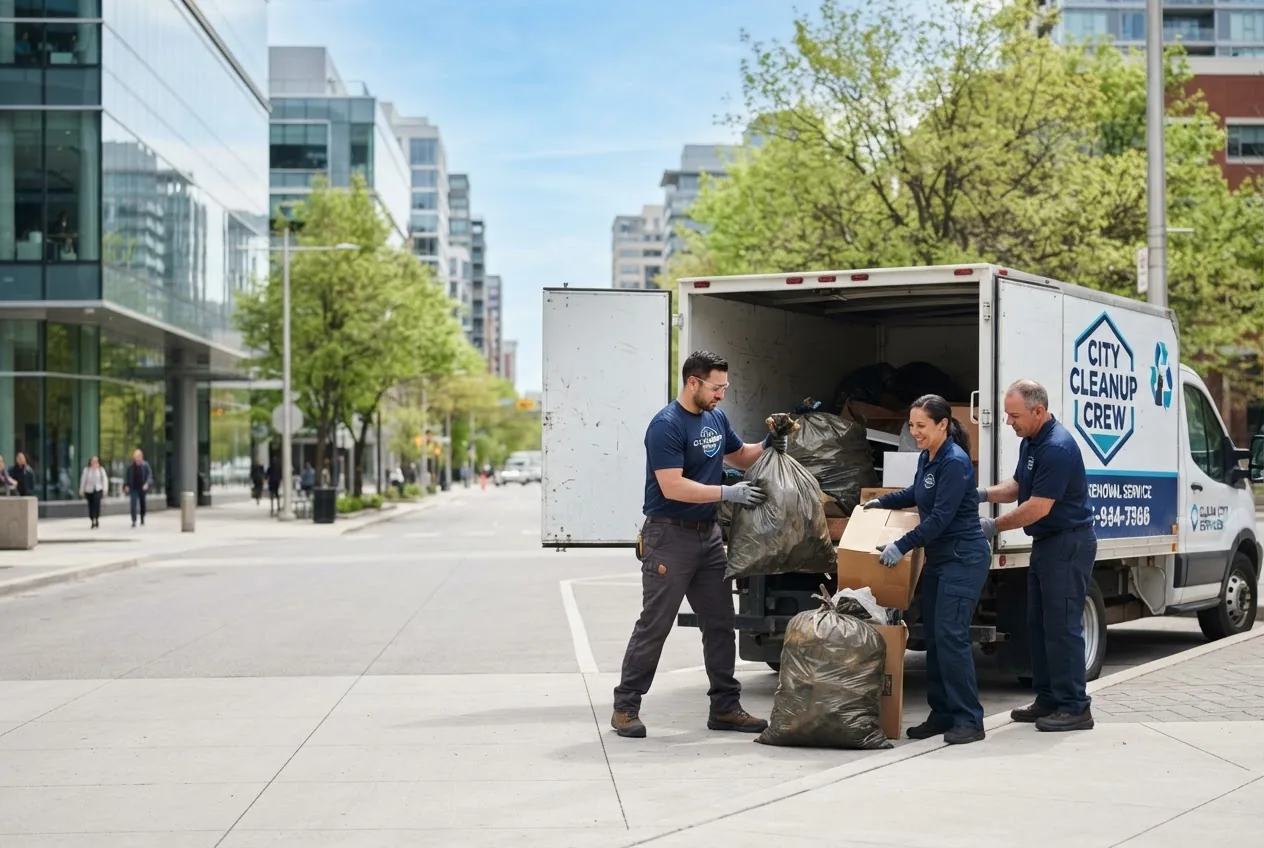
Complementary services often help with overflow or specialized removal needs. junk removal services and residential pickup options
Transition: Next we break down the step-by-step process residents should follow to use these services correctly and consistently.
How City Garbage Pickup Works: Process and Schedule
Answer: City garbage pickup operates on assigned routes and collection days within service zones—residents prepare, sort, and place containers by a set time; sanitation crews collect according to the published schedule, with protocols for missed pickups, holidays, and bulk items.
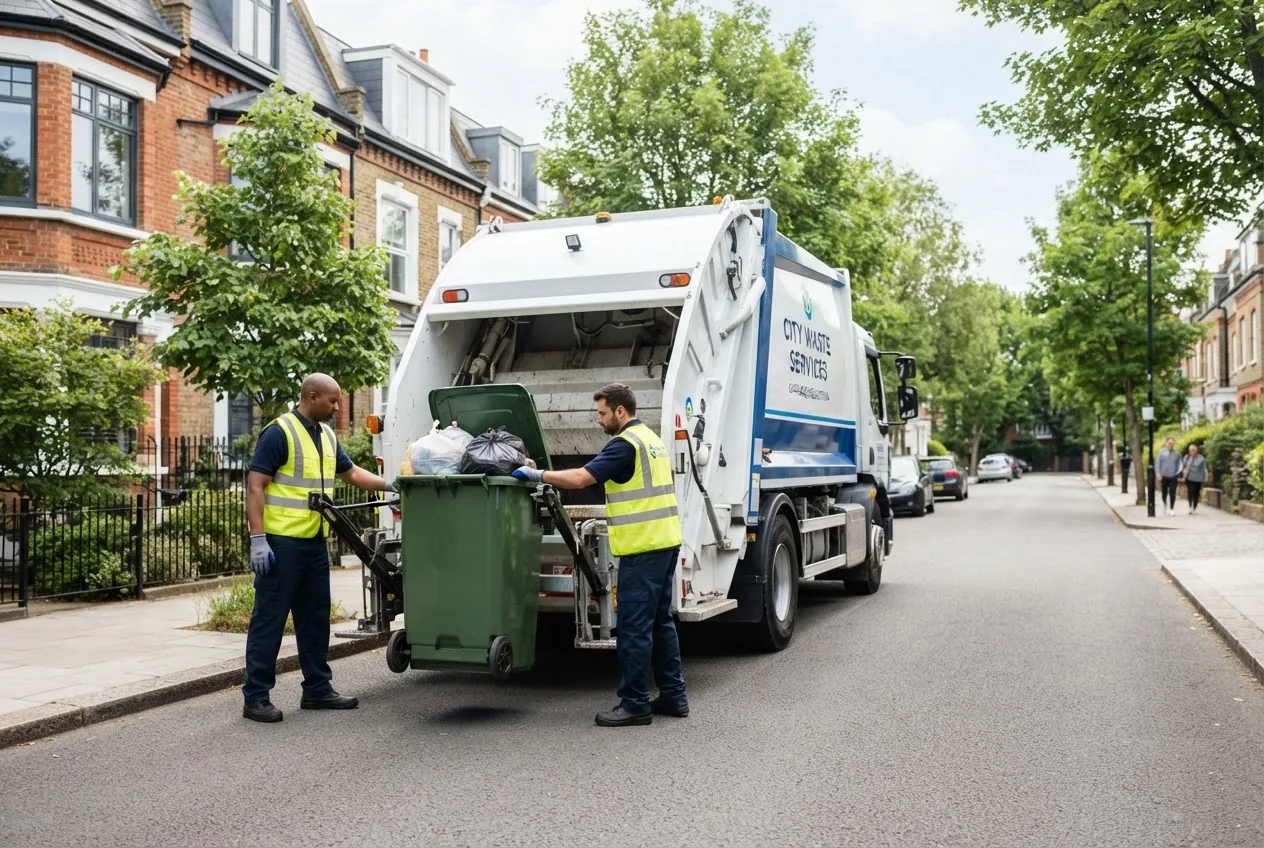
Term: Curbside pickup means placing standardized bins at the edge of your property or curb for automated or manual collection by sanitation crews.
-
Find your schedule and zone.
Look up your collection days through the city website, utility bill inserts, or mailed calendars. Collection days are usually fixed weekly or biweekly and may vary by material (trash, recycling, organics).
Birmingham garbage pickup guidelines
Cincinnati garbage pickup and cost overview
Fort Wayne garbage pickup schedule
-
Set out your containers correctly.
Place bins at the curb or designated collection point by the city’s required time (commonly by 6 a.m.). Use the city-approved containers and follow lid, weight and placement rules addressed later in this guide.
-
Sort materials per program rules.
Separate recyclables and organics if required; contamination can cause whole loads to be diverted to landfill. Many cities publish accepted item lists online and at drop-off centers.
-
Follow bulk and special pickup procedures.
Bulky items (furniture, mattresses) often require a request or scheduled curbside pickup; some cities limit free pickups per household per year. Check your local bulky-item rules for size and prep requirements.
-
Expect collection variability and notifications.
Weather, holidays and mechanical issues can delay collection. Cities increasingly use text/email alerts or app notifications to inform residents; register for these where offered.
-
Report missed pickups or service problems.
If your waste isn’t collected, follow city instructions for reporting missed pickups (phone, web form, or mobile app) and include photos and address details for faster resolution.
-
Pay fees or adhere to subscription rules if required.
Some municipalities include garbage service in taxes, while others bill through utility accounts or require subscription to private haulers for certain services.
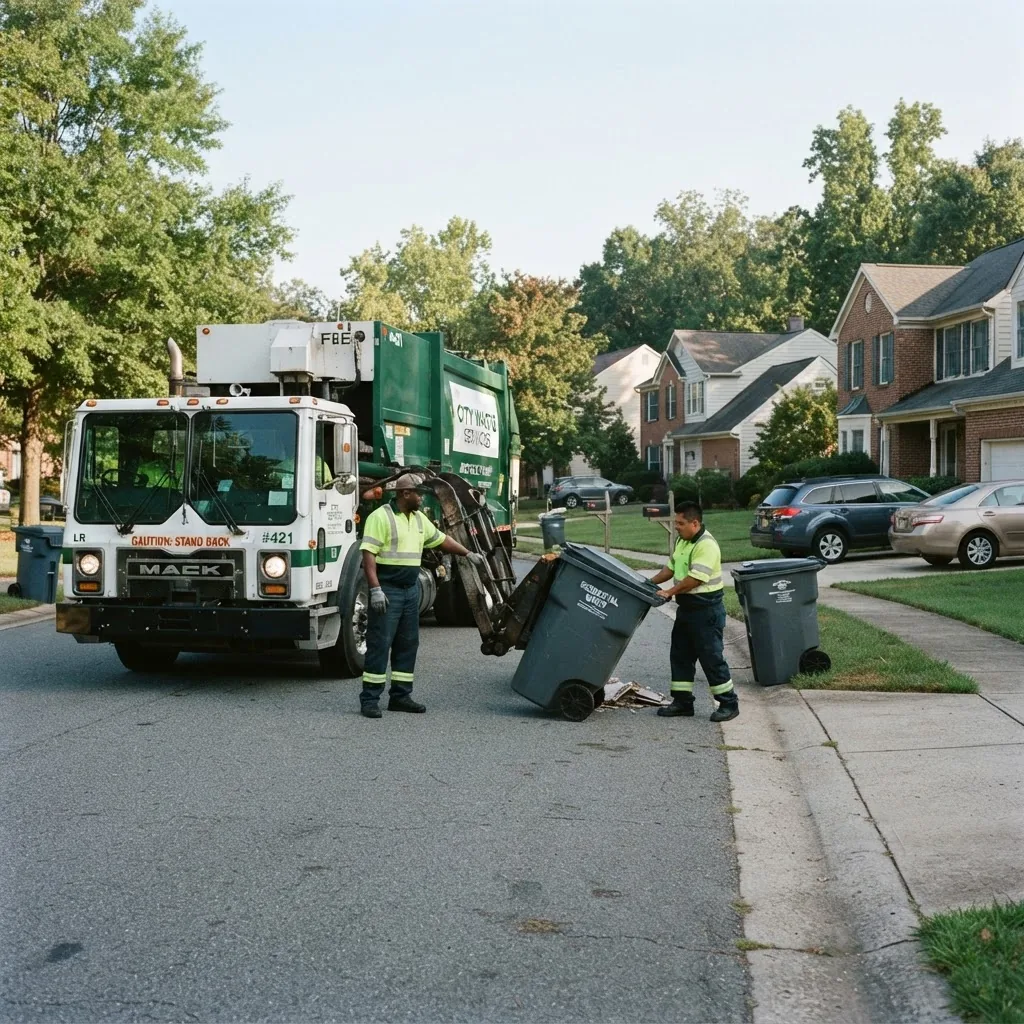
Real-world scenario: A townhouse resident places a standardized 96-gallon bin at the curb by 6 a.m. on Tuesday (the assigned day), labels it per city rules, and registers a missed pickup via the city app; the city resolves the issue within 48 hours per their service-level promise (source: city sanitation department notice, 2024).
Transition: Understanding the service types and the equipment used helps you match your household needs to the right collection method.
Types of City Garbage Pickup Services and Equipment
Answer: Cities provide several service models—curbside pickup, communal dumpsters, and public receptacle servicing—each using distinct equipment like automated trucks, roll-off containers, or manual collection crews, suited to different housing types and volumes.
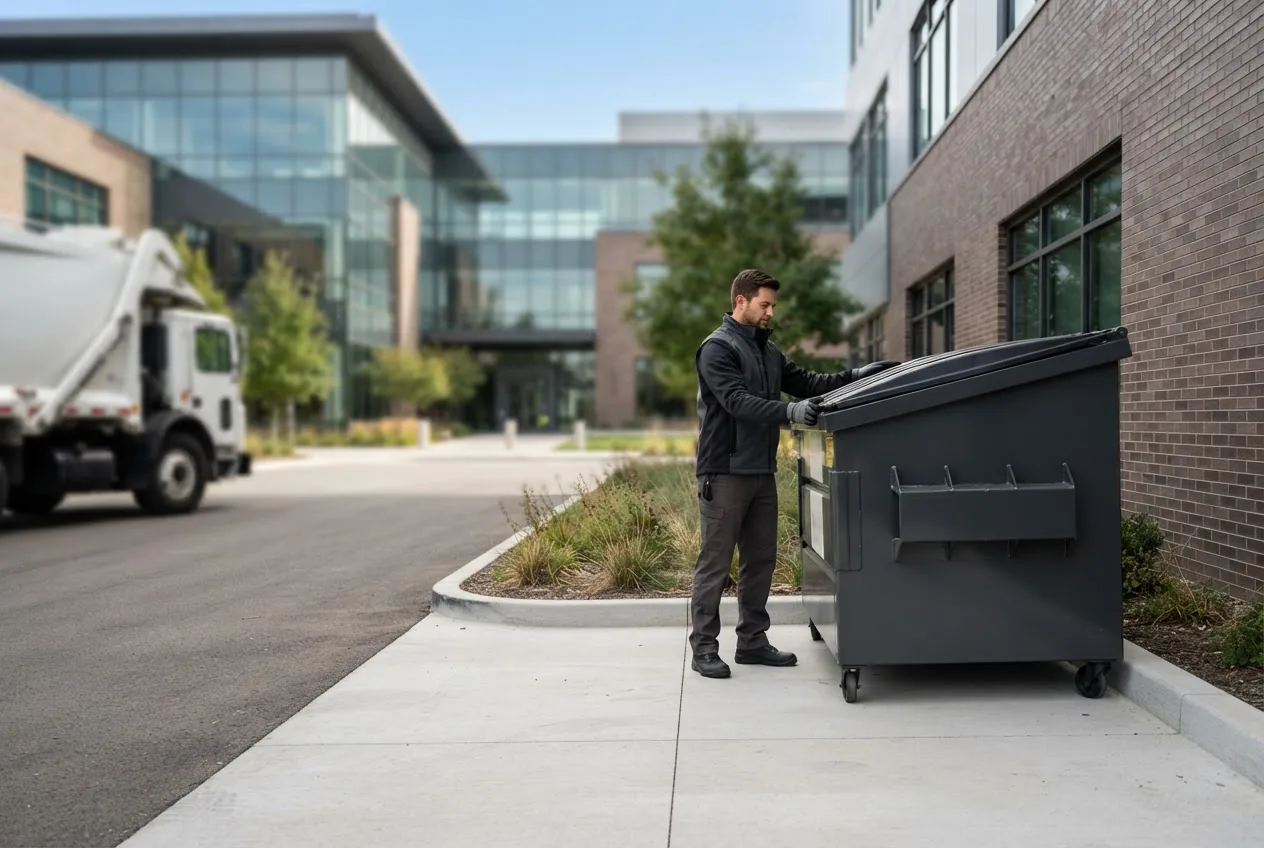
Term: Communal dumpster means a shared, stationary container serving multiple households or businesses, typically located in alleys or property-managed pads.
| Service Type | Equipment Used | Applicability |
|---|---|---|
| Curbside pickup | Standardized carts (e.g., 32–96 gal), automated or side-loader trucks | Single-family homes, small duplexes |
| Communal dumpster / pad site | Front-load or roll-off dumpsters, service lifts | Multi-family complexes, high-density neighborhoods |
| Public garbage cans / street receptacles | Smaller metal or plastic bins, manual collection | Parks, sidewalk corridors, transit stops |
| Valet / door-to-door service | Hand-carried bags or small carts, contracted crew | Multi-family or senior living facilities that opt for added convenience |
| Drop-off and refuse centers | Various containers, compactors, scale facilities | Residents with excess, bulky or restricted items |
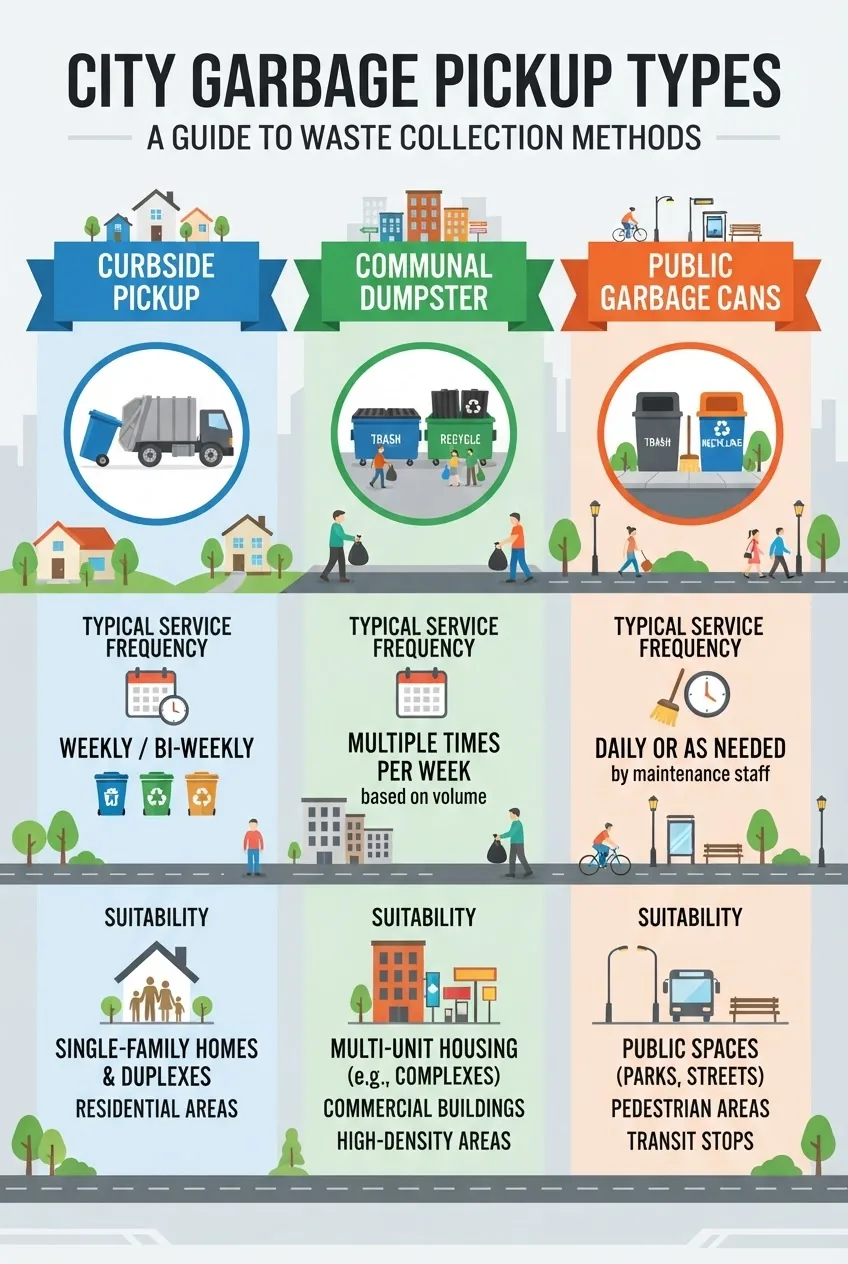
Equipment details matter: automated trucks reduce worker injury and speed collection, while manual servicing is common where bins are irregular or streets are narrow. Vehicle types and frequency often depend on route density and local budgets.
For businesses or construction projects that need larger or rented containers, see commercial alternatives. commercial dumpster service options
Additional service and equipment topics:
- local dumpster rental services
- public trash collection and refuse centers
- valet trash service convenience
- waste removal bags and dumpster rentals
- affordable rubbish removal options
- public trash collection and refuse centers
- local dumpster rental services
- valet trash service convenience
- affordable rubbish removal options
- Las Vegas waste disposal services
Transition: Knowing what service applies helps determine which items you can place at the curb or need to handle through special channels.
What Can and Cannot Be Disposed of in City Garbage Pickup
Answer: City garbage pickup accepts standard household trash and, where provided, curbside recyclables and organics; hazardous materials, construction debris, large amounts of dirt/soil, and certain appliances usually require special handling, scheduled pickups, or drop-off at designated centers.
Term: Hazardous waste means materials that pose health or environmental risks (e.g., batteries, paints, solvents) and are excluded from standard curbside collection.

Accepted residential items (typical; check your local list):
- General household trash in approved bins (bagged where required).
- Recyclables: paper, cardboard, certain plastics, glass and metal—rinsed and sorted if mandated.
- Yard waste/organics where curbside composting exists (leaves, grass clippings) when in approved bags or bins.
- Small appliances and electronics in some cities during scheduled collection or special events.
Commonly restricted or excluded items:
- Household hazardous waste: batteries, pesticides, paints, solvents—handled via hazardous waste programs. hazardous waste removal rules
- Construction debris and large amounts of building materials—often require debris removal for construction waste. debris removal for construction waste
- Dirt, sod and large volumes of soil—typically not accepted curbside. dirt removal services
- Bulk hazardous appliances (appliances containing refrigerants) require certified technicians or scheduled appliance pickup.
- Large furniture or bulky items without prior scheduling. furniture disposal options
- Scrap metal and specialized recyclables may need separate pickup arrangements or drop-off. metal scrap pickup services
Alternative disposal paths when city pickup won’t accept items:
- Drop-off at municipal transfer stations or landfill (check local landfill information).
- Private junk haulers or debris removal companies for construction and large-volume jobs. debris removal for construction waste
- Municipal recycling drop-off centers for electronics, batteries and items excluded from curbside. recycling drop off locations and bins
- Commercial recycling services for business-scale waste. commercial recycling requirements and costs
- Public dumping rules for permitted disposal at designated facilities. public dumping requirements
Case study: A 2022 municipal audit found that 18% of rejected recycling loads were due to food contamination; after outreach and clearer labels, contamination dropped to 10% (source: municipal audit, 2022).
Transition: Knowing accepted items is necessary, but correct placement and preparation ensure collection and reduce contamination.
Guidelines and Requirements for Proper Garbage Placement
Answer: Proper placement requires using approved containers, setting them at the designated collection point by the required time, keeping lids closed, following weight limits, and avoiding contamination; many cities publish exact measurements and placement rules.
Term: Contamination means non-accepted materials inside recyclables or organics that make the load unacceptable for processing.
-
Use approved containers and lids.
Only city-approved carts or labeled bags are accepted in many jurisdictions; lids should be fully closed to prevent spillage and animal access.
-
Observe placement location rules.
Set containers at the curb edge or designated pad facing the street with the handle toward the house (for automated pick-up), keeping them clear of parked cars, mailboxes and utility boxes.
-
Follow timing rules.
Place containers no earlier than 24 hours before collection and remove within 24 hours after pickup where specified; exact windows vary—follow your city ordinance.
-
Adhere to weight and volume limits.
Do not overload bins; many cities cap container weights (e.g., 50–100 lbs) to prevent injury and equipment damage—check local limits.
-
Prevent contamination.
Rinse recyclables when required, avoid plastic bags in recycling unless allowed, and keep yard waste free of plastic and trash.
-
Prepare bulky items safely.
Disassemble large furniture if possible, secure sharp edges, and follow the city’s scheduling and size rules for bulky pickups to prevent collection refusal.
-
Mark special items if required.
Label scheduled pickups or place tags provided by the city to signal special collection (e.g., appliance tags indicating refrigerant removal completed).
Checklist for residents (copy and keep):
- Confirm your collection day and material type.
- Use the correct bin and close the lid.
- Place bins at curb by 6 a.m. (or local time).
- Keep bins clear of obstructions.
- Remove bins within required pickup window.
- Report overflow or missed collection via the city app or hotline.
Common pitfalls: leaving items in alleyways instead of the designated pad, using non-approved bags for recycling, or placing hazardous materials in regular bins. Fines are possible for repeated violations, described in the legal section below.
Transition: When schedules change or service is disrupted, here’s how to manage expectations and options.
Managing Service Interruptions and Holiday Garbage Collection
Answer: Service interruptions from weather, holidays, or equipment issues are managed through published holiday schedules, make-up collection plans, and city notifications; residents should register for alerts and use drop-off or scheduled special pickups when delays occur.
Most cities publish an annual holiday pickup calendar explaining altered routes or delayed collections. For example, many shift collection one day forward the week of a major holiday. Register for city email/text notifications to receive real-time updates.
If your pickup is missed because of weather or equipment, follow these steps:
- Check the city’s outage/holiday page or social media for system-wide notices.
- Report a missed pickup through the designated online form or phone line; include photos and exact address.
- Bring items back to secured storage if possible until collection is rescheduled to avoid nuisance or fines.
- Use municipal drop-off centers for urgent disposal when available.
For seasonal or large cleanups beyond regular pickup schedules, explore municipal or community programs. local spring cleanup options
Plan ahead around holidays—especially winter storms and Thanksgiving—by consulting the city’s posted schedule. holiday trash pickup schedules
Contact points: most city sanitation departments list emergency phone numbers and after-hours contacts for critical service disruptions; keep these on hand.
Transition: If services fail or you observe violations, civic participation and reporting channels help improve outcomes.
Reporting Issues and Civic Participation in City Garbage Services
Answer: Residents report issues—missed pickups, illegal dumping, overflowing public bins—via city hotlines, mobile apps, or online forms; civic participation includes attending hearings, providing feedback, and volunteering in cleanup efforts to influence service quality and policy.
How to report effectively:
- Document the issue with photos and exact location coordinates or address.
- Submit via the city’s preferred channel (app, web form, or phone) using the incident category (missed pickup, illegal dumping, container damage).
- Note any previous reports and reference ticket numbers for follow-up.
- Escalate to elected officials if the response is inadequate after using standard reporting channels.
Community participation improves service: neighborhood groups and block cleanups can reduce illegal dumping and lower operational costs. Consider affordable alternatives if city pickup won’t meet a specific need. affordable junk hauling services
Urban examples show organized resident feedback reduced missed pickup complaints by 22% after coordinated reporting and service adjustments (source: municipal community engagement report, 2021).
Other useful resources and local examples:
- New York City trash pickup methods
- reliable waste and trusted pickup services
- veterans junk removal services
- trash removal and disposal solutions
Transition: Reporting and participation sit alongside legal frameworks that govern acceptable handling, penalties, and environmental mandates.
Environmental and Legal Considerations for City Garbage Pickup
Answer: City garbage pickup is governed by municipal ordinances and environmental regulations (state and federal) that set waste acceptance rules, recycling requirements, fines for violations, and landfill standards to reduce environmental impacts and ensure public health.
Legal framework components:
- Local ordinances specifying container standards, placement windows, and prohibited items.
- State recycling laws that may require mandatory recycling or ban organics from landfill.
- Federal regulations for hazardous waste and air emissions from landfills (e.g., EPA guidelines).
According to a 2024 industry report, municipalities that implemented mandatory organics diversion programs reduced landfill-bound organics by an average of 25% within two years (source: 2024 industry report).
Penalties and enforcement:
- Fines for improper placement or illegal dumping range widely; some cities issue warnings before fines for first offenses, while repeat violations can incur steeper penalties.
- Non-compliance by generators (e.g., mixing hazardous waste with household trash) may trigger disposal orders or civil penalties under local codes.
Waste processing and landfill rules:
Final disposition follows a waste hierarchy: reduce, reuse, recycle/compost, energy recovery, landfill. Municipal landfills must meet regulatory standards for liners, leachate controls and monitoring. garbage landfill regulations and local landfill information
Commercial waste differences: businesses often fall under different permitting and disposal fee structures; for details on commercial costs see the commercial guide. commercial junk removal service costs
External authoritative resources (examples):
- EPA Sustainable Materials Management — federal guidance on waste reduction and management.
- National Association of Counties — resources on county-level waste programs and best practices.
- U.S. Conference of Mayors — municipal sanitation strategies and case studies.
Transparency: Cities usually publish service standards and annual reports detailing diversion rates, tonnage, and compliance efforts; refer to your municipal sanitation department for specific ordinances (example: a city sanitation report, 2023).
Transition: Below are concise takeaways to keep your household compliant and reduce environmental impact.
Key takeaways
- Confirm your zone and schedule; register for alerts.
- Use approved containers, follow placement timing, and prevent contamination.
- Follow special procedures for bulky, hazardous, or construction waste.
- Report service problems promptly with photos and exact addresses.
- Participate in community efforts to improve waste services.
If you need help beyond city pickup—commercial or private options can assist with bulk or construction waste, recycling at scale, and expedited removal services.