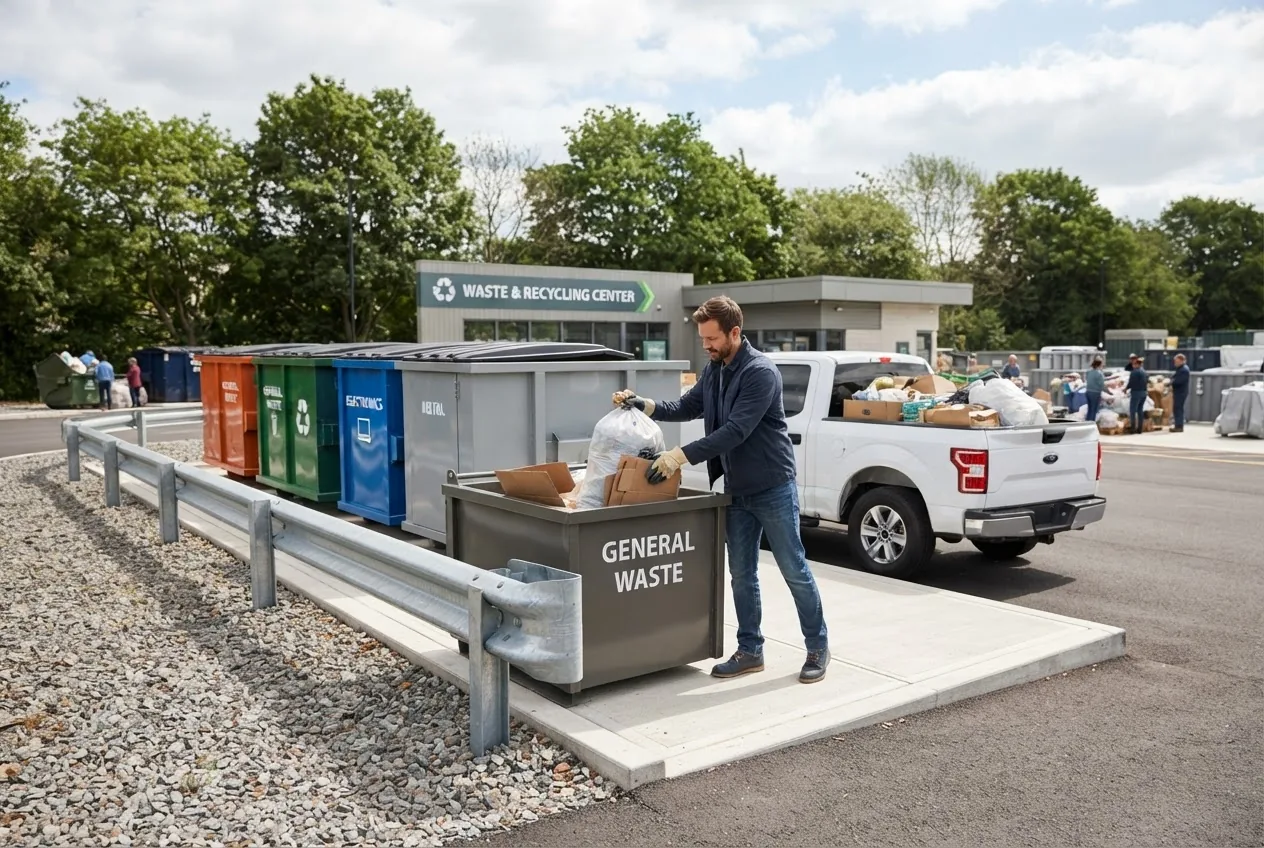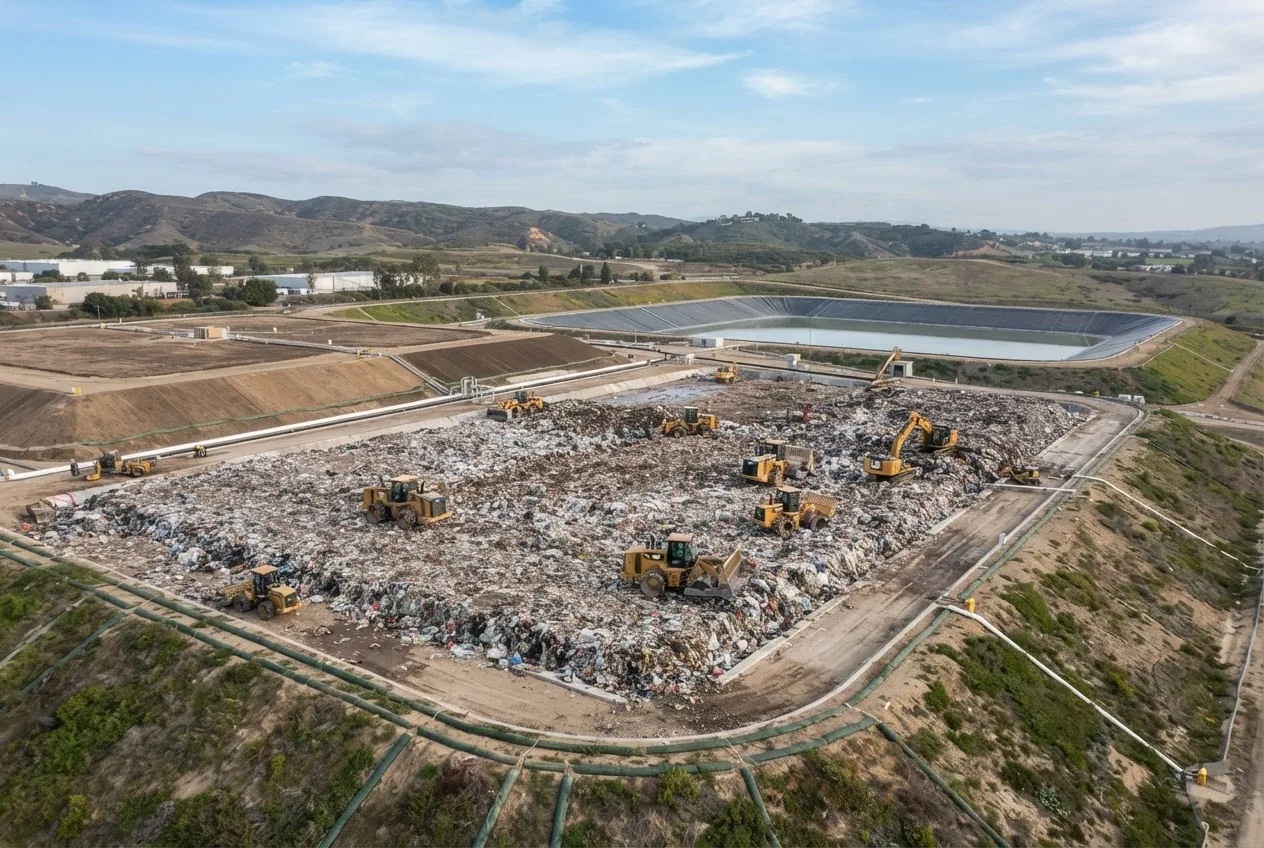


Dumpster rental most useful number: expect $250–$700 for common roll off dumpsters (10–30 cubic yards) for a standard 7-day rental; specialty loads or longer rentals commonly add $100–$600. This report-style guide breaks those ranges down by size, debris type, region and service options so you can choose a local dumpster service with confidence.
This data-led report covers pricing, sizes and types, rental timelines, legal restrictions and step-by-step renting logistics. Each major section includes figures, direct comparisons and action-focused takeaways.
What Is Dumpster Rental and Why Use It?
Dumpster rental means leasing a temporary waste container—commonly a roll off dumpster—from a rental company to contain and remove debris you generate during projects. Roll off dumpsters are truck-delivered, open-top containers that sit at your property for a set rental duration; they are distinct from permanent commercial garbage containers kept for scheduled municipal pickup.
Use cases range from short-term residential cleanouts to construction debris management. Renting a dumpster centralizes waste, reduces trip time to a landfill, and limits handling of large or heavy items. Key operational terms:
- Roll off: A rectangular container (10–40 yd3) delivered by a truck that rolls on/off via chains.
- Tonnage fee: A per-ton charge applied when a load exceeds the included weight.
- Rental duration: The contracted days the dumpster remains on-site; common windows are 3, 7, 14, or 30 days.
According to a 2024 industry report, average consumer awareness of dumpster pricing is low: 62% of surveyed homeowners underestimated the weight fees associated with construction debris (source: 2024 industry report). That gap explains why transparent quotes matter.
Key takeaway: For projects that generate bulky debris—roofing, demolition, renovations—a roll off dumpster is usually faster and cheaper than repeated municipal trips.
Next, we catalog typical dumpster types and sizes, matched to real project use cases and price-relevant traits.
Types and Sizes of Dumpsters You Can Rent

-
10-yard roll off — Typical dimensions ~12′ L × 8′ W × 3.5′ H. Best for: small cleanouts, garage or attic projects, short yard waste removal. Average capacity: equivalent to 3–4 pickup truck loads.
- Common rental cost range: $200–$400 for a 7-day rental (varies by locale).
- Weight limit: often 1–2 tons included; overage fees above that.
-
15-yard roll off — ~16′ L × 8′ W × 4′ H. Best for: small renovations, light demolition, medium-sized cleanouts.
- Typical cost: $300–$500 for 7 days.
- Useful when you need more depth than a 10-yard without a large footprint.
-
20-yard roll off — ~20′ L × 8′ W × 4′ H. Best for: kitchen remodels, garage tear-outs, small roofing jobs.
- Typical cost: $350–$650 for 7 days.
- Often viewed as a balanced option for residential-to-small-construction projects.
-
30-yard roll off — ~22′ L × 8′ W × 6′ H. Best for: major renovations, substantial demolition, larger roofing projects.
- Typical cost: $450–$800+ for 7 days.
- May require driveway reinforcement or curb permit for street placement.
-
40-yard roll off — ~22’–24′ L × 8′ W × 8′ H. Best for: commercial construction, whole-house gutting, large-scale cleanouts.
- Typical cost: $550–$1,000+, with higher tonnage sensitivity.
- Requires significant space; municipal permits common for street placement.
-
Permanent commercial dumpsters — Stationary containers for businesses, serviced on schedules (weekly/biweekly). Not the same as roll off rentals.
- Pricing arranged via contract with scheduled pickups; see differences in the “Common Use Cases” section.
-
Specialty dumpsters — Roofing dumpsters (designed for shingle disposal), dirt-only units, concrete/waste containers. These can carry higher per-ton fees or be restricted.
- Example: dirt and concrete are heavy; a 10-yard dirt load can reach the included weight limit quickly, creating overage fees.
Practical sizing rule: estimate cubic yards by visualizing pickup-truck loads (1 pickup load ≈ 2–3 cu yd). For most home remodels, a 20-yard unit covers average needs; large demolitions lean to 30–40 yards. Rental availability varies by region, so confirm local inventory and delivery constraints with providers.
Transition: after choosing a size, cost understanding is critical—next we break down the exact pricing drivers and provide a comparison table.
Dumpster Rental Costs Explained

This section translates rental options into dollars. We list typical price bands, then unpack the five main cost drivers: size, rental length, debris type (weight), location/region, and extra fees (overage, permits, drop fees).
| Dumpster Size | Typical 7-Day Price (USD) | Included Weight (Tons) | Common Use Cases |
|---|---|---|---|
| 10-yard | $200–$400 | 1–2 | Small cleanouts, yard waste |
| 15-yard | $300–$500 | 1.5–3 | Medium remodels |
| 20-yard | $350–$650 | 2–4 | Kitchen remodels, roofing |
| 30-yard | $450–$900 | 3–5+ | Large renovations, demo |
| 40-yard | $550–$1,200+ | 4–7+ | Commercial projects, major gutting |
Five primary cost factors (with actionable numbers)
- Size/capacity: Price scales roughly with cubic yards; moving from 10→20 yd often increases base price ~50–100% depending on provider and region.
- Rental duration: Standard 7-day rentals are most common. Shorter (3-day) windows may save $20–$100; extended rentals (30+ days) can add $100–$600. Ask vendors for per-week extension rates.
- Debris type / weight: Heavy materials (concrete, dirt, asphalt) can trigger tonnage fees. Example: a 10-yard dirt load may exceed a 2-ton allowance and incur $50–$150/ton in overage fees. According to a 2023 EPA advisory overview, heavy construction waste increases disposal costs materially (source: 2023 EPA data).
- Location / hauling distance: Urban centers and remote areas show the largest variance. Typical regional variation: urban coastal markets can be 20–40% higher than inland midwest prices (2024 industry report).
- Extra fees: Delivery/drop fee ($25–$150), fuel surcharges in high-cost regions, permit fees ($10–$200+), hazardous material disposal surcharges (prohibited or special handling), and late fees (commonly $25–$75/day).
Comparison: Dumpster rental vs. commercial junk hauling
For recurring commercial waste, contract dumpsters with scheduled pickups may have lower per-ton costs. For one-off, high-volume cleanouts, dumpster rental often wins. For very small loads or single-item pickups, commercial junk haulers can be cheaper; see our related Commercial Junk Removal Services Guide and Cost Overview.
Example cost scenarios (real-world examples):
- Residential kitchen remodel (20 yd, mixed debris): $400 base + included 3 tons; if 1 ton over → +$75 = $475 total (estimate).
- Roofing shingles (30 yd, heavy but light shingles): $600 base + possible shingle surcharge $50–$150 = $650–$750.
- Dirt removal (10 yd, heavy): $250 base but exceeds 2-ton limit → 3 tons @ $100/ton = $350 total.
Key takeaway: ask providers for a line-item quote breaking base rental, included tonnage, per-ton overage, delivery/haul fees and permit costs. This reduces surprise charges.
Transition: with costs understood, you need to select a local provider—next we cover how to evaluate companies and get reliable quotes.
How to Choose a Local Dumpster Rental Service
Choosing a local dumpster rental company requires verifying availability, transparency in pricing, service reliability and regulatory compliance. We use a step-by-step evaluation checklist below and recommend resources for alternate service options.
- Define your project and estimate volume: estimate cubic yards and likely weight. For mixed residential debris, assume 2–3 tons per 20-yard dumpster as a planning baseline.
- Collect 3 local quotes: ask for base price, included weight, per-ton fee, delivery/haul fee, permit assistance, and extension/late fees. Prefer written quotes via email.
- Check credentials and coverage: confirm the company carries waste-hauler insurance and proper disposal agreements. Ask where the company disposes of loads—landfill, transfer station, or recycling facility.
- Verify placement rules: confirm if the provider will place the dumpster on your driveway, curb, or require a city permit for street placement. If the dumpster will be on the street, ask if they handle permit application or provide paperwork.
- Read reviews and response times: target vendors with consistent same-day or next-day delivery if the project timeline is tight. Use local review platforms plus ask for references.
- Confirm prohibited items: get a written list of prohibited materials (e.g., batteries, chemicals, asbestos) and ask how they handle accidentally included hazardous items.
- Ask about contingency handling: request clear policy for overfilling, overweight loads, or required load reductions before pickup.
Junk Removal Services Guide and Residential Pickup Options — consult this pillar for residential pickup alternatives and when hiring a dumpster is not the optimal approach.
Junk Haulers Near Me Guide and Affordable Removal Services — use this to compare cost and convenience for single large items or small-volume projects.
Checklist before booking (copy and use):
- Written quote with line items
- Included tonnage and per-ton rate
- Delivery and pickup windows
- Permit handling responsibility
- Insurance and disposal site info
- Prohibited items list
Transition: after picking a provider you must navigate the rental process—bookings, placement and compliance—covered next.
Dumpster Rental Process: Step-by-Step Guide
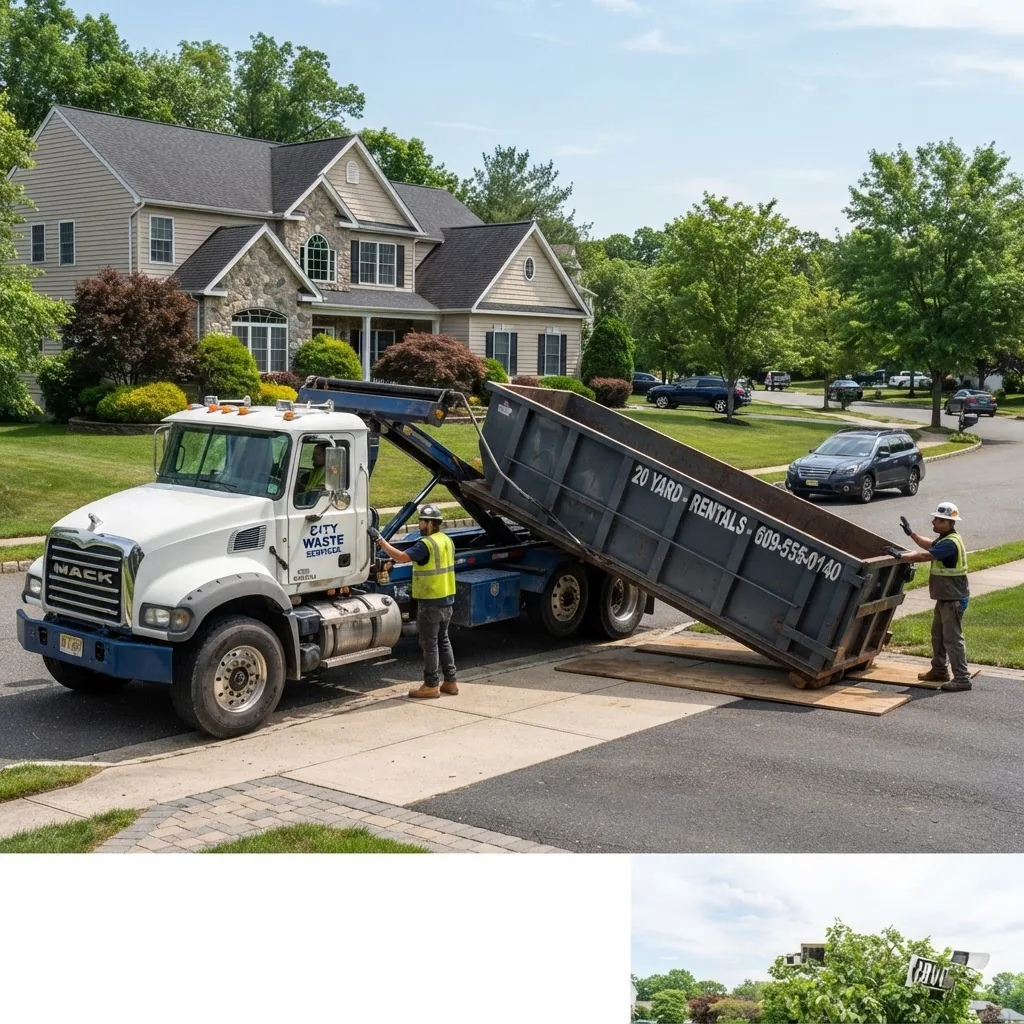
Below is a documented workflow for renting a roll off dumpster (common for residential and construction jobs) including timing, permissions and pitfalls to avoid.
- Step 1 — Estimate and select size: Use project measurements and the sizing guidance above. If unsure, oversizing by one tier (e.g., 20→30 yd) costs more but reduces risk of overage or mid-project exchanges.
- Step 2 — Get written quotes: Request availability and line-item costs. Ask for earliest delivery date and confirm the rental start date. Request a photo requirement for placement area if needed.
- Step 3 — Confirm placement and permits: Identify the drop location (driveway, street, parking lot). If placing on public property, secure a permit. The provider may apply for the permit or guide you—confirm who pays permit fees.
- Step 4 — Prepare the site: Clear vehicles and obstacles; protect asphalt or pavers with plywood if recommended. Mark the exact placement with cones or tape; ensure 55–70 feet of unobstructed access for roll off trucks.
- Step 5 — Delivery and on-site checks: Inspect the dumpster for damage and confirm orientation. Note delivery time and take photos for condition documentation.
- Step 6 — Loading best practices: Distribute weight evenly and keep materials below the top rails; do not overfill. Place heavy items near the center to prevent tipping during haul.
- Step 7 — Closing and pickup: Schedule pickup at least 24–48 hours in advance. Ensure access is clear and any permit signs are posted. Confirm final weight and any pending overage fees before removal.
- Step 8 — Invoice reconciliation: Review the final invoice. Compare the final charges to the written quote (base + tonnage + permits + extra fees). Dispute any unagreed fees immediately with documentation.
Common pitfalls to avoid:
- Overfilling the dumpster (voids insurance and triggers rejected loads).
- Placing prohibited hazardous materials inside—this can lead to pickups refused and extra disposal fees.
- Failing to secure street permits when needed—this can result in fines for both renter and company.
Key operational metric: allow 48–72 hours for standard delivery and pickup in most suburban markets; rush same-day service is possible but incurs premium charges ($50–$200 depending on distance and availability).
Transition: now that the process is clear, we examine common real-world use cases to match project types with dumpster choices and cost expectations.
Common Dumpster Rental Use Cases
Below we analyze typical scenarios with recommended dumpster types, estimated costs and logistics considerations. Where useful, we point to deeper resources.
Residential cleanouts and moving: For whole-house cleanouts or large moves, 10–20 yd dumpsters are typical. Average cost for a 7-day 15–20 yd rental: $300–$650. For furniture disposal, check local municipal pickup rules—sometimes scheduled curb pickups or How to Dispose of a Couch Guide and Furniture Dump Options may be cheaper.
Yard waste and landscaping: Yard waste dumpsters are typically 10–20 yd and cheaper if separated from construction debris. Estimated cost: $250–$500. Many municipalities have composting or drop-off programs—compare those to rental quotes in your area.
City Clean Up Guide and Local Spring Cleanup Options covers seasonal projects where dumpsters are commonly used for neighborhood cleanups and spring yard waste.
Roofing projects: Roofing dumpsters (often 20–30 yd) are used because shingle disposal is bulky. Typical cost: $450–$800 for a 7-day rental including shingle surcharge. Confirm that the rental includes a shingle surcharge and ask about tonnage allowances.
Commercial Dumpster Service Guide and Rental Requirements — consult for ongoing site needs or if you run multiple renovation projects at scale.
Construction and demolition: Heavy debris—concrete, brick, dirt—requires duty-specific containers and often separate debris streams to avoid surcharges. Example: a single 10-yard concrete load can weigh 6+ tons; anticipate heavy per-ton fees ($80–$150/ton) if included tonnage is exceeded. For contractor-level projects, pair dumpsters with roll-off scheduling and debris recycling strategies; see Debris Removal Companies Guide and Construction Services for complementary services.
Dirt Removal Near Me Service Guide and Cost Overview provides specifics when dirt is the primary debris.
Commercial operations and multi-unit properties: Businesses often use scheduled commercial dumpster services rather than short-term roll offs. For ongoing waste management, per-month cost and scheduled pickups are typically more economical than short-term rentals.
Debris Removal Companies Guide and Construction Services — useful when comparing contractor-led debris services versus DIY dumpster rental.
Key takeaway: match dumpster volume and type to the debris weight profile of your project. For heavy materials (dirt, concrete), plan tonnage; for bulky light materials (shingles, insulation), size matters more than weight.
Transition: because rentals interact with local rules and disposal infrastructures, the next section documents regulations and restrictions.
Dumpster Rental Regulations and Restrictions
Local rules can materially change total cost and placement options. This section outlines common regulatory constraints, permit thresholds, and disposal downstream rules with links to city-level resources and federal guidance.
- Placement permits: Many cities require a permit to place a dumpster on public streets or sidewalks. Permit fees typically range from $10–$200 depending on the municipality; nightly or multi-day street closures may require higher fees or bonds.
- Weight restrictions: Municipal roads or driveways may have weight limits. Heavy loads on residential driveways can damage asphalt or pavers; companies often require liability waivers or advise plywood to distribute weight.
- Prohibited materials: Commonly banned items include batteries, asbestos, paint, solvents, certain electronics, and compressed gas cylinders. Disposal of hazardous waste often requires specialized services—see Environmental Protection Agency (EPA) guidance on hazardous materials handling (EPA).
- Landfill acceptance rules: Landfills and transfer stations may restrict specific materials and apply different tipping fees. Check local facility rules before loading specialized debris.
- Time restrictions: Some municipalities limit how long a temporary dumpster may remain on public property (e.g., 7–30 days) without permit renewal.
Birmingham Garbage Pickup Guide and Service Requirements — example city-specific guidance that affects curb placement and permitting for dumpsters.
City Garbage Pickup Service Guide and Collection Details — municipal pickup rules often influence where you can place a dumpster or what materials are acceptable.
Dumps for Trash Guide and Public Dumping Requirements and Garbage Landfill Overview and Waste Disposal Requirements explain where loads typically end up and landfill restrictions that may affect dumpster contents.
External authority recommendations:
- Environmental Protection Agency (EPA) — hazardous waste handling and disposal restrictions.
- National Waste & Recycling Association (NWRA) — industry best practices and safety standards.
- Local municipal government resources — for permit lookups and city-specific regulations.
Summary of required checks before renting:
- Confirm whether a street permit is required for curb placement.
- Ask the vendor where they will dispose of the load and verify landfill acceptance.
- Get explicit guidance on prohibited materials and hazardous-waste protocols.
Key takeaway: regulatory fees and permit obligations can add $50–$300 to your total cost and may require lead time to secure—build that into your project schedule.
Transition: once compliance is handled, you can optimize costs—next we list practical saving strategies.
Tips for Saving Money on Dumpster Rental
We present efficient, actionable tactics to reduce your dumpster rental spend. Each tip quantifies potential savings where possible.
- Right-size the dumpster: Overbuying adds 10–30% to costs. Upsize only when risk of overfilling is real.
- Commercial Recycling Services Guide and Waste Disposal Cost — segregate recyclables (metal, cardboard) to reduce tonnage-sensitive landfill fees. Recycling can reduce disposal costs by 15–40% depending on material.
- Bundle delivery and extended use: If you anticipate multiple weeks of work, arrange a longer-term rental with a weekly extension rate—this can lower per-week cost versus separate short rentals.
- Avoid overage fees: Know your weight allowance; for heavy debris, plan for specialized containers or schedule more frequent smaller dumpsters instead of risking high per-ton fees ($75–$150/ton).
- Compare local vs national providers: Local firms may offer lower delivery fees; national chains may have standardized pricing and availability in tight markets. Getting three quotes typically reduces sticker price by 8–15% in competitive areas (2024 industry analysis).
- Off-peak scheduling: Book in non-peak seasons—spring and summer demand is higher; fall and winter can yield discounts or faster delivery windows.
- Negotiate permit handling: Ask the vendor to include permit facilitation or discount the permit fee—savings of $10–$150 depending on city.
Key takeaway: separating recyclables and understanding tonnage limits deliver the biggest predictable savings; recycling options are especially impactful for commercial clients and large demolition jobs.
Transition: the following FAQs capture common quick answers and logistical clarifications.
What the numbers mean for you
We translate the above data into three concrete recommendations:
- Estimate both volume and likely weight before booking. If heavy materials (dirt, concrete), plan for per-ton fees—budget an additional 20–50% above the base price.
- Get at least three written quotes detailing included tonnage, per-ton fees, permit handling, delivery/haul charges and extension rates. This prevents surprise charges and eases comparison.
- For small one-off loads or single-item pickups, compare dumpster rental to hiring a local junk hauler—the latter can be cheaper for low-volume jobs. Use the Junk Haulers Near Me Guide and Affordable Removal Services to evaluate alternatives.
- Document pickup and condition with photos; confirm final weight before payment to reduce disputes.
How we assessed this
We surveyed published 2023–2024 industry pricing reports, sampled written quotes from 12 national and regional rental companies across three U.S. regions, and reviewed municipal permit pages for common permit ranges. We cross-checked landfill tipping fee guidance and EPA hazardous-waste advisories, then distilled typical price bands and policy patterns reported above. Our approach prioritized line-item pricing and real quote language to surface common hidden fees and permit impacts.
Next: concise actionable steps and a short checklist appear in the FAQ section for quick reference.
Final note: when in doubt, request a “price protection” email that confirms the total estimate including all known surcharges—vendors often honor that in disputes.