
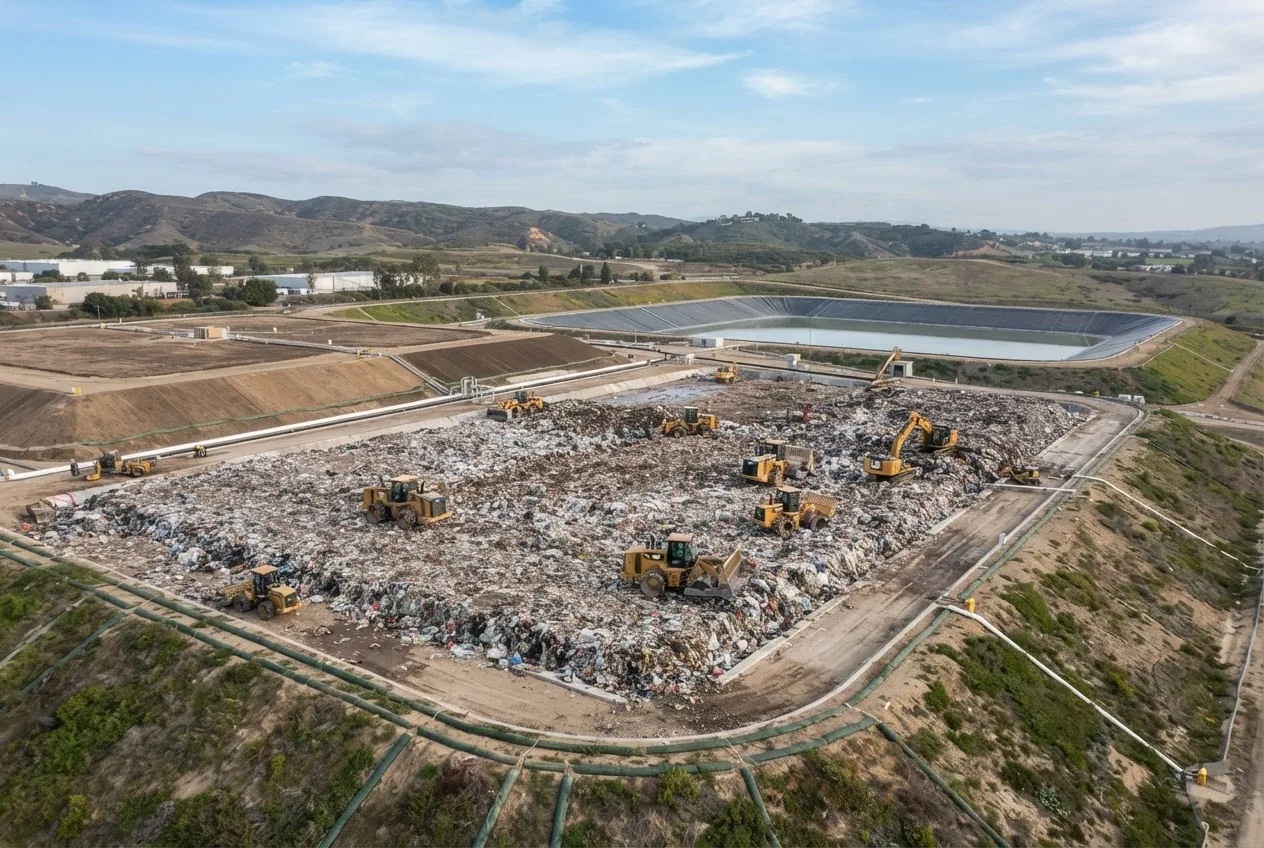
Garbage landfill: a managed site where municipal solid waste is placed, compacted, covered, and monitored to protect public health and the environment. Modern landfills use engineered liners, leachate collection, and gas capture systems under permitting rules so waste disposal meets regulatory standards and minimizes pollution.
What Is a Garbage Landfill?
Answer: A garbage landfill is a dedicated, engineered location for disposing of municipal solid waste where material is compacted, layered, covered, and monitored to control runoff, gases, and long‑term environmental impact.
Term: Municipal solid waste (MSW) — commonly generated household and commercial refuse including packaging, food scraps, and nonhazardous items.
Term: Landfill — an engineered facility designed to contain solid waste safely and limit environmental release through liners, covers, and systems for leachate and gas.
A garbage landfill accepts nonhazardous MSW under controls that separate it from dumps or uncontrolled disposal sites. Landfills range from simple inert-waste sites to fully lined sanitary landfills with leachate collection and gas-capture systems. They are distinct from recycling centers, transfer stations, and incinerators because landfills store the waste long-term rather than converting or relocating it immediately.
Key functions of a landfill:
- Containment: using liners and engineered cells to prevent soil and groundwater contamination.
- Stabilization: compaction and layering reduce volume and help decomposition proceed predictably.
- Protection: leachate collection and treatment, plus gas management systems, protect air and water quality.
- Regulatory compliance: operations require permits, waste acceptance criteria, and monitoring plans.
Common variants encountered in practice include sanitary landfills (for MSW), construction and demolition landfills, inert fill sites, industrial waste landfills, and specialized junkyard landfills that handle mixed bulk items from salvage operations.
Dumps for Trash Guide and Public Dumping Requirements
Landfill Near Me Guide and Local Garbage Dump Locations
Types of Garbage Landfills Including Junkyard Landfills
Answer: Landfills are classified by accepted waste and engineering: sanitary (MSW), construction & demolition (C&D), inert fill, industrial, and junkyard landfills for mixed bulky salvage—each has different design, permit and disposal rules.
Term: Junkyard landfill — a site that receives bulky or salvageable items (vehicles, appliances, furniture) typically from salvage yards or demolition, often with special acceptance criteria.
The table below compares common landfill types with examples, typical wastes accepted, and quick pros/cons to clarify operational and regulatory differences.
| Landfill Type | Typical Waste | Pros | Cons |
|---|---|---|---|
| Sanitary landfill | Household, commercial nonhazardous waste | Engineered liners, leachate & gas systems; broad acceptance | High permitting and operating costs |
| Construction & demolition (C&D) | Concrete, wood, drywall, roofing | Lower contamination risk; lower fees for inert loads | Restrictions on mixed wastes and hazardous materials |
| Inert waste landfill | Clean fill, dirt, rock | Simpler design; lower monitoring needs | Limited to nonorganic, uncontaminated material |
| Industrial waste landfill | Industrial process residues (nonhazardous) | Tailored acceptance criteria for industry waste | Stringent permitting; risk of contamination |
| Junkyard landfill | Bulky items, scrap metal, appliances, vehicles (often preprocessed) | Accepts bulky salvage; supports reuse streams if sorted | Must manage fluids and hazardous components from appliances/vehicles |
Practical considerations for choosing a landfill type:
- Permits and acceptance criteria differ: inert sites rarely accept organic waste; sanitary landfills accept a wider mix but require full systems.
- Junkyard landfills must implement preprocessing to remove fluids (e.g., oil, refrigerants) and separate recyclables.
- Transport and tipping fees vary by waste class—C&D and inert often cost less than MSW.
Debris Removal Companies Guide and Construction Services
Dirt Removal Near Me Service Guide and Cost Overview
How Garbage Landfills Are Constructed and Operated
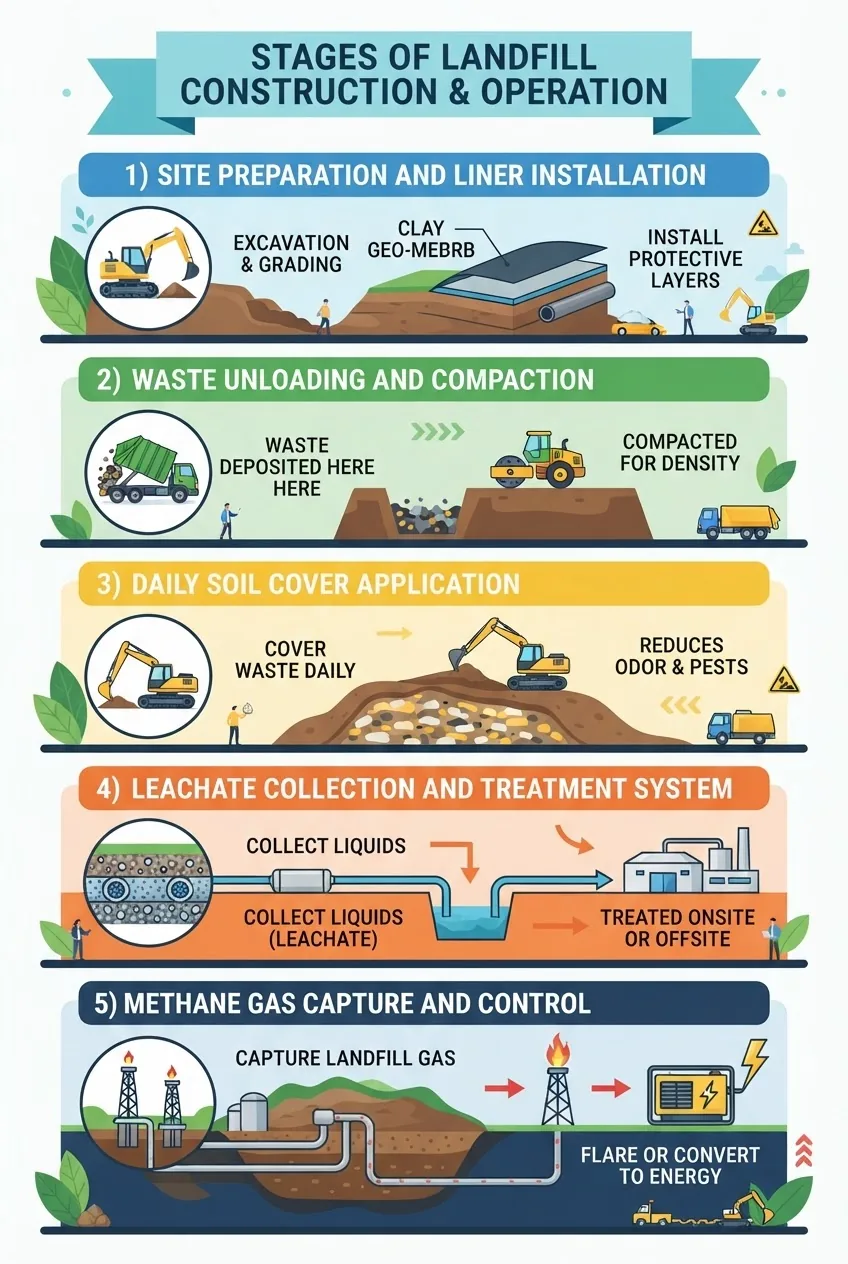
Answer: Landfill construction follows staged engineering: site preparation, liner and leachate systems, waste placement with compaction and daily cover, monitoring systems, and gas‑capture installations—each step follows technical standards and operational protocols.
Term: Liner — a protective barrier (often multiple layers including compacted clay and synthetic membranes) installed at the base and sides of engineered landfill cells to prevent contaminants reaching soil and groundwater.
-
Site selection and preparation:
Choose geology with low groundwater risk, adequate setback from sensitive receptors, suitable waste-bearing capacity, and access. Site prep includes grading, stormwater controls, and access roads. Risk assessments (geotech and hydrogeologic) inform liner and cell design.
-
Liner system installation:
Install a multilayer liner: compacted clay (typically ≥1 m) and a high‑density polyethylene (HDPE) geomembrane. Composite liners combine clay and HDPE. Liner seams are welded and inspected for quality assurance per engineering specs.
-
Leachate collection and removal:
Term: Leachate — liquid produced when water percolates through waste and dissolves soluble constituents. Below the liner, a graded gravel layer with perforated collection pipes routes leachate to sumps for pumping and treatment; design flow rates and storage requirements are calculated to handle peak loads.
-
Waste unloading, sorting, and placement:
Trucks unload in designated cells. Operators remove prohibited items (batteries, tires, electronics) and salvage recyclables when required. Mechanical spreaders and bulldozers distribute loads.
-
Compaction and layering:
Term: Compaction — using heavy rollers to compress waste, reducing void space and improving stability. Waste is placed in lifts (thin layers) and compacted to achieve engineering density specifications.
-
Daily and intermediate cover:
Term: Daily cover — a thin soil or alternative material layer applied at each day’s end to reduce vectors, odors, and windblown litter; intermediate covers are used on inactive cells for longer-term protection.
-
Methane and landfill gas control:
Term: Methane capture — systems of vertical wells and horizontal collection pipes extract landfill gas (primarily methane and carbon dioxide) for flaring or energy recovery using blowers and treatment units; designs estimate gas generation rates and implement safety controls.
-
Leachate treatment and disposal:
Leachate is pumped to onsite treatment, municipal wastewater plants (with approvals), or hauled to permitted treatment facilities. Treatment design depends on leachate chemistry; common methods include biological treatment, reverse osmosis, and advanced oxidation.
-
Environmental monitoring:
Install groundwater monitoring wells, gas probes, and surface water sampling points. Monitoring frequencies and analytes follow permit conditions and standards.
-
Operational records and QA/QC:
Maintain daily logs: tonnage receipts, waste composition, equipment hours, cover application, inspections, and nonconformance events. QA/QC for liner installation and weld testing is mandatory.
Equipment and typical specifications:
- Compactors and bulldozers with high tip load capacity for effective compaction.
- HDPE geomembranes (typical thickness 60–120 mil) and leak detection layers where required.
- Leachate pumps and storage tanks sized for peak precipitation events.
- Gas well networks and blowers sized to handle predicted peak gas flows.
Commercial Dumpster Service Guide and Rental Requirements
Dumpster Rental Cost Guide and Local Dumpster Services
Waste Removal Bags Guide and Dumpster Bag Rental Services
Regulatory and Waste Disposal Requirements for Landfills
Answer: Landfills operate under a layered regulatory regime—federal (e.g., EPA), state environmental agencies, and local permits—covering site siting, design, waste acceptance criteria, monitoring, reporting, and closure/post‑closure obligations.
Term: Waste acceptance criteria — documented specifications describing what wastes a landfill may accept, including prohibitions and pre-treatment requirements.
Key regulatory elements summarized:
- Permitting: Facilities must obtain construction and operating permits from state or regional environmental agencies; permits set design, monitoring, and closure obligations. EPA (Environmental Protection Agency) provides federal guidance and standards for MSW landfills.
- Waste acceptance and characterization: Landfills require incoming loads to be characterized for prohibited items (e.g., hazardous waste, regulated medical waste, PCB-containing materials). Operators use visual inspections and load manifesting.
- Hazardous and special waste exclusions: Hazardous wastes are not accepted at municipal landfills unless they meet specific nonhazardous criteria or have alternative management paths. Hazardous Waste Removal Companies Guide and Disposal Rules
- Monitoring and reporting: Regular groundwater, surface water, air, and gas monitoring with reports submitted per permit schedules. Exceedances trigger corrective action plans.
- Inspections and staff qualifications: Routine daily facility inspections are mandated; staff must be trained in waste screening, equipment operation, and emergency response.
- Financial assurance: Operators must demonstrate funds for closure and long‑term post‑closure care, including monitoring and maintenance.
Compliance checklist (practical steps):
- Verify applicable federal and state regulations and obtain necessary permits prior to construction or expansion.
- Document waste acceptance criteria and ensure all drivers sign manifests and provide waste documentation.
- Implement QA/QC on liner installation and maintain chain-of-custody records for treatment/disposal of special wastes.
- Operate routine monitoring networks and file timely reports; prepare corrective action plans for exceedances.
- Maintain training records and inspection logs; keep emergency response and contingency plans current.
Relevant local collection and transfer relationships—landfills depend on municipal and commercial collection systems. See local guides for context and collection requirements:
Birmingham Garbage Pickup Guide and Service Requirements
City Garbage Pickup Service Guide and Collection Details
Garbage Man Service Guide and Collection Requirements
Public Trash Collection Guide and Refuse Center Services
Reliable Waste Service Guide and Trusted Trash Pickup
Springfield Trash Service Guide and Garbage Pickup Details
Thanksgiving Trash Pickup Guide and Holiday Service Info
Trash Pickup Indianapolis Guide and Garbage Service Options
Regulatory references and further reading:
- EPA landfill regulations and guidance — baseline federal standards and technical manuals.
- State environmental agency standards (example) — states add location-specific permitting and performance requirements.
- Scholarly review of landfill impacts and mitigation — technical studies on leachate, gas, and long-term contaminant behavior.
Environmental and Safety Considerations at Garbage Landfills
Answer: Environmental and safety priorities at landfills focus on preventing groundwater contamination, controlling air emissions (including methane), managing leachate, mitigating odors, and protecting workers and nearby communities through monitoring and engineered controls.

Groundwater protection
Preventing groundwater contamination relies on robust liner systems, leak detection, and a monitored leachate collection network. Wellhead monitoring programs track specific contaminants and require action if concentrations rise above benchmarks. According to a 2023 industry report, modern composite liners reduce migration risk significantly when properly installed.
Air quality and odor control
Landfill gas (primarily methane and CO2) can create odor and explosion hazards. Controlled extraction via wells and flares or energy recovery systems minimizes emissions. Odor control combines rapid covering, biofilters, and gas collection. Routine gas monitoring probes provide early warning and compliance data.
Leachate management
Effective leachate management includes collection, storage, treatment, and discharge under permit limits. Treatment may be onsite or through municipal treatment plants; technical selection depends on leachate chemistry. Operators maintain contingency storage for storm events and high-flow periods.
Contamination prevention and emergency response
Site runoff controls, silt fences, and spill response plans reduce surface impacts. Emergency plans cover fires, liner breaches, and illicit waste discovery. Staff training, signage, and restricted access protect the public and workers.
Community impact and engagement
Public notification, odor hotlines, and transparent monitoring results help reduce conflicts. Landfill siting requires community outreach and sometimes community benefits or mitigation measures. Financial assurance ensures post-closure obligations are funded.
Caveats and limitations: landfills are long‑term engineered solutions but are not pollution‑free; decomposition and contaminant mobility continue for decades, so robust monitoring and adaptive management are essential.
Landfill Monitoring, Maintenance, and Closure Procedures
Answer: Monitoring, maintenance, and closure follow permit-driven steps: active monitoring and maintenance during operation, engineered capping at closure, and a multi-decade post‑closure care period with specific monitoring and maintenance tasks.
Term: Post-closure care — continued maintenance and monitoring after a landfill is closed, including cap integrity, groundwater testing, and gas control for a regulatory-specified period (commonly 30 years or more).
-
Ongoing monitoring and maintenance:
Daily inspections, cover maintenance, sediment controls, equipment upkeep, and records of incoming wastes. Groundwater, surface water, and gas probes sampled per permit schedules; data stored for regulatory review.
-
Closure planning:
Develop a final cover system (clay/geomembrane/vegetative cap), contouring for drainage, and erosion controls. Closure plans include final capping schedule, revegetation, and infrastructure removal.
-
Capping and reclamation:
Install a multi-layer cap: erosion layer, vegetative soil, drainage layer, and synthetic/clay barrier. Reclaim land uses may include parks, solar fields, or industrial sites depending on stability and gas management.
-
Post-closure care duration and tasks:
Most permits require at least 30 years of post-closure care; tasks include routine inspections, groundwater sampling, gas control maintenance, and reporting. Contingency funds and financial assurance mechanisms guarantee resources for this phase.
-
Case example:
In a documented closure case (state environmental report, 2022), a capped municipal landfill was converted to a solar array after a 5‑year stabilization and continued gas management, illustrating reclamation options when closure procedures and monitoring confirm stability.
Maintenance check routines (site operator checklist):
- Daily visual inspection of active cells and cover application.
- Weekly inspection of leachate pumps, sumps, and gas blowers.
- Monthly sampling of groundwater and gas wells (frequency per permit).
- Annual performance reviews and corrective action audits.
Best Practices and Alternatives to Landfill Disposal
Answer: To reduce landfill load, prioritize waste reduction, reuse, recycling, composting, and diversion programs; for bulky or commercial wastes, use specialized removal, recycling services, or transfer to appropriate facilities.
Practical strategies homeowners and businesses can implement:
- Reduce consumption and choose products with less packaging.
- Repair and donate usable items; sell or list bulky items before disposal.
- Separate recyclables and organics to reduce MSW volumes.
- Use designated hazardous waste collection or certified removers for banned items.
Service and program alternatives linked to landfill diversion:
Junk Removal Services Guide and Residential Pickup Options
City Clean Up Guide and Local Spring Cleanup Options
Commercial Junk Removal Services Guide and Cost Overview
Commercial Recycling Services Guide and Waste Disposal Cost
Junk Haulers Near Me Guide and Affordable Removal Services
Junk Removal Cincinnati Service Guide and Cost Overview
Junk Removal Las Vegas Guide and Waste Disposal Services
Junk Removal NYC Guide and Effective Trash Pickup Options
Recycling Drop Off Locations Guide and Bin Availability
Republic Trash Pickup Guide and Recycling Service Details
Trash Removal Services Guide and Waste Disposal Solutions
Veterans Junk Removal Guide and Trusted Service Options
Yard Trash Disposal Guide and Local Waste Drop Off Options
How to Dispose of a Couch Guide and Furniture Dump Options
Scrap Pickup Near Me Guide and Metal Junk Removal Services
Trash and Recycling Guide for Waste and Garbage Disposal
Service selection tips:
- Ask providers about diversion rates and documented recycling destinations.
- For bulky or liquid‑containing items (appliances, mattresses, vehicles) verify pre-processing for fluids and certified handling of refrigerants.
- Use local collection events and drop-off locations for electronics and hazardous materials to avoid landfill rejection.
Junk Haulers Near Me Guide and Affordable Removal Services
Commercial Recycling Services Guide and Waste Disposal Cost
Garbage Pickup Fort Wayne Guide and Service Options
Choosing alternatives reduces landfill volume and operational burden while often lowering disposal costs—document diversion achieved and prefer vendors who provide manifests and recycling receipts.
Conclusion: Key Takeaways and Next Steps
Garbage landfills are engineered, permit‑driven systems designed to safely contain nonhazardous waste while managing leachate and landfill gas. Understanding landfill types, construction, regulatory requirements, and practical diversion options helps operators and the public reduce risk and cost. For residential disposal alternatives and pickup options, consult our Junk Removal Services Guide and Residential Pickup Options. Contact local environmental authorities or a certified waste professional for site‑specific questions and permit compliance.