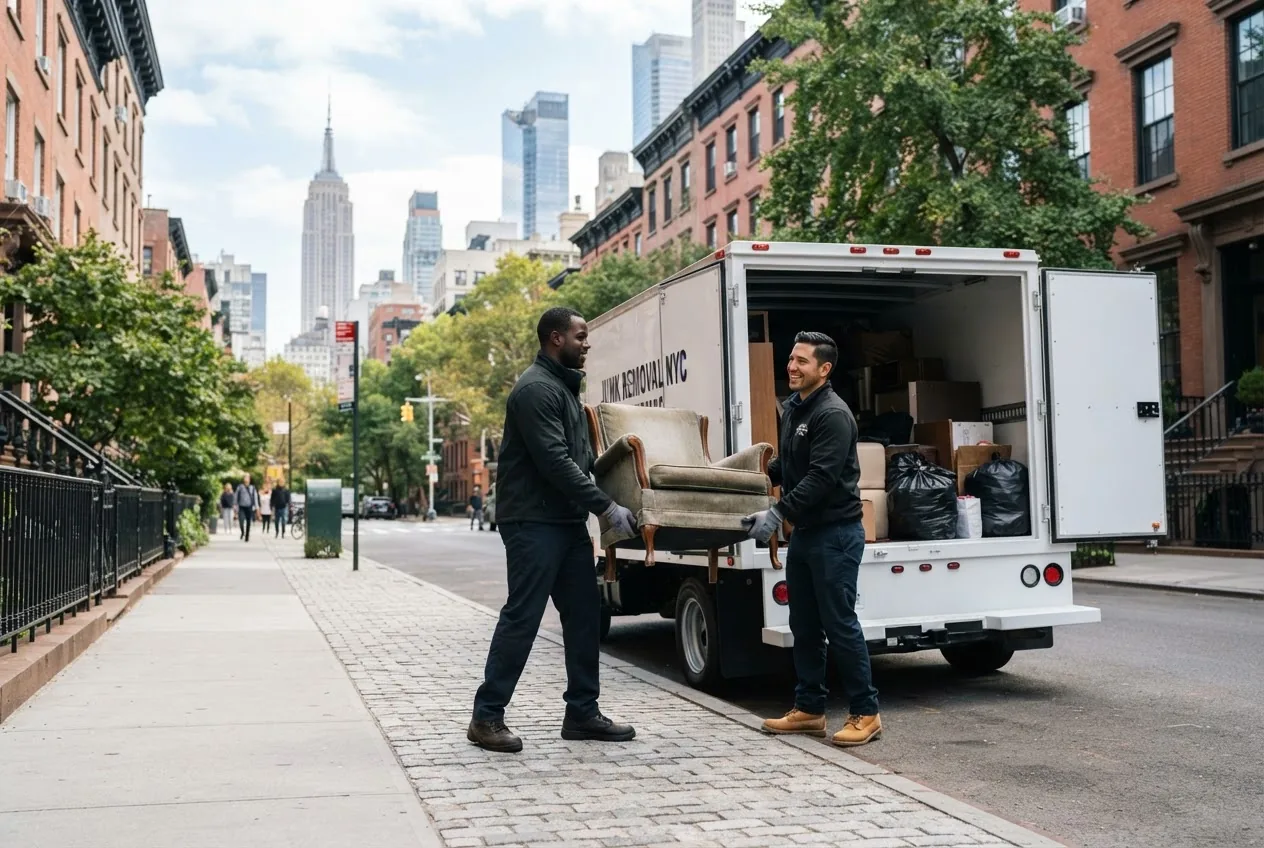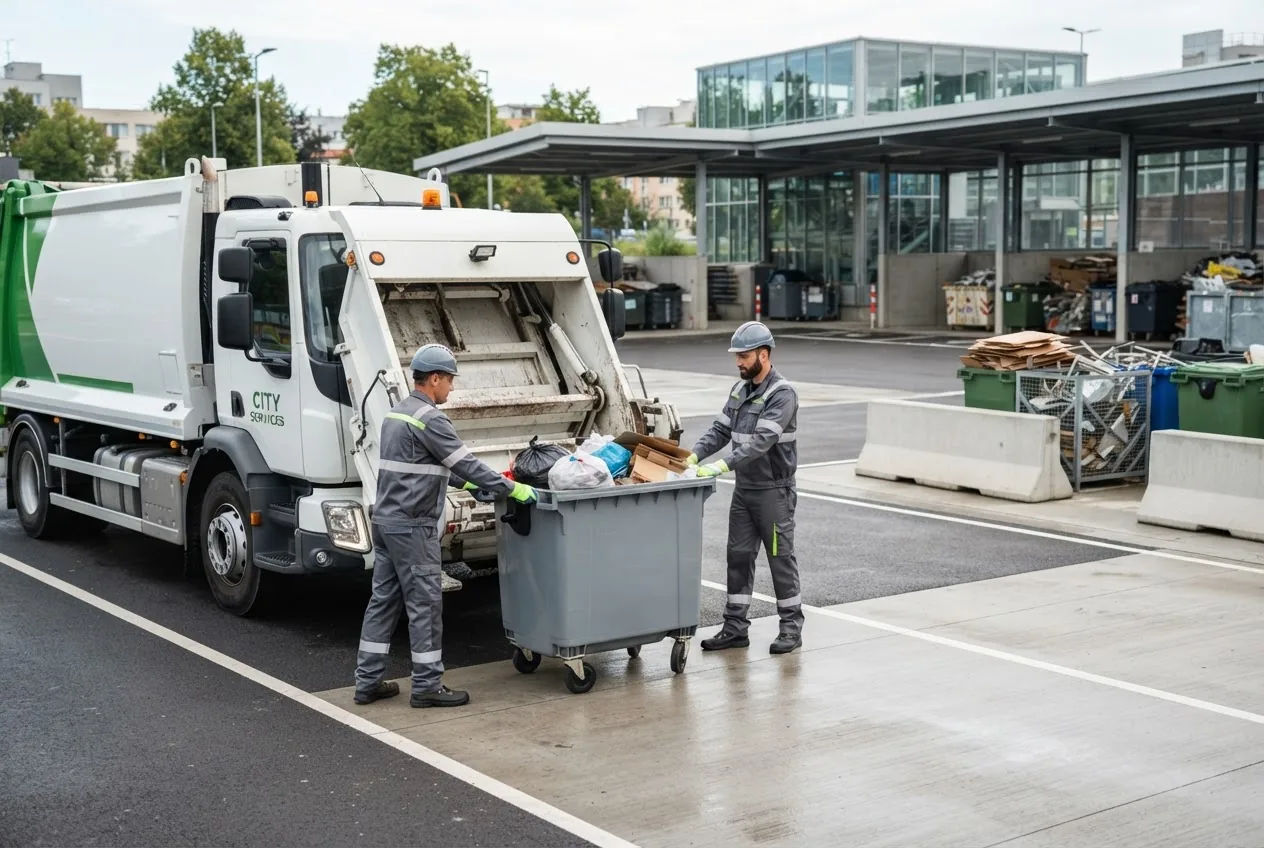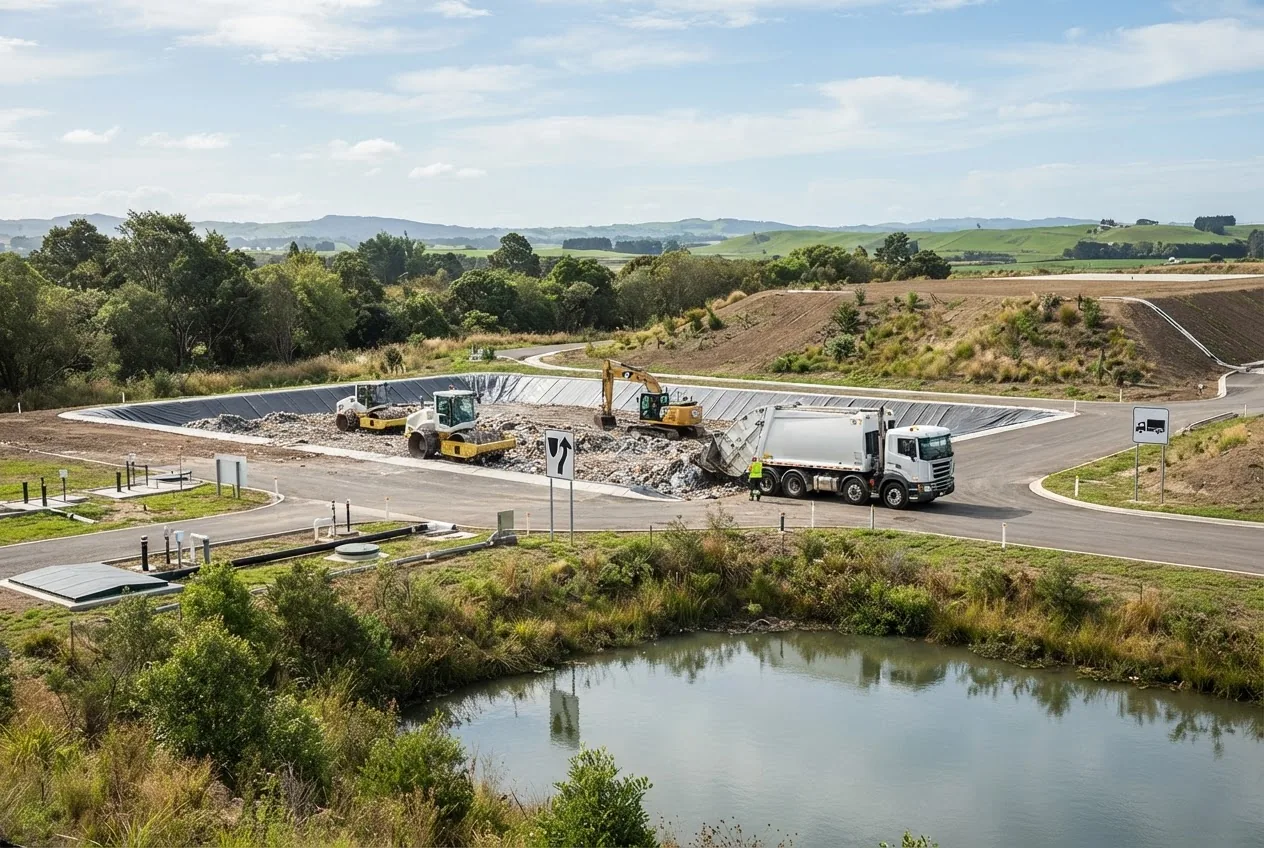
By the end of this hands-on guide you will be able to locate the best landfill near me, verify hours and fees, and choose the correct site for household, yard or construction waste. Expect to spend 30–90 minutes researching and one to several visits depending on load size. Skill level: basic internet research and safe loading practices.
Before you start
- Valid photo ID and proof of residency (utility bill or driver’s license) — many public dumps require it.
- Vehicle and tie-downs rated for your load (tarps, ratchet straps) — secure loose material, especially dirt or yard waste.
- Basic PPE: leather gloves, safety glasses, boots and a dust mask for dusty loads.
- Phone with maps app and screenshots of landfill rules (save for offline use).
- Cash, card or electronic pay for tipping fees (check local landfill payment methods).
- Weight estimate of load (e.g., pickup truck load ≈ 500–1,000 lbs; small trailer 1,000–3,000 lbs).
Understanding Landfills and Garbage Dumps
This section explains what a public landfill and a garbage dump are, the differences between types of waste management facilities, and why selecting the right facility matters for compliance and the environment.
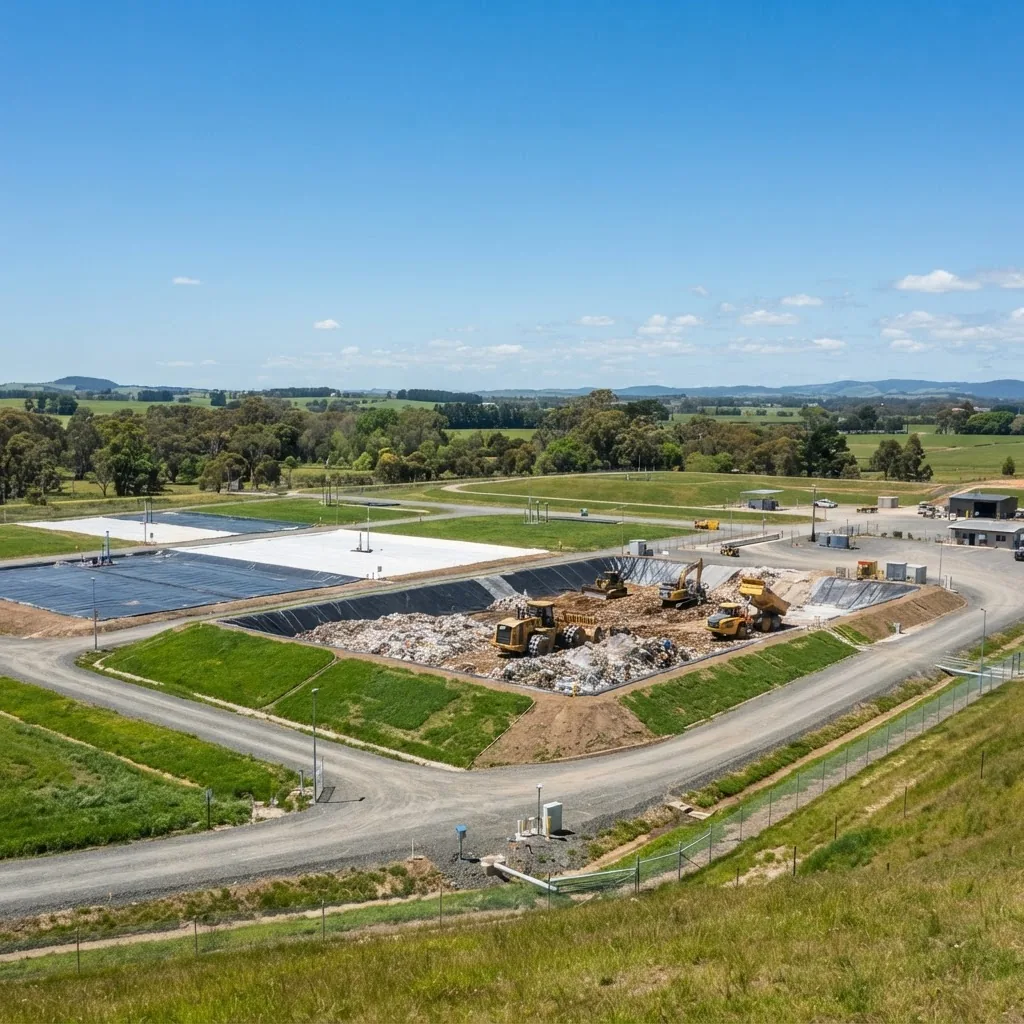
- Definition — public landfill vs dump: Think of a landfill as a large, managed dump with engineered liners, leachate collection, and gas control. A garbage dump (colloquial) might refer to municipal transfer stations or older unlined disposal areas.
- Types of landfills:
- Municipal Solid Waste (MSW) landfills — accept typical household trash and non-hazardous commercial waste.
- Construction and Demolition (C&D) landfills — accept concrete, wood, drywall and roofing material; usually require specific permits.
- Yard waste/organics facilities — handle leaves, grass, branches and accept for composting or chipping.
- Dirt/soil disposal sites — may operate separately for clean fill, topsoil or contaminated soil with special controls.
- Transfer stations — local drop-off where waste is compacted and sent to regional landfills.
- Operational differences: Landfills have operating plans, monitoring and environmental controls. Transfer stations and public dumps focus on convenience and short-term holding.
- Regulation snapshot: Landfills are regulated by federal, state and local agencies; landfill operators must follow monitoring, reporting, and closure rules. According to the 2024 EPA guidelines, modern landfills are required to control leachate and landfill gas to protect groundwater and air quality. EPA landfill guidance.
- When to use a landfill vs other options: Use a public landfill for mixed household trash and non-hazardous construction debris. Use yard waste drop-offs or composting centers for organic material, and hire hazardous waste removal services for paints, batteries and chemicals.
- Pillar and commercial alternatives: For pickup options that complement landfill visits consider junk removal services guide and residential pickup options.
- Example scenario: A homeowner clearing a basement (three pickup loads) confirms the MSW landfill accepts mixed household trash, pays a per-ton fee, and avoids hazardous items like solvents — finishing in one afternoon.
- Case study snapshot: A mid-sized city converted an old dump to a lined municipal landfill in 2019, reducing local groundwater tests exceeding contaminant limits by 87% over three years, according to a 2022 municipal environmental report.
Transition: now that you understand the facility types, the next section walks you through practical steps to locate the nearest authorized sites and verify their rules.
How to Find a “Landfill Near Me” and Local Garbage Dump Locations
This step-by-step guide covers online tools, municipal resources and phone checks to find nearby public landfills, transfer stations and drop-off centers quickly and reliably.

- Open maps and search with intent: Use Google Maps or Apple Maps and search “landfill near me”, “public dump near me” or “transfer station”. Note the facility type in the description and save at least three candidates within 30 miles.
- Check municipal public works pages: Search your city or county public works or solid waste department pages for official landfill locations and hours. Many counties have dedicated “trash and recycling” pages with maps and fee schedules. External resource example: find local government services.
- Verify facility type and accepted materials: Read the landfill’s “accepted materials” list online — confirm whether the site is MSW, C&D, yard waste or a dirt-only site. If unclear, call the operator directly; ask “Do you accept residential loads of [item]?” and note the staff name and time for records.
- Look for residency and vehicle restrictions: Confirm proof-of-residency rules, vehicle restrictions, trailer permits or any seasonal closures before you go. Save a screenshot of the rules to phone. Many municipal pages state these requirements clearly.
- Plan the visit logistics: Estimate your load weight and time. Example: a standard full-size pickup truck bed of mixed household junk is ~700–1,200 lbs — many landfills charge by the ton. Map the fastest route and check for low-clearance bridges if hauling large items.
- Confirm hours and holiday schedules: Public landfills often run limited hours (e.g., Tue–Sat 8:00–4:00). Check for holiday closures (e.g., Thanksgiving, Christmas) by calling on the morning of your trip if possible. For seasonal changes call ahead.
- Alternative tools and directories: Use state waste directories or non-profit maps of drop-off sites. For large metro areas, private apps and aggregator sites list transfer stations and community recycling events.
- Complementary pickup services: If you prefer collection instead of driving to a landfill, compare municipal pickup or private options such as the garbage man service guide and collection requirements and city garbage pickup service guide and collection details.
- Local examples and localized guides: If you’re in Birmingham, compare landfill locations with the Birmingham garbage pickup guide and service requirements. For other cities, check dedicated articles like junk removal Cincinnati service guide and cost overview, junk removal Las Vegas guide and waste disposal services, and junk removal NYC guide and effective trash pickup options.
- Save local and private provider options: Add entries for reliable local services such as reliable waste service guide and trusted trash pickup, garbage pickup Fort Wayne guide and service options, and provider-specific pages like trash pickup Indianapolis guide and garbage service options.
- Record keeping: Create a folder (digital or paper) with screenshots, facility phone numbers, hours, rules and payment options. This reduces surprises and supports dispute resolution if fees or restrictions change.
Transition: with locations identified and verified, the next section explains exactly where different waste types should go and which sites to avoid.
Different Types of Waste and Where to Dump Them
Match waste types to the correct facility: household trash, yard waste, construction debris, dirt and special materials. Below is a practical comparison to decide where to take each material and what to expect.
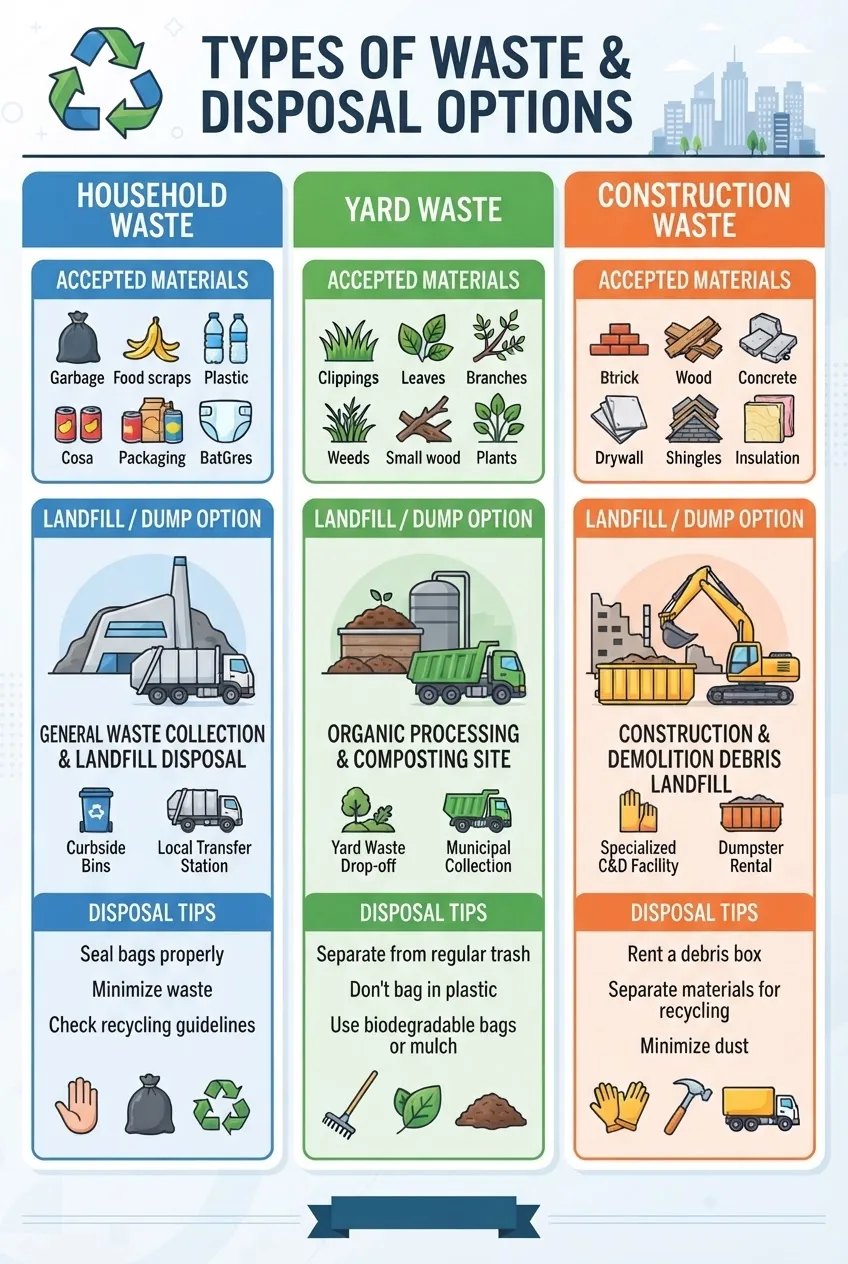
| Waste Type | Where to Dump | Restrictions & Tips |
|---|---|---|
| Household trash | MSW landfill or municipal transfer station | No hazardous liquids, separate electronics/recyclables. Small loads often allowed; pay per ton or per vehicle. |
| Yard waste | Yard waste facility, composting center or designated landfill cell | Branches may require bundling (e.g., <2" diameter, 4' length). Leaves may have seasonal drop-off days. |
| Construction & demolition (C&D) | C&D landfill or licensed transfer station | No hazardous building materials (asbestos requires specialized disposal). Expect higher fees; consider commercial dumpster service guide and rental requirements for large projects. |
| Dirt & clean fill | Designated dirt dumping sites or construction landfills | Require lab certification if contaminated; call ahead and get a price per cubic yard. See dirt removal near me service guide and cost overview. |
| Electronics & appliances | E-waste drop-off events or recycler | May be banned from landfills; refrigerants require certified recovery. |
| Hazardous waste | Household Hazardous Waste (HHW) facility or contracted removal company | Never take hazardous materials to a public landfill. See hazardous waste removal companies guide and disposal rules. |
| Metal and scrap | Scrap metal yards or municipal recycling centers | Metals often have value; separate to lower landfill fees. See scrap pickup near me guide and metal junk removal services. |
Additional resources and services for specialized waste: debris removal companies guide and construction services, waste removal bags guide and dumpster bag rental services, and dumpster rental cost guide and local dumpster services.
For businesses and large sites, consult commercial junk removal services guide and cost overview and commercial recycling services guide and waste disposal cost for cost and regulatory details.
Transition: now that waste routing is clear, learn the exact rules, fees and hours you’ll encounter at public landfills.
Rules, Fees, and Hours for Using Public Landfills
Below are practical numbered checks and standard expectations for visiting public landfills and dumps. Follow these steps to avoid fines and delays.
- Confirm identity and residency rules: Bring a government-issued ID and one proof of residency (utility bill or lease). Some county sites allow non-residents for a surcharge; confirm before travel.
- Check accepted materials list: Review the landfill’s accepted and prohibited list online. Common bans: batteries, tires (sometimes accepted at specific drop-off), paint, solvents, pesticides and medical waste.
- Understand fee structures: Typical fee models:
- Per-ton scale at gate (e.g., $40–$120 per ton) — many rural sites are cheaper than urban ones.
- Per-vehicle flat fee for passenger cars (e.g., $5–$20) and pickup trucks (e.g., $20–$60).
- Itemized charges for appliances or tires (e.g., $15–$50 each).
Ask for rates in writing or save the page screenshot. According to a 2023 industry fee survey, average municipal landfill tipping fees in the U.S. ranged widely by region; always verify locally.
- Confirm operational hours and holiday schedules: Most public landfills operate limited weekdays and a Saturday (e.g., Tue–Sat 8:00–4:00). Call the facility on the morning of your visit for last-minute closures. Many municipal pages list holiday closures explicitly — consult them before hauling. For broader refuse operations see public trash collection guide and refuse center services.
- Prepare for weight checks: If charged by weight, the scale ticket is your receipt. Know estimated weights: compacted household trash ~200–500 lbs per cubic yard; clean fill/dirt heavier (~2,400 lbs per cubic yard). Use these to estimate cost.
- Follow traffic patterns and staff directions: Most landfills have one-way circuits and designated unloading areas. Obey signage and attendant directions for safety and speed.
- Segregate loads in advance: Pre-sort metals, recyclables, yard waste and C&D to avoid extra handling charges and faster unloading times.
- Payment and documentation: Bring exact change, card or pre-purchased permits. Ask for an invoice if you need expense documentation for business purposes.
- Permits for large or commercial loads: Commercial vehicles and large contractors typically require pre-registration and commercial permits — call ahead and secure the required paperwork.
- Understand enforcement and penalties: Illicit dumping or bringing hazardous waste can trigger fines or criminal charges. Keep records of communications and receipts if disputes arise. For detailed rules see dumps for trash guide and public dumping requirements.
Transition: if fees are a concern, the next section lists free or low-cost alternatives and community programs to reduce disposal costs.
Options for Free or Low-Cost Garbage Disposal Near Me
Here are practical ways to lower or eliminate disposal fees using city programs, community events and low-cost services. Use these tactics before paying tipping fees.
- Free drop-off days: Many cities run annual “clean-up” or household hazardous waste (HHW) collection days with no charge. Check your city’s calendar and reserve spots when required. See city clean up guide and local spring cleanup options.
- Community swap and reuse programs: For reusable furniture and appliances, list items on local reuse networks (Freecycle, Buy Nothing) before hauling. Some charities offer free pickup for good-condition items.
- Municipal curbside bulky item pickup: Many cities provide scheduled bulky-item pickup or bulky-item vouchers; these are often free or low-cost but require advance scheduling. Compare with rubbish removal services guide and affordable pickup options.
- Veteran and low-income discounts: Some nonprofit or veteran-focused programs offer discounted pickups; check veterans junk removal guide and trusted service options.
- Junk haulers and affordable removal: Compare small local haulers for flat fee pickups; often cheaper than landfill trips when factoring time and fuel — see junk haulers near me guide and affordable removal services.
- Furniture removal alternatives: For couches and big furniture, check local donation centers or the guide how to dispose of a couch guide and furniture dump options.
- Use municipal recycle and scrap pickup: Metals and appliances often carry positive value or free disposal; schedule a scrap pickup or visit recycling drop-off. See scrap pickup near me guide and metal junk removal services.
- When community pickup isn’t enough: Consider paid junk removal or dumpster bag rental services as a time-saver — see trash removal services guide and waste disposal solutions and waste removal bags guide and dumpster bag rental services.
- Community examples: A midwestern city runs monthly “free bulky pickup” in each neighborhood — residents schedule online and items are collected without landfill fees; this reduced illegal dumping by 60% over two years, per a 2021 municipal report.
Transition: having explored cost-saving options, next we explain the environmental impacts of landfills and alternatives to reduce your footprint.
Environmental Considerations and Alternatives to Landfills
Landfills have measurable environmental impacts but there are effective alternatives and best practices to reduce waste, greenhouse gases and pollution.
- Environmental impacts overview: Landfills produce methane, can leach contaminants without proper liners, and require long-term monitoring. According to a 2022 environmental study, properly engineered landfills with gas-to-energy systems can cut methane emissions by over 50% compared to uncontrolled sites.
- Reduce and divert: Prioritize reuse, repair and recycling. Place metals, electronics and clean wood out of the landfill stream to reuse or recycle. For recycling locations see recycling drop off locations guide and bin availability.
- Composting and yard waste: Divert leaves and grass to municipal composting or your own compost bin. Composting reduces organic methane generation at landfills and produces valuable soil amendment.
- Commercial recycling and waste reduction: Businesses should work with commercial recycling services guide and waste disposal cost for tailored diversion programs.
- Hazardous waste handling: Proper disposal through HHW programs prevents soil and groundwater contamination. Never mix hazard materials with landfill loads. Refer to certified disposal companies for removal; see hazardous waste removal companies guide and disposal rules.
- Energy recovery options: Some landfills use captured methane to generate electricity; this mitigates greenhouse gases while producing energy. According to a 2023 industry report, about one-third of large U.S. landfills have gas-to-energy projects.
- Local service details and provider examples: For municipal and private pickup options that prioritize diversion, compare services like Republic trash pickup guide and recycling service details and use recycling drop-off hubs to lower landfill volumes.
Transition: the final section addresses common questions and troubleshooting when using landfill and dump services.
Frequently Asked Questions About Landfill and Dump Services
Below are concise, actionable answers and troubleshooting tips based on field experience and municipal procedures.
-
Step 1 — Prepare your vehicle and paperwork before you go
Action: Verify ID, residency proof, payment method and load segregation. Expect scale and staff inspection at entry. Typical time on-site: 20–45 minutes per load for standard household loads.
-
Step 2 — Follow the facility’s traffic pattern and unloading instructions
Action: Arrive with a tarp and one helper. Obey signs and attendants; unload in designated areas and immediately exit to avoid congestion. Save the scale ticket or receipt for proof of legal disposal.
-
Step 3 — Confirm banned items and redirect them to proper programs
Action: Segregate electronics, household hazardous waste, and tires before arrival. If an attendant rejects an item, ask for the proper disposal referral and local HHW event details.
-
Step 4 — Use low-cost alternatives when available
Action: Before paying tipping fees, check for upcoming free days, curbside bulky pickup or local donation pickup to avoid landfill costs.
-
Step 5 — Keep records and escalate disputes properly
Action: Photograph your load, keep receipts and record staff contacts if fees or rejections are disputed. Contact the landfill’s supervising authority if needed (municipal public works or county solid waste office).
Common mistakes and how to avoid them
I’ve seen users drive to a landfill only to be turned away for one of these avoidable reasons. Learn from these real missteps.
- I skipped checking hours: I once drove 45 minutes to a county landfill that closed an hour earlier than posted online; always call the morning of your visit.
- I mixed hazardous items with house trash: At a transfer station an attendant rejected my load and I had to haul back hazardous waste to a specialized drop-off — separate these items in advance.
- I underestimated my weight: I didn’t estimate dirt weight and was surprised by a high per-ton fee; always estimate cubic yards and multiply by regional soil weight (≈2,400 lbs/cu yd).
- I didn’t secure the load: I lost debris on the highway because tarps weren’t tied; use ratchet straps and a correctly sized tarp for all open loads.
Checklist before you go to a landfill
- Saved facility phone number, hours and accepted materials (screenshot).
- Photo ID and proof of residency.
- Payment method for tipping fees.
- Load secured with tarp and straps; PPE on hand.
- Pre-sorted materials (metal, recyclables, hazardous separated).
- Estimated weight or volume of load (cubic yards or lbs).
When to call a professional
Call a licensed hazardous waste removal company for chemicals, paint, pesticides, asbestos or unknown containers. Hire a licensed debris removal or dumpster rental service for large renovation projects exceeding 2–3 cubic yards, or if you lack safe hauling equipment. For construction and commercial projects consult the debris removal companies guide and construction services, commercial dumpster service guide and rental requirements, and dumpster rental cost guide and local dumpster services.
Closing summary and call to action
You now know how to locate a local dump near me, match waste types to the correct facility, minimize costs and protect the environment. Start by verifying one nearby landfill’s hours and accepted materials, save the contact and plan your first load. For pickup alternatives and residential collection compare options in our junk removal services guide and residential pickup options.