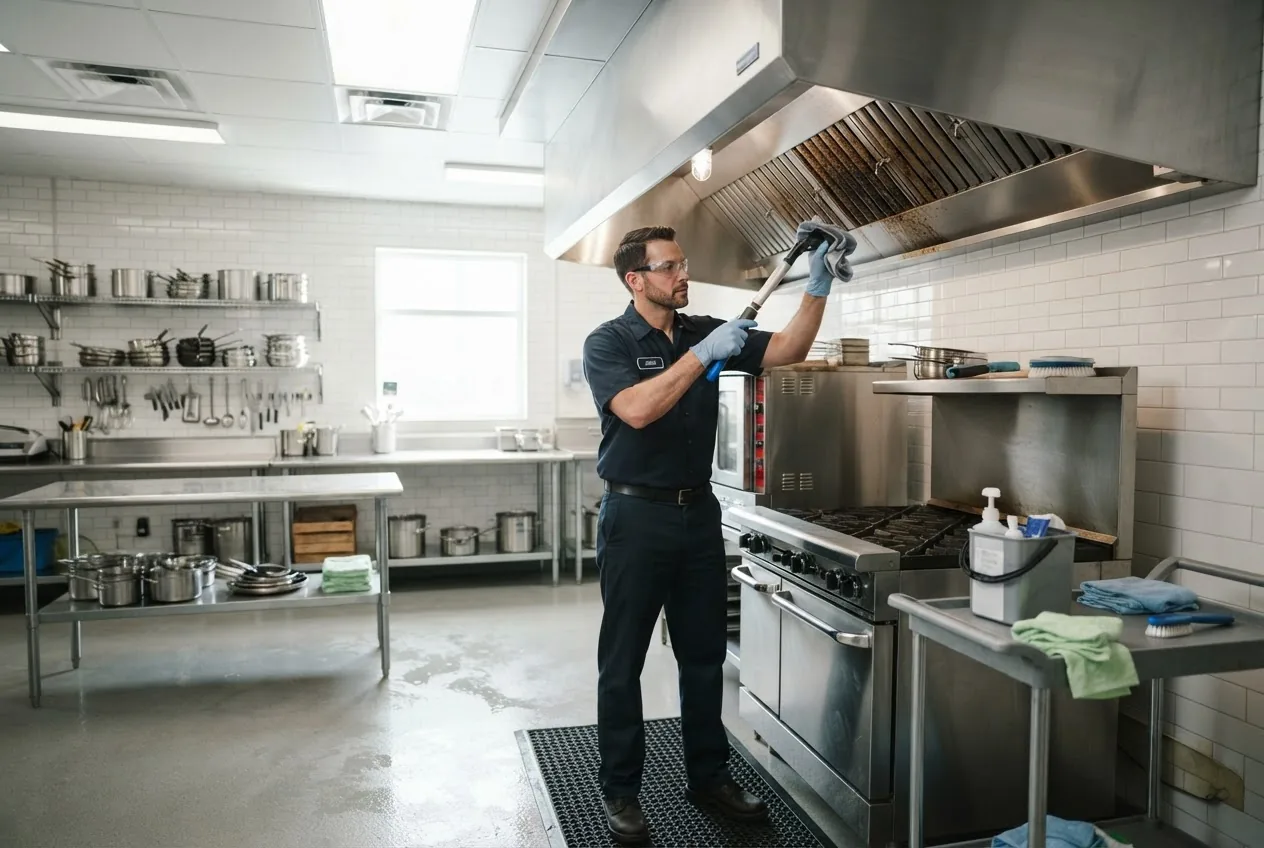

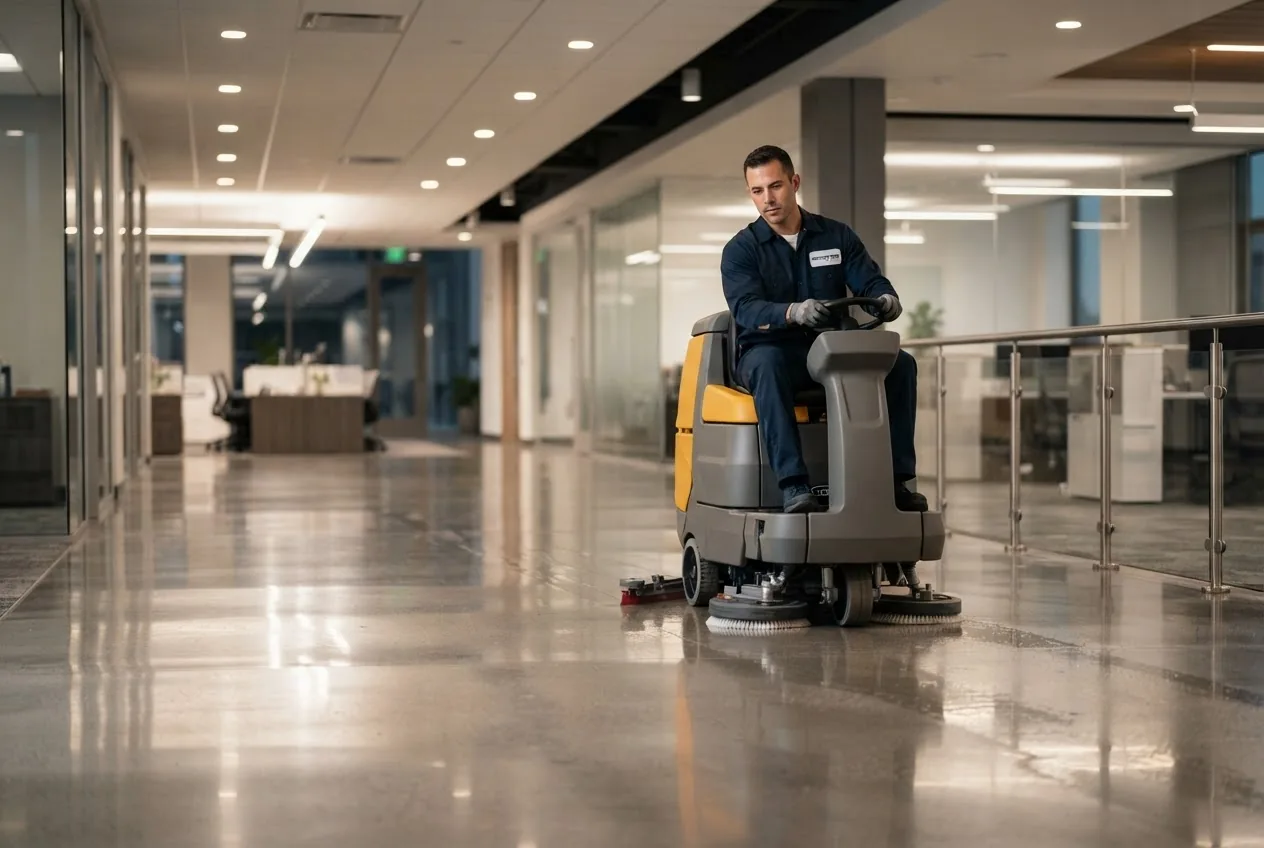
Commercial floor care services require structured training programs, certifications, equipment operation, chemical handling, safety compliance and documented service protocols so clients receive consistent, safe, and code-compliant floor maintenance across tile, vinyl, carpet and wood surfaces.
Overview of Commercial Floor Care Services Training?
Answer: Commercial floor care training is a structured onboarding and continuing-education program that teaches equipment operation, surface-specific cleaning chemistry, safety (OSHA-aligned) and service documentation so teams deliver repeatable, high-quality results.
Term: Onboarding — the initial set of classroom and hands-on sessions new employees complete to reach baseline competency in floor care.
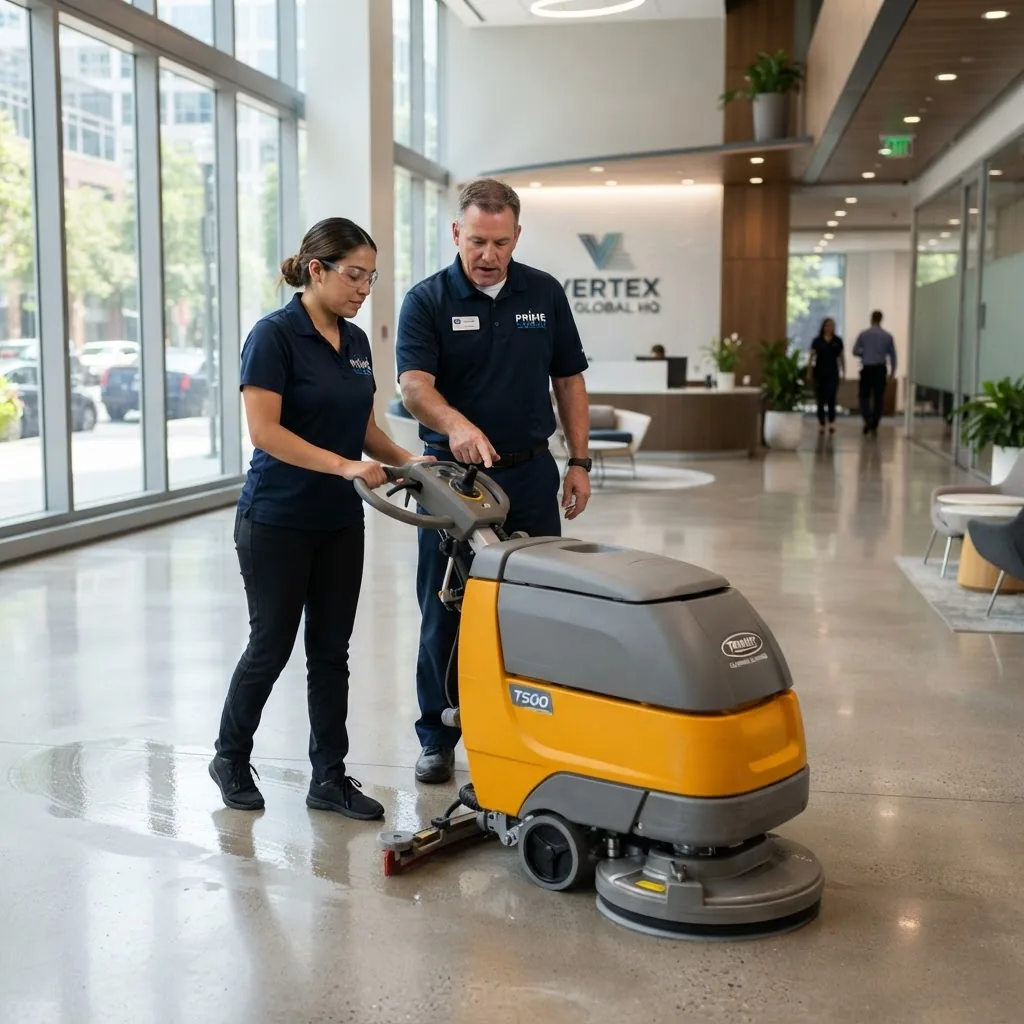
Trainings typically combine classroom lessons, hands-on machine practice, chemical-safety modules and supervised field shifts. For employers and facilities managers, a standard curriculum reduces liability, improves finish longevity and clarifies scope for service contracts.
- Company orientation and policies: scope of work, reporting lines, client expectations, contract terms.
- Safety and hazard communication: PPE, MSDS review, PPE selection and emergency response.
- Floor type science: porosity, finish compatibility, slip-resistance considerations.
- Equipment operation: auto-scrubbers, ride-on scrubbers, buffers, burnishers, extractors.
- Chemical handling: dilution control, neutralization, eco-friendly product selection.
- Service protocols: daily, weekly, monthly tasks; quality checkpoints and documentation.
- Record keeping and inspection: digital checklists, photos, incident logs.
- Performance assessment: skills testing, shadow shifts, customer feedback incorporation.
Training materials should be versioned and linked to job descriptions so competency maps to billable service levels and client SLAs.
cleaning jobs requirements and contracts
Key Training Programs and Certifications
Answer: Accredited programs (vendor and industry) plus in-house competency checks form the certification backbone; recognized industry standards (e.g., ISSA/CIMS) and OSHA training are commonly required for commercial floor care companies.
Term: OSHA — the U.S. Occupational Safety and Health Administration, which issues workplace health and safety regulations and guidance.
Recommended certification layers:
- Industry-standard certification: ISSA’s CIMS (Cleaning Industry Management Standard) or equivalent — shows management systems and quality controls. See ISSA resources for standards and training options: ISSA.
- OSHA training: general industry 10/30-hour modules and hazard communication (HazCom) tied to chemical handling. Reference OSHA guidance: OSHA.
- Manufacturer equipment certification: vendor-sponsored auto-scrubber and buffer operator programs that certify safe operation and maintenance.
- Green credentials: Green Seal or similar eco-certifications for sustainable cleaning products and procedures: Green Seal and EPA product guidance at EPA.
Example case study (anonymized): A regional facilities firm implemented a 12-week blended CIMS-aligned training and vendor machine-certification program; internal audits reported a 32% reduction in rework and a 25% drop in slip incidents over 12 months (internal audit report, 2022).
Training programs should include written exams, hands-on sign-offs, and a documented re-certification schedule (e.g., annual or biannual) tied to contract renewals.
Essential Skills and Knowledge Areas for Floor Care Technicians
Answer: Technicians must master equipment operation, floor-type diagnostics, chemical selection and dilution, safety procedures, restoration techniques, and documentation to meet commercial property cleaning standards.
Term: Auto-scrubber — a mechanized machine that dispenses cleaning solution, scrubs, and vacuums floors in a single pass to remove soil and dry the surface.
- Equipment operation
- Start-up and shutdown checks, daily maintenance, pad and brush selection, battery care.
- Operator skill levels: basic (walk-behind), advanced (ride-on, large-area scrubbers), expert (burnishing & finish application).
- janitorial services companies training
- Chemical handling and selection
- pH awareness: which chemistries are safe for vinyl, hardwood, tile and carpet.
- Proper dilution and dosing systems, use of color-coded buckets and closed-dilution systems.
- Floor type knowledge
- Porous vs. non-porous distinctions, finish compatibility, moisture sensitivity for hardwoods.
- small office cleaning services overview
- Safety and compliance
- PPE selection, slip hazard control, reporting incidents, and following site-specific emergency plans compliant with OSHA guidance.
- Restoration & finishing
- Stripping and re-coating finishes, burnishing schedules, stain removal and grout sealing basics.
- Documentation & client communication
- Digital checklists, before/after photos, incident logs, and clear escalation paths for client issues.
- office cleaning jobs career guide
- Soft skills — punctuality, client-facing communication, basic troubleshooting and escalation judgement.
- Ongoing learning — refresher modules, new product rollouts, and seasonal protocol updates.
Equipment and Chemical Handling Training Requirements?
Answer: Training must include step-by-step equipment operation, preventive maintenance, manufacturer-certified safety checks, PPE use, closed-dilution chemical handling, and sustainable product selection consistent with EPA/Green Seal guidance.
Term: PPE — personal protective equipment such as gloves, eye protection, respirators and slip-resistant footwear required during chemical handling and machine operation.
How-to steps for an equipment and chemical training module:
- Theory session (30–60 min): explain machine components, chemistries, MSDS/label reading, and relevant environmental standards (EPA, Green Seal).
- Pre-operation checklist demo: show battery checks, squeegee alignment, pad/brush selection, and leak inspection.
- Hands-on operation (1–2 hours): supervised area cleaning with instructor feedback — start/stop, turns, obstacle management, and recovery of solution tanks.
- Maintenance procedure: demonstrate filter cleaning, daily rinsing, pad care, and battery charging protocols with documented sign-off.
- Chemical dosing practical: trainees practice with closed-dilution systems, measure dilutions, and document correct concentrations on logs.
- Emergency scenario drills: chemical spill containment, neutralization, eyewash use and incident reporting steps following OSHA HazCom guidance.
- Assessment and certification: written test + practical skills sign-off; issue card or digital credential with expiration date.
Trainer qualifications should include manufacturer certification for complex equipment and documented instructor credentials for hazardous material handling.
commercial kitchen cleaning services
Use EPA and Green Seal lists for selecting low-toxicity, high-performance products; document product approvals and keep MSDS/SDS sheets accessible on-site and digitally.
Service Quality and Commercial Floor Care Service Requirements?
Answer: Service quality equals clear service checklists, documented frequencies, measurable KPIs, inspection protocols and contract terms defining deliverables, response times, and quality remediation paths.
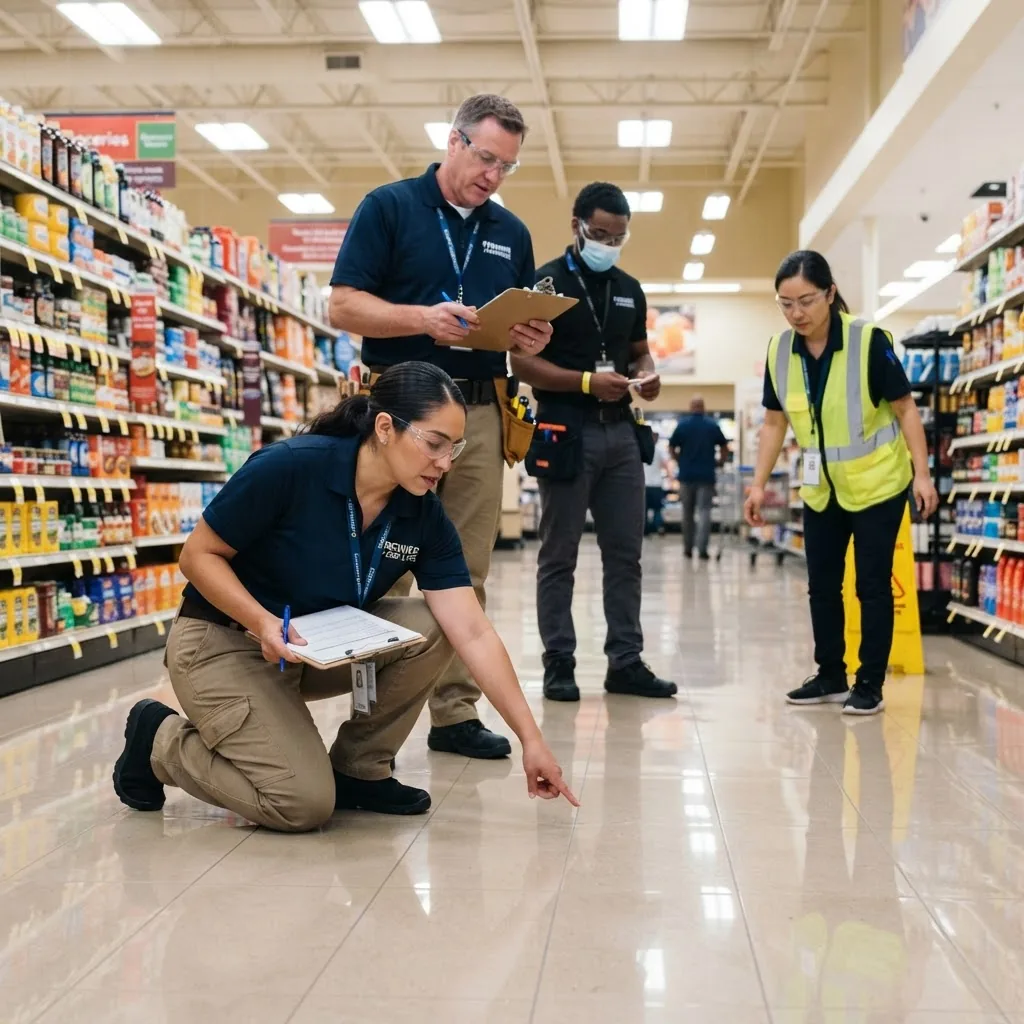
For commercial property cleaning, clients expect written service agreements, time-on-site expectations, performance metrics and clear invoicing tied to completed checklist items and inspection sign-offs.
| Floor Type | Daily Tasks | Weekly/Monthly | Quality KPIs |
|---|---|---|---|
| Vinyl / VCT | Sweep, spot mop, auto-scrub high-traffic lanes | Strip & recoat schedule monthly–quarterly based on traffic | No visible scuffs; finish gloss within spec; slip-resistance pass |
| Tile & Grout | Dry dust, spot clean spills | Deep clean grout & seal semi-annually | Grout whiteness baseline; reduced staining reports |
| Carpet | Vacuum daily; spot treat spills | Encapsulation or hot-water extraction monthly–quarterly | Clean appearance score; allergen reduction metrics |
| Hardwood | Dry dust, spot-clean only | Polish or recoat annually; refinishing as needed | Moisture control adherence; finish integrity |
| Concrete / Polished | Dust control, sweep | Polish maintenance; densifier application per schedule | Reflectivity metrics; abrasion wear rate |
Clients and contracts should define:
- Service frequencies and exclusion lists.
- Accepted consumables and finish brands.
- KPIs (e.g., number of rework incidents allowed, maximum slip incidents).
- Inspection cadence and acceptance criteria for completed work.
Sample service checklist (template):
- Pre-shift machine inspection — fill out serial number, battery level, pad condition.
- Daily tasks performed — areas cleaned, approximate time spent, exceptions.
- Consumables used — chemical name, dilution ratio, batch number.
- Photo evidence — upload before/after images to job record.
- Client sign-off or feedback entry — record client name/time.
Quality control inspections should be documented and scored; remediation steps and retraining triggered automatically when scores fall below thresholds.
office cleaning service costs and providers
retail store cleaning services guide
Cleaning Protocols for Different Commercial Flooring Types
Answer: Each flooring type requires distinct protocols: vinyl needs pH-balanced cleaners and routine burnishing; tile needs grout care and sealing; hardwood needs low-moisture methods; carpet relies on vacuuming and periodic extraction; concrete requires densifiers and polishing schedules.
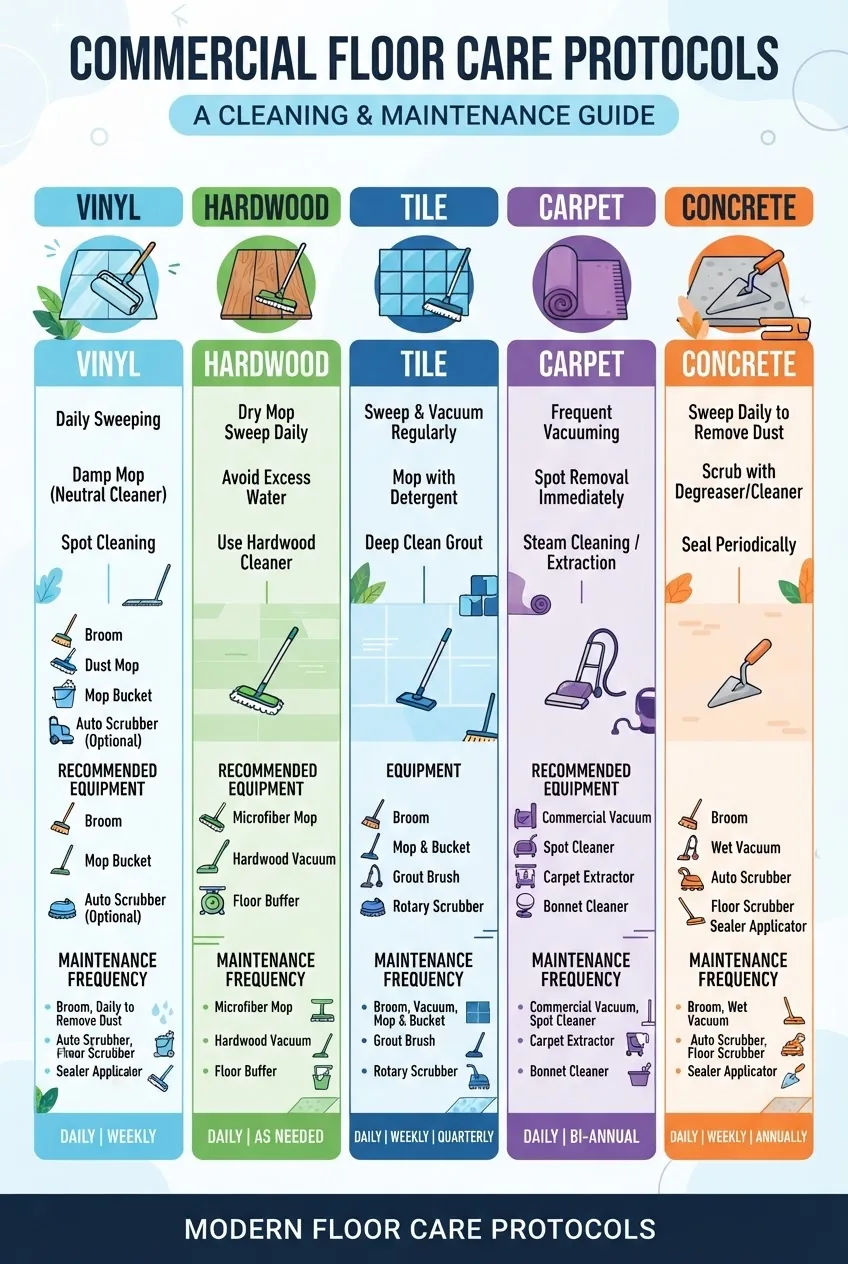
| Flooring | Recommended Equipment | Cleaning Steps | Maintenance Frequency |
|---|---|---|---|
| Vinyl / VCT | Auto-scrubber, microfiber pads, orbital buffer | Sweep → auto-scrub with neutral cleaner → rinse → dry → periodic strip & recoat | Daily cleaning; strip/recoat 1–6 months by traffic |
| Hardwood | Microfiber dust mops, low-moisture auto-scrubbers with wood pads | Dry dust → spot clean with pH-neutral cleaner → polish sparingly → refinish as needed | Daily dusting; annual polish; refinishing 5–15 years |
| Tile & Grout | Auto-scrubber, rotary machines, grout brushes, extractor | Sweep → scrub with alkaline or neutral cleaner → grout deep-clean → rinse → seal grout | Daily cleaning; grout deep-clean 3–12 months |
| Carpet | Commercial vacuums, low-moisture encapsulation machines, hot-water extractors | Vacuum → pre-spray & agitation → extraction or encapsulation → grooming | Daily vacuum; extraction monthly–annually per soil load |
| Concrete / Polished | Dust-control sweepers, high-speed burnishers, densifiers | Dust mop → spray buff/polish → periodic densifier application → address stains | Daily dust control; polish cycles quarterly–annually |
kitchen cleaning service guide
post construction cleaning services
post construction clean-up options
restaurant cleaning service costs and providers
warehouse cleaning services solutions
Safety and Compliance in Commercial Floor Care Services?
Answer: Safety and compliance require following OSHA regulations for hazard communication and PPE, maintaining MSDS/SDS, conducting site-specific risk assessments, and documenting training and incident responses.
Term: MSDS/SDS — Material Safety Data Sheet / Safety Data Sheet giving hazard, handling, storage and emergency information for chemicals.
According to 2024 OSHA guidelines for hazard communication and PPE, employers must provide training on hazardous chemicals and maintain accessible SDS records (public guidance, 2024).
Key compliance actions:
- Maintain current SDS for every chemical and ensure digital and physical access at the site.
- Train staff on HazCom annually and when new chemicals are introduced.
- Use engineering controls and PPE to limit exposure; document PPE issuance and fit testing where required.
- Perform slip-risk audits and maintain documented anti-slip procedures and warning signage.
- Conduct periodic compliance audits and corrective-action tracking; retain training records per jurisdictional requirements.
Failure to follow compliance protocols can increase liability and risk costly OSHA citations and client contract penalties. Clients should request documentation of training dates, instructor credentials and incident metrics during procurement.
Commercial Disinfection Services Guide to Costs and Providers
Continuous Training and Performance Evaluation?
Answer: Ongoing training, scheduled refresher courses, periodic skills testing and client feedback loops are essential to maintain competency and improve service quality over time.
Steps to implement continuous training and evaluation:
- Establish baseline metrics: first-pass quality score, average rework incidents, safety incident rate.
- Schedule refresher training: quarterly micro-modules and annual full re-certification.
- Implement monthly performance reviews with ride-along inspections and documented scores.
- Collect client feedback after each major service and incorporate in technician performance files.
- Link career steps to training completion and open internal advancement for high performers.
- janitor job eligibility and applications
Measure ROI on training by tracking reductions in rework, chemical overuse, equipment downtime and client complaints. According to a 2023 industry report, companies that formalized ongoing training saw average first-pass quality improvements of 20% (industry analytics report, 2023).
Final Thoughts on Meeting Commercial Floor Care Service Standards?
Answer: Invest in structured training, documented protocols, and regular quality audits to deliver safe, compliant, and consistent floor care that protects clients and extends floor life — this pays for itself through fewer complaints, lower repair costs and better client retention.
Facilities managers should require documented certification, sample checklists and a recovery plan for deficiencies as part of any service contract. For regional hiring or procurement, consider vetted providers listed in local directories; for example see cleaning companies in California if operating in that market.
Final checklist for procurement:
- Ask for training matrices, instructor qualifications, and equipment certifications.
- Require inspection scorecards and digital job reports as part of invoicing.
- Verify OSHA/HazCom training records and SDS accessibility.
- Include remediation and rework SLAs in the contract to protect against poor service.